
















- Industrial display
-
Industrial Products
- DC Servo Drive
- AC Servo Drive
- Industrial board
- Siemens
- Switch Sensor
- Proximity Switch
- Temperature Controller
- Protection Relay
- Fiber Optic Sensor
- Encoder
- Fan
- other
- Heidelberg
- MITSUBISHI
- FANUC
- Siemens adapter
- Fujitsu connector
- Motherboard
- Board
- Contactor
- Circuit
- OMRON
- Relay
- Motor Driver
- power supply
- Cable
- Transformer
- HMI Touch Glass
-
HMI Full Machine Whole unit
- OMRON HMI Touch Panel
- Siemens HMI Touch Panel
- Mitsubishi HMI Touch Panel
- Allen-Bradley automation HMI Touch Panel
- DELTA HMI Touch Panel
- Proface HMI Touch Panel
- KINCO DELTA HMI Touch Panel
- HITECH HMI Touch Panel
- WEINTEK HMI Touch Panel
- TECVIEW HMI Touch Panel
- WEINVIEW HMI Touch Panel
- PANASONIC HMI Touch Panel
- KYOCERA HMI Touch Panel
- SCHNEIDER HMI Touch Panel
- Module
- lcd inverter
- Membrane Keypad Switch
- Zhiyan Customized Touch Screens
- Frequency Inverter
- Servo Motor
- PLC
In the demanding world of industrial technology, where reliability is non-negotiable and environmental challenges are a daily reality, the display module serves as the critical bridge between machine and operator. At the heart of many robust human-machine interfaces (HMIs), medical devices, and point-of-sale systems lies a specific component: the 12.1-inch industrial LCD screen, model G121X1-L04. This is not a consumer-grade panel; it is a precision-engineered module built for mission-critical applications.
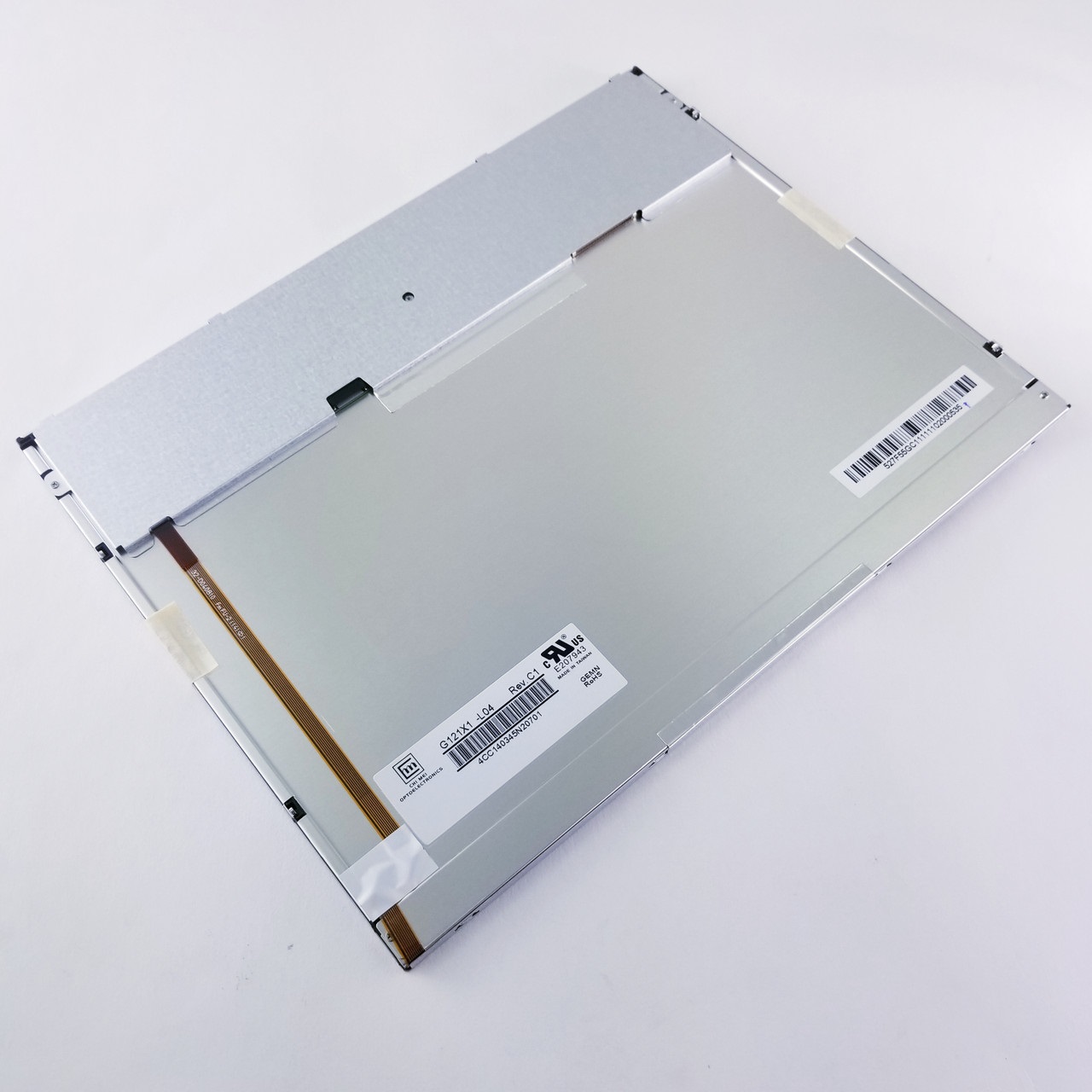
This article delves into a comprehensive analysis of the G121X1-L04 LCD module. We will move beyond basic specifications to explore its architectural strengths, the technology that ensures its durability, and the specific industrial niches where it excels. Understanding the nuanced capabilities of such a component is essential for engineers, product designers, and procurement specialists aiming to build devices that perform flawlessly under pressure, ensuring clarity, longevity, and unwavering performance where it matters most.

Core Architecture and Technical Specifications
The G121X1-L04 is built upon a TFT-LCD (Thin-Film Transistor Liquid Crystal Display) platform, offering a resolution of 800 x 600 pixels (SVGA). This 4:3 aspect ratio is a classic and highly functional format for many industrial control interfaces, providing ample space for data visualization, control buttons, and system status indicators without unnecessary widescreen space. The module typically incorporates a CCFL (Cold Cathode Fluorescent Lamp) backlight system, known for its stable and uniform brightness output over a long lifespan, which is a traditional and reliable choice for industrial settings.
At its core, the module includes the LCD panel itself, the driver circuitry, and the backlight unit, often assembled into a single, robust unit. Key electrical interfaces are standardized, commonly featuring LVDS (Low-Voltage Differential Signaling) for high-speed, low-noise data transmission from the system's controller board. This foundational architecture prioritizes signal integrity and compatibility with industrial-grade embedded systems, forming the basis for its reliable operation.
Engineering for Extreme Environments: Durability Features
What truly distinguishes the G121X1-L04 as an industrial component is its engineered resilience. The module is designed to withstand operational parameters that would cripple commercial displays. This includes an extended operating temperature range, often from -20°C to 70°C or wider, ensuring functionality in unheated warehouses or near hot machinery. Its storage temperature range is even more expansive, safeguarding the unit during shipping or offline periods.
Beyond temperature, the module is constructed to resist vibration and shock, a necessity for equipment mounted on moving vehicles or factory floors. High-brightness options are frequently available to combat ambient glare from sunlight or high-intensity indoor lighting. Furthermore, the design often incorporates protective measures against moisture and dust ingress, and the use of industrial-grade components and soldering processes enhances its mean time between failures (MTBF), guaranteeing sustained performance in harsh conditions.
The Critical Role of Optical Bonding Technology
A pivotal feature often associated with high-performance industrial displays like the G121X1-L04 is optical bonding. This process involves filling the air gap between the LCD panel and the front cover glass (or touch sensor) with a clear, durable resin. This technique delivers several transformative benefits. Firstly, it significantly reduces surface reflections, improving sunlight readability—a crucial factor for outdoor or brightly lit HMIs.
Secondly, optical bonding enhances mechanical strength and seals the display layers, providing better protection against condensation and dust accumulation in the gap. Most importantly, it eliminates the internal air gap that can cause parallax error (a misalignment between where the user touches and the underlying image), which is vital for touch-screen applications requiring precision. This technology directly contributes to the module's durability and optical performance.
Integration and Interface Considerations
Successfully integrating the G121X1-L04 into an end product requires careful attention to its physical and electrical interface requirements. Mechanically, the module must be securely mounted within the device housing, often using specific bezel or bracket designs that account for its dimensions and connector locations, while ensuring proper heat dissipation. Electrically, integration revolves around the LVDS interface, requiring the host system to provide a compatible signal and the correct power supply voltages for both the logic board and the backlight inverter.
Designers must also consider the control of the backlight, which may involve dimming functionality via PWM (Pulse Width Modulation) signals. Furthermore, if a touch panel (resistive or capacitive) is added, its controller must be integrated and calibrated. Proper ESD (electrostatic discharge) protection and electromagnetic compatibility (EMC) design around the display interface are essential to prevent noise interference and ensure the stability of the entire system.
Primary Industrial Applications and Use Cases
The specific blend of size, format, and ruggedness makes the G121X1-L04 module ideal for a range of specialized applications. In factory automation, it serves as the primary HMI for PLCs (Programmable Logic Controllers), providing operators with real-time control and monitoring of production lines. Within the medical device sector, its reliability meets the stringent requirements for patient monitoring equipment and diagnostic instruments, where display clarity and uptime are critical.
It is also prevalent in transportation and logistics, embedded into vehicle-mounted computers for fleet management and forklift operation systems. Other key use cases include point-of-sale (POS) terminals in retail and hospitality, kiosks for public information, and test and measurement equipment. In each scenario, the module's durability, stable performance, and clear 4:3 display area prove to be significant assets.
Comparative Analysis: Industrial vs. Consumer-Grade Displays
Choosing an industrial module like the G121X1-L04 over a commercially available 12.1-inch panel is a decision with profound implications for product lifecycle and reliability. Consumer displays are optimized for cost, aesthetics, and thin profiles, with operating temperatures typically ranging from 0°C to 50°C. Their components are selected for a shorter lifespan, aligning with rapid consumer electronics cycles.
In stark contrast, the industrial module is engineered for a product lifecycle that can span 5-10 years or more. Its components are rated for higher temperatures, continuous operation, and mechanical stress. The supply chain for industrial modules is characterized by long-term availability, preventing obsolescence issues that frequently plague consumer parts. This fundamental difference in design philosophy ensures that an integrated product will maintain functionality and serviceability throughout its intended industrial lifespan, ultimately reducing total cost of ownership despite a higher initial unit cost.
FAQS
Q1: What is the resolution and aspect ratio of the G121X1-L04?A1: It typically offers SVGA resolution (800 x 600 pixels) with a 4:3 aspect ratio.
Q2: What type of backlight does this module use?A2: It commonly uses a CCFL (Cold Cathode Fluorescent Lamp) backlight system for uniform and stable brightness.
Q3: What is the operating temperature range for an industrial LCD like this?A3: Industrial modules like the G121X1-L04 are designed for wide ranges, often from -20°C to 70°C.
Q4: What is optical bonding and why is it important?A4: It's a process that fills the air gap between layers with resin to reduce glare, improve durability, and eliminate touch parallax.
Q5: What is the primary interface for the display signal?A5: The standard interface is LVDS (Low-Voltage Differential Signaling) for reliable, high-speed data transmission.
Q6: Is this module suitable for outdoor use?A6: With optional high-brightness and optical bonding, it can be used in bright environments, but full outdoor use may require additional weatherproof housing.
Q7: Can a touch screen be added to this display module?A7: Yes, resistive or capacitive touch panels are commonly added, often with optical bonding for optimal performance.
Q8: How long is the typical lifespan of an industrial LCD module?A8: Industrial modules are built for longevity, often rated for 50,000 hours or more of backlight life and supported by long-term supply agreements.
Q9: What are the main applications for the G121X1-L04?A9: Key applications include industrial HMIs, medical devices, POS systems, transportation computers, and test/measurement equipment.
Q10: Why choose an industrial module over a cheaper consumer panel?A10: For reliability in harsh conditions, extended temperature range, longer product lifecycle, and stable long-term supply—critical for industrial product viability.
Conclusion
The 12.1-inch G121X1-L04 industrial LCD module exemplifies the engineering rigor required for technology that operates beyond the controlled confines of an office or home. It is far more than a simple screen; it is a subsystem built with durability, clarity, and long-term reliability as its core tenets. From its robust architecture and wide operating tolerances to the application-enhancing potential of optical bonding, every feature addresses the real-world challenges of industrial environments.
For system integrators and product developers, selecting a component like the G121X1-L04 is a strategic decision that impacts product performance, maintenance costs, and brand reputation. It represents an investment in unwavering quality, ensuring that the vital interface between human and machine remains clear, responsive, and dependable, day after day, in the most demanding conditions imaginable. In the landscape of industrial design, such reliability is not just a feature—it is the foundation.





