


















- Industrial display
-
Industrial Products
- DC Servo Drive
- AC Servo Drive
- Industrial board
- Siemens
- Switch Sensor
- Proximity Switch
- Temperature Controller
- Protection Relay
- Fiber Optic Sensor
- Encoder
- Fan
- other
- Heidelberg
- MITSUBISHI
- FANUC
- Siemens adapter
- Fujitsu connector
- Motherboard
- Board
- Contactor
- Circuit
- OMRON
- Relay
- Motor Driver
- power supply
- Cable
- Transformer
- HMI Touch Glass
-
HMI Full Machine Whole unit
- OMRON HMI Touch Panel
- Siemens HMI Touch Panel
- Mitsubishi HMI Touch Panel
- Allen-Bradley automation HMI Touch Panel
- DELTA HMI Touch Panel
- Proface HMI Touch Panel
- KINCO DELTA HMI Touch Panel
- HITECH HMI Touch Panel
- WEINTEK HMI Touch Panel
- TECVIEW HMI Touch Panel
- WEINVIEW HMI Touch Panel
- PANASONIC HMI Touch Panel
- KYOCERA HMI Touch Panel
- SCHNEIDER HMI Touch Panel
- Module
- lcd inverter
- Membrane Keypad Switch
- Zhiyan Customized Touch Screens
- Frequency Inverter
- Servo Motor
- PLC
In the intricate world of electronic components, the display panel often serves as the critical interface between machine and user. Among the myriad of options available to engineers and product designers, the 12.1-inch G121X1-L03 LCD module stands out as a notable and enduring solution. This panel, characterized by its 1024 x 768 (XGA) resolution, represents a specific class of display technology that balances performance, reliability, and cost-effectiveness for a wide range of industrial and commercial application
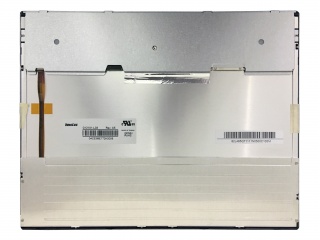
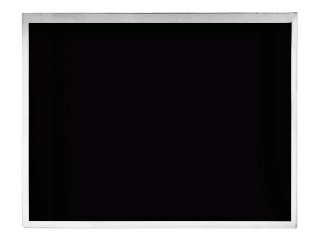
This article delves into a comprehensive analysis of the G121X1-L03 module. We will move beyond basic specifications to explore its underlying technology, the rationale behind its enduring design, and its precise positioning in the current market. By examining its key features, typical applications, and integration considerations, we aim to provide a deep technical understanding of where this particular LCD module excels and why it remains a relevant choice in an era of ever-higher resolutions and novel display types.
Decoding the G121X1-L03: Core Specifications and Technology
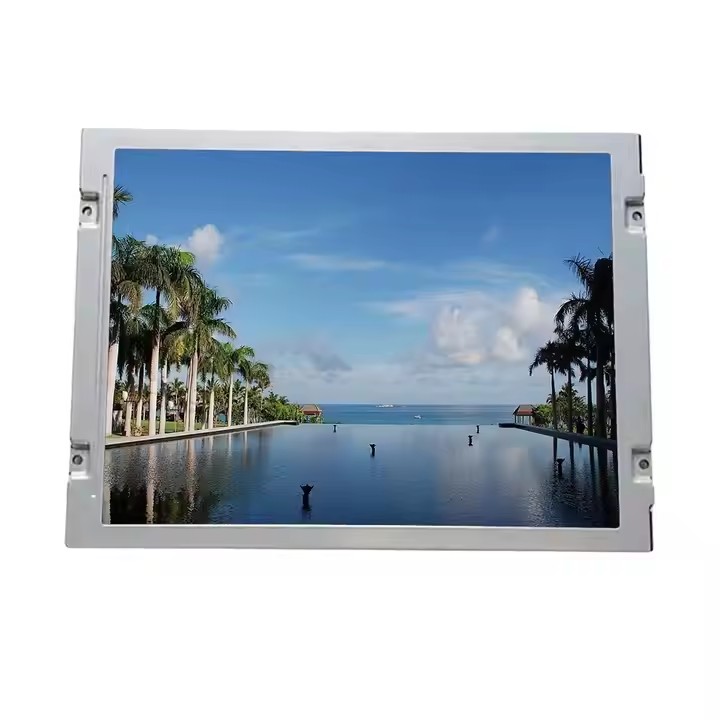
The G121X1-L03 is a 12.1-inch diagonal TFT-LCD (Thin-Film Transistor Liquid Crystal Display) module. Its defining characteristic is its XGA (1024 x 768 pixels) resolution, which yields a pixel pitch of approximately 0.240mm x 0.240mm and a pixel density of roughly 106 PPI (Pixels Per Inch). This specification places it firmly in the realm of standard resolution displays, a category prized for its clarity in many industrial settings without the excessive processing power demands of higher-resolution panels.
The module typically employs a twisted nematic (TN) or advanced TN-type technology, offering a balanced profile of brightness (often around 300-400 nits), contrast ratio, and response time. It commonly features an LVDS (Low-Voltage Differential Signaling) interface, a robust and noise-resistant standard for transmitting high-speed video data. Understanding these core specs is the first step in appreciating its design philosophy: delivering reliable, readable visual performance in controlled or demanding environments.
The Enduring Relevance of XGA Resolution in a High-DPI World
In an age where consumer smartphones boast pixel densities exceeding 400 PPI, a 1024x768 panel might seem anachronistic. However, its continued relevance is rooted in practical engineering and application-specific needs. For many industrial control systems (HMI), medical monitors, point-of-sale terminals, and embedded kiosks, ultra-high resolution is not merely unnecessary but often counterproductive.
XGA resolution provides sufficient detail for displaying complex schematics, text-based data, and control interfaces without straining the embedded system's graphical processing unit or memory bandwidth. This leads to lower power consumption, reduced heat generation, and lower overall system cost. Furthermore, the larger interface elements at this resolution can enhance usability and reduce operator error in fast-paced or high-stress environments, proving that the "right" resolution is determined by the task, not just the highest available number.
Key Performance Characteristics and Optical Features
Evaluating the G121X1-L03 requires a look at its optical performance. A typical brightness of 300 cd/m² or higher ensures viewability under office or factory lighting. The contrast ratio, crucial for image depth and legibility, is designed to be effective for its target uses. Viewing angles, while more limited than IPS (In-Plane Switching) panels, are often adequate for the direct-on-axis viewing common in its applications.
Many versions of this module are equipped with a robust metal frame and integrated CCFL or LED backlighting systems. The choice of backlight impacts longevity, power draw, and thickness. LED backlights, now more common, offer advantages in longevity, instant-on capability, and a wider operating temperature range. These characteristics collectively define the user experience: a stable, consistent, and durable image output.
Primary Application Domains and Use Cases
The G121X1-L03 finds its home in applications where reliability trumps cutting-edge specs. Its primary domains include:
Industrial Human-Machine Interfaces (HMIs): For factory automation, PLC control screens, and machinery operator panels.
Medical Equipment: In devices like patient monitors, diagnostic instruments, and dental systems, where clarity and reliability are paramount.
Point-of-Sale & Retail Systems: As the display for cash registers, self-checkout kiosks, and order terminals.
Transportation & Avionics: For in-vehicle information systems, rear-seat entertainment, and auxiliary cockpit displays.
Test & Measurement Equipment: Providing the visual output for oscilloscopes, spectrum analyzers, and other bench-top instruments.
In these fields, the module is valued for its proven track record, ease of integration, and predictable performance over long operational lifetimes.
Critical Integration Considerations for Engineers
Successfully incorporating the G121X1-L03 into a product requires attention to several technical details. The LVDS interface necessitates a compatible controller on the host system. Designers must account for the power supply requirements for both the logic board and the backlight, ensuring clean, stable power to avoid display artifacts.
Mechanical integration is equally important. The module's dimensions, mounting hole patterns, and bezel design must align with the product enclosure. Thermal management must be considered, especially in sealed environments, to ensure the backlight and drivers operate within their specified temperature ranges. Furthermore, understanding the pinout and signal timing from the datasheet is essential for creating a functional and flicker-free display connection.
The Competitive Landscape and Sourcing Strategy
The G121X1-L03 is part of a mature market. It may be sourced directly from original manufacturers or through a network of specialized distributors and brokers. When sourcing, it is crucial to verify the exact version (e.g., differences in backlight type, connector, or revision) and ensure compatibility.
Competitors include other 12.1-inch XGA modules from different manufacturers, as well as newer panels with similar form factors but different interfaces (like eDP). The choice often boils down to cost, availability, lifecycle status, and the value of a known, qualified component versus a newer alternative. For long-lifecycle products, securing a stable supply chain or identifying acceptable alternates is a key part of the design process.
Frequently Asked Questions (FAQs)
Q1: What is the exact resolution of the G121X1-L03?A1: It is 1024 x 768 pixels, known as XGA (Extended Graphics Array).
Q2: What type of interface does this LCD module use?A2: It typically uses an LVDS (Low-Voltage Differential Signaling) interface.
Q3: Is this a touch screen panel?A3: The G121X1-L03 is a display-only module. Touch functionality (resistive or capacitive) is usually added as a separate overlay.
Q4: What is the typical brightness level?A4: Brightness commonly ranges from 300 to 400 nits (cd/m²), suitable for indoor industrial use.
Q5: What are the main applications for this display?A5: It's widely used in industrial HMIs, medical devices, POS systems, kiosks, and test equipment.
Q6: Does it use CCFL or LED backlighting?A6: Both versions exist. Modern supplies are predominantly LED-backlit due to longer life and lower power consumption.
Q7: What are the advantages of XGA resolution for industrial use?A7: It offers a balance of sufficient detail, lower system processing load, lower cost, and often better legibility for UI elements.
Q8: What should I check when replacing an old G121X1-L03 module?A8: Verify the backlight type (CCFL/LED), interface connector pinout, mechanical dimensions, and supply voltage exactly.
Q9: Is this panel still in production?A9: Its production status varies by manufacturer. It is considered a mature product, so availability is often through distributors or aftermarket sources.
Q10: Can it operate in wide temperature ranges?A10: Standard versions are for commercial temperatures (0-50°C). Extended temperature variants may be available for specific industrial or outdoor uses.
Conclusion
The 12.1-inch G121X1-L03 LCD module is far more than a simple collection of specifications. It embodies a design ethos centered on reliability, practicality, and optimized performance for specific professional environments. Its XGA resolution, while not the highest available, remains a smart engineering choice for countless applications where functional clarity, system efficiency, and cost control are critical.
For engineers and product developers, understanding this module's strengths—from its robust LVDS interface to its application-specific optical performance—is key to leveraging its value effectively. In a rapidly evolving technological landscape, the G121X1-L03 serves as a powerful reminder that the most advanced component is not always the best; rather, the most appropriate one is. It continues to be a trusted and effective solution, proving that well-executed, fundamental display technology holds enduring value.





