


















- Industrial display
-
Industrial Products
- DC Servo Drive
- AC Servo Drive
- Industrial board
- Siemens
- Switch Sensor
- Proximity Switch
- Temperature Controller
- Protection Relay
- Fiber Optic Sensor
- Encoder
- Fan
- other
- Heidelberg
- MITSUBISHI
- FANUC
- Siemens adapter
- Fujitsu connector
- Motherboard
- Board
- Contactor
- Circuit
- OMRON
- Relay
- Motor Driver
- power supply
- Cable
- Transformer
- HMI Touch Glass
-
HMI Full Machine Whole unit
- OMRON HMI Touch Panel
- Siemens HMI Touch Panel
- Mitsubishi HMI Touch Panel
- Allen-Bradley automation HMI Touch Panel
- DELTA HMI Touch Panel
- Proface HMI Touch Panel
- KINCO DELTA HMI Touch Panel
- HITECH HMI Touch Panel
- WEINTEK HMI Touch Panel
- TECVIEW HMI Touch Panel
- WEINVIEW HMI Touch Panel
- PANASONIC HMI Touch Panel
- KYOCERA HMI Touch Panel
- SCHNEIDER HMI Touch Panel
- Module
- lcd inverter
- Membrane Keypad Switch
- Zhiyan Customized Touch Screens
- Frequency Inverter
- Servo Motor
- PLC
In the intricate world of industrial and commercial display solutions, the selection of a single component can define the performance, reliability, and user experience of an entire system. At the heart of many sophisticated devices lies a critical interface: the TFT LCD screen. This article delves deep into the G121X1-L01, a specific 12.1-inch TFT screen module designed for integration into products by CMO (Chi Mei Optoelectronics, now part of Innolux). This is not merely a generic display panel; it is a tailored solution engineered for demanding applications.
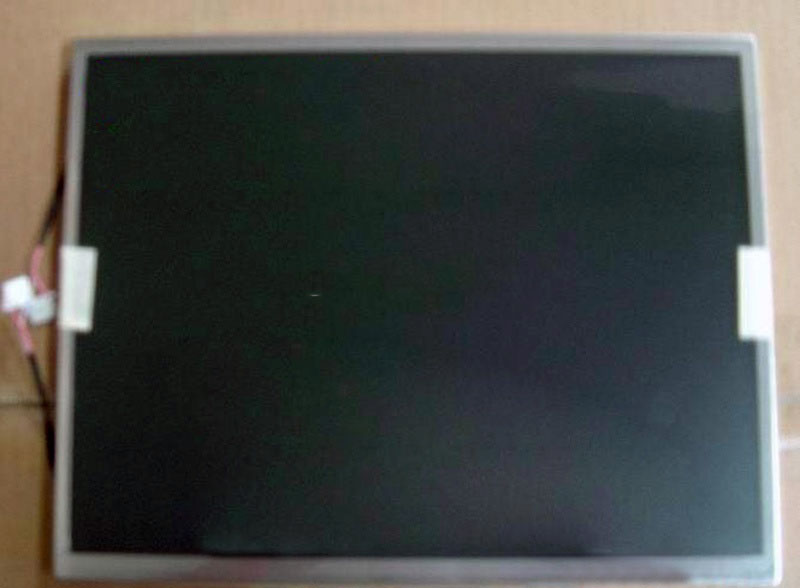
Our exploration will move beyond basic specifications to uncover the strategic value this module offers to engineers, product designers, and procurement specialists. We will analyze its core technological foundations, the specific use-case environments it is built for, and the tangible benefits it delivers in terms of performance and integration. Understanding the G121X1-L01 is to understand how a precisely matched display component can become a cornerstone of product excellence in competitive markets such as industrial automation, medical instrumentation, and point-of-sale systems.
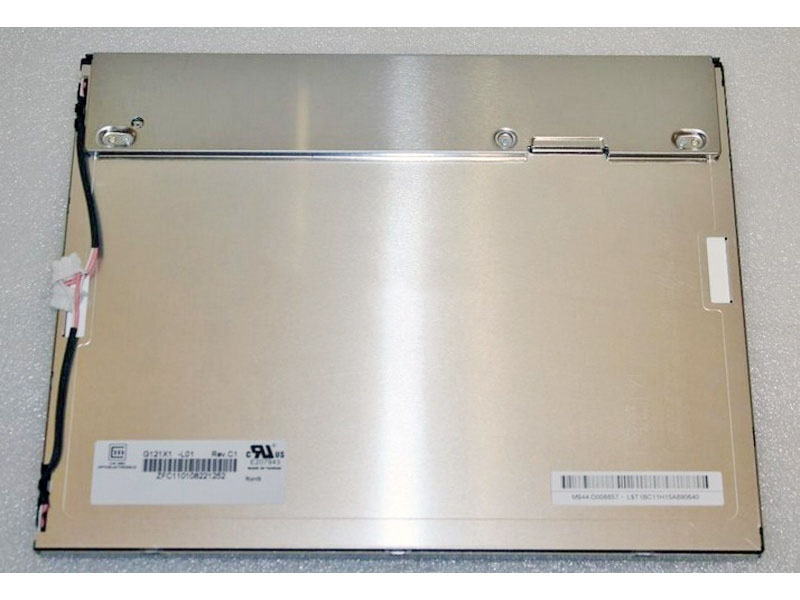
Decoding the G121X1-L01: Core Architecture and Specifications
The G121X1-L01 is built upon a foundation of a-Si (amorphous Silicon) TFT LCD technology, a mature and highly reliable process. Its 12.1-inch diagonal active area provides a viewable image with a resolution of 800 x 600 pixels (SVGA), offering a balanced blend of sufficient detail and lower system processing requirements compared to higher-resolution panels. This native resolution is a strategic choice for many embedded systems.
A critical aspect of its architecture is the inclusion of a CCFL (Cold Cathode Fluorescent Lamp) backlight unit. While newer panels may use LED backlighting, the CCFL system in the G121X1-L01 delivers uniform brightness and a wide operating temperature range, which is crucial for stability in industrial settings. The module features an LVDS (Low-Voltage Differential Signaling) interface, the industry-standard protocol for transmitting high-speed video data with minimal noise interference over longer cable runs within a device. This combination of proven technology—a-Si TFT, CCFL, and LVDS—defines it as a workhorse module designed for long-term durability and consistent performance.
Engineered for Resilience: The Industrial-Grade Design Philosophy
The true differentiation of the G121X1-L01 lies in its design ethos, which prioritizes resilience over consumer-grade aesthetics. This panel is engineered to operate reliably under conditions that would compromise standard displays. Its specifications typically support an extended operating temperature range, often from -20°C to 70°C or similar, ensuring functionality in both freezing cold and heated industrial environments.
This ruggedness extends to mechanical robustness. The module is constructed to withstand higher levels of vibration and shock, which are common in factory automation, transportation, and heavy machinery applications. The CCFL backlight, while consuming more power than LEDs, is chosen for its stable light output across this wide temperature spectrum and its long operational life. Furthermore, the screen surface is often paired with durable cover glass or optical bonding techniques to mitigate condensation, reduce glare, and protect against physical impacts. This holistic focus on endurance makes it a component chosen for mission-critical interfaces.
Ideal Application Ecosystems: Where the G121X1-L01 Excels
The technical profile of the G121X1-L01 naturally aligns it with specific vertical markets where reliability is non-negotiable. A primary application domain is Industrial Human-Machine Interfaces (HMIs). Here, it serves as the visual conduit for controlling PLCs, monitoring assembly lines, and managing complex machinery, where 24/7 operation and clarity under bright factory lighting are paramount.
Another key sector is Medical and Healthcare Equipment. Devices such as patient monitors, diagnostic instruments, and surgical displays benefit from the panel's stable performance, consistent color representation (often a standard gamut), and ability to be reliably disinfected. The third major ecosystem is Point-of-Sale (POS) and Kiosk Systems. In retail and hospitality, these terminals require displays that can operate continuously for years without fading or failure. The G121X1-L01’s SVGA resolution is perfectly adequate for transaction interfaces and information display, providing a cost-effective and dependable solution.
Integration Considerations and Technical Synergy
Successfully integrating the G121X1-L01 into a product requires careful attention to its electrical and physical requirements. Designers must account for the power needs of both the LCD panel and the CCFL backlight inverter, which requires a high-voltage AC supply. Proper inverter selection and shielding are essential to prevent electromagnetic interference (EMI) with other sensitive components.
The LVDS interface necessitates a compatible controller board or system-on-chip (SoC) that can output an LVDS signal matching the panel's native timing and color depth. Mechanically, the module's dimensions, mounting hole patterns, and connector placement must be precisely accommodated in the product's chassis. Furthermore, considering the eventual end-of-life of CCFL technology, forward-thinking designs may also plan for future iterations with LED backlights, ensuring a potential upgrade path while maintaining form-factor compatibility.
Comparative Analysis: LED Backlighting and Modern Alternatives
While the G121X1-L01 utilizes CCFL technology, it is essential to contextualize it within the evolution towards LED backlighting. LED-backlit panels offer distinct advantages: they are thinner, lighter, consume less power, and have a longer theoretical lifespan. They also achieve higher brightness levels more efficiently and do not contain mercury, making them more environmentally friendly.
However, the choice is not merely about newer versus older. The G121X1-L01’s CCFL system offers exceptional brightness uniformity and performance stability across its specified wide temperature range, which some early-generation LED solutions struggled to match cost-effectively. For applications where the operating environment is harsh and thermally variable, or where existing designs rely on a proven, stable supply chain, the CCFL-based module remains a valid and often preferred choice. It represents a specific, optimized solution rather than an obsolete one.
Strategic Sourcing and Long-Term Value Proposition
Procuring a specialized component like the G121X1-L01 involves strategic thinking beyond unit cost. For manufacturers in the aforementioned industries, the long-term value proposition is rooted in reliability, consistency, and lifecycle management. Sourcing from a reputable supplier or directly from Innolux ensures access to genuine, high-quality modules that meet all published specifications.
Key considerations include securing a stable supply chain to support multi-year product manufacturing cycles, accessing comprehensive technical documentation, and understanding the product's lifecycle status (active, end-of-life, etc.). Investing in a display module with a proven track record in harsh environments reduces the risk of field failures, costly recalls, and brand reputation damage. Therefore, the G121X1-L01 is not just a commodity purchase; it is an investment in the foundational reliability of the end product.
FAQs: G121X1-L01 12.1-Inch TFT Screen
1. What is the primary technology of the G121X1-L01 screen?It is a 12.1-inch a-Si (amorphous Silicon) TFT LCD module with a CCFL backlight and an LVDS interface.
2. What is its native resolution?The native resolution is 800 x 600 pixels (SVGA).
3. Why does it use CCFL instead of LED backlighting?CCFL provides excellent brightness uniformity and stable performance across a very wide operating temperature range, which is critical for industrial applications.
4. What are the typical operating and storage temperature ranges?While specific specs vary, it is designed for extended ranges, typically operating from -20°C to 70°C and storing from -30°C to 80°C.
5. What is the main interface for connecting this panel?It uses an LVDS (Low-Voltage Differential Signaling) interface for robust, low-noise video transmission.
6. What are the most common applications for this display?Industrial HMIs, medical equipment, and POS/kiosk systems are its primary application areas.
7. What are the key advantages of this module?Its key advantages are industrial-grade ruggedness, reliable performance in extreme temperatures, long-term durability, and proven technology.
8. What are the main power considerations during integration?Designers must account for power for the LCD logic and, crucially, provide a compatible high-voltage inverter for the CCFL backlight.
9. Is the G121X1-L01 still a relevant choice today?Yes, for applications prioritizing wide-temperature stability, uniformity, and a proven design in harsh environments, it remains a highly relevant and optimized solution.
10. Where can I find reliable technical documentation for this module?Official datasheets and integration guides should be sourced from authorized distributors or directly from Innolux Corporation.
Conclusion
The G121X1-L01 12.1-inch TFT screen exemplifies how a specialized display component is engineered to serve as the reliable visual interface for mission-critical systems. Its value is not defined by the latest consumer trends but by its proven a-Si TFT and CCFL technology, ruggedized construction, and steadfast performance in challenging environments. For product developers in industrial, medical, and commercial sectors, this module offers a foundation of certainty.
Choosing the G121X1-L01 is a strategic decision that prioritizes long-term operational integrity over fleeting specifications. It underscores a fundamental principle in professional design: the right tool, meticulously matched to the task's demands, delivers unparalleled value. As display technologies continue to evolve, the legacy and ongoing utility of robust modules like the G121X1-L01 remind us that in many high-stakes applications, proven resilience is the ultimate innovation.





