












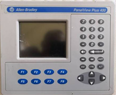
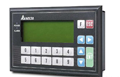

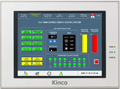
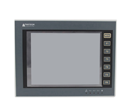




- Industrial display
-
Industrial Products
- DC Servo Drive
- AC Servo Drive
- Industrial board
- Siemens
- Switch Sensor
- Proximity Switch
- Temperature Controller
- Protection Relay
- Fiber Optic Sensor
- Encoder
- Fan
- other
- Heidelberg
- MITSUBISHI
- FANUC
- Siemens adapter
- Fujitsu connector
- Motherboard
- Board
- Contactor
- Circuit
- OMRON
- Relay
- Motor Driver
- power supply
- Cable
- Transformer
- HMI Touch Glass
-
HMI Full Machine Whole unit
- OMRON HMI Touch Panel
- Siemens HMI Touch Panel
- Mitsubishi HMI Touch Panel
- Allen-Bradley automation HMI Touch Panel
- DELTA HMI Touch Panel
- Proface HMI Touch Panel
- KINCO DELTA HMI Touch Panel
- HITECH HMI Touch Panel
- WEINTEK HMI Touch Panel
- TECVIEW HMI Touch Panel
- WEINVIEW HMI Touch Panel
- PANASONIC HMI Touch Panel
- KYOCERA HMI Touch Panel
- SCHNEIDER HMI Touch Panel
- Module
- lcd inverter
- Membrane Keypad Switch
- Zhiyan Customized Touch Screens
- Frequency Inverter
- Servo Motor
- PLC
In the intricate ecosystem of electronic components, the display screen often serves as the critical interface between user and device. For engineers, procurement specialists, and product developers, selecting the right display module is a decision that impacts performance, reliability, and ultimately, market success. This article delves deep into the G121UAN01.0, a 12.1-inch LCD display panel manufactured by AUO (AU Optronics), a global leader in display technology.
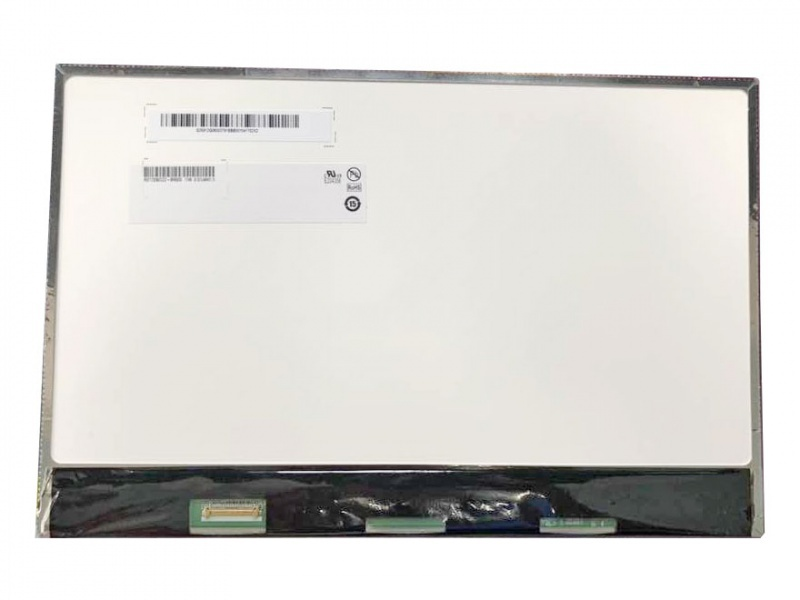
We will move beyond basic datasheet specifications to explore the nuanced characteristics and strategic applications of this specific model. Our analysis will cover its core technological advantages, from its viewing performance and power profile to its mechanical and electrical integration requirements. The goal is to provide a comprehensive resource that empowers you to evaluate whether the G121UAN01.0 is the optimal visual solution for your next industrial, medical, or commercial project, ensuring your design is built on a foundation of clarity and durability.
Decoding the G121UAN01.0: Core Specifications and Technology
The AUO G121UAN01.0 is a 12.1-inch diagonal TFT-LCD module featuring an a-Si (amorphous Silicon) process panel. Its native resolution is 1024 x 768 pixels (XGA), offering a 4:3 aspect ratio that remains highly relevant for a multitude of industrial and professional applications where vertical screen space is valuable. The display utilizes a standard CCFL (Cold Cathode Fluorescent Lamp) backlighting system, known for its uniform brightness and mature, reliable technology.
Key performance metrics include a brightness of typically 450 nits, ensuring good visibility in various lighting conditions, and a contrast ratio of 700:1 for solid image depth. The interface is a single-channel LVDS (Low-Voltage Differential Signaling), a robust and widely adopted standard for transmitting high-speed video data with minimal noise interference. Understanding these foundational specs is crucial as they set the stage for the panel's operational envelope and compatibility requirements.

Visual Performance and User Experience Analysis
Beyond numbers, the true test of a display lies in the quality of the visual experience it delivers. The G121UAN01.0 provides a wide viewing angle of 170 degrees horizontally and vertically (CR>10), which is essential for applications where multiple operators may view the screen from different positions, such as in control rooms or medical carts. The color gamut covers approximately 62% of the NTSC standard, delivering accurate and consistent color reproduction suitable for diagnostic and monitoring equipment.
The XGA resolution on a 12.1-inch screen results in a pixel pitch of approximately 0.24mm, yielding sharp text and detailed graphics. This makes it ideal for displaying complex data interfaces, schematics, or patient information without eye strain. The robust CCFL backlight contributes to stable white uniformity and a consistent color temperature across the entire panel surface, a critical factor in prolonged-use scenarios.
Power, Durability, and Environmental Robustness
For embedded and industrial applications, operational longevity and resilience are non-negotiable. The G121UAN01.0 is engineered for durability. Its typical power consumption for the panel alone is around 5.4 Watts, with the CCFL backlight system adding further load. This efficiency must be factored into overall system power design. The module is designed to operate within a wide temperature range, typically from -20°C to 70°C for storage and 0°C to 50°C for operation, allowing deployment in challenging environments.
The construction is built to withstand vibration and minor mechanical stress common in mobile or factory-floor settings. Furthermore, the panel surface can be optioned with various treatments, including anti-glare (AG) coatings to reduce reflections in brightly lit environments, and hard-coat (HC) layers to protect against scratches and abrasion during use. This focus on environmental robustness makes it a workhorse for mission-critical systems.
Typical Applications and Industry Fit
The specific combination of form factor, performance, and ruggedness directs the G121UAN01.0 toward several key vertical markets. Its most prominent applications include:
Industrial Human-Machine Interfaces (HMIs): As the primary touchpoint for factory automation, PLC control systems, and test equipment.
Medical Diagnostic Equipment: In portable ultrasound machines, patient monitors, and diagnostic carts where reliable color and clarity are paramount.
Transportation and Fleet Management: Integrated into vehicle-mounted systems for logistics, public transit, and agricultural machinery.
Point-of-Sale (POS) and Kiosk Systems: Where reliability and long operational hours in public spaces are required.
Its 4:3 format is particularly advantageous for legacy system upgrades or applications where the interface layout is optimized for a taller screen rather than a modern widescreen format.
Integration Considerations and Interface Details
Successfully integrating the G121UAN01.0 requires careful attention to its interface and physical requirements. The 40-pin single-channel LVDS connector mandates a compatible controller board or system-on-chip (SoC) that can drive this signal. Designers must ensure proper impedance matching and signal integrity in their PCB layout. Mechanically, the module's outline dimensions, bezel size, and mounting hole positions must be precisely adhered to in the product enclosure design.
The CCFL backlight requires an inverter circuit to provide the high-voltage AC power needed for illumination. This adds a component to the bill of materials and requires careful electrical isolation in the design. Understanding these integration details upfront prevents costly redesigns and ensures stable performance throughout the product's lifecycle.
Supply Chain, Sourcing, and Lifecycle Management
For production planning, understanding the component's lifecycle is as important as its technical specs. As a mature product from AUO, the G121UAN01.0 is in a stable production or "mainstream" phase, but its status should be verified with authorized distributors or directly with AUO. Sourcing from reputable suppliers is critical to avoid counterfeit or refurbished panels being sold as new.
For long-term projects, it's advisable to discuss long-term supply (LTS) agreements or identify potential alternative or successor panels (like LED-backlit versions for future eco-design regulations) early in the design process. Proactive lifecycle management mitigates the risk of sudden end-of-life (EOL) notifications derailing your manufacturing line.
Frequently Asked Questions (FAQs)
Q1: What is the exact screen size of the G121UAN01.0?A1: It features a 12.1-inch diagonal display area with an active area of 246.0mm x 184.5mm.
Q2: Is this a touch screen panel?A2: No, the G121UAN01.0 is a standard LCD module. Touch functionality (resistive or capacitive) would require an additional touch overlay to be bonded to the surface.
Q3: What is the difference between CCFL and LED backlighting in this context?A3: CCFL offers proven uniformity and wide temperature operation. LED backlights are generally thinner, more energy-efficient, and mercury-free, but may have different optical characteristics.
Q4: Can I directly replace an older CCFL panel with this one?A4: Possibly, but you must verify mechanical dimensions, mounting holes, connector type/pinout, and interface (LVDS voltage/swing) compatibility exactly.
Q5: What is the typical lifespan of this display?A5: The backlight lifetime is typically rated at 50,000 hours (to half-brightness), and the panel itself is designed for long-term reliable operation.
Q6: Does it support wide operating voltage ranges?A6: The panel logic typically operates at 3.3V, but the backlight inverter requires a separate input (often 12V or 24V). Always consult the datasheet.
Q7: Is this panel suitable for outdoor use?A7: Not directly. While it has a wide temperature range, it lacks high-brightness (1000+ nits) and sunlight-readable enhancements typically needed for outdoor use.
Q8: Where can I find the detailed datasheet?A8: Official datasheets should be sourced from AUO's official website or through their authorized distribution partners.
Q9: Are there compatible driver boards available?A9: Yes, many third-party manufacturers offer LVDS controller boards compatible with this panel's resolution and interface. Ensure compatibility before purchase.
Q10: What is the lead time for this component?A10: Lead times vary by distributor and stock levels. For volume orders, contact distributors or AUO directly for the most accurate planning information.
Conclusion
The AUO G121UAN01.0 12.1-inch LCD display stands as a testament to reliable, performance-driven display technology tailored for demanding professional environments. Its strengths lie in its robust XGA visual performance, wide viewing angles, and proven durability under a range of environmental conditions. While its CCFL backlight and 4:3 format mark it as a solution rooted in a mature technological phase, these very characteristics make it an ideal and often irreplaceable component for upgrading or maintaining a vast installed base of industrial, medical, and commercial equipment.
Selecting this panel is not merely a procurement decision but a strategic engineering choice. It demands careful consideration of integration parameters, power design, and long-term supply chain strategy. For projects where reliability, clarity, and proven performance outweigh the latest ultra-thin or ultra-high-resolution trends, the G121UAN01.0 remains a compelling and trustworthy foundation for your product's human-machine interface.





