


















- Industrial display
-
Industrial Products
- DC Servo Drive
- AC Servo Drive
- Industrial board
- Siemens
- Switch Sensor
- Proximity Switch
- Temperature Controller
- Protection Relay
- Fiber Optic Sensor
- Encoder
- Fan
- other
- Heidelberg
- MITSUBISHI
- FANUC
- Siemens adapter
- Fujitsu connector
- Motherboard
- Board
- Contactor
- Circuit
- OMRON
- Relay
- Motor Driver
- power supply
- Cable
- Transformer
- HMI Touch Glass
-
HMI Full Machine Whole unit
- OMRON HMI Touch Panel
- Siemens HMI Touch Panel
- Mitsubishi HMI Touch Panel
- Allen-Bradley automation HMI Touch Panel
- DELTA HMI Touch Panel
- Proface HMI Touch Panel
- KINCO DELTA HMI Touch Panel
- HITECH HMI Touch Panel
- WEINTEK HMI Touch Panel
- TECVIEW HMI Touch Panel
- WEINVIEW HMI Touch Panel
- PANASONIC HMI Touch Panel
- KYOCERA HMI Touch Panel
- SCHNEIDER HMI Touch Panel
- Module
- lcd inverter
- Membrane Keypad Switch
- Zhiyan Customized Touch Screens
- Frequency Inverter
- Servo Motor
- PLC
In the intricate world of electronic components, the display panel serves as the critical interface between user and device, defining the visual experience. Among the myriad of options available to engineers and procurement specialists, the G121STN02.1 emerges as a notable and specialized solution. This 12.1-inch LCD panel, manufactured by AU Optronics (AUO), represents a specific convergence of size, technology, and application-focused design. It is not merely a generic screen but a tailored component built to meet precise industrial and commercial requirements.
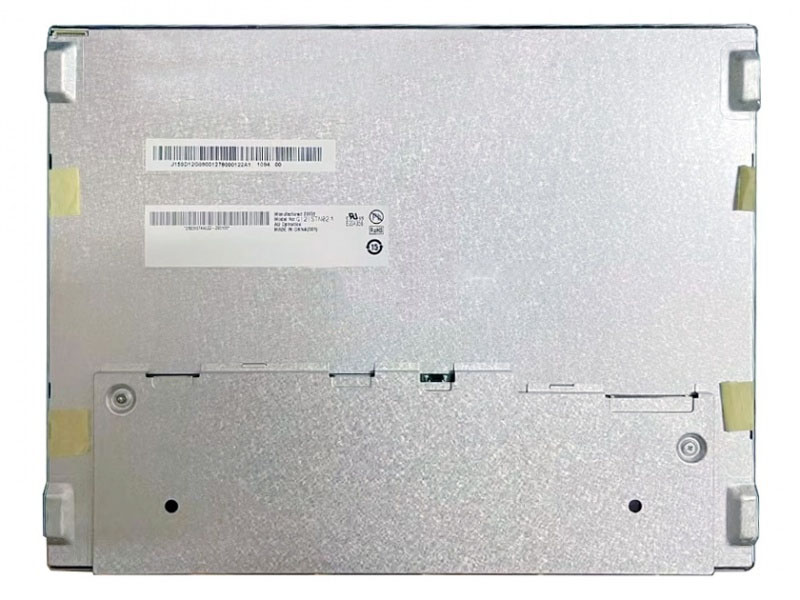
This article delves into a comprehensive technical and application analysis of the AUO G121STN02.1 display module. We will move beyond basic datasheet parameters to explore its underlying Twisted Nematic (TN) technology, dissect its key performance characteristics, and contextualize its ideal use cases. Furthermore, we will examine its integration considerations, compare it with alternative panel types, and discuss its role in the broader supply chain. Our goal is to provide OEMs, product developers, and technical buyers with the depth of insight needed to make informed decisions regarding this specific display component.

Understanding the G121STN02.1: Core Specifications and TN Technology
The AUO G121STN02.1 is a 12.1-inch diagonal LCD panel with a native resolution of 800 x 600 pixels (SVGA). This 4:3 aspect ratio is a hallmark of panels designed for legacy-compatible or specific industrial applications where square screen real estate is preferred. The module utilizes a Twisted Nematic (TN) liquid crystal mode, one of the most established and cost-effective LCD technologies. TN panels operate by controlling the alignment of rod-shaped liquid crystal molecules through an applied voltage to modulate light.
Key specifications include a brightness level typically around 300 nits, a contrast ratio in the region of 500:1, and a wide operating temperature range, crucial for non-climate-controlled environments. The interface is typically LVDS (Low-Voltage Differential Signaling), ensuring reliable signal transmission with reduced noise. Understanding these foundational specs is essential, as they directly dictate the panel's performance envelope. The choice of TN technology here is strategic, prioritizing fast response times, proven reliability, and economic viability over the superior viewing angles and color reproduction of IPS panels.
Performance Analysis: Strengths and Operational Parameters
The performance profile of the G121STN02.1 is defined by its technological lineage and design intent. Its primary strength lies in its fast response time, often in the range of 10-25ms, which minimizes motion blur—a critical factor for displaying dynamic data or basic graphical user interfaces without smearing. This makes it suitable for applications involving scrolling text or simple animations.
However, the TN structure inherently imposes limitations on viewing angles, particularly in the vertical direction. Color and contrast can shift significantly when viewed off-center. Its color gamut covers a standard range, adequate for most industrial readouts but not for high-fidelity color work. The panel's power consumption is relatively modest, aligning with its role in potentially power-sensitive embedded systems. Engineers must evaluate these parameters—response time versus viewing angle, color depth versus cost—against their specific project requirements to determine suitability.
Target Applications and Industry Use Cases
The G121STN02.1 is not designed for consumer televisions or premium laptops. Its specifications target a distinct realm of embedded systems and industrial equipment. Common application areas include:
Industrial Human-Machine Interfaces (HMIs): Control panels for factory automation, machinery, and process monitoring systems.
Point-of-Sale (POS) Terminals: Retail and hospitality systems where reliability and long operational hours are key.
Medical Devices: Diagnostic equipment and monitoring devices where the 4:3 format may suit data display layouts.
Transportation and Fleet Management: In-vehicle displays for logistics, public transit, or agricultural vehicles.
Test and Measurement Equipment: Oscilloscopes, spectrum analyzers, and other bench-top instruments.
In these environments, factors like longevity, stable operation across temperature variances, and cost-effectiveness often outweigh the need for ultra-wide viewing angles.
Integration Considerations and Interface Protocol
Successfully integrating the G121STN02.1 into an end-product requires careful attention to electrical, mechanical, and signal compatibility. The LVDS interface is a standard yet critical element; designers must ensure their controller board outputs a compatible LVDS signal with the correct pin mapping and voltage levels. The timing requirements (vertical/horizontal sync, clock) must match the panel's native mode to avoid display artifacts.
Mechanically, the panel's dimensions, bezel size, and mounting hole positions must align with the product enclosure. Furthermore, integration involves sourcing or designing a compatible backlight inverter (for CCFL backlight versions) or LED driver board, as the panel itself requires an external power source for its illumination system. Thermal management should also be considered to ensure the panel operates within its specified temperature range for optimal lifespan and performance.
Comparative Landscape: TN vs. IPS and Alternative Sizes
Placing the G121STN02.1 in context necessitates comparison with its technological cousin, the In-Plane Switching (IPS) panel. For similar sizes, an IPS panel would offer vastly superior viewing angles and better color consistency but at a higher cost and with slightly slower response times. The choice is fundamentally application-driven: an interactive kiosk viewed from multiple angles may need IPS, while a fixed-angle control panel does not.
Similarly, the 12.1-inch, 4:3 format is a specific niche. The market has largely shifted toward widescreen formats (16:9, 16:10) for multimedia and modern software. Therefore, selecting this panel often indicates support for legacy software designed for square screens, or a design requirement for vertical space in a compact housing. Understanding these trade-offs is vital for making a future-proof component selection.
Supply Chain and Sourcing Strategies
As a mature product from a major manufacturer like AUO, the G121STN02.1 is typically available through a network of authorized distributors and specialized display module suppliers. However, given its classification as a potentially end-of-life or long-lifecycle industrial component, sourcing requires strategy. Buyers should verify current production status with suppliers and consider minimum order quantities.
For long-term projects, securing a lifetime buy or identifying second-source compatible panels from other manufacturers (with careful re-validation) are common risk-mitigation practices. Engaging with suppliers who provide full technical support, including compatible controller boards and cabling, can significantly reduce development time and integration risks for OEM teams.
Frequently Asked Questions (FAQs)
Q1: What is the primary technology used in the G121STN02.1 panel?A1: It uses Twisted Nematic (TN) LCD technology, known for fast response times and cost-effectiveness.
Q2: What is the screen resolution and aspect ratio?A2: The resolution is 800 x 600 pixels (SVGA) with a 4:3 aspect ratio.
Q3: What are the main advantages of this panel?A3: Key advantages include fast response time, wide operating temperature range, proven reliability, and a lower cost compared to IPS alternatives.
Q4: What are its main limitations?A4: The main limitations are narrow viewing angles, especially vertically, and a more limited color gamut compared to IPS or VA panels.
Q5: What is the most common interface for this module?A5: It typically uses an LVDS (Low-Voltage Differential Signaling) interface for robust data transmission.
Q6: Is this panel suitable for outdoor use?A6: With a standard brightness of ~300 nits, it is not ideal for direct sunlight. For outdoor use, a high-brightness version (500+ nits) and proper environmental sealing would be required.
Q7: What industries commonly use this display?A7: It's common in Industrial HMIs, POS systems, medical devices, transportation, and test/measurement equipment.
Q8: Can I replace it with an IPS panel easily?A8: Not directly. While sizes may match, the interface protocol, power requirements for the backlight, and timing may differ, requiring significant design changes.
Q9: How do I power the backlight?A9: It requires an external inverter for CCFL backlights or an LED driver circuit for LED-backlit versions, which must be sourced separately.
Q10: Where can I source this panel?A10: Through authorized electronic component distributors, specialized display module suppliers, or directly from AUO's sales channels.
Conclusion
The AUO G121STN02.1 12.1-inch LCD panel stands as a specialized tool in the display engineer's arsenal. It is a component defined not by cutting-edge consumer specs, but by its focused suitability for demanding embedded and industrial environments. Its value proposition is clear: deliver reliable, fast-response visual performance in a robust and cost-effective package, perfectly aligned with the needs of HMIs, POS systems, and specialized instrumentation.
Selecting this panel is a deliberate decision that balances technical requirements with practical business considerations like cost, longevity, and supply chain stability. For projects where wide viewing angles are not critical, but durability, response time, and a 4:3 format are, the G121STN02.1 remains a compelling and rational choice. Ultimately, understanding its detailed characteristics and ideal application context, as outlined in this analysis, empowers developers to leverage its strengths effectively within their product designs.





