









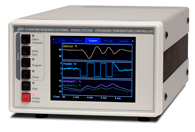

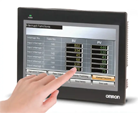
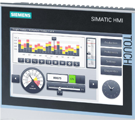





- Industrial display
-
Industrial Products
- DC Servo Drive
- AC Servo Drive
- Industrial board
- Siemens
- Switch Sensor
- Proximity Switch
- Temperature Controller
- Protection Relay
- Fiber Optic Sensor
- Encoder
- Fan
- other
- Heidelberg
- MITSUBISHI
- FANUC
- Siemens adapter
- Fujitsu connector
- Motherboard
- Board
- Contactor
- Circuit
- OMRON
- Relay
- Motor Driver
- power supply
- Cable
- Transformer
- HMI Touch Glass
-
HMI Full Machine Whole unit
- OMRON HMI Touch Panel
- Siemens HMI Touch Panel
- Mitsubishi HMI Touch Panel
- Allen-Bradley automation HMI Touch Panel
- DELTA HMI Touch Panel
- Proface HMI Touch Panel
- KINCO DELTA HMI Touch Panel
- HITECH HMI Touch Panel
- WEINTEK HMI Touch Panel
- TECVIEW HMI Touch Panel
- WEINVIEW HMI Touch Panel
- PANASONIC HMI Touch Panel
- KYOCERA HMI Touch Panel
- SCHNEIDER HMI Touch Panel
- Module
- lcd inverter
- Membrane Keypad Switch
- Zhiyan Customized Touch Screens
- Frequency Inverter
- Servo Motor
- PLC
In the demanding world of industrial automation, medical equipment, and transportation systems, the display is far more than an output device—it is a critical interface for control, monitoring, and decision-making. The introduction of the G121STN01.0 12.1-inch 60Hz industrial LED display represents a significant advancement in this specialized field. This panel is engineered not for consumer entertainment, but for environments where reliability, clarity, and longevity are non-negotiable.
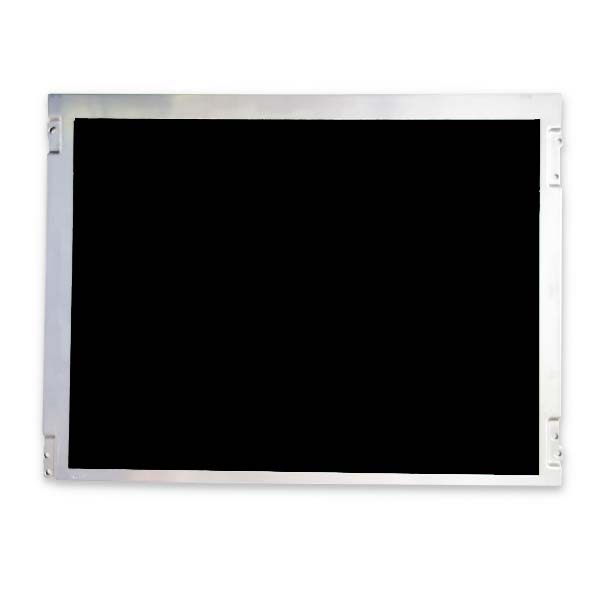
This article provides a comprehensive analysis of the G121STN01.0, moving beyond basic specifications to explore its architectural advantages and practical applications. We will dissect its core technology, superior durability features, and the specific industrial scenarios where it delivers maximum value. For engineers, system integrators, and procurement specialists, understanding the nuanced capabilities of this display is key to building robust and future-proof human-machine interfaces.
Core Technology and Optical Performance
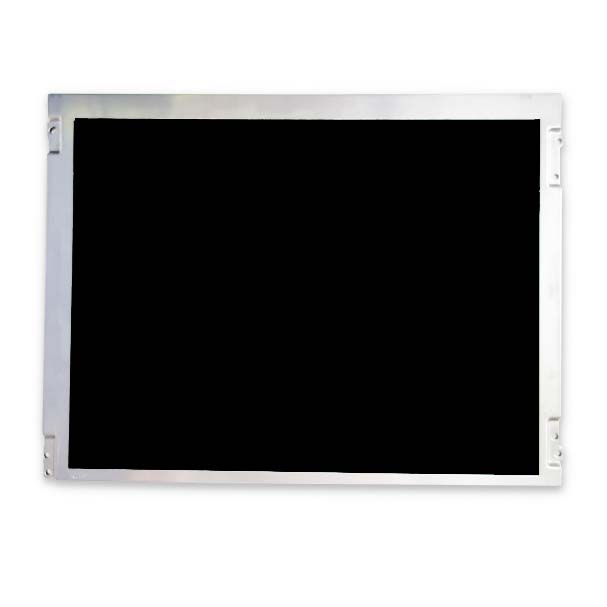
At the heart of the G121STN01.0 is a Twisted Nematic (TN) panel with LED backlighting, engineered for industrial-grade performance. The 12.1-inch diagonal size offers a balanced viewable area for control panels and diagnostic equipment. With a standard resolution of 800 x 600 (SVGA), it provides sharp, legible pixel density for displaying complex schematics, textual data, and graphical user interfaces without unnecessary processing overhead.
The 60Hz refresh rate ensures smooth updates of dynamic content, crucial for real-time monitoring applications. The panel's optical characteristics—including its brightness, contrast ratio, and color gamut—are calibrated for consistent performance under various ambient lighting conditions, from dim control rooms to brightly lit factory floors. The LED backlight offers not only energy efficiency but also a more uniform illumination and a longer lifespan compared to older CCFL technology, forming a reliable foundation for continuous operation.
Ruggedized Design for Harsh Environments
What truly distinguishes an industrial display from a commercial one is its resilience. The G121STN01.0 is built to withstand the rigors of non-climate-controlled environments. It typically features an extended operating temperature range, often from -20°C to 70°C or wider, ensuring functionality in freezing cold storage or near hot machinery. Its construction is designed to resist vibrations and minor shocks, a common occurrence in manufacturing and vehicular applications.
Furthermore, the panel often incorporates enhanced humidity resistance and protection against dust ingress. The front surface is frequently bonded with a ruggedized glass or hard coating to prevent scratches and chemical damage from cleaning agents or accidental spills. This ruggedized design philosophy ensures that the display remains the most durable component in the system, minimizing downtime and maintenance costs.
Interface and Signal Integrity
Seamless integration into existing and new systems is paramount. The G121STN01.0 commonly supports a range of legacy and modern video interfaces, most notably LVDS (Low-Voltage Differential Signaling). LVDS is the industry standard for robust, noise-resistant data transmission over longer cables within a chassis, making it ideal for industrial control cabinets.
The integrity of the signal is protected against electromagnetic interference (EMI), which is abundant in industrial settings filled with motors, relays, and power supplies. This focus on clean signal transmission prevents screen flicker, ghosting, or data corruption, ensuring that the operational data presented to the user is accurate and stable. The compatibility with standard controller boards simplifies the design-in process for OEMs.
Longevity and Supply Chain Stability
In industrial and medical projects, product lifecycles span many years, even decades. The G121STN01.0 addresses this need through a commitment to long-term availability. Manufacturers of such industrial panels typically guarantee supply for extended periods, unlike the rapid refresh cycles of consumer displays. This allows OEMs to design a product without the constant risk of a critical display component becoming obsolete.
This longevity is matched by the display's own operational lifespan. The LED backlight is rated for tens of thousands of hours of operation, often with minimal luminance degradation. This reduces the total cost of ownership and the frequency of costly field replacements, providing peace of mind for mission-critical installations where access may be difficult or system uptime is paramount.
Key Application Sectors
The specific attributes of the G121STN01.0 make it the optimal choice for several high-stakes sectors. In industrial automation, it serves as the primary HMI for PLCs, CNC machines, and robotic control stations, providing clear visibility in harsh plant conditions. The medical device industry utilizes it in diagnostic equipment, patient monitors, and surgical consoles, where reliability can directly impact patient care.
Additionally, it finds a home in transportation and infrastructure, such as in-vehicle information systems for buses or trains, and control panels for utility and energy management systems. Its ruggedness and stable performance also make it suitable for specialized point-of-sale and kiosk applications in demanding outdoor or high-traffic indoor environments.
Selection and Integration Considerations
Selecting the G121STN01.0 involves more than just matching a size and resolution. Integrators must consider the complete ecosystem. This includes choosing a compatible controller board, designing for proper thermal management within the enclosure, and ensuring the mechanical mounting aligns with the panel's bezel dimensions and mounting holes.
Attention must also be paid to the customization options available, such as the removal of the front polarizer for bonding with a custom touchscreen (resistive, capacitive, or infrared) or optical bonding to reduce glare and condensation. Understanding these integration nuances upfront is critical to deploying a successful, reliable end-product that leverages the full potential of this industrial-grade display module.
FAQs
Q: What is the primary advantage of this display over a consumer monitor?A: Its ruggedized design for wide temperature ranges, vibration resistance, long-term supply guarantee, and industrial interfaces like LVDS.
Q: Is this a touchscreen display?A: The G121STN01.0 is typically a display panel only. Touch functionality (resistive/capacitive) is added as a separate component during system integration.
Q: What does "60Hz" mean in an industrial context?A: It refers to the refresh rate, ensuring smooth update of dynamic data like graphs or real-time feeds, crucial for control and monitoring.
Q: Can it operate outdoors?A> While rugged, it is not inherently waterproof or sunlight-readable. For outdoor use, it requires a protective enclosure and possibly optical bonding for high-brightness needs.
Q: What is LVDS and why is it important?A: Low-Voltage Differential Signaling is a noise-resistant video interface standard for reliable data transmission in electrically noisy industrial environments.
Q: How long is this display model expected to be in production?A: Industrial panels like this often have a lifecycle of 5-10 years or more, ensuring long-term availability for OEM products.
Q: What is the typical brightness level?A> Brightness varies, but industrial panels often range from 300 to 1000+ nits. The exact specification should be checked with the manufacturer or distributor.
Q: Is it compatible with Raspberry Pi or Arduino?A> Not directly. It requires an intermediate controller board that converts HDMI or other outputs from a SBC to the panel's LVDS signal.
Q: What are the common failure points to consider?A> With proper integration, failure is rare. Primary concerns over time can be backlight dimming or physical damage to the surface if not properly protected.
Q: Where can I buy the G121STN01.0 and find technical documents?A> It is sourced through specialized industrial display distributors or directly from panel manufacturers. Datasheets and pinout diagrams are provided by these suppliers.
Conclusion
The G121STN01.0 12.1-inch industrial LED display is a testament to engineering focused on endurance and performance under pressure. It transcends the role of a simple screen, establishing itself as a robust and reliable portal for human-machine interaction in sectors where failure is not an option. Its value lies not in flashy features, but in its predictable operation, environmental resilience, and seamless integrability into complex systems.
For professionals designing the control systems of tomorrow, selecting a component like the G121STN01.0 is a strategic decision. It represents an investment in reduced lifecycle costs, enhanced system reliability, and ultimately, the safety and efficiency of the operations it helps to manage. In the intricate ecosystem of industrial technology, this display panel stands as a fundamental building block for interfaces that are built to last.





