

















- Industrial display
-
Industrial Products
- DC Servo Drive
- AC Servo Drive
- Industrial board
- Siemens
- Switch Sensor
- Proximity Switch
- Temperature Controller
- Protection Relay
- Fiber Optic Sensor
- Encoder
- Fan
- other
- Heidelberg
- MITSUBISHI
- FANUC
- Siemens adapter
- Fujitsu connector
- Motherboard
- Board
- Contactor
- Circuit
- OMRON
- Relay
- Motor Driver
- power supply
- Cable
- Transformer
- HMI Touch Glass
-
HMI Full Machine Whole unit
- OMRON HMI Touch Panel
- Siemens HMI Touch Panel
- Mitsubishi HMI Touch Panel
- Allen-Bradley automation HMI Touch Panel
- DELTA HMI Touch Panel
- Proface HMI Touch Panel
- KINCO DELTA HMI Touch Panel
- HITECH HMI Touch Panel
- WEINTEK HMI Touch Panel
- TECVIEW HMI Touch Panel
- WEINVIEW HMI Touch Panel
- PANASONIC HMI Touch Panel
- KYOCERA HMI Touch Panel
- SCHNEIDER HMI Touch Panel
- Module
- lcd inverter
- Membrane Keypad Switch
- Zhiyan Customized Touch Screens
- Frequency Inverter
- Servo Motor
- PLC
In the demanding world of industrial automation, medical equipment, and human-machine interfaces (HMI), the display is far more than a simple output device. It is the critical touchpoint between complex systems and human operators, where reliability, clarity, and durability are non-negotiable. This article delves into the technical specifications and application significance of a specific industrial-grade component: the LCD display G121ICE-L02. This 12.1-inch screen, with its 1280x800 resolution, represents a carefully engineered solution designed to thrive where commercial panels would fail.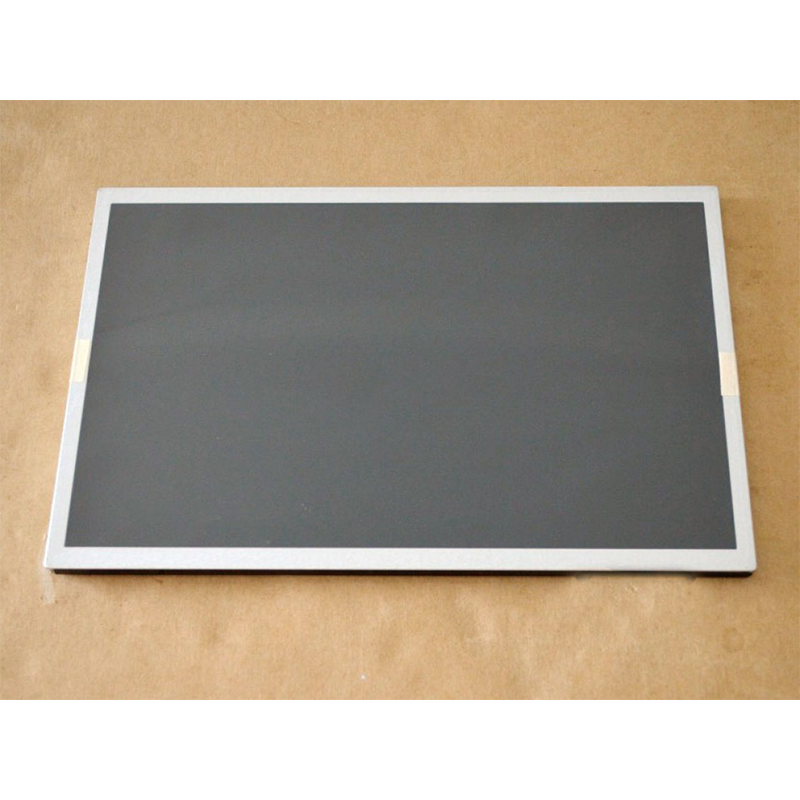
We will explore not just the basic specs on the datasheet, but the underlying engineering choices that make this display suitable for harsh environments. From its robust construction and optimal optical performance to its precise interface compatibility and thermal resilience, each feature of the G121ICE-L02 addresses a real-world industrial challenge. This deep dive aims to provide engineers, procurement specialists, and system integrators with a comprehensive understanding of how this display module can enhance the stability and longevity of their mission-critical applications.


Robust Construction for Demanding Environments
The fundamental differentiator of the G121ICE-L02 from consumer-grade screens lies in its build philosophy. Industrial environments are rife with challenges: constant vibration from machinery, potential for physical shock during transport or operation, and the pervasive ingress of dust and contaminants. This display module is constructed to withstand these rigors. It typically features a strengthened frame and secure mounting points to prevent loosening from vibration. The panel itself is bonded to the cover glass using advanced optical bonding techniques.
This bonding process fills the air gap between the LCD and the touch sensor or front glass with a clear optical resin. This not only enhances optical performance (reduced glare, better contrast) but also mechanically fortifies the display stack. It prevents internal fogging from humidity shifts and dramatically increases resistance to shock and vibration. Furthermore, the seals and gaskets used around the bezel are designed to meet specific ingress protection standards, safeguarding the internal electronics from dust and moisture, ensuring reliable operation in factories, outdoor kiosks, or medical carts.
Optical Performance and Readability Under Pressure
Beyond durability, an industrial display must deliver consistent and clear visual information under variable, often suboptimal, lighting conditions. The G121ICE-L02’s 12.1-inch diagonal with a 1280x800 (WXGA) resolution offers a balanced pixel density, providing ample screen real estate for complex HMI graphics while maintaining sharp, legible text and icons. A key metric is its high brightness, often ranging from 500 to 1000 nits or more, which allows the screen to remain clearly visible under direct sunlight or bright factory lighting.
Equally important is a wide viewing angle, supported by its IPS (In-Plane Switching) or similar advanced LCD technology. This ensures that color and contrast shift minimally when viewed from off-angles, crucial for panels mounted in positions where operators may not be directly in front of them. The combination of high brightness, wide viewing angle, and optimal contrast ratio guarantees that critical system statuses, alerts, and data are communicated effectively, reducing operator error and fatigue in high-stakes environments.
Interface Compatibility and System Integration
A display module is not an island; it must seamlessly integrate into a larger electronic ecosystem. The G121ICE-L02 is designed with this principle at its core. It commonly features a LVDS (Low-Voltage Differential Signaling) interface, the long-standing, robust, and noise-resistant standard for industrial panel connectivity. LVDS ensures stable transmission of high-speed video data over longer cable lengths within a system cabinet, immune to the electromagnetic interference prevalent in industrial settings.
Furthermore, the module includes a standardized pin definition and form factor, allowing it to be a drop-in replacement or a selected component for custom embedded systems. Integrators must also consider the power supply requirements and the compatibility of the backlight inverter or LED driver. The G121ICE-L02’s design typically accounts for straightforward power sequencing and control, enabling smooth integration with single-board computers (SBCs), industrial PCs, and custom controller boards, streamlining the development and assembly process.
Thermal Management and Operational Longevity
Industrial and medical equipment often operate 24/7, generating significant heat and experiencing wide ambient temperature swings. The reliability of an LCD is heavily dependent on its operating temperature range. The G121ICE-L02 is engineered for an extended temperature range, often from -20°C or -30°C up to 70°C or higher. This is achieved through the selection of industrial-grade liquid crystals, polarizers, and LED backlight components that do not degrade or exhibit slow response times at temperature extremes.
Effective thermal management is built into the module's design. The use of LED backlighting not only provides bright, uniform illumination but also generates less heat and offers a longer lifespan than older CCFL technology. The metal chassis acts as a heat sink, dissipating heat away from the LCD matrix. This rigorous attention to thermal performance ensures that the display maintains consistent brightness, color, and response time over its entire specified lifespan, which is crucial for applications where downtime for display replacement is costly and unacceptable.
Application-Specific Customization and Adaptability
The "G121ICE-L02" serves as a platform that can be tailored to meet niche requirements. While the core LCD module is standardized, system integrators often work with manufacturers to implement application-specific modifications. A common customization is the integration of a resistive or projected capacitive (PCAP) touchscreen. For medical or food-grade environments, this might involve a glove-compatible or chemically resistant overlay. In outdoor applications, an anti-reflective or anti-glare coating with a ruggedized surface treatment becomes essential.
Other adaptations may include the addition of a fully sealed front surface for easy cleaning and disinfection in medical settings, or the implementation of an optically bonded solution for superior performance in high-vibration transportation or aviation contexts. The ability to customize the front polarizer for enhanced sunlight readability or to specify a particular mounting bracket makes this display module a versatile building block for a vast array of specialized industrial and commercial solutions.
Lifecycle and Supply Chain Considerations
In consumer electronics, components may have a lifecycle of just 12-18 months. For industrial OEMs building products with multi-year development and field service lives, this is untenable. The G121ICE-L02 is typically characterized by a long-term product lifecycle and stable supply chain. Manufacturers of such industrial panels commit to producing the same model for many years, sometimes a decade or more, to support their clients' long-term product roadmaps and spare part requirements.
This stability is a critical, often overlooked, feature. It allows OEMs to design a product once, secure in the knowledge that the core display component will remain available for production runs and future service needs without costly and time-consuming redesigns. When evaluating a display like the G121ICE-L02, understanding the manufacturer's commitment to longevity, along with their technical support and documentation, is as important as evaluating the electrical and mechanical specs. It is an investment in long-term system viability.
FAQs
Q1: What is the primary application of the G121ICE-L02 display?A1: It is designed for industrial, medical, and HMI applications requiring durability, wide temperature operation, and high reliability.
Q2: What does the resolution 1280x800 (WXGA) offer?A2: It provides a 16:10 aspect ratio, offering more vertical space than standard HD, ideal for displaying complex control panels and data.
Q3: Why is LVDS interface important for this screen?A3: LVDS ensures robust, noise-resistant data transmission over distance, crucial for stability in electrically noisy industrial environments.
Q4: Can this display operate in extreme temperatures?A4: Yes, it is typically rated for an extended temperature range (e.g., -30°C to 80°C), using industrial-grade components.
Q5: What is optical bonding and why is it used?A5: It fills the air gap between layers with resin, enhancing durability, reducing glare, and preventing internal condensation.
Q6: Is the G121ICE-L02 compatible with touchscreens?A6: Yes, it is commonly paired with resistive or PCAP touch panels, often with options for customization like glove-touch.
Q7: How does its brightness compare to consumer monitors?A7: It is significantly brighter (often 500-1000+ nits) to ensure readability under direct sunlight or bright ambient light.
Q8: What is the advantage of LED backlighting in this module?A8: LEDs offer longer lifespan, lower power consumption, better dimming control, and less heat than older CCFL technology.
Q9: Is this display suitable for 24/7 continuous operation?A9: Absolutely. Its design, thermal management, and component selection are specifically engineered for continuous, reliable operation.
Q10: What does "long-term lifecycle" mean for an industrial display?A10: It guarantees the product will be manufactured and available for many years, protecting OEMs from sudden obsolescence.
Conclusion
The LCD display G121ICE-L02 exemplifies the engineering rigor applied to components destined for critical roles. It transcends being merely a "12.1-inch screen" to become a robust subsystem integral to system reliability. Its value is defined by the synergy of its rugged construction, superior optical performance in challenging conditions, stable LVDS interface, and resilience across a wide thermal spectrum.
For system designers and integrators, selecting such a display is a strategic decision that impacts product longevity, user safety, and total cost of ownership. By understanding the depth of features and considerations outlined—from application-specific customization to supply chain stability—professionals can make informed choices that ensure their HMI solutions are not just functional, but fundamentally dependable. In the industrial realm, where failure is not an option, the right display is a cornerstone of success.





