





















- Industrial display
-
Industrial Products
- DC Servo Drive
- AC Servo Drive
- Industrial board
- Siemens
- Switch Sensor
- Proximity Switch
- Temperature Controller
- Protection Relay
- Fiber Optic Sensor
- Encoder
- Fan
- other
- Heidelberg
- MITSUBISHI
- FANUC
- Siemens adapter
- Fujitsu connector
- Motherboard
- Board
- Contactor
- Circuit
- OMRON
- Relay
- Motor Driver
- power supply
- Cable
- Transformer
- HMI Touch Glass
-
HMI Full Machine Whole unit
- OMRON HMI Touch Panel
- Siemens HMI Touch Panel
- Mitsubishi HMI Touch Panel
- Allen-Bradley automation HMI Touch Panel
- DELTA HMI Touch Panel
- Proface HMI Touch Panel
- KINCO DELTA HMI Touch Panel
- HITECH HMI Touch Panel
- WEINTEK HMI Touch Panel
- TECVIEW HMI Touch Panel
- WEINVIEW HMI Touch Panel
- PANASONIC HMI Touch Panel
- KYOCERA HMI Touch Panel
- SCHNEIDER HMI Touch Panel
- Module
- lcd inverter
- Membrane Keypad Switch
- Zhiyan Customized Touch Screens
- Frequency Inverter
- Servo Motor
- PLC
In the intricate world of electronic components, where performance and reliability are paramount, the choice of a display module can define the entire user experience of a device. This article delves into the specifics of the G121EAT01.0, a 12.1-inch TFT LCD screen manufactured by AU Optronics (AUO), a global leader in display technology. This particular model is not merely a generic panel; it represents a carefully engineered solution designed for applications demanding clarity, durability, and precise color reproduction.
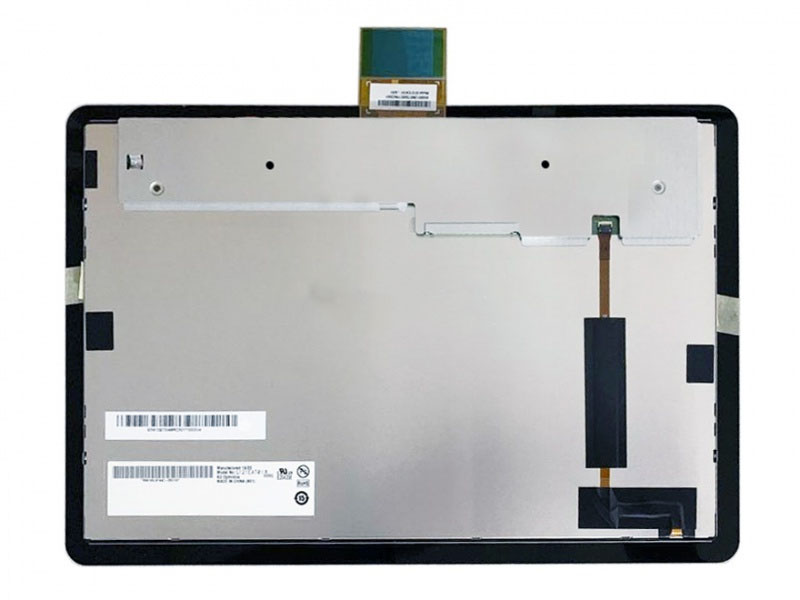
Our exploration will move beyond basic specifications to uncover the technical nuances, application landscapes, and integration considerations that make the G121EAT01.0 a significant component in industrial, medical, and specialized commercial fields. We will analyze its optical performance, mechanical and electrical interfaces, and the critical factors that engineers and procurement specialists must evaluate. By providing a comprehensive and in-depth examination, this article aims to serve as a definitive resource for anyone looking to understand, select, or implement this specific AUO display module in their next project.
Unpacking the Core Specifications: The G121EAT01.0 Blueprint
The AUO G121EAT01.0 is built on a 12.1-inch diagonal TFT-LCD panel with a native resolution of 800 x 600 pixels (SVGA). This 4:3 aspect ratio is a classic format, particularly valued in industrial and legacy systems where it matches the dimensions of many control interfaces and software UIs. The module utilizes a high-quality a-Si (amorphous Silicon) TFT process, ensuring stable performance and longevity.
A key feature is its wide viewing angle capability, typically achieved through AUO's proprietary technology, allowing for clear visibility from various positions—a critical requirement in multi-operator environments. The screen offers a standard brightness level, often around 300 nits or higher, making it suitable for indoor use under normal to bright lighting conditions. Furthermore, it supports a standard color gamut, rendering colors accurately for diagnostic or monitoring purposes. Understanding this blueprint is the first step in recognizing where this panel fits within the broader ecosystem of display solutions.
Optical Performance and User Experience
The true value of a display is measured by what the user sees. The optical performance of the G121EAT01.0 is engineered for clarity and consistency. Its contrast ratio ensures that text and graphics appear sharp, reducing eye strain during prolonged use. The panel's surface treatment, often including an anti-glare layer, mitigates reflections from ambient light, which is a common challenge in factory floors or medical settings.
Color performance, while not aimed at cinematic ranges, is consistent and reliable, which is more important than vibrancy in many of its target applications. For instance, in medical imaging auxiliary displays or process control monitors, accurate representation of grayscale and consistent color temperature are vital. The backlight system, usually employing LED technology, provides uniform illumination across the entire screen area, eliminating dark spots or uneven brightness that could lead to misinterpretation of data.
Mechanical Design and Interface Integration
Integration is where specifications meet reality. The G121EAT01.0 comes as a complete module, including the LCD panel, driver circuitry, backlight unit, and a sturdy metal frame. This frame not only provides structural integrity but also offers standardized mounting points, simplifying the mechanical design of the host device. The module's thickness, weight, and bezel dimensions are critical factors for designers working with space constraints.
On the electrical side, the module typically features an LVDS (Low-Voltage Differential Signaling) interface. LVDS is a mature, robust, and noise-resistant standard for transmitting high-speed video data, making it ideal for environments with electromagnetic interference. The pinout configuration, power requirements (often 3.3V or 5V for logic and a higher voltage for the backlight), and signal timing are all detailed in the datasheet, forming the essential guide for hardware engineers to design the matching controller board or interface cable.
Target Applications and Industry Fit
The characteristics of the G121EAT01.0 make it a specialist rather than a generalist. Its primary domain is the industrial automation sector, where it serves as the face of Human-Machine Interfaces (HMIs) for PLCs, control panels for manufacturing equipment, and monitoring stations. The 4:3 format is often perfect for these data-intensive, form-driven interfaces.
Another significant field is medical equipment, particularly in patient monitoring systems, diagnostic devices, and laboratory instruments. Here, reliability and long-term availability are as crucial as optical performance. Additionally, this panel finds use in point-of-sale systems, transportation information displays, and specialized instrumentation. Its value lies in its ability to perform consistently 24/7 in controlled, yet demanding, environments.
Critical Considerations for Sourcing and Compatibility
Procuring a display module like the G121EAT01.0 involves more than finding a supplier. One must verify the exact version and revision, as AUO may release updates that affect compatibility. The availability of a fully compatible controller board (or TCON) is paramount; using an unmatched controller can lead to no display, image artifacts, or permanent damage.
Long-term supply is a major concern for industrial product lifecycles. It's essential to partner with distributors who understand the lifecycle of such components and can guarantee supply or suggest validated alternatives. Furthermore, environmental specifications—operating temperature range, storage temperature, and humidity tolerance—must be cross-checked against the end product's requirements to ensure field reliability.
Maintenance, Longevity, and Ecosystem
The end of the integration phase is the beginning of the product's operational life. The G121EAT01.0, like most industrial-grade panels, is designed for a long service life, often rated for tens of thousands of hours of backlight operation. The most common point of failure is the backlight, but thanks to the module's design, it can often be replaced separately from the LCD glass itself.
Understanding the ecosystem is key for maintenance. This includes knowing sources for replacement modules, compatible cables, and controller boards. The panel's longevity is also supported by AUO's reputation for consistent manufacturing and the existence of a secondary market for such well-established models. Planning for the entire product lifecycle, including potential screen replacement years down the line, is a mark of robust system design.
FAQs: G121EAT01.0 12.1-inch TFT Screen
Q1: What is the resolution of the AUO G121EAT01.0 screen?A1: It has an SVGA resolution of 800 x 600 pixels with a 4:3 aspect ratio.
Q2: What type of interface does this display module use?A2: It typically uses an LVDS (Low-Voltage Differential Signaling) interface for video data transmission.
Q3: Is this screen suitable for outdoor use?A3: Primarily designed for indoor use. Its standard brightness may not be sufficient for direct sunlight without protective enclosures.
Q4: What are the main application areas for this panel?A4: Industrial HMIs, medical monitoring equipment, point-of-sale systems, and instrumentation.
Q5: Does it have a touch screen function?A5: The G121EAT01.0 is a display-only module. Touch functionality (resistive or capacitive) would require an additional overlay.
Q6: What is the typical operating temperature range?A6: Refer to the official datasheet, but industrial panels commonly range from -20°C to 70°C for operation.
Q7: Can I replace the backlight if it fails?A7: Yes, the LED backlight unit is often a separate, replaceable component within the module assembly.
Q8: Is a controller board included?A8: No, the module typically does not include a controller board. One must be sourced separately to generate the correct LVDS signal.
Q9: How do I ensure compatibility with my system?A9: Match the interface (LVDS pinout), voltage requirements, and mechanical dimensions precisely with the module's datasheet.
Q10: Is this model still in production by AUO?A10: This is a longstanding model. Its production status should be verified directly with AUO or authorized distributors for current lifecycle information.
Conclusion
The AUO G121EAT01.0 12.1-inch TFT screen stands as a testament to specialized, reliable display engineering. It excels not through consumer-oriented flash, but through proven performance in environments where consistency, durability, and integration ease are the true currencies. From its SVGA resolution and robust LVDS interface to its precise mechanical form factor, every aspect is tailored for embedded industrial, medical, and commercial applications.
Selecting this module is a strategic decision that impacts product design, user interaction, and long-term maintainability. By thoroughly understanding its specifications, optical behavior, integration requirements, and target ecosystem, engineers and buyers can leverage the G121EAT01.0 to build devices that are not only functional but also dependable over an extended lifespan. In a world of rapidly changing consumer displays, this panel remains a steady, high-quality workhorse for mission-critical interfaces.





