
















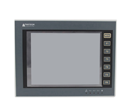
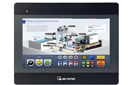
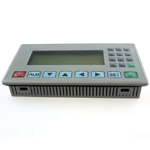
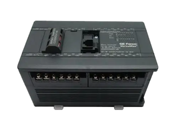





- Industrial display
-
Industrial Products
- DC Servo Drive
- AC Servo Drive
- Industrial board
- Siemens
- Switch Sensor
- Proximity Switch
- Temperature Controller
- Protection Relay
- Fiber Optic Sensor
- Encoder
- Fan
- other
- Heidelberg
- MITSUBISHI
- FANUC
- Siemens adapter
- Fujitsu connector
- Motherboard
- Board
- Contactor
- Circuit
- OMRON
- Relay
- Motor Driver
- power supply
- Cable
- Transformer
- HMI Touch Glass
-
HMI Full Machine Whole unit
- OMRON HMI Touch Panel
- Siemens HMI Touch Panel
- Mitsubishi HMI Touch Panel
- Allen-Bradley automation HMI Touch Panel
- DELTA HMI Touch Panel
- Proface HMI Touch Panel
- KINCO DELTA HMI Touch Panel
- HITECH HMI Touch Panel
- WEINTEK HMI Touch Panel
- TECVIEW HMI Touch Panel
- WEINVIEW HMI Touch Panel
- PANASONIC HMI Touch Panel
- KYOCERA HMI Touch Panel
- SCHNEIDER HMI Touch Panel
- Module
- lcd inverter
- Membrane Keypad Switch
- Zhiyan Customized Touch Screens
- Frequency Inverter
- Servo Motor
- PLC
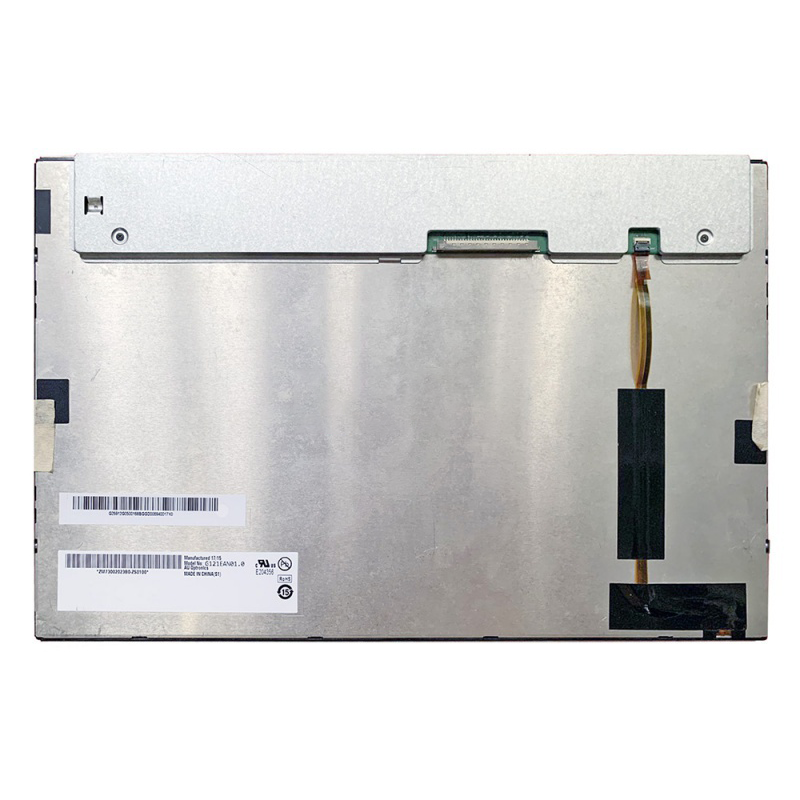
In the intricate world of display technology, where every pixel and refresh rate is scrutinized, specific component models like the G121EAN01.5 represent the critical building blocks of our visual experience. This 12.1-inch LCD panel from AUO (AU Optronics) is not merely a part number; it is a carefully engineered solution designed for integration into a range of demanding applications, from industrial human-machine interfaces (HMIs) and medical monitors to portable instrumentation and specialized embedded systems. Its specifications tell a story of balance—between size, performance, reliability, and power efficiency.
This article delves deep into the AUO G121EAN01.5 display, moving beyond basic datasheet parameters to explore its technological significance, design considerations, and practical application value. We will dissect its core features, analyze its ideal use-case environments, and provide insights for engineers, procurement specialists, and product developers tasked with selecting the right display module. Understanding the nuances of such a component is key to unlocking optimal performance and longevity in the final product.
Decoding the G121EAN01.5: Core Specifications and Technology
The AUO G121EAN01.5 is a 12.1-inch diagonal TFT-LCD module with a resolution of 800 x 600 pixels (SVGA). This 4:3 aspect ratio is a classic format, particularly valued in industrial and medical fields where legacy software compatibility and vertical screen space are important. The panel utilizes a standard a-Si (amorphous Silicon) TFT process, a mature and cost-effective technology known for its reliability and stable performance over wide temperature ranges.
A closer look reveals critical specs: it typically offers a brightness of 300 nits or higher, ensuring readability in various lighting conditions, and a contrast ratio that delivers clear image differentiation. The interface is typically LVDS (Low-Voltage Differential Signaling), a robust and noise-resistant standard for transmitting high-speed video data. Furthermore, it features a wide operating temperature range, often from -20°C to 70°C, which is a hallmark of industrial-grade components. This combination of SVGA resolution, robust interface, and environmental resilience forms the foundation of its design philosophy.
Target Applications and Market Niche
The specifications of the G121EAN01.5 directly dictate its ideal applications. Its primary domain is the industrial automation sector, where it serves as the face of PLCs, CNC machine controls, and factory floor HMIs. Here, the 4:3 aspect ratio efficiently displays control panels and data logs, while its rugged temperature tolerance ensures operation in non-climate-controlled environments.
Equally important is the medical device market, particularly for diagnostic equipment, patient monitoring systems, and portable carts. The panel's reliability, stable performance, and ability to meet stringent regulatory requirements for clarity and consistency are paramount. Other niches include test and measurement equipment, transportation systems (for onboard diagnostics), and point-of-sale terminals. It fills the need for a dependable, mid-sized display that prioritizes longevity and clarity over ultra-high resolution or consumer-grade aesthetics.
Advantages of Choosing an Industrial-Grade Panel
Selecting a display like the G121EAN01.5 over a commercial off-the-shelf monitor involves a conscious decision for long-term value. The foremost advantage is extended product lifecycle. Industrial panels are manufactured and available for many years, protecting against obsolescence for products that may be in service for a decade or more. This is in stark contrast to the rapid refresh cycles of consumer displays.
Secondly, they are built for superior reliability. Components are rated for continuous operation, with backlights designed for longer lifespans (often 50,000 hours or more). The wide temperature range prevents image lag, discoloration, or failure in extreme conditions. Finally, they offer direct integration support, with manufacturers providing detailed mechanical drawings, interface manuals, and often, customization options for bonding touch panels (like resistive or projective capacitive). This simplifies the engineering process for embedded system designers.
Integration Considerations and Technical Challenges
Successfully integrating the G121EAN01.5 into a product requires careful planning. The power supply design must be clean and stable, as noise can introduce visual artifacts on the screen. Engineers must account for the panel's power sequencing requirements to avoid latch-up or damage. The LVDS interface requires proper impedance matching on the PCB traces to ensure signal integrity and prevent ghosting.
Mechanically, the module must be securely mounted, often with metal brackets, to withstand vibration—a common requirement in industrial settings. Heat dissipation is another critical factor; while the panel itself generates heat, its performance can be degraded if the surrounding enclosure traps excessive thermal energy. Furthermore, integrating a touch overlay adds layers of complexity, involving optical bonding techniques, controller selection, and driver calibration to maintain optical clarity and responsiveness.
Comparing to Alternative Display Sizes and Technologies
Understanding the G121EAN01.5's position requires comparison. Against larger 15-inch or 17-inch panels, the 12.1-inch module offers a compact form factor and lower power consumption, crucial for portable or space-constrained devices. Compared to modern widescreen (16:9) HD panels, its 4:3 SVGA format provides less total pixel count but superior pixel density for text and line graphics, which is often more useful in data-centric applications.
In terms of technology, it differs from newer IPS (In-Plane Switching) panels which offer wider viewing angles but may come at a higher cost and potentially different temperature performance. It also stands apart from OLED displays, which offer perfect contrast but may have concerns with burn-in for static industrial graphics and currently lack the same proven long-term lifecycle in harsh environments. The G121EAN01.5 represents an optimal, proven trade-off.
Future-Proofing and Supply Chain Strategy
For businesses, procuring a critical component like this involves strategic thinking. Engaging directly with AUO or authorized distributors is essential to secure a stable supply and access technical support. It is prudent to qualify a second source or compatible alternative early in the design phase to mitigate supply chain risk, a lesson underscored by recent global disruptions.
Future-proofing the product design can involve creating a display "holder" in the design that can accommodate the G121EAN01.5 and other similar-form-factor modules with minor adjustments. This modular approach allows for flexibility if a panel is end-of-lifed or if a performance upgrade is needed later. Staying informed about AUO's product roadmap and potential successor models (e.g., G121EAN02.x series) ensures a smooth transition path when the time comes.
FAQs: AUO G121EAN01.5 Display Module
Q1: What is the resolution and aspect ratio of the G121EAN01.5?A1: It has an SVGA resolution of 800 x 600 pixels with a 4:3 aspect ratio.
Q2: What is the typical interface for this display?A2: It typically uses an LVDS (Low-Voltage Differential Signaling) interface.
Q3: Is this a good display for outdoor use?A3: With 300+ nits brightness, it is readable indoors under bright lights. For direct sunlight, a high-brightness (500+ nits) variant or special optical bonding is needed.
Q4: Can I add a touchscreen to this module?A4: Yes, it is commonly paired with resistive or projective capacitive touch panels, often through optical bonding services.
Q5: What is the operating temperature range?A5: It is designed for a wide operating temperature range, typically from -20°C to 70°C.
Q6: What are its main application areas?A6: Primary applications include industrial HMIs, medical devices, test equipment, and transportation systems.
Q7: How does it compare to consumer laptop displays?A7: It is far more robust, with a wider temperature range, longer lifecycle, and industrial reliability, but often has lower resolution than modern consumer panels.
Q8: What does the backlight lifetime mean?A8: The backlight is rated for a long lifespan (e.g., 50,000 hours), meaning its brightness halves after that duration of use under specified conditions.
Q9: Where can I buy the G121EAN01.5?A9: Through AUO's authorized distributors or specialized display module suppliers. Avoid uncertified sources for reliability.
Q10: Is this panel being phased out?A10: It is a mature product. Always check with AUO or distributors for current lifecycle status (Active, Mature, or EOL).
Conclusion
The AUO G121EAN01.5 is more than just a component; it is a testament to engineered durability and specialized application design. In a market increasingly driven by consumer-grade specs, it serves a vital role where reliability, longevity, and performance under stress are non-negotiable. Its SVGA resolution and 4:3 format, while not cutting-edge, remain perfectly suited for the data-intensive, control-oriented interfaces of industrial and medical worlds.
For product developers, choosing this panel signifies a commitment to quality and lifecycle management. Successful integration demands attention to power, signal integrity, and thermal design, but the payoff is a robust and dependable user interface. As display technologies evolve, modules like the G121EAN01.5 will continue to form the reliable backbone of critical systems, reminding us that in many sectors, proven performance and stability ultimately outweigh mere pixel count.





