










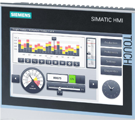





- Industrial display
-
Industrial Products
- DC Servo Drive
- AC Servo Drive
- Industrial board
- Siemens
- Switch Sensor
- Proximity Switch
- Temperature Controller
- Protection Relay
- Fiber Optic Sensor
- Encoder
- Fan
- other
- Heidelberg
- MITSUBISHI
- FANUC
- Siemens adapter
- Fujitsu connector
- Motherboard
- Board
- Contactor
- Circuit
- OMRON
- Relay
- Motor Driver
- power supply
- Cable
- Transformer
- HMI Touch Glass
-
HMI Full Machine Whole unit
- OMRON HMI Touch Panel
- Siemens HMI Touch Panel
- Mitsubishi HMI Touch Panel
- Allen-Bradley automation HMI Touch Panel
- DELTA HMI Touch Panel
- Proface HMI Touch Panel
- KINCO DELTA HMI Touch Panel
- HITECH HMI Touch Panel
- WEINTEK HMI Touch Panel
- TECVIEW HMI Touch Panel
- WEINVIEW HMI Touch Panel
- PANASONIC HMI Touch Panel
- KYOCERA HMI Touch Panel
- SCHNEIDER HMI Touch Panel
- Module
- lcd inverter
- Membrane Keypad Switch
- Zhiyan Customized Touch Screens
- Frequency Inverter
- Servo Motor
- PLC
In the intricate ecosystem of electronic displays, specific component models serve as the unsung heroes behind the performance of countless devices. One such critical component is the G121EAN01.4, a 12.1-inch LCD panel manufactured by AU Optronics (AUO). This panel is not merely a generic screen; it is a precisely engineered solution designed to meet rigorous demands for clarity, color, and reliability. Its specifications and application fit make it a subject of keen interest for engineers, procurement specialists, and product developers across industries.
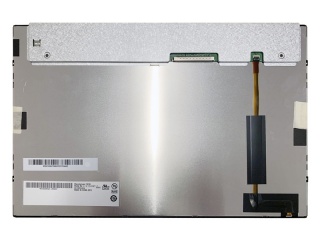
This article delves into a comprehensive analysis of the AUO G121EAN01.4 LCD panel. We will move beyond basic datasheet parameters to explore its defining technological characteristics, ideal application landscapes, and the tangible benefits it delivers. Furthermore, we will provide crucial guidance on integration, sourcing, and maintenance, culminating in a forward-looking view of its place in the evolving display market. Our goal is to transform technical specifications into actionable insights for professionals making critical component decisions.
Decoding the G121EAN01.4: Core Specifications and Technology
The AUO G121EAN01.4 is a 12.1-inch diagonal TFT-LCD module utilizing In-Plane Switching (IPS) technology. This foundational choice is pivotal, as IPS is renowned for delivering superior color consistency, wider viewing angles (typically 85/85/85/85 degrees), and better image stability compared to older TN panels. The panel boasts an HD+ resolution of 1280x800 pixels (WXGA), striking a balance between sharp detail and system processing load.
Its optical performance is characterized by a standard brightness level suitable for indoor environments and a contrast ratio that ensures deep blacks and bright whites. The interface is typically LVDS (Low-Voltage Differential Signaling), a robust and common standard for reliable data transmission in industrial and commercial applications. Understanding these core specs—IPS, WXGA, LVDS—is the first step in recognizing this panel as a module built for quality and durability rather than cost-cutting consumer entertainment.
Target Applications and Industry Use Cases
The technical profile of the G121EAN01.4 directs it towards specific, demanding markets. Its primary home is in industrial human-machine interfaces (HMIs) and medical diagnostic equipment. In factory settings, the wide viewing angles and consistent color ensure readability from various positions on a machine control panel. For medical monitors, color accuracy and reliability are non-negotiable for correct diagnosis.
Beyond these, the panel finds application in point-of-sale (POS) systems, transportation infotainment, and specialized test and measurement devices. In each case, the common threads are the need for long operational life, stable performance under continuous use, and resilience in potentially challenging environments. It is not designed for ultra-high refresh rates for gaming but for unwavering performance where downtime is costly.
Competitive Advantages and Performance Benefits
Choosing the G121EAN01.4 over alternative panels confers several distinct advantages. First, the AUO brand itself signifies a supply chain tier known for quality control and manufacturing consistency, reducing the risk of field failures. The IPS technology ensures that the displayed information remains accurate regardless of the operator's viewpoint, a critical factor in collaborative or multi-operator environments.
Secondly, its balanced resolution provides sufficient pixel density for clear text and graphics without overburdening the system's graphic controller, which can be important for embedded systems with limited processing power. Finally, the use of a standard LVDS interface simplifies design-in processes, as many controller chips and driver solutions are readily available for this ubiquitous standard, accelerating development timelines.
Integration Considerations and Technical Compatibility
Successfully integrating the G121EAN01.4 into a product requires attention to several technical details. Designers must ensure the host system's video output signal matches the panel's LVDS input requirements in terms of voltage, timing, and pin configuration. The mechanical design must account for the module's exact dimensions, bezel size, and mounting hole positions.
Power supply design is crucial; a clean, stable power source within the panel's specified voltage range is necessary to avoid noise or performance degradation. Furthermore, considering the operating environment is key. While the panel is robust, for extreme conditions, additional design measures for temperature management or physical sealing may be necessary. Consulting the official AUO datasheet and application notes is imperative at this stage.
Sourcing, Authenticity, and Supply Chain Management
Procuring a specialized industrial component like the G121EAN01.4 presents unique challenges. The primary channel is through authorized distributors or directly from AUO. However, due to product lifecycles, this specific model may transition to end-of-life (EOL) status, pushing buyers to the broader electronic component broker market.
This shift heightens the risk of encountering counterfeit, refurbished, or remarked components. Verifying authenticity through traceable lot codes, inspecting physical markings, and sourcing from reputable, audited suppliers becomes paramount. Effective supply chain management involves forecasting needs, exploring AUO's potential drop-in replacements or newer-generation panels, and qualifying secondary sources to mitigate obsolescence risks.
The Future Landscape and Obsolescence Planning
Display technology is perpetually advancing. While the G121EAN01.4 remains a workhorse, the industry trend moves toward higher resolutions, lower power consumption, and slimmer form factors. AUO and other manufacturers continually refresh their lineups. Consequently, proactive obsolescence management is a critical strategy for any product with a multi-year lifecycle.
This involves monitoring AUO's product change notifications (PCNs), engaging with suppliers for lifecycle forecasts, and beginning qualification processes for potential successor panels (like AUO's G121ETN01 series or equivalent) long before the EOL date. Designing a system with some interface and mechanical flexibility can facilitate future panel upgrades, thereby extending the overall product's market viability.
FAQs: G121EAN01.4 LCD Panel
Q1: What is the screen size and resolution of the G121EAN01.4?A1: It is a 12.1-inch diagonal panel with a resolution of 1280 x 800 pixels (WXGA).
Q2: What type of LCD technology does it use?A2: It uses IPS (In-Plane Switching) technology for wide viewing angles and good color reproduction.
Q3: What is the primary interface for this panel?A3: It typically uses an LVDS (Low-Voltage Differential Signaling) interface.
Q4: Is this panel suitable for outdoor use?A4: It is designed primarily for indoor use. Outdoor application would require careful analysis of brightness needs and potential additional protective measures.
Q5: What are the most common applications for this panel?A5: Industrial HMI, medical monitors, POS systems, and transportation displays.
Q6: How do I ensure I am buying an authentic AUO panel?A6: Source from authorized distributors or highly reputable brokers, and verify markings and documentation.
Q7: Is the G121EAN01.4 still in production?A7: Its status can change. You must check with AUO or authorized suppliers for current production and EOL status.
Q8: What should I consider for powering this module?A8: Provide a stable, clean DC power supply within the specified voltage range (e.g., 3.3V or 5V, as per datasheet) to ensure optimal performance.
Q9: Can this panel be a drop-in replacement for an older 12.1" model?A9: Not automatically. You must meticulously compare mechanical dimensions, interface pinouts, power requirements, and backlight type with the existing model.
Q10: What are potential successor models to consider?A10: Explore AUO's current 12.1-inch IPS portfolio, such as models from the G121ETN01.x or newer series, but always verify compatibility.
Conclusion
The AUO G121EAN01.4 12.1-inch LCD panel exemplifies a specialized component engineered for performance-critical applications beyond the consumer sphere. Its value proposition is rooted in the reliable IPS technology, industry-standard interface, and the manufacturing pedigree of AUO, making it a trusted choice for industrial, medical, and commercial systems where failure is not an option.
However, leveraging its full potential requires a deep understanding of its specifications, thoughtful integration, and astute supply chain management—especially in the face of inevitable technological obsolescence. By viewing this panel not just as a commodity but as a key system determinant, engineers and buyers can make informed decisions that enhance product reliability, streamline development, and secure long-term viability in a competitive marketplace.





