





















- Industrial display
-
Industrial Products
- DC Servo Drive
- AC Servo Drive
- Industrial board
- Siemens
- Switch Sensor
- Proximity Switch
- Temperature Controller
- Protection Relay
- Fiber Optic Sensor
- Encoder
- Fan
- other
- Heidelberg
- MITSUBISHI
- FANUC
- Siemens adapter
- Fujitsu connector
- Motherboard
- Board
- Contactor
- Circuit
- OMRON
- Relay
- Motor Driver
- power supply
- Cable
- Transformer
- HMI Touch Glass
-
HMI Full Machine Whole unit
- OMRON HMI Touch Panel
- Siemens HMI Touch Panel
- Mitsubishi HMI Touch Panel
- Allen-Bradley automation HMI Touch Panel
- DELTA HMI Touch Panel
- Proface HMI Touch Panel
- KINCO DELTA HMI Touch Panel
- HITECH HMI Touch Panel
- WEINTEK HMI Touch Panel
- TECVIEW HMI Touch Panel
- WEINVIEW HMI Touch Panel
- PANASONIC HMI Touch Panel
- KYOCERA HMI Touch Panel
- SCHNEIDER HMI Touch Panel
- Module
- lcd inverter
- Membrane Keypad Switch
- Zhiyan Customized Touch Screens
- Frequency Inverter
- Servo Motor
- PLC
In the intricate world of industrial and embedded electronics, the display screen is far more than a simple output window; it is the critical interface through which data is visualized, machines are controlled, and users interact with complex systems. Among the myriad of components available, the G121ACE-PH1, a 12.1-inch LCD module manufactured by Innolux, stands out as a pivotal solution for demanding applications. This article delves into a comprehensive analysis of this specific display model, moving beyond basic datasheet specifications to explore its technical DNA, application suitability, and the tangible value it brings to product design.
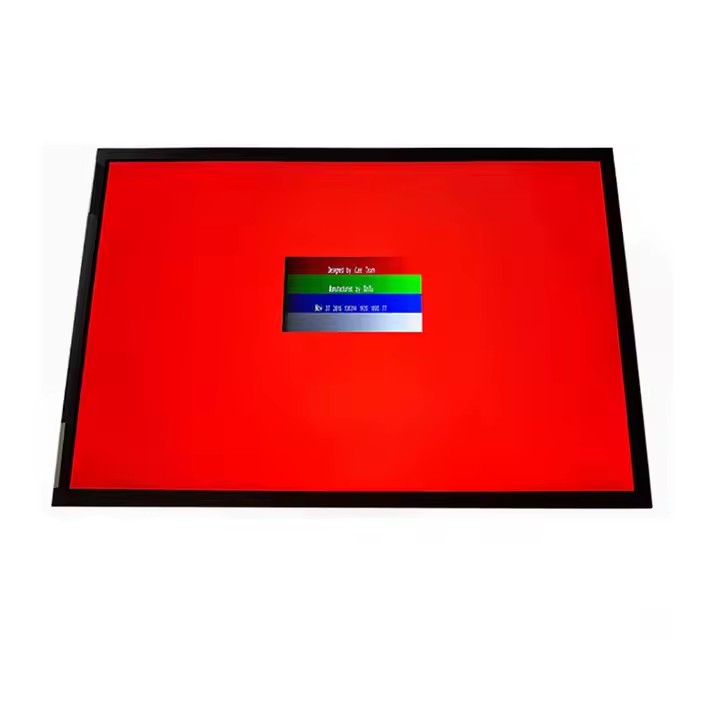
We will dissect the key features that define the G121ACE-PH1, from its panel technology and optical performance to its robust mechanical and electrical characteristics. Understanding this component in depth is essential for engineers, procurement specialists, and product managers seeking reliable, high-performance display integration for medical devices, industrial human-machine interfaces (HMIs), point-of-sale systems, and transportation equipment. This exploration aims to provide the contextual knowledge necessary to make an informed component selection that impacts product longevity, usability, and overall success.
Decoding the Core Technology: Panel Specifications and Performance
The foundation of the G121ACE-PH1's capability lies in its advanced a-Si TFT LCD (Amorphous Silicon Thin-Film Transistor Liquid Crystal Display) technology. This 12.1-inch diagonal screen offers a native resolution of 800 x 600 pixels (SVGA), a format that remains highly relevant in industrial contexts for its balance of clarity, compatibility, and cost-effectiveness. The 4:3 aspect ratio is a significant characteristic, making it ideally suited for legacy software interfaces, diagnostic equipment, and control panels where vertical screen space is as valuable as horizontal.
Optical performance is paramount. This module typically delivers a brightness level of approximately 1000 nits, ensuring exceptional readability even under direct sunlight or in brightly lit factory environments. Coupled with a high contrast ratio, this brightness guarantees sharp, well-defined images. Furthermore, the inclusion of LED backlighting not only contributes to the high luminance and wide color gamut but also ensures greater energy efficiency and longer lifespan compared to older CCFL technology, directly impacting maintenance cycles and total cost of ownership.
Robustness by Design: Mechanical and Environmental Durability
Designed to thrive outside of controlled office settings, the G121ACE-PH1 is engineered for resilience. Its construction is built to withstand the vibrations, shocks, and constant operation endemic to industrial and commercial use. A key feature contributing to this durability is the inclusion of a robust metal frame, which provides structural integrity, protects the delicate glass substrate, and facilitates secure mounting within larger enclosures.
Environmental sealing is another critical aspect. Many variants of this module are equipped to resist the ingress of dust and moisture, addressing challenges posed by factory floors, outdoor kiosks, or medical settings. The operating temperature range is suitably wide, allowing functionality in both cold and hot environments. This focus on mechanical and environmental hardening transforms the display from a commodity item into a reliable system component, minimizing downtime and ensuring consistent performance where failure is not an option.
The Interface Landscape: Connectivity and Signal Compatibility
Seamless integration into existing electronic architectures is a non-negotiable requirement. The G121ACE-PH1 commonly features a LVDS (Low-Voltage Differential Signaling) interface. LVDS has long been the industry standard for transmitting high-speed video data from a controller board to the display panel over longer distances with minimal noise interference and lower power consumption. This makes it a versatile and reliable choice for a wide array of system designs.
Understanding the pin configuration and power requirements is crucial for engineers. The module operates on a single low-voltage power supply, simplifying power management design. The standardized interface allows designers to source compatible controller boards or system-on-chip (SoC) solutions with greater ease, accelerating development timelines. This section of the design underscores the module's role as a facilitator of efficient and stable system integration.
Optical Enhancements and Customization Options
Beyond the base panel, the G121ACE-PH1 can be tailored with various optical enhancements to meet specific application needs. The most common is the application of surface treatments on the cover glass or polarizer. An anti-glare (AG) treatment diffuses ambient light, drastically reducing reflections and improving readability in high-ambient-light conditions—a necessity for outdoor or surgical lighting environments.
Conversely, an anti-reflective (AR) coating on the outer surface minimizes the percentage of light reflected, increasing contrast and optical clarity. For touch-enabled applications, the module can be seamlessly integrated with resistive or projective capacitive touchscreens, creating a complete human-machine interface unit. These customization options highlight the flexibility of the G121ACE-PH1 platform, allowing it to be optimized for everything from a fuel pump display to a sensitive medical monitor.
Strategic Applications Across Industries
The technical attributes of the G121ACE-PH1 directly map to a diverse set of demanding vertical markets. In industrial automation, its durability, sunlight readability, and 4:3 format make it perfect for HMIs on PLCs, CNC machines, and control stations. The medical device industry leverages its reliability, high brightness, and ability to support sterilization-compatible touchscreens for patient monitors and diagnostic equipment.
Furthermore, it finds a strong foothold in transportation (for in-vehicle infotainment or control systems), point-of-sale/kiosks requiring constant operation, and marine and aviation instrumentation. In each case, the module solves core challenges: enduring harsh conditions, providing clear visual feedback, and offering a dependable interface that aligns with the operational lifespan of the host equipment, often spanning a decade or more.
Integration Considerations and Sourcing Strategy
Successfully deploying the G121ACE-PH1 requires careful forethought. Engineers must account for the thermal management of the display within the end-product's enclosure, ensuring adequate heat dissipation to maintain performance and longevity. Mechanical design must include precise cutouts and secure mounting points aligned with the module's frame.
From a sourcing perspective, while Innolux is the original manufacturer, the module is typically distributed through authorized electronic component distributors or specialized display integrators. Key considerations include verifying the exact version and revision of the module, ensuring long-term availability and lifecycle support, and understanding the lead times. For high-volume projects, engaging directly with Innolux or a premier distributor early in the design phase is critical to secure supply chain stability.
FAQs: G121ACE-PH1 12.1" LCD Display
Q1: What is the resolution of the G121ACE-PH1?A1: It has an SVGA resolution of 800 x 600 pixels.
Q2: What is the screen aspect ratio?A2: It features a 4:3 aspect ratio, common for industrial and medical applications.
Q3: How bright is this display?A3: It offers high brightness, typically around 1000 nits, for sunlight readability.
Q4: What type of interface does it use?A4: It commonly uses an LVDS (Low-Voltage Differential Signaling) interface.
Q5: Is it suitable for outdoor use?A5: Yes, its high brightness and optional anti-glare treatment make it suitable for many outdoor applications.
Q6: Can a touchscreen be added?A6: Yes, it can be integrated with resistive or projective capacitive touch panels.
Q7: What industries typically use this display?A7: Key industries include industrial automation, medical devices, transportation, and POS/kiosks.
Q8: What is the backlight technology?A8: It uses long-life, energy-efficient LED backlighting.
Q9: Why is the 4:3 aspect ratio still important?A9: It is ideal for legacy software, data-intensive vertical layouts, and many diagnostic equipment interfaces.
Q10: Where can I source this module?A10: It is available through authorized electronic component distributors and display specialists.
Conclusion
The Innolux G121ACE-PH1 12.1-inch LCD display exemplifies a component engineered for purpose, not just performance. Its value proposition extends beyond a checklist of specifications—SVGA resolution, 1000-nit brightness, LVDS interface—into the realm of reliability, durability, and integration readiness. As we have explored, its 4:3 format, robust metal frame, and environmental resilience make it a strategic choice for applications where failure carries significant operational or safety consequences.
Selecting a display like the G121ACE-PH1 is a long-term decision. It involves aligning the module's proven characteristics with the environmental, optical, and interface demands of the target application. For product developers navigating the complexities of industrial, medical, or commercial device design, understanding the depth of features and considerations surrounding this display is a crucial step toward building products that are not only functional but also dependable and enduring in the field.





