













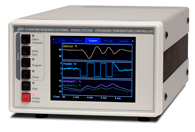


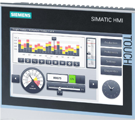





- Industrial display
-
Industrial Products
- DC Servo Drive
- AC Servo Drive
- Industrial board
- Siemens
- Switch Sensor
- Proximity Switch
- Temperature Controller
- Protection Relay
- Fiber Optic Sensor
- Encoder
- Fan
- other
- Heidelberg
- MITSUBISHI
- FANUC
- Siemens adapter
- Fujitsu connector
- Motherboard
- Board
- Contactor
- Circuit
- OMRON
- Relay
- Motor Driver
- power supply
- Cable
- Transformer
- HMI Touch Glass
-
HMI Full Machine Whole unit
- OMRON HMI Touch Panel
- Siemens HMI Touch Panel
- Mitsubishi HMI Touch Panel
- Allen-Bradley automation HMI Touch Panel
- DELTA HMI Touch Panel
- Proface HMI Touch Panel
- KINCO DELTA HMI Touch Panel
- HITECH HMI Touch Panel
- WEINTEK HMI Touch Panel
- TECVIEW HMI Touch Panel
- WEINVIEW HMI Touch Panel
- PANASONIC HMI Touch Panel
- KYOCERA HMI Touch Panel
- SCHNEIDER HMI Touch Panel
- Module
- lcd inverter
- Membrane Keypad Switch
- Zhiyan Customized Touch Screens
- Frequency Inverter
- Servo Motor
- PLC
In the intricate world of industrial and embedded systems, the display module serves as the critical bridge between machine intelligence and human interaction. Among the specialized components that power this interface, the G121ACE-LH2 12.1-inch LCD display module from INNOLUX stands out as a pivotal solution engineered for demanding applications. This article delves into a comprehensive analysis of this specific module, moving beyond basic specifications to explore its architectural significance and practical implementation.

We will dissect the core technologies that define its performance, from its advanced liquid crystal mode to its robust mechanical design. The discussion will extend to its ideal application ecosystems, the crucial considerations for successful integration, and a balanced evaluation of its competitive positioning. This deep dive aims to provide engineers, product designers, and procurement specialists with the nuanced understanding necessary to leverage the G121ACE-LH2's capabilities fully, ensuring informed decision-making for projects where reliability, clarity, and durability are non-negotiable.
Decoding the Core Architecture of the G121ACE-LH2
At its heart, the G121ACE-LH2 is built upon a 12.1-inch diagonal TFT-LCD panel with a standard resolution of 800 x 600 pixels (SVGA). This aspect ratio and resolution are historically significant and remain prevalent in industrial and medical contexts due to their compatibility with legacy systems and software. The module's performance is anchored in its a-Si (amorphous Silicon) TFT technology, which offers a proven balance of manufacturing maturity, cost-effectiveness, and reliability for mid-size displays.
A key differentiator lies in its optical stack. INNOLUX typically employs advanced technologies like FFS (Fringe Field Switching) or similar wide-viewing angle solutions in this class of module. This ensures consistent color and contrast with minimal inversion over a wide viewing cone, often exceeding 80 degrees from all directions. This is paramount for applications where the screen may be viewed from off-angles, such as in multi-operator medical stations or industrial control panels. The module integrates a robust LED backlight system, designed for long life and uniform brightness distribution across the entire viewing area.
Interface and Signal Integrity: The Critical Link
The G121ACE-LH2 typically features an LVDS (Low-Voltage Differential Signaling) interface. This choice is strategic; LVDS is the industry-standard workhorse for embedded displays, renowned for its robustness against electromagnetic interference (EMI). By transmitting signals as a differential pair, it minimizes noise corruption over the cable run between the display module and the system's controller board. This ensures a stable, clear image even in electrically noisy environments like factory floors.
The module requires precise power sequencing and signal timing, which are detailed in its datasheet. Designers must pay close attention to the power-on sequence (the order in which logic power, analog power, and backlight power are applied) to prevent potential latch-up or damage to the TFT array. Furthermore, the LVDS receiver on the module expects a specific clock frequency and data mapping format. Mismatches here are a common source of display failure, leading to no image, flickering, or color distortions. Successful integration is predicated on meticulously following the manufacturer's interface protocol.
Mechanical Robustness and Environmental Suitability
Engineered for longevity, the G121ACE-LH2 is more than just a glass panel. It is a fully integrated module, encompassing the LCD cell, driver ICs, backlight unit, and often a protective metal frame. This frame provides structural rigidity, protects delicate edges, and offers standardized mounting points for secure installation into end products. The surface of the display is usually fitted with a hard-coated polarizer to resist scratches and abrasions from frequent touch or cleaning.
Its operational parameters reveal its industrial pedigree. With an extended operating temperature range (commonly from -20°C to 70°C) and high storage temperature tolerance, it is built to withstand harsh conditions. The module is also designed to resist vibration and shock, making it suitable for mobile or heavy machinery applications. While not inherently waterproof, its sealed front-surface design allows for easy integration with external gaskets to meet required ingress protection (IP) ratings for the final product assembly.
Primary Application Ecosystems and Use Cases
The technical profile of the G121ACE-LH2 directly maps to several critical vertical markets. In industrial automation and Human-Machine Interface (HMI) systems, it serves as the primary visual interface for PLCs, CNC machines, and process control monitors. Its wide viewing angle allows operators to see status and alerts from various positions on the factory line, while its ruggedness ensures uptime.
The medical device field is another key domain. It is found in patient monitoring systems, diagnostic equipment, and surgical displays where consistent visual accuracy is vital. The module's reliability and stable performance over long, continuous duty cycles align perfectly with medical equipment standards. Furthermore, it finds a home in transportation (e.g., in-vehicle information systems, maritime navigation), point-of-sale/kiosk terminals, and specialized test and measurement instrumentation. Its value shines in any application where 24/7 operation, environmental resilience, and long-term supply consistency are prioritized over consumer-grade aesthetics like ultra-thin bezels.
Integration Considerations and Design Challenges
Adopting the G121ACE-LH2 requires careful system-level planning. Electrical designers must ensure the host system's power supply can deliver the required voltages and currents with low ripple, as noise on the power lines can manifest as visual artifacts on the display. Thermal management is also crucial; while the LED backlight is efficient, it still generates heat. Adequate ventilation or heat sinking must be provided within the end-product enclosure to prevent overheating, which can degrade LED life and LCD response times.
Another significant challenge is optical bonding. For applications exposed to high ambient light or requiring enhanced durability, the air gap between the module's cover glass and the LCD can be filled with a clear optical resin. This process reduces reflections, improves contrast in sunlight, and strengthens the assembly against condensation and physical impact. However, bonding adds cost, complexity, and potential yield issues, making it a decision that must be weighed against the end-use environment.
Comparative Analysis and Market Positioning
Positioned within the industrial display landscape, the G121ACE-LH2 competes with similar modules from manufacturers like AUO, BOE, and Panasonic. Its strengths lie in INNOLUX's established manufacturing scale and supply chain reliability, which are critical for products with multi-year lifecycles. The module offers a solid, no-frills combination of standard resolution, proven interface technology, and industrial-grade construction.
Its primary trade-offs are against newer technologies. Compared to modern IPS-level panels, its color gamut and absolute contrast ratio may be more modest. It lacks the ultra-high brightness (>1000 nits) of specialized sunlight-readable displays or the sleek form factor of newer edge-lit designs. Therefore, its value proposition is strongest for projects that prioritize long-term availability, proven field reliability, and total cost of ownership over cutting-edge optical performance. It represents a dependable, "right-tool-for-the-job" component in a mature segment of the market.
FAQs: G121ACE-LH2 Display Module
1. What is the resolution and aspect ratio of the G121ACE-LH2?It features an SVGA resolution of 800 x 600 pixels with a 4:3 aspect ratio.
2. What type of interface does it use?It typically uses a standard LVDS (Low-Voltage Differential Signaling) interface for robust data transmission.
3. Is this module suitable for outdoor use?While rugged, it is not inherently sunlight-readable. For outdoor use, high-brightness versions and optical bonding are usually required.
4. What is the typical operating temperature range?It is designed for an extended industrial temperature range, commonly from -20°C to +70°C.
5. Can it support touch functionality?The G121ACE-LH2 is a display-only module. Touch functionality (resistive or capacitive) must be added as a separate overlay.
6. What are the main advantages of its wide viewing angle technology?It ensures consistent color and contrast when viewed from off-center angles, essential for multi-user or panel-mounted applications.
7. What is the expected lifespan of the LED backlight?Industrial LED backlights are often rated for 50,000 hours or more to half-brightness under normal operating conditions.
8. What is the most critical step during system integration?Adhering strictly to the recommended power-on sequence and LVDS signal timing from the datasheet is crucial to avoid damage.
9. How does it compare to a consumer laptop display?It trades higher resolution and slim design for far greater ruggedness, wider temperature tolerance, longer lifecycle support, and viewing angle consistency.
10. Where can I find detailed technical specifications?The official INNOLUX website or authorized distributors provide the comprehensive datasheet, which is essential for design-in.
Conclusion
The INNOLUX G121ACE-LH2 12.1-inch LCD module exemplifies the engineering principles required for success beyond the consumer electronics sphere. It is not merely a display but a reliable system component, where longevity, signal integrity, and environmental resilience are paramount. Its value is proven in the demanding arenas of factory automation, medical instrumentation, and transportation, where failure is not an option.
Selecting this module is a strategic decision that balances proven performance with pragmatic supply chain considerations. For designers and engineers, a deep understanding of its interface protocols, thermal needs, and optical characteristics is the key to unlocking its full potential. In a world increasingly driven by specialized hardware, the G121ACE-LH2 remains a testament to the enduring importance of robust, purpose-built technology.





