













































- Industrial display
-
Industrial Products
- DC Servo Drive
- AC Servo Drive
- Industrial board
- Siemens
- Switch Sensor
- Proximity Switch
- Temperature Controller
- Protection Relay
- Fiber Optic Sensor
- Encoder
- Fan
- other
- Heidelberg
- MITSUBISHI
- FANUC
- Siemens adapter
- Fujitsu connector
- Motherboard
- Board
- Contactor
- Circuit
- OMRON
- Relay
- Motor Driver
- power supply
- Cable
- Transformer
- HMI Touch Glass
-
HMI Full Machine Whole unit
- OMRON HMI Touch Panel
- Siemens HMI Touch Panel
- Mitsubishi HMI Touch Panel
- Allen-Bradley automation HMI Touch Panel
- DELTA HMI Touch Panel
- Proface HMI Touch Panel
- KINCO DELTA HMI Touch Panel
- HITECH HMI Touch Panel
- WEINTEK HMI Touch Panel
- TECVIEW HMI Touch Panel
- WEINVIEW HMI Touch Panel
- PANASONIC HMI Touch Panel
- KYOCERA HMI Touch Panel
- SCHNEIDER HMI Touch Panel
- Module
- lcd inverter
- Membrane Keypad Switch
- Zhiyan Customized Touch Screens
- Frequency Inverter
- Servo Motor
- PLC
In the intricate world of industrial and specialized display technology, the choice of a screen is far more than a simple specification check. It is a critical decision that impacts the reliability, clarity, and longevity of the entire system it powers. Among the myriad of options, the Innolux G104S1-L01 10.4-inch LCD display screen emerges as a prominent and highly engineered solution. This model represents a specific convergence of size, performance, and durability tailored for demanding environments beyond consumer electronics.
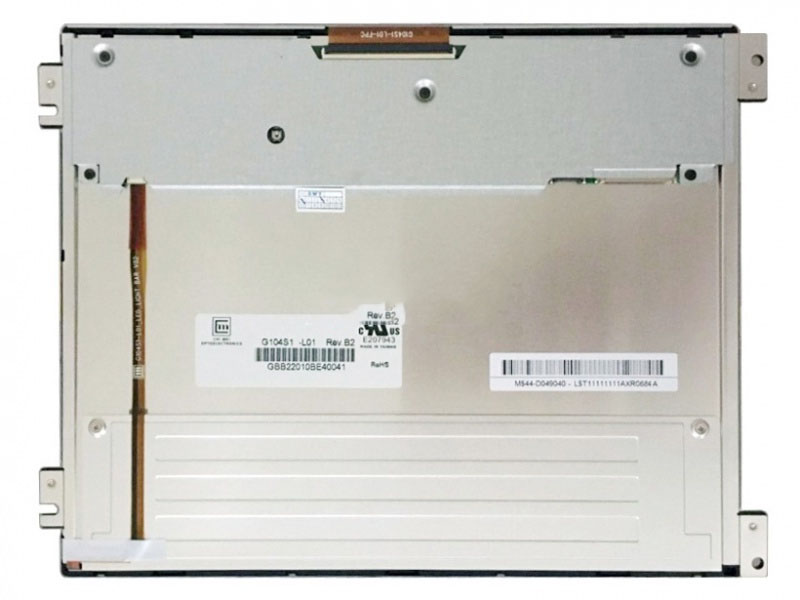
This article delves into a comprehensive analysis of the Innolux G104S1-L01. We will move beyond basic datasheet parameters to explore its architectural strengths, the technology behind its visual performance, and its practical integration challenges. Our goal is to provide engineers, procurement specialists, and product developers with a deep, actionable understanding of where this display excels, its ideal applications, and key considerations for implementation, ultimately serving as a definitive guide for evaluating its fit in professional projects.
Core Architecture and Design Philosophy
The Innolux G104S1-L01 is built upon a robust a-Si TFT (Amorphous Silicon Thin-Film Transistor) LCD architecture. This mature and reliable technology provides a solid foundation for industrial-grade performance, offering excellent stability and production consistency. The 10.4-inch diagonal, with its native resolution of 800 x 600 (SVGA), is a deliberate design choice. This 4:3 aspect ratio is not a relic but a strategic feature for legacy systems and modern industrial interfaces that prioritize vertical information density and compatibility with older software frameworks.
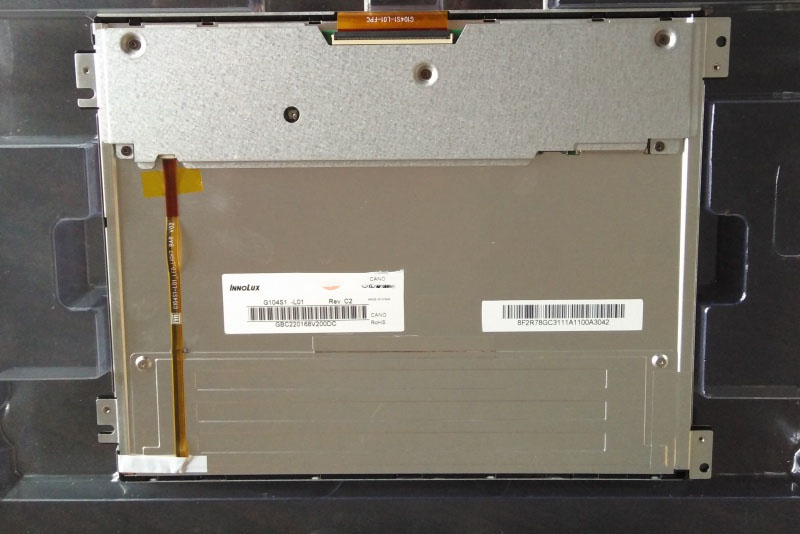
At its heart, the module employs a standard RGB stripe arrangement and typically utilizes LED backlighting, ensuring uniform brightness and lower power consumption compared to older CCFL methods. The design philosophy is clearly centered on functional longevity and interfacial compatibility. Every element, from the driver IC placement to the mechanical mounting points, is engineered for seamless integration into larger assemblies, such as Human-Machine Interfaces (HMIs), medical monitors, and point-of-sale systems, where service life is measured in decades, not years.
Decoding the Visual Performance Metrics
Visual performance is quantified through key metrics that define user experience. The G104S1-L01 typically offers a brightness level ranging from 300 to 450 nits, making it clearly viewable in controlled indoor environments like factory floors or laboratories. Its contrast ratio, often around 500:1, ensures that text and graphic elements have sufficient pop and readability for data-intensive applications.
A critical, yet often overlooked, specification is the viewing angle. This panel commonly provides wide viewing angles (e.g., 80/80/80/80 in Left/Right/Up/Down directions), crucial for devices where the operator may not be directly centered. The color depth, usually 6-bit + FRC delivering 16.7 million colors, is adequate for displaying complex diagrams and interface graphics without banding. These metrics collectively paint a picture of a display optimized for clarity and reliability over cinematic flair, perfectly aligning with its mission-critical use cases.
The Critical Role of Interface and Signal Compatibility
A display module is useless without a reliable connection to the host controller. The Innolux G104S1-L01 primarily features an LVDS (Low-Voltage Differential Signaling) interface. LVDS remains an industry standard for its robustness, noise immunity, and ability to transmit high-speed data over longer cables within a device—a non-negotiable requirement in electrically noisy industrial settings.
Understanding the pin configuration, power sequencing requirements, and signal timing is paramount for successful integration. Designers must ensure their controller board outputs a compatible LVDS signal that matches the panel's native resolution and refresh rate (typically 60Hz). This chapter underscores that technical procurement must go beyond physical dimensions; electrical and protocol compatibility is the linchpin of a functional design, preventing costly re-spins or field failures.
Environmental Durability and Reliability Parameters
What truly separates an industrial display from a commercial one is its built-in resilience. The G104S1-L01 is engineered to withstand operational stresses. This includes a wide operating temperature range (commonly -20°C to 70°C) and a storage temperature range that is even broader, ensuring functionality in unheated warehouses or under the heat of constant operation.
Its construction often involves strengthened glass and stable polarizers to resist yellowing or degradation. Furthermore, it may offer options for enhanced durability features like optical bonding, where the LCD is laminated directly to the cover glass. This process eliminates an air gap, reducing internal condensation (fogging), improving sunlight readability by cutting internal reflection, and providing superior resistance to shock and vibration—a key for transportation or heavy machinery applications.
Primary Application Domains and Use Cases
The specific combination of its 10.4-inch 4:3 format, SVGA resolution, and rugged build directs the G104S1-L01 toward well-defined market segments. Its foremost application is in Industrial Human-Machine Interfaces (HMIs) for PLCs, CNC machines, and factory automation, where its size is ideal for control panels.
It is equally prevalent in medical diagnostic equipment (e.g., patient monitors, ultrasound devices) where grayscale accuracy and reliability are paramount. Other significant use cases include legacy POS/retail systems, kiosks for indoor information, and specialized instrumentation in aviation and maritime contexts. In each scenario, the display acts as a dependable window into complex system data, where failure is not an option.
Integration Considerations and Sourcing Strategy
Successfully integrating this module requires careful planning. Engineers must account for the mechanical footprint, including bezel size and mounting hole patterns. Thermal management is also crucial; ensuring adequate heat dissipation from the LED backlight prolongs lifespan. Electrically, designing a clean power supply with proper in-rush current limiting is essential to protect the panel's drivers.
From a sourcing perspective, the G104S1-L01 is often available through specialized distributors of industrial electronic components. It's vital to verify the specific revision and full part number, as Innolux may produce variants with different connector types, brightness levels, or surface treatments. Building a relationship with a reputable supplier who provides full datasheets, application notes, and technical support is as important as the technical evaluation itself.
FAQs: Innolux G104S1-L01 Display Screen
Q1: What is the screen size and resolution of the G104S1-L01?A1: It is a 10.4-inch diagonal LCD with a native resolution of 800 x 600 pixels (SVGA).
Q2: What type of interface does it use?A2: It primarily uses an LVDS (Low-Voltage Differential Signaling) interface for robust data transmission.
Q3: Is this a 4:3 or 16:9 aspect ratio screen?A3: It features a 4:3 aspect ratio, common for industrial and legacy applications.
Q4: What are typical brightness and contrast specs?A4: Brightness often ranges from 300-450 nits, with a contrast ratio around 500:1.
Q5: What is the operating temperature range?A5: It is designed for a wide operating temperature range, typically from -20°C to 70°C.
Q6: What are its main applications?A6: Key uses include Industrial HMIs, medical monitors, point-of-sale systems, and instrumentation.
Q7: Does it support touch functionality?A7: The G104S1-L01 is a display-only module. Touch panels (resistive or capacitive) can be added as separate components.
Q8: Is optical bonding available for this model?A8: Optical bonding is often available as a variant or custom option to enhance durability and readability.
Q9: How does its 800x600 resolution compare to HD screens?A9: While lower than HD, SVGA is ideal for text-based interfaces and legacy systems, requiring less processing power and offering excellent compatibility.
Q10: Where can I source this display module?A10: It is available through authorized distributors and specialists in industrial electronic components.
Conclusion
The Innolux G104S1-L01 10.4-inch LCD display is a testament to purpose-driven engineering. It is not a generic screen but a specialized component crafted for longevity, reliability, and seamless function within larger systems. Its value lies in the precise alignment of its 4:3 SVGA format, robust LVDS interface, wide environmental tolerances, and industrial-grade construction with the rigorous demands of HMI, medical, and commercial embedded applications.
Selecting this display is a strategic decision that prioritizes operational certainty over fleeting specifications. For designers and engineers building equipment where performance must be unwavering, understanding the depth of its architecture and integration requirements, as outlined in this analysis, is the first step toward creating products that endure. In the landscape of specialized displays, the G104S1-L01 stands as a reliable and proven workhorse.





