

















- Industrial display
-
Industrial Products
- DC Servo Drive
- AC Servo Drive
- Industrial board
- Siemens
- Switch Sensor
- Proximity Switch
- Temperature Controller
- Protection Relay
- Fiber Optic Sensor
- Encoder
- Fan
- other
- Heidelberg
- MITSUBISHI
- FANUC
- Siemens adapter
- Fujitsu connector
- Motherboard
- Board
- Contactor
- Circuit
- OMRON
- Relay
- Motor Driver
- power supply
- Cable
- Transformer
- HMI Touch Glass
-
HMI Full Machine Whole unit
- OMRON HMI Touch Panel
- Siemens HMI Touch Panel
- Mitsubishi HMI Touch Panel
- Allen-Bradley automation HMI Touch Panel
- DELTA HMI Touch Panel
- Proface HMI Touch Panel
- KINCO DELTA HMI Touch Panel
- HITECH HMI Touch Panel
- WEINTEK HMI Touch Panel
- TECVIEW HMI Touch Panel
- WEINVIEW HMI Touch Panel
- PANASONIC HMI Touch Panel
- KYOCERA HMI Touch Panel
- SCHNEIDER HMI Touch Panel
- Module
- lcd inverter
- Membrane Keypad Switch
- Zhiyan Customized Touch Screens
- Frequency Inverter
- Servo Motor
- PLC
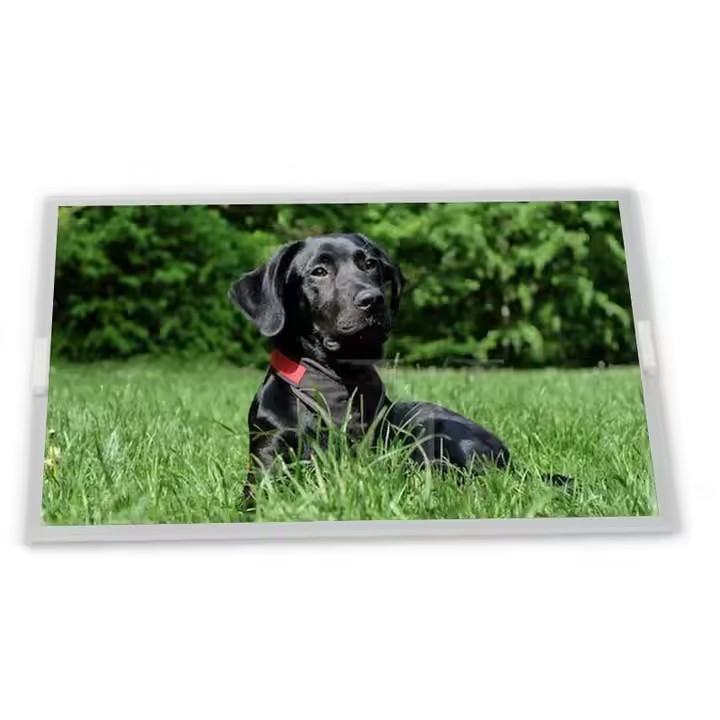
In the intricate world of industrial and embedded systems, the display module is far more than a simple window for data; it is the critical touchpoint of human-machine interaction. Its reliability, clarity, and performance under duress directly impact operational efficiency and user experience. This brings us to the specialized component at the heart of our discussion: the G104ACE-LH1, a 10.4-inch LCD display module engineered by INNOLUX. This isn't a consumer-grade screen, but a robust industrial solution designed for mission-critical applications.
This article delves into a comprehensive analysis of the G104ACE-LH1. We will move beyond basic specifications to explore its architectural strengths, the technology that powers its visual performance, and the specific environmental challenges it is built to conquer. Furthermore, we will examine its ideal integration pathways and the tangible value it delivers across demanding sectors like industrial automation, medical instrumentation, and transportation. Our goal is to provide engineers, system integrators, and procurement specialists with a deep, actionable understanding of what makes this module a standout choice for professional applications.
Core Architecture and Design Philosophy
The G104ACE-LH1 is built upon a foundation of industrial-grade resilience. At its core lies a 10.4-inch diagonal a-Si TFT LCD panel with a standard XGA resolution of 1024 x 768 pixels. This 4:3 aspect ratio is not an antiquated choice but a strategic one, perfectly suited for displaying legacy machine interfaces, diagnostic software, and complex data dashboards without wasteful black bars or distorted graphics.
The module's design philosophy emphasizes longevity and stability. It utilizes LED backlighting, which offers significant advantages over older CCFL technology, including lower power consumption, instant illumination, absence of mercury, and a more consistent brightness profile over time. The construction is engineered to minimize mechanical stress on the glass and ensure consistent electrical connectivity, even when subjected to continuous operation. This thoughtful architecture makes it not just a display, but a dependable system component.

Advanced Optical and Performance Features
Visual performance in industrial settings is non-negotiable. The G104ACE-LH1 addresses this with a suite of advanced optical features. It boasts a high brightness rating, typically around 1000 nits, which is essential for combating ambient glare in sunlit factories or outdoor kiosks. Coupled with this is an anti-glare (AG) surface treatment on the front polarizer. This treatment diffuses direct light sources, reducing reflections and preventing the "washout" effect that can obscure critical information.
Furthermore, the module offers wide viewing angles, often exceeding 80 degrees in all directions (CR>10). This ensures that readings and visuals remain consistent and color-stable for operators viewing the screen from various standing or seated positions. The color gamut and contrast ratio are calibrated for accuracy, not vibrancy, ensuring that status indicators, graphs, and warnings are rendered with unambiguous clarity. These features collectively transform raw data into instantly actionable intelligence.
Ruggedization for Harsh Operating Environments
The true test of an industrial display is its performance outside climate-controlled offices. The G104ACE-LH1 is specifically ruggedized to thrive in adversity. Its operating temperature range is expansive, reliably functioning in both freezing cold and intense heat that would cripple consumer displays. This thermal resilience is crucial for applications in unheated warehouses, near industrial ovens, or within enclosed transportation cabins.
Beyond temperature, the module is built to resist other environmental stressors. It features a robust design that can handle high levels of vibration and shock, making it suitable for mounting on moving machinery, agricultural equipment, or emergency vehicles. While not inherently sealed, its design facilitates integration into systems with IP65 or higher front-panel ratings, protecting against dust ingress and low-pressure water jets. This durability ensures uptime and reduces total cost of ownership by minimizing failures.
Interface Integration and System Compatibility
A display module is only as good as its ability to connect. The G104ACE-LH1 provides versatile and reliable integration pathways. It primarily features a LVDS (Low-Voltage Differential Signaling) interface. LVDS is the industry-standard digital interface for such panels, prized for its high-speed data transmission, noise immunity, and lower power consumption. This makes connecting to a wide array of Single-Board Computers (SBCs) and system controllers straightforward.
The module typically includes a standard connector pinout and may offer options for backlight control (e.g., PWM dimming) and touchscreen integration. This plug-and-play compatibility significantly reduces engineering overhead during the system design phase. Developers can focus on application software rather than low-level display driver complexities, accelerating time-to-market for the end product.
Primary Application Sectors and Use Cases
The combination of ruggedness, clarity, and reliable interfacing opens doors to numerous high-stakes sectors. In Industrial Automation and HMI, it serves as the primary interface for PLCs, controlling assembly lines, monitoring sensors, and visualizing SCADA systems. Within Medical Equipment, its stable performance and clear imaging make it suitable for diagnostic devices, patient monitors, and surgical instrument displays where readability is paramount.
The Transportation and Fleet Management sector utilizes these modules for in-vehicle infotainment, navigation, and telematics systems in buses, trains, and heavy trucks. Additionally, it finds purpose in Point-of-Sale (POS) systems, kiosks, and ruggedized portable devices. In each case, the G104ACE-LH1 provides the dependable visual layer upon which critical operational decisions are made.
Value Proposition and Total Cost of Ownership
Selecting the G104ACE-LH1 is an investment in system integrity. Its value proposition extends far beyond the unit's initial price. The primary value drivers are extended operational lifespan and reduced failure rates in challenging conditions. This directly lowers maintenance costs, spare part inventories, and costly system downtime.
Furthermore, its optical performance enhances operator efficiency and reduces errors caused by misread data. The standard interface and form factor also provide long-term supply stability and design reusability across multiple product generations. When evaluated through the lens of Total Cost of Ownership (TCO), the module's robustness, reliability, and performance consistency deliver a superior return on investment compared to commercial-off-the-shelf displays that may fail prematurely.
FAQs: G104ACE-LH1 10.4" LCD Display Module
Q1: What is the resolution and aspect ratio of the G104ACE-LH1?A1: It has an XGA resolution of 1024 x 768 pixels with a 4:3 aspect ratio.
Q2: What type of backlight does it use?A2: It uses a long-life LED backlight system.
Q3: Is it suitable for outdoor or high-brightness environments?A3: Yes, its high brightness (~1000 nits) and anti-glare surface make it suitable for such conditions.
Q4: What is the main interface for this display module?A4: The primary interface is LVDS (Low-Voltage Differential Signaling).
Q5: Can it operate in extreme temperatures?A5: Yes, it is designed for a wide industrial operating temperature range.
Q6: Is this a touchscreen module?A6: The G104ACE-LH1 is typically the LCD module only. Touch panels (resistive or capacitive) can be integrated as an additional layer.
Q7: What are its typical applications?A7: Industrial HMIs, medical devices, transportation systems, POS terminals, and rugged kiosks.
Q8: Why choose a 4:3 screen over a wider format?A8: The 4:3 format is ideal for legacy software interfaces, data-heavy vertical layouts, and industrial control screens without unused space.
Q9: How does it handle vibration?A9: It is built with a rugged design to withstand high levels of vibration and shock common in industrial and mobile environments.
Q10: What does Total Cost of Ownership (TCO) mean for this module?A10: TCO highlights its value through long-term reliability, lower failure rates, and reduced downtime, outweighing the initial cost.
Conclusion
The INNOLUX G104ACE-LH1 10.4-inch LCD display module exemplifies the engineering rigor required for professional-grade applications. It successfully bridges the gap between visual fidelity and environmental toughness, offering a solution where clarity, reliability, and longevity are not optional features but fundamental requirements. From its robust architecture and high-brightness optics to its wide-temperature operation and standard LVDS interface, every aspect is tailored for integration into systems that cannot afford to fail.
For system designers and engineers, choosing this module is a strategic decision that prioritizes long-term system integrity over short-term cost savings. It delivers assured performance at the human-machine interface, ensuring that critical information is always visible, accurate, and actionable. In the demanding landscapes of industry, medicine, and transportation, the G104ACE-LH1 stands as a dependable visual workhorse, built not just to display information, but to endure.





