














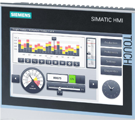





- Industrial display
-
Industrial Products
- DC Servo Drive
- AC Servo Drive
- Industrial board
- Siemens
- Switch Sensor
- Proximity Switch
- Temperature Controller
- Protection Relay
- Fiber Optic Sensor
- Encoder
- Fan
- other
- Heidelberg
- MITSUBISHI
- FANUC
- Siemens adapter
- Fujitsu connector
- Motherboard
- Board
- Contactor
- Circuit
- OMRON
- Relay
- Motor Driver
- power supply
- Cable
- Transformer
- HMI Touch Glass
-
HMI Full Machine Whole unit
- OMRON HMI Touch Panel
- Siemens HMI Touch Panel
- Mitsubishi HMI Touch Panel
- Allen-Bradley automation HMI Touch Panel
- DELTA HMI Touch Panel
- Proface HMI Touch Panel
- KINCO DELTA HMI Touch Panel
- HITECH HMI Touch Panel
- WEINTEK HMI Touch Panel
- TECVIEW HMI Touch Panel
- WEINVIEW HMI Touch Panel
- PANASONIC HMI Touch Panel
- KYOCERA HMI Touch Panel
- SCHNEIDER HMI Touch Panel
- Module
- lcd inverter
- Membrane Keypad Switch
- Zhiyan Customized Touch Screens
- Frequency Inverter
- Servo Motor
- PLC
In the intricate world of electronic components, the display often serves as the critical bridge between a device's functionality and the user's experience. Among the myriad of options available to engineers and product developers, the A035QN02 VG AUO 3.5-inch LCD Display Module stands out as a notable solution for a wide range of compact, high-performance applications. This module, manufactured by AU Optronics (AUO), a global leader in display technology, represents a sophisticated integration of visual clarity, robust construction, and versatile interfacing capabilities.

This article provides a comprehensive exploration of the A035QN02 VG module. We will delve beyond basic specifications to examine its core technological features, electrical and mechanical characteristics, and the practical considerations for integration. Our goal is to offer a detailed resource that illuminates why this specific 3.5-inch screen is a preferred choice in industries from industrial automation and portable medical devices to advanced consumer electronics, and how its design addresses key challenges in modern embedded system development.
Core Technology and Visual Performance
The foundation of the A035QN02 VG's appeal lies in its advanced TFT-LCD panel. It offers a resolution of 320 x 240 pixels (QVGA) on a 3.5-inch diagonal, delivering a balanced pixel density suitable for detailed graphics and readable text. The module utilizes a transmissive display technology, which requires a backlight for visibility but results in excellent brightness and color consistency. A key feature is its VG designation, indicating a standard RGB parallel interface, which provides a direct and high-speed data pathway from the controller.
Color performance is a significant strength. It typically supports a 262K color depth, enabling vibrant and accurate color reproduction crucial for user interfaces, diagnostic imaging, or status indication. Furthermore, AUO integrates technologies to ensure wide viewing angles, both horizontally and vertically, allowing the display content to remain clear even when viewed from off-axis positions. This combination of resolution, color fidelity, and viewing stability forms the core visual value proposition of this module.
Electrical Interface and Signal Integration
Successful integration hinges on understanding the module's electrical interface. The A035QN02 VG employs a parallel RGB (Red, Green, Blue) interface, often using a 40-pin or similar connector. This interface transmits pixel clock, synchronization signals (HSYNC, VSYNC), data enable (DE), and the RGB data bits themselves. This method allows for direct control from many microprocessors and application processors that feature a dedicated LCD controller interface, simplifying the driver design.
The module requires precise timing control for these signals, as defined in its datasheet. Designers must ensure their host controller can generate the correct clock frequencies and signal polarities. Additionally, the module needs a stable power supply, typically at 3.3V or 5.0V for logic and a higher voltage for the LED backlight driver circuit. Proper power sequencing and noise filtering on these lines are critical to prevent display artifacts, flickering, or long-term reliability issues.

Mechanical Design and Durability Considerations
The physical construction of the A035QN02 VG is engineered for durability and integration ease. The module consists of the LCD glass, bonded to the driver ICs, and a sturdy metal or plastic frame. This frame provides structural rigidity, protects the delicate glass edges, and offers standardized mounting points (often via holes in the corners) for secure attachment within a product's enclosure. The inclusion of a resistive or capacitive touch panel overlay is a common variant, transforming the display into an interactive component.
Environmental robustness is a key factor for industrial and portable applications. The module is designed to operate reliably across a specified temperature range, often from -20°C to +70°C. Its solid-state design, with minimal moving parts, offers high resistance to shock, vibration, and gradual wear. The choice of surface treatments for the front polarizer can also enhance performance, with options for anti-glare coatings to improve readability under bright lighting or hard coatings for scratch resistance.
Backlight System and Optical Enhancement
The transmissive nature of the LCD means the backlight system is paramount. The A035QN02 VG typically uses a side-lit LED backlight array. LEDs offer significant advantages over older CCFL technology, including lower power consumption, longer lifespan, instant-on capability, and a more compact form factor. The backlight's brightness, measured in nits (cd/m²), is a critical specification for applications used in both dim and brightly lit environments.
Optical enhancement films are integrated within the module stack to manage light distribution. These include diffusers to create uniform brightness across the entire screen area, brightness enhancement films (BEF) to direct light forward towards the viewer, and reflective layers to maximize efficiency. The design of this optical system directly impacts the module's overall power efficiency and visual quality, ensuring there are no dark spots or uneven illumination that could degrade the user experience.
Typical Application Scenarios and Use Cases
The specific blend of size, performance, and reliability of the A035QN02 VG makes it ideal for several demanding sectors. In industrial human-machine interfaces (HMIs), it serves as a compact control panel for machinery, displaying real-time parameters and providing touch input. The medical field utilizes it in portable diagnostic devices, patient monitors, and handheld instruments where clear data presentation is vital.
Furthermore, it finds a home in point-of-sale (POS) systems, handheld scanners, automotive auxiliary displays, and smart home control panels. Its QVGA resolution is well-suited for embedded systems where processor power and memory may be constrained compared to high-definition systems, offering a perfect balance between visual information capacity and system resource demands. Each application leverages its durability, clear readability, and stable interface.
Integration Challenges and Best Practices
While feature-rich, integrating the A035QN02 VG presents challenges that require careful planning. Electromagnetic interference (EMI) is a primary concern, as the high-speed digital signals can both emit noise and be susceptible to it. Best practices include using short, matched-length traces on the PCB, implementing proper grounding schemes, and considering shielded cables or connectors for the flex cable.
Software driver development is another critical phase. Developers must configure the host's LCD controller registers to match the module's exact timing parameters. For touch-enabled versions, calibrating the touch controller and implementing debouncing algorithms are essential for accurate and responsive input. Thermal management should also be considered, especially if the module is enclosed in a sealed space, to ensure the backlight LEDs and driver ICs operate within their safe temperature range for maximum longevity.
FAQS
Q: What does "VG" stand for in A035QN02 VG?A: It typically refers to the interface type, in this case, a standard parallel RGB interface.
Q: What is the resolution of this display?A: It has a QVGA resolution of 320 pixels horizontally by 240 pixels vertically.
Q: Does it have a touch screen?A: The base module is display-only, but it is commonly available with an attached resistive or capacitive touch panel as an option.
Q: What is the typical operating voltage?A: The logic interface usually runs on 3.3V, while the LED backlight may require a higher voltage driver circuit (e.g., 5-20V).
Q: What type of backlight does it use?A: It uses a long-life, side-lit LED backlight system.
Q: What are the common applications for this module?A: Industrial HMIs, portable medical devices, POS systems, handheld test equipment, and embedded control panels.
Q: What controller is needed to drive it?A: A microprocessor or SoC with a parallel RGB LCD controller interface is required (e.g., many ARM Cortex-M/M-A series chips).
Q: How is the display mounted?A: It is typically mounted via screw holes in its metal frame and connected via a flexible printed circuit (FPC) cable.
Q: What is the operating temperature range?A: The standard range is often -20°C to +70°C, but specific grades may vary.
Q: Where can I find the detailed datasheet?A: The official datasheet should be sourced from AU Optronics (AUO) or their authorized distributors for accurate specifications.
The A035QN02 VG AUO 3.5-inch LCD module exemplifies how a well-engineered component can become a keystone in diverse electronic products. Our exploration has moved from its core visual technology and electrical interface to the practical realities of mechanical integration and application-specific deployment. It is more than just a screen; it is a subsystem that demands careful consideration of power, signal integrity, software, and environmental factors.
For engineers and product managers, selecting this module represents a choice for proven reliability and performance from a leading manufacturer. Its balanced specifications address the real-world constraints of size, power, and cost, while providing a high-quality user interface. Ultimately, successful implementation of the A035QN02 VG lies in respecting its technical requirements and leveraging its robust design to create devices that are not only functional but also deliver a superior and reliable visual experience to the end-user.





