


















- Industrial display
-
Industrial Products
- DC Servo Drive
- AC Servo Drive
- Industrial board
- Siemens
- Switch Sensor
- Proximity Switch
- Temperature Controller
- Protection Relay
- Fiber Optic Sensor
- Encoder
- Fan
- other
- Heidelberg
- MITSUBISHI
- FANUC
- Siemens adapter
- Fujitsu connector
- Motherboard
- Board
- Contactor
- Circuit
- OMRON
- Relay
- Motor Driver
- power supply
- Cable
- Transformer
- HMI Touch Glass
-
HMI Full Machine Whole unit
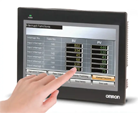
- OMRON HMI Touch Panel
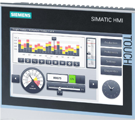
- Siemens HMI Touch Panel
- Mitsubishi HMI Touch Panel
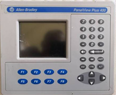
- Allen-Bradley automation HMI Touch Panel
- DELTA HMI Touch Panel
- Proface HMI Touch Panel
- KINCO DELTA HMI Touch Panel
- HITECH HMI Touch Panel
- WEINTEK HMI Touch Panel
- TECVIEW HMI Touch Panel
- WEINVIEW HMI Touch Panel
- PANASONIC HMI Touch Panel
- KYOCERA HMI Touch Panel
- SCHNEIDER HMI Touch Panel
- Module
- lcd inverter
- Membrane Keypad Switch
- Zhiyan Customized Touch Screens
- Frequency Inverter
- Servo Motor
- PLC
This article delves into a comprehensive technical and application-oriented analysis of this specific module, moving beyond basic datasheet specifications.
We will explore its core technological DNA, dissect its performance characteristics under various conditions, and examine the key considerations for successful integration. For engineers, procurement specialists, and product developers, understanding the nuances of such a component is paramount. It ensures system reliability, optimizes user experience, and mitigates risks in design and supply chain management. This deep dive aims to provide that essential knowledge, positioning the C088KAN02.0 not just as a part number, but as a pivotal solution for demanding visual interface requirements.

Unpacking the Core Technology: TFT-LCD and Interface Architecture
The C088KAN02.0 is built on a foundation of advanced Thin-Film Transistor Liquid Crystal Display (TFT-LCD) technology. Its 8.8-inch diagonal screen size offers a compact yet sufficiently viewable area, often fitting niche form factors where standard 10.1-inch panels are too large. The module typically incorporates a high-resolution WSVGA (1024 x 600 pixels) configuration, providing a sharp pixel density suitable for displaying detailed graphics, user interface elements, and diagnostic data.
At its heart lies the LVDS (Low-Voltage Differential Signaling) interface, a critical feature for industrial applications. LVDS ensures robust, high-speed data transmission from the system's controller to the display with minimal electromagnetic interference (EMI). This noise immunity is crucial in environments surrounded by motors, power supplies, or wireless communication devices. The panel's construction also includes a built-in LED backlight system, offering uniform brightness and long life, which are essential for continuous operation.

Performance Specifications Under the Microscope
Evaluating the C088KAN02.0 requires a close look at its performance envelope. Key parameters include brightness, measured in nits (cd/m²), which determines readability in brightly lit indoor or semi-outdoor settings. Contrast ratio defines the depth between the darkest black and the brightest white, impacting image clarity and text legibility. The color gamut coverage indicates how accurately and vividly the display can reproduce colors, a factor important for medical imaging or control panel status indicators.
Furthermore, the operating temperature range is a decisive spec for industrial deployments. A wide range, often from -20°C to 70°C or similar, guarantees functionality in uncontrolled environments like factory floors, automotive cabins, or outdoor kiosks. Response time, the speed at which a pixel can change color, is another vital metric, affecting the smoothness of moving content or touch feedback. These specs collectively define the module's suitability for mission-critical applications.
Critical Integration and Compatibility Considerations
Seamless integration of the C088KAN02.0 is not automatic. The primary consideration is its pin-to-pin and mechanical compatibility with the AUO panel it is designed to replace. This includes the physical dimensions, mounting hole positions, and connector type (typically a 40-pin or similar LVDS connector). Even a minor mismatch can lead to costly redesigns of brackets or mainboard interfaces.
Electrical compatibility is equally crucial. Designers must verify the input voltage requirements for both the logic board and the LED backlight, ensuring the host system's power supply can deliver stable power within the required tolerances. The configuration of the LVDS signal channels, color depth (6-bit vs. 8-bit), and timing control must align with the output of the system's graphic controller. A thorough review of the interface protocol and initialization sequence is necessary to avoid a "no-signal" scenario.
Application Landscapes: Where This Display Excels
The specific attributes of the C088KAN02.0 make it ideal for several demanding verticals. In industrial human-machine interfaces (HMIs), its rugged build, stable performance across temperatures, and clear visibility are paramount for controlling machinery and monitoring processes. The medical device field utilizes such displays in portable diagnostic equipment, patient monitors, and surgical tools where reliability and clarity are non-negotiable.
In transportation and automotive, this display size is perfect for dashboard instrument clusters, rear-seat entertainment, or fleet management systems, where resistance to vibration and temperature fluctuation is key. Additionally, it finds use in point-of-sale (POS) systems, gaming consoles, and specialized test and measurement equipment. Its role is always to serve as a dependable visual conduit in systems where failure is not an option.
Supply Chain and Sourcing Strategies
For OEMs and integrators, sourcing the C088KAN02.0 involves strategic thinking beyond finding the lowest price. A reliable supply chain is critical, as industrial product lifecycles often span many years. Partnering with authorized distributors or reputable module assemblers who can provide full technical documentation, compliance certificates (like RoHS), and long-term availability guarantees is essential.
It is also prudent to evaluate the ecosystem support. Are evaluation kits available? Can the supplier offer customizations, such as different connector orientations, modified brightness levels, or integrated touchscreen solutions (like resistive or projective capacitive)? Establishing a relationship with a supplier that provides engineering support can significantly de-risk the integration process and accelerate time-to-market.
Future-Proofing and Obsolescence Management
In the fast-evolving display industry, component end-of-life (EOL) notifications are a constant challenge. Proactively managing the lifecycle of the C088KAN02.0 is a key responsibility. This involves monitoring manufacturer announcements, maintaining strategic inventory buffers for aftermarket support, and having a qualified alternative in the pipeline.
Future-proofing may also involve considering the next-generation technologies. While LVDS remains an industrial staple, interfaces like eDP (Embedded DisplayPort) offer higher bandwidth for future resolution upgrades. Understanding the technology roadmap allows designers to make informed decisions today that will not bottleneck future product enhancements, ensuring the longevity and upgradeability of the end product.
FAQs: C088KAN02.0 8.8" TFT Display
Q1: Is the C088KAN02.0 a direct drop-in replacement for my existing AUO 8.8-inch panel?A: It is designed to be, but you must verify exact mechanical dimensions, mounting holes, connector pinout, and electrical interface compatibility with your specific AUO model.
Q2: What is the typical brightness of this display?A: Brightness varies, but common specifications range from 450 to 1000 nits. The exact value depends on the specific version and backlight configuration.
Q3: Does it support touch functionality?A: The C088KAN02.0 is primarily a display panel. Touch capability (resistive or capacitive) is typically added as a separate overlay or module that can be integrated during assembly.
Q4: What is the operating temperature range?A: Industrial-grade versions commonly support an operating temperature range of -20°C to 70°C, but always confirm with the specific supplier's datasheet.
Q5: What interface does it use?A: It typically uses an LVDS (Low-Voltage Differential Signaling) interface, which is standard for robust, noise-resistant data transmission in industrial environments.
Q6: What is the resolution of the C088KAN02.0?A: The standard resolution is 1024 x 600 pixels (WSVGA), offering a 16:9 aspect ratio suitable for modern interfaces.
Q7: Can I adjust the brightness?A: Yes, brightness is usually adjustable through PWM (Pulse Width Modulation) control of the LED backlight, allowing software-based dimming.
Q8: Is it suitable for outdoor use?A: While it has a wide temperature range and can be quite bright, true outdoor use in direct sunlight may require an enhanced optical bonding solution and a higher-brightness (>1000 nits) variant to combat glare.
Q9: How long is the typical lifespan?A: The LED backlight is often rated for 50,000 hours or more at typical brightness settings, making it suitable for long-term industrial applications.
Q10: Where can I find a driver board or controller for this display?A: Many display module suppliers and specialized electronics distributors offer compatible LVDS controller boards that can accept inputs from HDMI, VGA, or other sources to drive this panel.
Conclusion
The C088KAN02.0 8.8-inch TFT display represents more than just a component; it is a tailored solution for bridging digital information with the physical world in challenging environments. Its value lies in the precise combination of its compact form factor, robust LVDS interface, industrial-grade durability, and specific compatibility with AUO designs. Successfully leveraging this module requires a holistic approach that encompasses technical validation, thoughtful application matching, and strategic supply chain management.
For engineers and developers, the key takeaway is to look beyond the basic specs. Engage with the integration details, plan for the product's entire lifecycle, and choose supply partners who offer reliability and support. In doing so, the C088KAN02.0 transforms from a simple part into a cornerstone of a reliable, high-performance human-machine interface, capable of meeting the rigorous demands of modern industrial, medical, and transportation systems.





