



















In the intricate world of industrial and specialized display solutions, certain components stand out not for mass-market appeal, but for their critical role in enabling specific, demanding applications. The C084XAT01.0 from AUO (AU Optronics) is precisely such a component. This 8.4-inch a-Si TFT-LCD Liquid Crystal Module (LCM) with a resolution of 1024(RGB)×768 (XGA) represents a mature yet highly reliable workhorse in the display technology landscape. Far from a consumer-grade panel, its specifications and design philosophy are tailored for environments where consistency, durability, and long-term availability are paramount.

This article delves into a comprehensive analysis of the C084XAT01.0. We will explore its core technological foundations, dissect its key performance characteristics, and examine the specific market niches it serves. Beyond mere specifications, we will consider its integration challenges, lifecycle position, and the tangible value it delivers to engineers and product designers. Understanding this module is to understand the engineering decisions behind countless industrial, medical, and instrumentation devices that operate reliably day in and day out.
Decoding the Specification: A Foundation of Reliability
The part number C084XAT01.0 itself is a roadmap to its identity. The "8.4" denotes the diagonal screen size in inches, a compact form factor suitable for embedded systems. "a-Si TFT-LCD" confirms the use of amorphous Silicon Thin-Film Transistor technology, the longstanding, cost-effective, and stable backbone of the LCD industry. The resolution of 1024(RGB)×768 is the classic XGA (Extended Graphics Array) standard, offering a 4:3 aspect ratio. This aspect ratio is crucial, as it provides more vertical space for data display compared to wide-screen formats, making it ideal for diagnostic equipment, control panels, and legacy system upgrades.
As an LCM (Liquid Crystal Module), the unit includes the LCD panel, driver circuits, backlight unit, and often a controller, presenting a significantly more integrated solution than a bare panel. This integration reduces development complexity for OEMs. The specification sheet, detailing parameters like brightness, contrast ratio, viewing angles, and interface type (typically LVDS), paints the picture of a module designed not for vibrant multimedia, but for clear, legible, and stable visualization of critical information under various lighting conditions.
Core Technologies and Performance Characteristics
At the heart of the C084XAT01.0 lies mature a-Si TFT technology. Its advantage is not in cutting-edge pixel response or extreme color gamut, but in proven manufacturing yield, thermal stability, and economic viability for industrial-scale procurement. The module typically features a moderate brightness level (e.g., 300-400 nits) sufficient for indoor use, a contrast ratio that ensures text clarity, and wide viewing angles (often 80/80/80/80) allowing for readability from different positions.
The XGA resolution on an 8.4-inch screen results in a pixel pitch that offers sharp detail without requiring excessive scaling. The backlight system, usually utilizing LED arrays, is engineered for long life and consistent output. Key performance metrics also include operating temperature range, which is often wider than consumer panels (e.g., -20°C to 70°C), enabling functionality in non-climate-controlled environments. Reliability metrics like Mean Time Between Failures (MTBF) are central to its value proposition, emphasizing uninterrupted operation.
Target Applications and Market Niches
The C084XAT01.0 finds its home in applications where performance is defined by reliability, not by flashy specs. Its primary domains include:
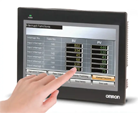
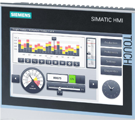
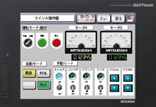
Industrial Human-Machine Interfaces (HMIs): Embedded in factory automation controls, PLC interfaces, and test equipment, where the 4:3 screen is perfect for ladder logic diagrams and data tables.
Medical Instrumentation: Used in patient monitors, diagnostic devices, and laboratory equipment. The stable performance and clear display are critical for accurate readings.
Point-of-Sale (POS) and Kiosk Systems: For transactional terminals and information kiosks requiring durable, always-on displays.
Transportation and Fleet Management: In vehicle-mounted systems for logistics, public transit, or agricultural machinery.
Legacy System Replacement: As a direct-fit upgrade for older equipment using the same form factor and XGA signal, extending the lifecycle of capital-intensive machinery.
Integration Considerations and Design Challenges
Integrating an LCM like the C084XAT01.0 into a product requires careful planning. Engineers must first ensure electrical compatibility, matching the module's LVDS interface and power requirements with the host system's mainboard. Mechanical integration involves precise mounting, considering bezel dimensions, screw locations, and sealing requirements if used in harsh environments.
Thermal management is also critical; while robust, the module's performance and lifespan can be degraded by improper heat dissipation within the end device. Furthermore, designers must source or develop compatible controller board firmware and ensure stable power sequencing during startup and shutdown to prevent damage. These challenges underscore that using an industrial LCM is as much about engineering as it is about component selection.
The Lifecycle Perspective: Availability and Obsolescence
In consumer electronics, display models change yearly. In industrial contexts, product lifecycles span 5, 10, or even 15 years. The C084XAT01.0, as a mature product, is often in a sustained production or "extended lifecycle" phase. Manufacturers like AUO typically commit to long-term availability for such components, which is a decisive factor for OEMs.
However, eventual obsolescence is a reality. This necessitates proactive supply chain management. Strategies include final buy orders, identifying authorized after-market suppliers, or qualifying pin-compatible alternative modules. Understanding the product's lifecycle status is therefore a crucial part of the design-in decision, impacting long-term product support and maintenance.
Value Proposition: Beyond the Datasheet
The true value of the C084XAT01.0 transcends its technical parameters. It offers risk reduction through proven design and long-term supply. It provides time-to-market advantages by being a fully integrated, tested module, reducing R&D overhead. Its total cost of ownership is favorable when factoring in reliability, reduced failure rates, and simplified logistics over a product's lifespan.
For a designer, it represents a known quantity—a reliable building block that allows focus on core application software and system functionality rather than display subsystem complexities. In a world chasing the latest specs, this module embodies the enduring virtues of stability, dependability, and purposeful design.
Frequently Asked Questions (FAQs)
Q1: What does "LCM" stand for in C084XAT01.0?A1: LCM means Liquid Crystal Module, indicating it includes the LCD panel, drivers, backlight, and often a controller as an integrated unit.
Q2: What is the significance of the 4:3 aspect ratio?A2: The 4:3 aspect ratio provides more vertical display space, ideal for showing documents, data lists, and legacy application interfaces common in industrial and medical settings.
Q3: What is the typical interface for this module?A3: It typically uses an LVDS (Low-Voltage Differential Signaling) interface, a standard for robust, low-noise digital video transmission in industrial applications.
Q4: Is this module suitable for outdoor use?A4: With a typical brightness of 300-400 nits, it is designed for indoor use. Outdoor readability would require a high-brightness variant and proper environmental sealing.
Q5: Can it be used as a direct replacement for an older 8.4" XGA display?A5: Potentially yes, but careful cross-checking of mechanical dimensions, mounting holes, interface pinouts, and power requirements is absolutely essential.
Q6: What is the expected operating lifetime?A6: The backlight LED life is often rated for 50,000 hours or more. The overall module MTBF is typically in the tens of thousands of hours under specified conditions.
Q7: Does it support touch functionality?A7: The C084XAT01.0 is a display module. Touch capability (resistive or capacitive) would be an additional layer that can be added by the system integrator.
Q8: Why choose this over a newer, higher-resolution panel?A8: Reasons include compatibility with existing systems/software, long-term supply guarantees, lower cost, and sufficient performance for the intended application.
Q9: How do I manage obsolescence for this component?A9: Work with distributors for lifecycle forecasts, consider last-time buys, or identify alternative modules with identical form, fit, and function.
Q10: Where is it commonly manufactured?A10: AUO manufactures its display modules in its facilities in Taiwan and China, adhering to strict industrial quality control standards.
Conclusion
The AUO C084XAT01.0 is a testament to the principle that in specialized technology, optimal is often better than maximal. It is not defined by the highest resolution or the thinnest bezel, but by its steadfast reliability, thoughtful integration, and unwavering suitability for its intended missions. In the demanding realms of industrial control, medical diagnostics, and commercial systems, these attributes are priceless.
For engineers and procurement specialists, understanding this module means looking beyond the allure of the latest specs and appreciating the deep-seated value of stability, long-term availability, and proven performance. The C084XAT01.0, therefore, is more than just a display; it is a strategic component that supports the backbone of critical infrastructure worldwide, ensuring that vital information is presented clearly and dependably, day after day.





