


















- Industrial display
-
Industrial Products
- DC Servo Drive
- AC Servo Drive
- Industrial board
- Siemens
- Switch Sensor
- Proximity Switch
- Temperature Controller
- Protection Relay
- Fiber Optic Sensor
- Encoder
- Fan
- other
- Heidelberg
- MITSUBISHI
- FANUC
- Siemens adapter
- Fujitsu connector
- Motherboard
- Board
- Contactor
- Circuit
- OMRON
- Relay
- Motor Driver
- power supply
- Cable
- Transformer
- HMI Touch Glass
-
HMI Full Machine Whole unit
- OMRON HMI Touch Panel
- Siemens HMI Touch Panel
- Mitsubishi HMI Touch Panel
- Allen-Bradley automation HMI Touch Panel
- DELTA HMI Touch Panel
- Proface HMI Touch Panel
- KINCO DELTA HMI Touch Panel
- HITECH HMI Touch Panel
- WEINTEK HMI Touch Panel
- TECVIEW HMI Touch Panel
- WEINVIEW HMI Touch Panel
- PANASONIC HMI Touch Panel
- KYOCERA HMI Touch Panel
- SCHNEIDER HMI Touch Panel
- Module
- lcd inverter
- Membrane Keypad Switch
- Zhiyan Customized Touch Screens
- Frequency Inverter
- Servo Motor
- PLC
In the intricate ecosystem of display technologies, specific component models serve as the fundamental building blocks for countless devices. The C080EAN06.0 AUO 8" a-Si TFT-LCD CELL is one such critical component, a precise engineering solution designed for applications demanding reliability and clear visual performance. This article delves into a comprehensive analysis of this particular LCD cell, moving beyond basic specifications to explore its technological underpinnings, design rationale, and ideal application landscapes.
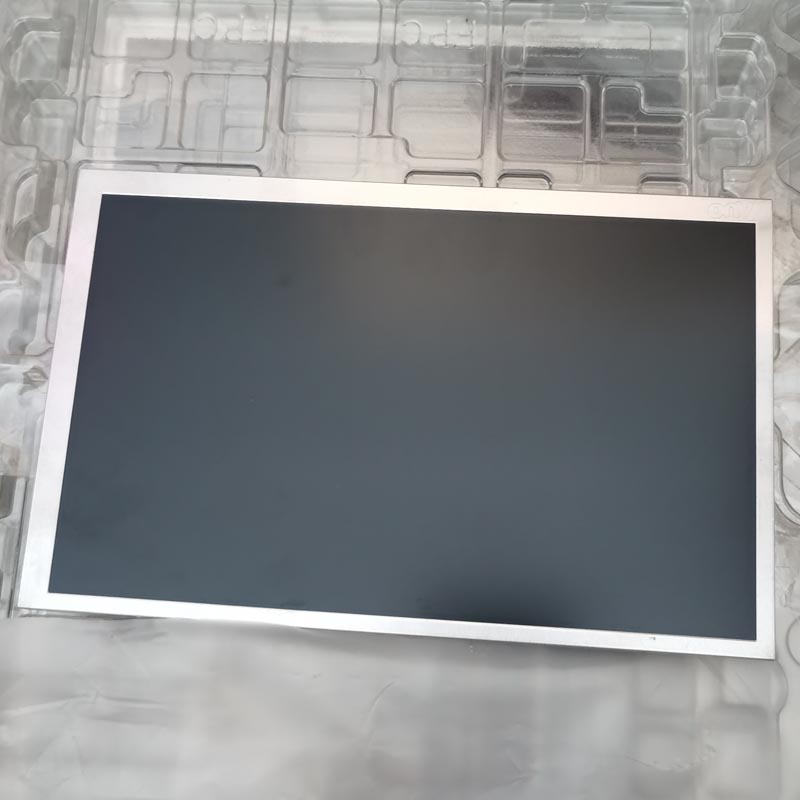
We will dissect the significance of its 1280(RGB)×720 resolution on an 8-inch diagonal, the enduring role of a-Si (amorphous Silicon) TFT technology, and the distinct advantages of procuring a "cell" versus a fully integrated module. By understanding the nuances of components like the C080EAN06.0, product designers, engineers, and procurement specialists can make more informed decisions, optimizing their designs for performance, cost, and longevity in a competitive market.
Decoding the Model: Anatomy of the C080EAN06.0
The model name C080EAN06.0 is a concise data sheet in itself, following AUO's naming convention. "C080" typically denotes an 8.0-inch diagonal size. "EAN" often references the specific product series and generation, indicating its position within AUO's portfolio and the underlying technology stack. The "06.0" suffix usually points to the revision or version of the panel design. Understanding this nomenclature is the first step in component selection, as it allows cross-referencing with similar families and anticipating performance characteristics.
More than just a part number, this identifier signifies a specific combination of physical dimensions, electrical interface, optical performance, and mechanical structure. It tells the informed buyer that they are looking at an 8-inch amorphous Silicon TFT-LCD in its cell form, setting precise expectations before a single datasheet is opened. This granularity is crucial in industrial and embedded contexts where compatibility and long-term supply are as important as the initial performance specs.

The 8-Inch Form Factor: Balancing Size and Utility
The choice of an 8-inch diagonal is a strategic compromise that positions this display cell in a versatile niche. It provides substantially more viewable area than smaller panels common in portable handheld devices, enabling richer information display and better user interaction, without becoming overly bulky or power-hungry like larger desktop monitors. This size is particularly advantageous for human-machine interface (HMI) panels, portable medical devices, industrial control units, and in-vehicle infotainment systems.
In these applications, the 8-inch size offers an optimal balance: it is large enough to display complex data, schematics, or multiple parameters simultaneously with clarity, yet compact enough to be integrated into equipment with space constraints. The physical dimensions of the cell directly influence the overall product design, dictating bezel size, depth, and the necessary structural support, making it a key mechanical determinant in the engineering process.
Resolution and Pixel Density: The Clarity of 1280x720
With a native resolution of 1280 horizontal pixels (RGB) by 720 vertical pixels, this panel aligns with the 720p (HD) standard. On an 8-inch screen, this translates to a pixel density of approximately 184 PPI (Pixels Per Inch). This density is a critical sweet spot. It delivers sharp, legible text and detailed graphics, effectively eliminating the "screen door effect" at a typical viewing distance for embedded devices, while remaining forgiving on system resources.
The "RGB" stipulation confirms a standard stripe pixel arrangement, where each pixel comprises three sub-pixels (Red, Green, Blue). This resolution ensures compatibility with widespread HD content and graphics processors, simplifying driver development. For industrial and instrumentation use, this clarity is essential for reducing operator eye strain and preventing misinterpretation of critical data, marrying user experience with functional reliability.
The Enduring Relevance of a-Si TFT Technology
At the heart of this display cell lies amorphous Silicon (a-Si) Thin-Film Transistor technology. While newer technologies like LTPS and Oxide TFT offer higher electron mobility for ultra-high resolution or refresh rates, a-Si remains the workhorse of the industry for good reason. Its primary strengths are cost-effectiveness, manufacturing maturity, and excellent reliability over a wide temperature range.
For applications like the ones targeted by the C080EAN06.0—where ultra-high pixel density or extreme refresh rates are not the primary requirement—a-Si provides a perfectly balanced solution. The technology offers stable performance and long operational life, which are paramount in medical, industrial, and automotive environments. Its manufacturing scalability also contributes to stable supply chains and cost predictability for product manufacturers.
Understanding the "Cell" vs. "Module" Distinction
A critical specification is that the C080EAN06.0 is offered as a LCD Cell. This means it consists of the core TFT glass substrate with the liquid crystal layer and color filters, but it typically excludes key ancillary components. Most notably, it does not include a backlight unit (BLU), touch panel, or driver ICs mounted on a printed circuit board (PCB). This is a deliberate design choice for system integrators.
Procuring the cell allows for greater customization and optimization. Engineers can select a backlight with specific brightness, uniformity, and power characteristics suited to their end-use environment (e.g., high-brightness for sunlight readability). They can also choose a tailored touch solution (resistive, capacitive) and integrate the display driver into their own mainboard, potentially saving space and cost. This flexibility is invaluable for creating differentiated, optimized final products.
Target Applications and Integration Considerations
The technical profile of the C080EAN06.0 makes it a compelling choice for several demanding verticals. In industrial automation, it serves as a robust HMI for PLCs and control systems. The medical device field utilizes it in portable diagnostic equipment and patient monitoring systems where reliability is non-negotiable. The transportation sector integrates it into rear-seat entertainment, navigation, and fleet management displays.
Successful integration requires careful attention to its interface requirements (typically LVDS or eDP), operating voltage, and mechanical mounting specifications. Thermal management is also crucial, as the cell's performance and lifespan are tied to its operating temperature. Designers must plan for the separate integration of the backlight and its inverter/LED driver circuit, ensuring even illumination and meeting target power budgets for the final application.
FAQs: C080EAN06.0 AUO 8" LCD Cell
1. What does "a-Si" stand for in this context?It stands for amorphous Silicon, the semiconductor material used to fabricate the thin-film transistors that control each pixel.
2. Is this a touchscreen display?No, the C080EAN06.0 is specified as a "Cell," which does not include a touch panel. A touch sensor must be added separately during integration.
3. What is the screen's aspect ratio?The 1280x720 resolution gives it a 16:9 widescreen aspect ratio.
4. Does this product include a backlight?No, the LCD cell does not include a backlight. A backlight unit (BLU) must be sourced and integrated to make the display visible.
5. What is the typical interface for this display?It commonly uses an LVDS (Low-Voltage Differential Signaling) interface, but the exact interface should be confirmed from the official datasheet.
6. Is this display suitable for outdoor use?The cell itself is not inherently sunlight-readable. For outdoor use, it requires integration with a high-brightness backlight and potentially an optical bonding service.
7. What are the main advantages of choosing an LCD cell?Greater design flexibility, potential for cost optimization, and the ability to customize the backlight and touch solutions for the specific application.
8. How does a-Si compare to IPS technology?They are different classifications: a-Si refers to the transistor material, while IPS (In-Plane Switching) is a liquid crystal alignment mode for wider viewing angles. This panel likely uses an a-Si TFT with an IPS-type mode.
9. Where can I find the detailed technical datasheet?The official and complete datasheet should be obtained directly from AU Optronics (AUO) or an authorized distributor.
10. What is the typical lifespan of such a display cell?When operated within its specified parameters (especially temperature), a-Si TFT LCD cells can typically have lifespans exceeding 50,000 hours.
Conclusion
The C080EAN06.0 AUO 8" a-Si TFT-LCD Cell exemplifies how a well-specified component serves as the cornerstone of effective device design. Its combination of an 8-inch HD panel, reliable a-Si technology, and the flexibility of the cell format creates a versatile solution for a range of professional and industrial applications. Understanding its specifications—from the 1280x720 resolution to the implications of procuring a cell—empowers engineers to leverage its strengths fully.
In a market driven by both performance and cost, this display cell represents a balanced choice, prioritizing proven reliability, adequate clarity, and system integration flexibility. For designers building the next generation of HMIs, medical tools, or embedded systems, components like the C080EAN06.0 provide a reliable visual foundation upon which innovative and durable products can be built.





