














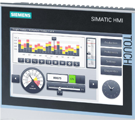


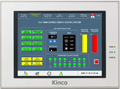







- Industrial display
-
Industrial Products
- DC Servo Drive
- AC Servo Drive
- Industrial board
- Siemens
- Switch Sensor
- Proximity Switch
- Temperature Controller
- Protection Relay
- Fiber Optic Sensor
- Encoder
- Fan
- other
- Heidelberg
- MITSUBISHI
- FANUC
- Siemens adapter
- Fujitsu connector
- Motherboard
- Board
- Contactor
- Circuit
- OMRON
- Relay
- Motor Driver
- power supply
- Cable
- Transformer
- HMI Touch Glass
-
HMI Full Machine Whole unit
- OMRON HMI Touch Panel
- Siemens HMI Touch Panel
- Mitsubishi HMI Touch Panel
- Allen-Bradley automation HMI Touch Panel
- DELTA HMI Touch Panel
- Proface HMI Touch Panel
- KINCO DELTA HMI Touch Panel
- HITECH HMI Touch Panel
- WEINTEK HMI Touch Panel
- TECVIEW HMI Touch Panel
- WEINVIEW HMI Touch Panel
- PANASONIC HMI Touch Panel
- KYOCERA HMI Touch Panel
- SCHNEIDER HMI Touch Panel
- Module
- lcd inverter
- Membrane Keypad Switch
- Zhiyan Customized Touch Screens
- Frequency Inverter
- Servo Motor
- PLC
In the intricate world of electronic components, the display panel serves as the critical interface between machine and user. Among the myriad of specifications and part numbers, the 15-inch AC150XA01 LCD module stands out as a notable and widely implemented solution. Characterized by its 1024 x 768 (XGA) resolution, this panel represents a specific intersection of size, clarity, and legacy compatibility that has powered countless industrial, medical, and commercial applications. This article delves deep into the technical essence and practical significance of this particular display module.
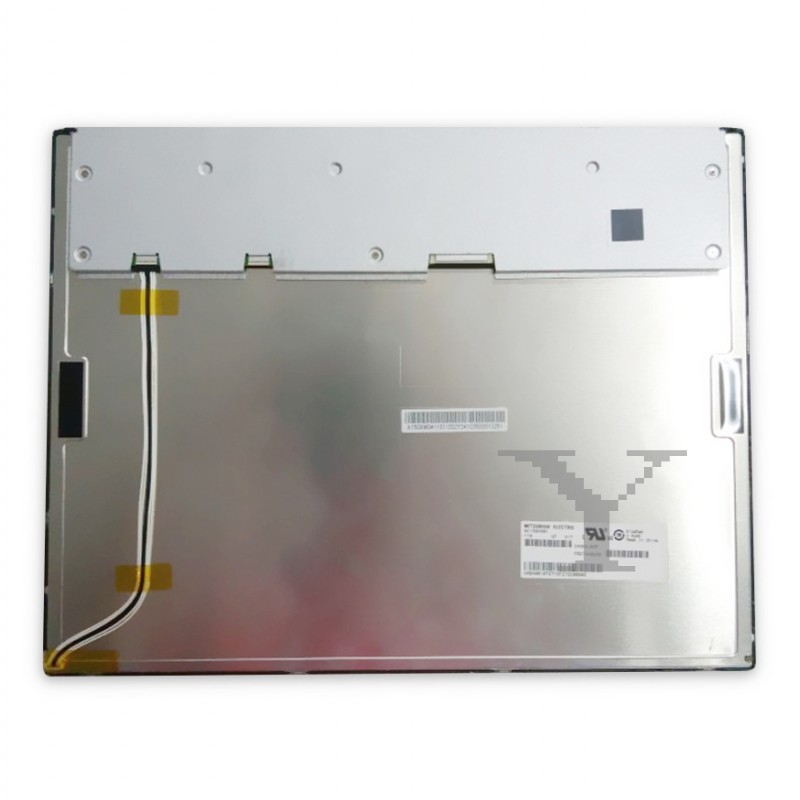
Moving beyond a simple part number, we will explore the engineering rationale behind its enduring design, the specific market needs it addresses, and the technical parameters that define its performance. From its fundamental pixel structure to its integration challenges and comparative standing in the modern display landscape, this analysis aims to provide engineers, procurement specialists, and technology integrators with a comprehensive understanding of the AC150XA01. Our journey will illuminate why this specific 15-inch XGA panel remains a relevant and reliable choice in an era dominated by higher-resolution alternatives.
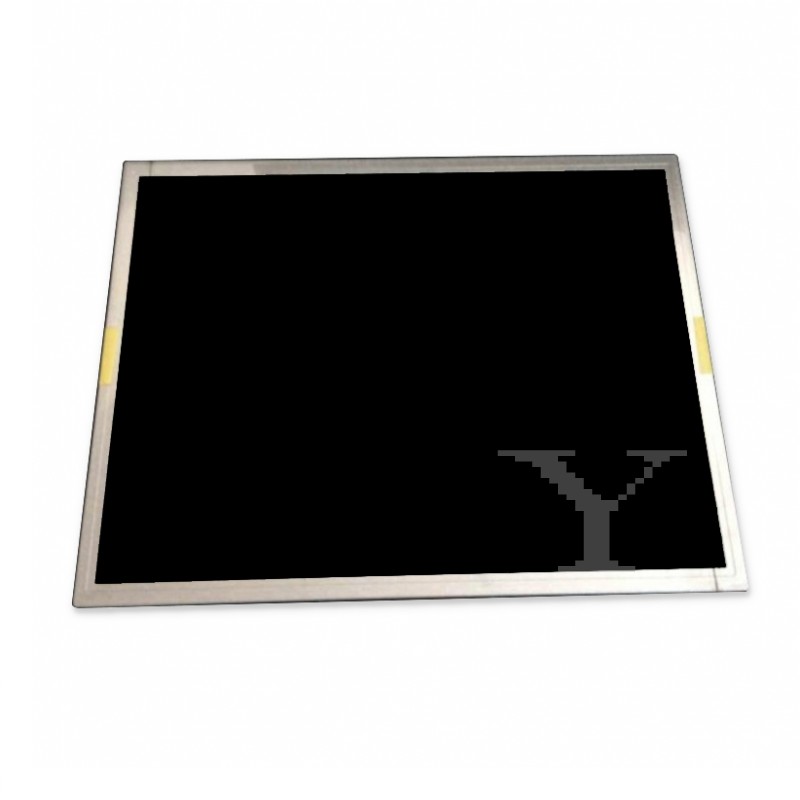
Decoding the Specification: The XGA Standard in a 15-Inch Form
The core identity of the AC150XA01 module is defined by its 1024 x 768 pixel array, known as the Extended Graphics Array (XGA) standard. In a 15-inch diagonal screen size, this resolution yields a specific pixel pitch and density. The resulting pixels per inch (PPI) is lower than that of modern high-definition panels, but this is a deliberate design feature with distinct advantages.
For industrial and embedded applications, where the display is often viewed from a distance or through protective glass, extreme pixel density is unnecessary. The XGA resolution provides ample detail for displaying complex control interfaces, diagnostic data, or logistical information without overburdening the system's graphical processing unit (GPU). This balance between clarity and computational efficiency is a key reason for its longevity. The 4:3 aspect ratio, another hallmark of XGA, is perfectly suited for legacy software interfaces and certain vertical applications where screen real estate is optimized for lists and data forms rather than widescreen media.
Anatomy of the AC150XA01 LCD Module
The AC150XA01 is not just a glass panel; it is a fully integrated LCD module. This typically includes the liquid crystal matrix, the backlight unit (often CCFL or LED), the driver circuitry, and the interface connectors, all assembled into a single, ready-to-install unit. The module's design is focused on reliability and ease of integration for OEMs.
Critical to its function is the LVDS (Low-Voltage Differential Signaling) interface, which is the most common method for transmitting high-speed video data from a controller board to the LCD panel in such applications. This interface provides robust signal integrity, resisting electromagnetic interference—a crucial factor in noisy industrial environments. Understanding the pinout, voltage requirements (e.g., 3.3V or 5V for logic, 12V or higher for the backlight), and timing characteristics of the AC150XA01 is essential for successful system design. The mechanical footprint, including mounting hole positions and bezel dimensions, is also standardized to facilitate drop-in replacements and upgrades.
Target Applications and Industrial Longevity
The AC150XA01 finds its true home in B2B and embedded environments where longevity, reliability, and stability trump the latest consumer trends. Its primary applications are a testament to its rugged design and consistent performance.
You will commonly find this panel in industrial human-machine interfaces (HMIs) for factory automation, medical monitoring devices (where color accuracy and reliability are paramount), point-of-sale (POS) systems, kiosks, and specialized instrumentation. In these settings, equipment lifecycles span 5-10 years or more. The continued availability of a stable, known-quantity display module like the AC150XA01 allows manufacturers to support their products in the field for decades, avoid costly re-certifications (especially in medical fields), and maintain inventory for repairs. This creates a market dynamic very different from the consumer space, where planned obsolescence is more common.
Technical Advantages in Niche Environments
Why choose a 1024x768 panel in an age of 4K? The advantages are both technical and practical. First, the lower resolution demands significantly less from the host system's graphical processing and memory bandwidth. This allows the use of simpler, lower-power, and more cost-effective single-board computers or microcontrollers, reducing overall system cost and thermal output.
Second, the screen's characteristics are often ideal for environments with specific lighting conditions. Many industrial versions of such panels feature high-brightness options (500 nits or more) for sunlight readability and wide-temperature range operation. Furthermore, the availability of resistive touchscreen overlays integrated with this module is common. Resistive touch, while less refined for consumer multi-touch, is highly reliable, can be operated with gloves or a stylus, and is immune to liquid spills—making it perfect for factory floors or medical settings.
Integration Considerations and Compatibility
Successfully integrating the AC150XA01 requires careful attention to several factors. Electrical compatibility is foremost: ensuring the system's LCD controller can output an LVDS signal matching the panel's native resolution, timing, and color depth (typically 6-bit or 8-bit per channel). The backlight inverter (for CCFL versions) or LED driver circuit must be correctly matched to the module's specifications to avoid premature failure or dim performance.
Mechanically, designers must account for the module's depth, which is influenced by the backlight technology. CCFL-based modules are generally thicker than modern LED-backlit ones. Thermal management is also crucial, as excessive heat can degrade the LCD's performance and lifespan, particularly in sealed enclosures. Finally, sourcing is a key consideration; while the AC150XA01 is a standard, it is manufactured by multiple vendors. Verifying optical performance, quality grades (A+, A, etc.), and connector/pinout consistency across suppliers is vital.
The Modern Context: Legacy Workhorse or Obsolete Technology?
In the context of ultra-high-definition smartphone screens, the AC150XA01 can appear dated. However, labeling it as obsolete would be a profound misunderstanding of its market role. It is a mature, proven, and optimized technology for a specific set of challenges. Its value lies in its predictability, extensive support documentation, and vast ecosystem of compatible controllers and hardware.
That said, the landscape is evolving. Newer panels with the same 15-inch XGA format but utilizing LED backlights offer improved longevity, lower power consumption, and slimmer profiles. The search for true drop-in replacements often leads to these updated versions. The decision to use the AC150XA01 or its modern equivalents hinges on a trade-off analysis: the unparalleled stability and known reliability of a legacy design versus the efficiency and potential future-proofing of a newer, pin-compatible module. For many ongoing projects and long-lifecycle products, the former remains the prudent choice.
FAQs: Understanding the AC150XA01 LCD Module
1. What does "AC150XA01" refer to?It is a model number for a 15-inch LCD module with XGA (1024x768) resolution, encompassing the panel, backlight, and drivers.
2. What is the screen's aspect ratio?It has a 4:3 aspect ratio, standard for XGA resolution.
3. What is the most common interface for this module?It typically uses an LVDS (Low-Voltage Differential Signaling) interface for video data transmission.
4. What type of backlight does it use?Older versions often use CCFL, but modern equivalents or replacements frequently feature LED backlights for better efficiency.
5. Where is this display panel commonly used?In industrial HMIs, medical devices, POS systems, kiosks, and instrumentation where long-term reliability is critical.
6. Can I add a touchscreen to it?Yes, it is commonly available with an integrated resistive touchscreen overlay, suitable for gloved or stylus input.
7. Is this resolution still relevant today?Yes, for specific embedded and industrial applications where software compatibility, lower system load, and cost are priorities over ultra-high pixel density.
8. What are the key advantages of using this panel?System simplicity, proven reliability, wide operating temperature ranges, high brightness options, and long-term availability.
9. What should I check when replacing or integrating this module?Verify the interface pinout, voltage requirements (logic and backlight), timing, mechanical dimensions, and backlight type.
10. Is the AC150XA01 being phased out?While it is a mature product, it and its direct pin-compatible successors remain actively manufactured and sourced due to sustained demand in industrial markets.
Conclusion
The 15-inch AC150XA01 LCD module is far more than a simple display component with a 1024x768 resolution. It embodies a design philosophy centered on reliability, longevity, and purposeful optimization for demanding professional environments. Its continued relevance in industrial, medical, and commercial applications demonstrates that technological value is not defined solely by the highest pixel count, but by a component's fitness for a specific, challenging purpose.
For engineers and integrators, understanding this module's specifications, advantages, and integration nuances is key to building durable and effective systems. In a world racing toward the next visual benchmark, the AC150XA01 stands as a testament to the enduring power of robust, well-conceived engineering that prioritizes function and stability over fleeting trends. It remains a vital and intelligent choice for a vast array of applications where failure is not an option.





