














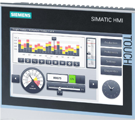
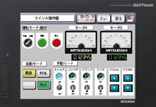





- Industrial display
-
Industrial Products
- DC Servo Drive
- AC Servo Drive
- Industrial board
- Siemens
- Switch Sensor
- Proximity Switch
- Temperature Controller
- Protection Relay
- Fiber Optic Sensor
- Encoder
- Fan
- other
- Heidelberg
- MITSUBISHI
- FANUC
- Siemens adapter
- Fujitsu connector
- Motherboard
- Board
- Contactor
- Circuit
- OMRON
- Relay
- Motor Driver
- power supply
- Cable
- Transformer
- HMI Touch Glass
-
HMI Full Machine Whole unit
- OMRON HMI Touch Panel
- Siemens HMI Touch Panel
- Mitsubishi HMI Touch Panel
- Allen-Bradley automation HMI Touch Panel
- DELTA HMI Touch Panel
- Proface HMI Touch Panel
- KINCO DELTA HMI Touch Panel
- HITECH HMI Touch Panel
- WEINTEK HMI Touch Panel
- TECVIEW HMI Touch Panel
- WEINVIEW HMI Touch Panel
- PANASONIC HMI Touch Panel
- KYOCERA HMI Touch Panel
- SCHNEIDER HMI Touch Panel
- Module
- lcd inverter
- Membrane Keypad Switch
- Zhiyan Customized Touch Screens
- Frequency Inverter
- Servo Motor
- PLC
In the intricate world of industrial automation, medical imaging, and specialized computing, the display screen is far more than a simple output device. It is the critical interface through which data is interpreted, decisions are made, and precision is maintained. Among the myriad of options, the AC121SA03 Mitsubishi 12.1-inch LCD display screen stands out as a notable component, engineered for applications where reliability, clarity, and durability are non-negotiable. This article delves deep into this specific display module, moving beyond basic specifications to explore its technological DNA, inherent strengths, and the exacting environments it is designed to serve.

While consumer displays chase higher refresh rates and vibrant colors, industrial-grade panels like the AC121SA03 are built on a different paradigm. We will dissect its core technology, from its TFT active matrix to its unique optical bonding capabilities, explaining how these features translate to real-world performance. Furthermore, we will navigate its complex ecosystem of compatible interfaces and controllers—a crucial consideration for system integrators. By understanding the why behind its design, engineers, procurement specialists, and technical decision-makers can accurately assess its suitability for their most demanding projects, from factory floor control panels to diagnostic medical equipment.

Unpacking the Core Technology: Beyond the 12.1-Inch Diagonal
The Mitsubishi AC121SA03 is built around a high-performance amorphous silicon TFT (Thin-Film Transistor) LCD panel. This active-matrix technology ensures each pixel is individually controlled, resulting in sharp, consistent images with wide viewing angles—a critical factor in multi-operator environments. Its native resolution of 800 x 600 (SVGA) strikes a deliberate balance, providing sufficient detail for complex graphical user interfaces (GUIs) and data visualization without imposing excessive processing overhead on the connected system.
Beyond the panel itself, the module incorporates a robust CCFL (Cold Cathode Fluorescent Lamp) backlighting system. While LED backlighting is common today, CCFL offers proven, stable illumination with excellent uniformity across the entire screen surface, which is paramount in grayscale-intensive applications like ultrasound or non-destructive testing. The integration of the inverter and power supply within the module's compact metal frame simplifies system design, reducing the need for external components and mitigating points of failure.
The Critical Role of Optical Bonding and Enhanced Durability
A defining characteristic of the AC121SA03 is its optional optical bonding feature. This process involves filling the air gap between the LCD panel and the front cover glass with a clear, optical-grade resin. This technology delivers transformative benefits. Firstly, it dramatically reduces surface reflections and glare from ambient light, making the display readable even under harsh factory or outdoor lighting. Secondly, it enhances mechanical robustness by creating a solid laminate that is resistant to condensation and physical impact.
This durability is further reinforced by the module's sturdy construction. The metal chassis provides electromagnetic shielding, protecting the sensitive electronics from interference that could disrupt nearby equipment or be caused by it. The design inherently resists dust and moisture ingress, aligning with the demands of industrial and medical settings where equipment must perform reliably despite challenging environmental conditions. This focus on resilience ensures the display maintains its integrity and performance over a long operational lifespan.
Interface and Signal Compatibility: Connecting to Your System
For a display module to be functional, it must seamlessly integrate with the host system's video source. The AC121SA03 is designed with this flexibility in mind. It primarily accepts analog RGB signals, the longstanding standard in many industrial PC and embedded systems. This analog interface, while traditional, offers broad compatibility and simplifies signal transmission over shorter distances typical in enclosed control panels.
However, the true integration power often lies in pairing the module with a dedicated LCD controller board. These controllers act as translators, converting signals from various sources—such as LVDS, DVI, or even HDMI—into the precise analog format the panel requires. This allows modern single-board computers or legacy systems to drive the display effectively. Selecting the correct controller is a pivotal step, as it determines supported resolutions, refresh rates, and additional functionalities like touch screen integration.
Target Applications: Where Precision and Reliability Intersect
The technical profile of the AC121SA03 directly dictates its ideal application sectors. In industrial automation, it is a mainstay for Human-Machine Interface (HMI) panels on CNC machines, PLC control stations, and process monitoring systems. Its readability under bright lights and resistance to vibration are invaluable here. Within the medical field, its stable grayscale performance and high contrast make it suitable for diagnostic imaging displays, patient monitoring equipment, and dental visualization systems, where accurate representation of detail is crucial.
Beyond these, it finds use in transportation (for onboard information displays and control units), test and measurement equipment, and specialized point-of-sale or kiosk systems operating in demanding environments. In each case, the common thread is the need for a display that functions not as a consumer gadget, but as a dependable, always-readable component of a larger, mission-critical system.
Comparative Analysis: Positioning in the Industrial Display Landscape
When evaluated against other displays, the AC121SA03's position becomes clear. Compared to modern consumer-grade panels, it may lack ultra-high resolution or wide color gamuts, but it excels in longevity, stability, and environmental hardening—attributes consumers rarely need. Against newer industrial LED-backlit modules, its CCFL backlight offers potentially longer lifespan at consistent brightness and superior uniformity, though at the cost of slightly higher power consumption and thickness.
Its true competitors are peers within the same class of ruggedized, medium-resolution displays. Its advantages often lie in Mitsubishi's reputation for quality, the availability of optical bonding, and its established supply chain for replacement and service. The choice often boils down to specific system requirements for brightness, interface, form factor, and the paramount need for a proven, reliable component with a long track record.
Integration Considerations and Sourcing Pathways
Successfully deploying the AC121SA03 requires careful planning. Engineers must account for its physical dimensions and mounting points, ensuring it fits the intended enclosure. Power requirements, heat dissipation from the backlight, and the selection of a compatible controller board are all critical design-phase decisions. Furthermore, integrating a touch overlay (resistive or capacitive) adds another layer of complexity regarding cabling, calibration, and driver software.
Sourcing this specialized module typically occurs through authorized industrial electronic component distributors or specialized display integrators. Due to its nature as a professional-grade component, it is less commonly found on general consumer marketplaces. When procuring, verifying authenticity is essential, as counterfeit components can fail to meet the stringent performance and safety standards required for industrial and medical use. Partnering with reputable suppliers ensures access to technical support and reliable supply
.
FAQS
Q1: What is the resolution of the Mitsubishi AC121SA03 display?A1: It has a native resolution of 800 x 600 pixels (SVGA).
Q2: Does this screen use LED or CCFL backlighting?A2: It uses a CCFL (Cold Cathode Fluorescent Lamp) backlight system.
Q3: What is optical bonding, and does the AC121SA03 offer it?A3: Optical bonding fills the air gap with resin to reduce glare and enhance durability. It is a key optional feature for this model.
Q4: What type of video input signal does it accept?A4: It primarily accepts standard analog RGB signals.
Q5: Can I connect a modern HDMI source to this display?A5: Yes, but you will need an appropriate LCD controller board that converts HDMI (or other digital signals) to the panel's analog RGB input.
Q6: Is this display suitable for outdoor use?A6: With its optional optical bonding for glare reduction and robust construction, it is suitable for many outdoor or bright indoor environments, though direct sunlight may still pose a challenge.
Q7: What are its main application areas?A7: Key applications include industrial HMI, medical imaging equipment, transportation systems, and test/measurement devices.
Q8: How does it compare to a standard consumer monitor?A8: It is built for long-term reliability, stable performance, and durability in harsh conditions, not for high refresh rates or ultimate color vibrancy.
Q9: Can a touch screen be added to this module?A9: Yes, resistive or capacitive touch overlays can be integrated, typically requiring a separate controller and careful mounting.
Q10: Where can I purchase the AC121SA03?A10: It is best sourced through authorized industrial electronic component distributors or specialized display system integrators.
Conclusion
The Mitsubishi AC121SA03 12.1-inch LCD display module exemplifies the engineering philosophy underpinning professional-grade components. It is not defined by fleeting consumer trends but by a steadfast commitment to performance parameters that matter in critical applications: unwavering reliability, exceptional readability in adverse conditions, and long-term durability. Its value proposition lies in its specialized design, from the CCFL backlight and optional optical bonding to its ruggedized metal chassis.
For system designers and engineers, selecting a display like the AC121SA03 is a strategic decision. It represents an investment in reducing downtime, ensuring operator effectiveness, and protecting the integrity of the larger system. In a landscape where the display is the vital conduit of information, choosing a component built to the exacting standards of industrial and medical use is not just a specification—it is a cornerstone of system resilience and operational success.





