


















In the demanding world of industrial technology, the display panel is far more than a simple window to data; it is the critical interface between complex machinery and human operators. The selection of an appropriate industrial LCD screen can profoundly impact system reliability, usability, and total cost of ownership. This article provides an in-depth exploration of a specific, high-performance component: the AC121SA02 LCD module. This 12.1-inch display, with its 800 x 600 (SVGA) resolution, represents a carefully engineered solution designed to thrive where standard commercial screens would fail.

We will dissect the AC121SA02 from multiple angles, moving beyond basic specifications to understand its core technological advantages. The analysis will cover its robust physical and optical characteristics, the specialized features that ensure operation in harsh conditions, and its typical integration pathways within larger systems. Furthermore, we will examine its ideal application sectors and provide a comparative context against other display technologies. This comprehensive guide aims to equip engineers, system integrators, and procurement specialists with the knowledge needed to evaluate whether the AC121SA02 is the optimal visual interface for their challenging industrial applications.
Core Architecture and Technical Specifications
At its heart, the AC121SA02 is a 12.1-inch diagonal TFT LCD module built on a-Si (amorphous silicon) technology. Its native resolution of 800 x 600 pixels, known as SVGA, offers a balanced compromise between detail clarity and the computational load on the system's graphics controller. This resolution is particularly well-suited for displaying traditional human-machine interface (HMI) graphics, diagnostic data, and control schematics without requiring excessive processing power.
The module typically incorporates a high-brightness CCFL or LED backlight system, often exceeding 450 nits or more, to ensure visibility in brightly lit factory environments. It features a standard LVDS (Low-Voltage Differential Signaling) interface, which provides robust, low-noise data transmission critical for maintaining signal integrity over longer cable runs common in industrial setups. Understanding these foundational specs—the active area dimensions, pixel pitch, contrast ratio, and supported color depth—is the first step in evaluating its fit for a project, forming the basis for its environmental and mechanical robustness.

Ruggedized Design for Harsh Environments
The defining characteristic of the AC121SA02, and what separates it from consumer-grade panels, is its engineered durability. Industrial environments present a gauntlet of challenges including extreme temperatures, conductive dust, moisture, vibration, and electromagnetic interference. This module is constructed to withstand these stresses.
Its operating temperature range is significantly wider, often from -20°C to 70°C or beyond, ensuring functionality in unheated warehouses or near heat-generating machinery. The screen surface usually features a hardened coating to resist scratches and chemical abrasion from cleaning agents or accidental spills. The metal bezel and frame provide structural integrity against physical shocks and vibrations. Furthermore, the entire assembly is designed with sealing considerations to meet specific Ingress Protection (IP) ratings, guarding against dust and water ingress that would quickly incapacitate a standard monitor.
Specialized Features and Enhanced Performance
Beyond ruggedness, the AC121SA02 integrates features tailored for continuous, reliable operation. A key aspect is its optical performance. High brightness, as mentioned, combats ambient light, while a wide viewing angle technology (typically IPS or similar) ensures color consistency and readability for operators viewing the screen from off-center positions—a common scenario in control panels.
Many industrial modules also include heater solutions for reliable cold-start performance in sub-zero conditions, preventing liquid crystal fluidity issues. The longevity of the backlight is paramount; thus, these modules use high-grade LEDs with lifespans rated for tens of thousands of hours. Additionally, the electronic driving board is optimized for low electromagnetic emissions and high immunity to external interference, crucial for maintaining stability in electrically noisy industrial settings alongside motors and power supplies.
Integration Pathways and System Compatibility
Integrating the AC121SA02 into an industrial system requires careful planning. The module is typically supplied as a "bare panel" with an attached control board (the "LCD controller" or "driver board"). This board receives video signals via the LVDS interface from a host system's SBC (Single Board Computer) or dedicated graphics controller.
System integrators must account for mechanical mounting—using the module's pre-drilled holes—power supply requirements (often 3.3V or 5V for logic and a higher voltage for the backlight), and the configuration of the LVDS channel. The interface is often compatible with standard chipsets, but timing parameters may need adjustment in the host's BIOS or driver settings. Successful integration hinges on creating a stable mechanical housing, providing clean power, and ensuring precise signal matching to avoid display artifacts.
Ideal Application Sectors and Use Cases
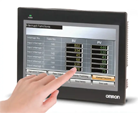
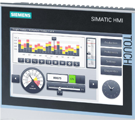
The specific combination of size, resolution, and ruggedness makes the AC121SA02 a versatile choice across numerous industrial verticals. In factory automation, it serves as the primary HMI for PLCs, controlling assembly lines, robotic arms, and packaging machinery. Within transportation and logistics, it is found in vehicle-mounted terminals for forklifts and agricultural equipment, and in warehouse management systems.
The medical field utilizes such panels in diagnostic and monitoring equipment where reliability is non-negotiable. It is also prevalent in kiosks and point-of-sale systems in demanding retail or outdoor environments, and in test and measurement instruments where clear data presentation is critical. Any application demanding a dependable, daylight-readable, and physically robust display in a compact form factor falls within its purview.
Comparative Analysis: AC121SA02 vs. Alternative Technologies
Placing the AC121SA02 in context clarifies its value proposition. Compared to a consumer-grade 12.1-inch panel, the industrial module offers vastly superior environmental specs and longevity, justifying its higher cost in mission-critical applications. Against a larger, higher-resolution panel (e.g., 15-inch XGA), the AC121SA02 provides a more compact solution with lower power consumption and reduced computational overhead, which can be crucial for embedded systems.
When evaluated next to emerging technologies like industrial-grade OLED, the AC121SA02's TFT-LCD technology offers advantages in cost-effectiveness, proven long-term reliability under constant static image display (avoiding burn-in), and typically higher peak brightness. The choice ultimately depends on the specific trade-offs between cost, environmental needs, optical performance, and system constraints.
Frequently Asked Questions (FAQs)
1. What is the AC121SA02?It is a 12.1-inch industrial TFT LCD display module with 800x600 (SVGA) resolution, designed for harsh environments.
2. What does "industrial" mean for this screen?It features a wide operating temperature range, vibration resistance, enhanced durability, and often sealed design for dust/moisture protection.
3. What is the interface for this LCD module?It typically uses an LVDS (Low-Voltage Differential Signaling) interface for reliable data transmission.
4. How bright is this display?Brightness often exceeds 450 nits (cd/m²), making it suitable for high-ambient-light conditions like factories or outdoors.
5. Can it operate in cold temperatures?Yes, with an operating range often from -20°C to 70°C. Some versions may include heaters for extreme cold-start scenarios.
6. What are typical applications for this panel?Factory HMIs, medical devices, vehicle-mounted systems, test equipment, and ruggedized kiosks/POs.
7. Is it a touch screen?The AC121SA02 is usually a display-only module. Touch functionality (resistive or capacitive) can be added as a separate overlay.
8. How long is the backlight lifespan?Industrial LED backlights are rated for long lifespans, commonly 50,000 hours or more under typical use.
9. How do I power this LCD module?It requires separate power for the logic board (e.g., 3.3V/5V) and the backlight (a higher AC or DC voltage, e.g., 12V/24V).
10. Where can I find technical drawings and datasheets?They are available from authorized distributors or directly from the manufacturer of the module.
Conclusion
The AC121SA02 12.1-inch industrial LCD module stands as a testament to engineered resilience. It transcends the role of a simple display by offering a reliable, high-visibility human-machine interface capable of enduring the rigors of industrial life. Its SVGA resolution provides a practical balance of detail and efficiency, while its ruggedized construction ensures continuous operation across a spectrum of challenging conditions, from temperature extremes to physical vibration.
Selecting this module is an investment in system uptime and operator effectiveness. For engineers and integrators designing control systems, medical devices, or field-deployed equipment, the AC121SA02 represents a proven, dependable component choice. By understanding its technical foundations, integration requirements, and ideal use cases, professionals can confidently deploy this display to create robust and user-friendly industrial solutions that perform reliably for years to come.





