




















- Industrial display
-
Industrial Products
- DC Servo Drive
- AC Servo Drive
- Industrial board
- Siemens
- Switch Sensor
- Proximity Switch
- Temperature Controller
- Protection Relay
- Fiber Optic Sensor
- Encoder
- Fan
- other
- Heidelberg
- MITSUBISHI
- FANUC
- Siemens adapter
- Fujitsu connector
- Motherboard
- Board
- Contactor
- Circuit
- OMRON
- Relay
- Motor Driver
- power supply
- Cable
- Transformer
- HMI Touch Glass
-
HMI Full Machine Whole unit
- OMRON HMI Touch Panel
- Siemens HMI Touch Panel
- Mitsubishi HMI Touch Panel
- Allen-Bradley automation HMI Touch Panel
- DELTA HMI Touch Panel
- Proface HMI Touch Panel
- KINCO DELTA HMI Touch Panel
- HITECH HMI Touch Panel
- WEINTEK HMI Touch Panel
- TECVIEW HMI Touch Panel
- WEINVIEW HMI Touch Panel
- PANASONIC HMI Touch Panel
- KYOCERA HMI Touch Panel
- SCHNEIDER HMI Touch Panel
- Module
- lcd inverter
- Membrane Keypad Switch
- Zhiyan Customized Touch Screens
- Frequency Inverter
- Servo Motor
- PLC
In the world of industrial computing and embedded systems, the display is far more than just a window for information; it is the critical interface between complex machinery and human operators. The AA170EC01, a 17-inch LCD display module, stands as a prime example of this vital component, engineered not for the consumer market but for the demanding environments of factories, medical devices, point-of-sale systems, and transportation. This article delves deep into the technical specifications, design philosophy, and practical applications of the AA170EC01.
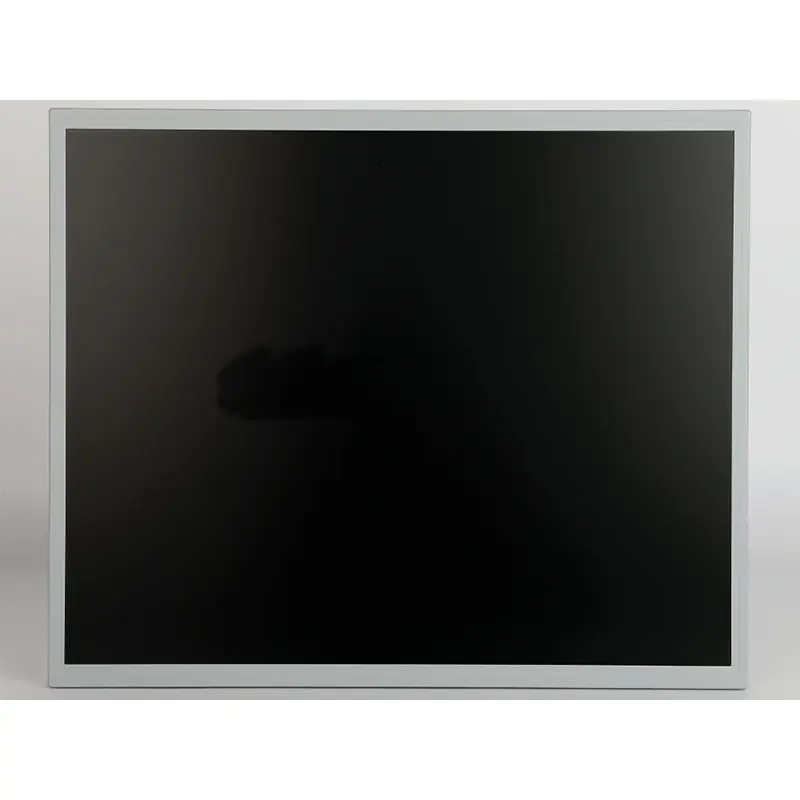
Our exploration moves beyond basic specs to uncover what makes this display a reliable workhorse. We will examine its core panel technology, the significance of its interface and signal compatibility, and the robust mechanical design that allows it to withstand vibration, temperature fluctuations, and continuous operation. Furthermore, we will analyze its integration challenges and the key factors that differentiate it from standard commercial monitors, providing a comprehensive guide for engineers, procurement specialists, and system integrators tasked with selecting the right display for mission-critical applications.
Unpacking the Core Technology: The LCD Panel at the Heart of AA170EC01
The foundation of the AA170EC01's performance lies in its 17-inch diagonal TFT LCD panel. Typically offering an XGA resolution (1024 x 768 pixels) with a 4:3 aspect ratio, this format remains prevalent in industrial contexts due to its compatibility with legacy systems and its efficient use of space for control software interfaces. The panel utilizes a twisted nematic (TN) or advanced fringe field switching (AFFS) technology, balancing factors like response time, viewing angle, and cost.
Key to its functionality is the integrated CCFL (Cold Cathode Fluorescent Lamp) backlight system. Unlike modern LED-backlit consumer screens, this traditional backlight offers proven reliability and consistent brightness output over a long lifespan, often rated at 50,000 hours or more. The display's optical performance, including its brightness (measured in nits), contrast ratio, and color gamut, is calibrated for clarity and readability under various ambient lighting conditions, from dim control rooms to brightly lit factory floors.
Interface and Signal Compatibility: Bridging the Digital Divide
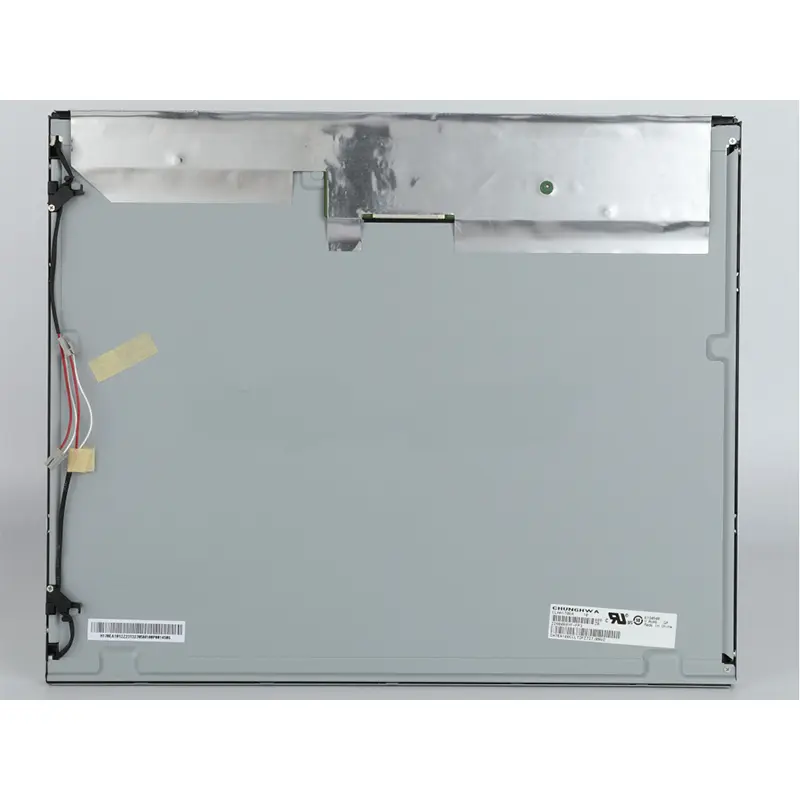
A display module is useless without a reliable connection. The AA170EC01 is designed as a "bare panel," meaning it requires an external controller board (LVDS interface board). Its primary interface is typically Low-Voltage Differential Signaling (LVDS), a robust, noise-resistant digital transmission standard essential for maintaining signal integrity over longer cable runs in electrically noisy industrial environments.
This LVDS interface acts as a universal translator. The external controller board accepts common input signals, such as VGA (D-Sub), DVI, or even HDMI, and converts them into the LVDS protocol the panel understands. This modularity is a significant advantage, allowing system designers to choose or design a controller that perfectly matches their source device's output, ensuring seamless compatibility with a wide range of industrial PCs, single-board computers, and embedded systems.
Ruggedized Design for Demanding Environments
The defining characteristic of the AA170EC01 is its industrial-grade construction. Unlike consumer monitors housed in plastic casings, this module is built on a sturdy metal frame, providing exceptional resistance to physical stress, vibration, and shock. This mechanical robustness is non-negotiable in applications like railway signage, automotive test benches, or heavy machinery where constant movement is a factor.
Furthermore, its operational temperature range is significantly wider than that of commercial displays. Rated to function reliably in extremes from below freezing to high heat (e.g., -20°C to 70°C), it ensures uninterrupted operation in uncontrolled environments. The design also often incorporates measures to mitigate dust and moisture intrusion, although for full protection, it is typically integrated into a sealed enclosure as part of the final product assembly.
Application Landscapes: Where the AA170EC01 Excels
The specific combination of size, reliability, and interface flexibility makes the AA170EC01 a versatile solution across numerous sectors. In industrial automation, it serves as the primary HMI (Human-Machine Interface) for PLCs and SCADA systems, displaying real-time process data and control buttons. The medical field utilizes it in diagnostic equipment like ultrasound or patient monitors, where consistent, fault-free display is critical.
It is also a mainstay in point-of-sale (POS) and kiosk systems, where its 4:3 aspect ratio is ideal for transactional software and its durability supports 24/7 operation. Additionally, it finds use in transportation for in-vehicle information displays and in gaming and arcade machines, where its standardized form factor and reliability are key assets for manufacturers.
Integration Considerations and System Design
Integrating the AA170EC01 into a final product is an engineering task. Designers must account for several factors beyond simply connecting cables. Power supply design is crucial, as the CCFL backlight requires a high-voltage inverter, which must be properly shielded to prevent electromagnetic interference (EMI) with other sensitive electronics.
Thermal management is another critical consideration. The metal chassis helps dissipate heat, but the enclosed system must ensure adequate airflow to prevent overheating, especially at the upper end of its temperature rating. Mechanical mounting must align precisely with the panel's bezel screw holes, and careful selection of the LVDS controller board and cable length is necessary to avoid signal degradation.
Lifecycle, Sourcing, and the Future of Industrial Displays
One of the most compelling reasons for choosing a module like the AA170EC01 is its long-term availability and stable lifecycle. Consumer monitors have rapid refresh cycles, but industrial components are often guaranteed to be in production for many years, which is vital for manufacturers who need to support their products for a decade or more.
Sourcing these displays requires working with specialized industrial electronics distributors or directly with panel manufacturers. While the underlying CCFL technology may seem legacy compared to contemporary LED backlighting, its proven track record and specific performance characteristics ensure its continued relevance. However, the industry trend is moving towards direct LED-backlit industrial panels, offering lower power consumption and thinner profiles, signaling a future evolution for this class of components.
FAQs: AA170EC01 17-Inch LCD Display Module
1. What is the AA170EC01?It is a 17-inch industrial TFT LCD display module, typically with XGA resolution, designed for integration into equipment rather than standalone use.
2. What is its primary interface?It uses an LVDS (Low-Voltage Differential Signaling) interface, requiring an external controller board to convert signals from VGA, DVI, or other sources.
3. What are its typical applications?Common uses include industrial HMIs, medical devices, point-of-sale systems, transportation displays, and gaming/arcade machines.
4. Why is it called an "industrial" display?It features a rugged metal frame, a wide operating temperature range, high reliability, and a long product lifecycle, suited for harsh environments.
5. What is the backlight technology?It commonly uses a CCFL (Cold Cathode Fluorescent Lamp) backlight, known for long life and stable brightness.
6. Can I use it as a direct replacement for a computer monitor?Not directly. It is a bare panel requiring an appropriate LVDS controller board and power supply to function with a standard PC output.
7. What is its resolution and aspect ratio?It typically offers XGA resolution (1024 x 768 pixels) with a 4:3 aspect ratio.
8. How long does the backlight last?The CCFL backlight is often rated for 50,000 hours or more of operation.
9. What are the key integration challenges?Key challenges include sourcing the correct controller board, managing power for the backlight inverter, ensuring thermal dissipation, and mitigating EMI.
10. Is this technology becoming obsolete?While CCFL is a mature technology, the module itself remains highly relevant. The industry is gradually shifting towards LED-backlit industrial panels for newer designs.
Conclusion
The AA170EC01 17-inch LCD module exemplifies the engineering principles that underpin reliable industrial technology. It is not defined by cutting-edge consumer features but by its robustness, longevity, and unwavering performance in contexts where failure is not an option. Its value lies in the seamless integration it enables between digital control systems and the human operators who depend on them.
For system integrators and product designers, understanding its specifications—from the LVDS interface and CCFL backlight to its rugged mechanical construction—is essential for successful implementation. As we look forward, the legacy of workhorses like the AA170EC01 paves the way for their next-generation successors, ensuring that the critical link between machine data and human insight remains clear, durable, and trustworthy.





