












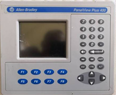
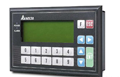

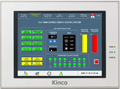
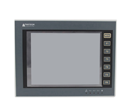




- Industrial display
-
Industrial Products
- DC Servo Drive
- AC Servo Drive
- Industrial board
- Siemens
- Switch Sensor
- Proximity Switch
- Temperature Controller
- Protection Relay
- Fiber Optic Sensor
- Encoder
- Fan
- other
- Heidelberg
- MITSUBISHI
- FANUC
- Siemens adapter
- Fujitsu connector
- Motherboard
- Board
- Contactor
- Circuit
- OMRON
- Relay
- Motor Driver
- power supply
- Cable
- Transformer
- HMI Touch Glass
-
HMI Full Machine Whole unit
- OMRON HMI Touch Panel
- Siemens HMI Touch Panel
- Mitsubishi HMI Touch Panel
- Allen-Bradley automation HMI Touch Panel
- DELTA HMI Touch Panel
- Proface HMI Touch Panel
- KINCO DELTA HMI Touch Panel
- HITECH HMI Touch Panel
- WEINTEK HMI Touch Panel
- TECVIEW HMI Touch Panel
- WEINVIEW HMI Touch Panel
- PANASONIC HMI Touch Panel
- KYOCERA HMI Touch Panel
- SCHNEIDER HMI Touch Panel
- Module
- lcd inverter
- Membrane Keypad Switch
- Zhiyan Customized Touch Screens
- Frequency Inverter
- Servo Motor
- PLC
In the intricate world of industrial automation, machinery uptime and precise visual feedback are paramount. At the heart of many Mitsubishi Electric systems, from factory floor HMIs to specialized medical or transportation equipment, lies a critical component often overlooked: the display module. The AA121ST01 12.1-inch TFT display stands as a quintessential example of this vital engineering. This article delves deep into this specific display model, moving beyond a simple specification sheet to explore its role, technical DNA, and the practical considerations for integration and maintenance.

Our exploration will uncover why the AA121ST01 is more than just a screen; it's a tailored interface solution designed for reliability in demanding environments. We will analyze its key features, from its inverter-less LED backlighting to its robust mechanical design, and provide a clear roadmap for engineers, procurement specialists, and technicians working with Mitsubishi platforms. Understanding this component is key to ensuring system longevity, performance, and seamless human-machine interaction.

The Core Role of the AA121ST01 in Mitsubishi Ecosystems
The AA121ST01 is not a consumer-grade monitor but a industrial display module. Its primary function is to serve as the visual output core within larger Mitsubishi systems, such as the renowned GOT1000 series graphic operation terminals (GOTs). In these applications, the display is the conduit through which operators monitor complex processes, input commands, and diagnose issues.
Its value lies in its standardization. For OEMs and system integrators using Mitsubishi components, the AA121ST01 provides a known-quantity, high-quality display solution that guarantees compatibility with Mitsubishi's logic controllers, drivers, and mounting hardware. This reduces development risk and time-to-market. It is engineered for 24/7 operation in environments where temperature fluctuations, vibration, and electromagnetic interference are common, making it a cornerstone of reliability in automation panels, diagnostic equipment, and control rooms where failure is not an option.
Decoding the Technical Specifications and Features
A closer look at the AA121ST01's specifications reveals its industrial pedigree. It features a 12.1-inch diagonal screen with a standard SVGA (800 x 600 pixel) resolution, offering a balanced blend of sufficient detail and lower processing load for control applications. A key advancement is its LED backlight system, which eliminates the need for a high-voltage inverter. This results in lower power consumption, reduced heat generation, and enhanced long-term reliability compared to older CCFL-backlit models.
The module typically offers a high brightness level of approximately 450 nits, ensuring readability in brightly lit industrial settings. Its contrast ratio and wide viewing angles are optimized for frontal and slight off-angle viewing common in control panels. The interface is a fundamental LVDS (Low-Voltage Differential Signaling) channel, ensuring clean, high-speed digital signal transmission from the controller board to the display with minimal noise interference, a critical factor in electrically noisy environments.
Mechanical Design and Environmental Durability
The robustness of the AA121ST01 is etched into its physical construction. The module is designed as a drop-in replacement or initial component with precise outer dimensions and a standardized mounting hole pattern, ensuring it fits seamlessly into Mitsubishi's panel cutouts. The front surface often consists of a durable polycarbonate or glass overlay, providing resistance against scratches and minor impacts.
This durability extends to its environmental tolerances. The display is built to operate reliably across an extended temperature range, often from -20°C to 70°C for the operating ambient. It is engineered to withstand significant levels of vibration and shock, which are inevitable in manufacturing plants, vehicles, or heavy machinery. This mechanical fortitude ensures that the visual interface remains operational and legible throughout the equipment's lifecycle, even under strenuous conditions.
Integration Considerations and Compatibility
Successfully integrating the AA121ST01 requires attention beyond the display itself. System designers must account for the complete signal chain. This includes ensuring the source controller outputs a compatible LVDS signal that matches the panel's native resolution, pixel clock, and timing. The power supply must provide stable, clean DC power at the required voltage and current for the LED backlight and logic board.
Compatibility is foremost with Mitsubishi's own ecosystem. It is crucial to verify the exact model number and revision against the host device's requirements (e.g., a specific GOT1000 model). Furthermore, understanding the cable interface—the pinout and connector type—is essential for a flawless physical and electrical connection. Ignoring these details can lead to no display, image artifacts, or premature failure.
Common Failure Modes and Troubleshooting Guide
Even robust components can fail. Common issues with industrial displays like the AA121ST01 include a complete loss of image (often related to power supply, LVDS cable, or main board failure), dim or uneven backlight (pointing to LED strip degradation), or horizontal/vertical lines (indicating potential driver IC or panel connection issues).
A systematic troubleshooting approach is vital. Start with the simplest checks: verify input power voltage and stability. Reseat the LVDS and power cables to ensure good contact. If possible, test the display module with a known-good controller and cable set to isolate the fault. Visual inspection for capacitor bulge or burn marks on the driver board can also reveal problems. Understanding these failure modes aids in rapid diagnosis, minimizing system downtime.
Sourcing, Replacement, and End-of-Life Planning
For maintenance and repair teams, sourcing a genuine or compatible AA121ST01 is critical. While Mitsubishi may phase out direct support for older modules, a specialized market of industrial display distributors and refurbishers exists. When sourcing, verify the module's lot code and revision to ensure a perfect match. Consider purchasing from vendors that offer technical support and a warranty.
Proactive end-of-life planning is wise for critical systems. This involves identifying the display part number in your BOM, monitoring its lifecycle status from the manufacturer, and considering the purchase of strategic spares before the module becomes obsolete. In some cases, identifying a modern, pin-compatible alternative with improved features (like higher brightness or wider temperature range) can be a forward-thinking strategy to future-proof your equipment.
FAQs: AA121ST01 12.1" TFT Display
1. What is the AA121ST01 primarily used for?It is primarily used as the display module inside Mitsubishi Graphic Operation Terminals (GOTs) and other industrial HMI/control systems.
2. What resolution does this display have?It has an SVGA resolution of 800 pixels horizontally by 600 pixels vertically.
3. Does it use CCFL or LED backlighting?It uses a modern, long-life LED backlight system, which does not require a high-voltage inverter.
4. What is the main interface type?It uses an LVDS (Low-Voltage Differential Signaling) digital interface.
5. Can I use this display as a standalone computer monitor?No, it is a bare panel module requiring an LVDS signal controller and appropriate power supply; it cannot connect directly to VGA or HDMI ports.
6. My display is very dim. What could be wrong?This is typically caused by aging or failing LED backlight strips. The power supply to the backlight should also be checked.
7. Where can I find a replacement AA121ST01?Specialized industrial electronic component distributors or refurbishers are the best sources, especially for older or discontinued stock.
8. Is the AA121ST01 touch screen?No, the AA121ST01 is a display-only panel. Touch functionality is provided by a separate overlay integrated by the system manufacturer.
9. How do I ensure compatibility when replacing it?Match the exact model number, revision, connector type, and pinout. Physical dimensions and mounting holes are also critical.
10. What is a key advantage of its LED backlight?Key advantages include lower power consumption, less heat, instant-on capability, and generally longer lifespan than CCFL backlights.
Conclusion
The AA121ST01 12.1-inch TFT display exemplifies the engineered reliability required in industrial automation. More than just a screen, it is a system-critical component designed for seamless integration within the Mitsubishi ecosystem, offering durability, clarity, and long-term performance in challenging environments. From its technical architecture to practical integration and maintenance insights, understanding this module is essential for anyone responsible for the lifecycle of Mitsubishi-based control systems.
In a landscape where equipment is expected to last for decades, the choice and care of foundational components like the AA121ST01 have direct consequences for operational efficiency and cost. By appreciating its role, specifications, and failure modes, engineers and technicians can make informed decisions—ensuring that the vital window between human and machine remains clear, reliable, and effective for years to come.





