


















- Industrial display
-
Industrial Products
- DC Servo Drive
- AC Servo Drive
- Industrial board
- Siemens
- Switch Sensor
- Proximity Switch
- Temperature Controller
- Protection Relay
- Fiber Optic Sensor
- Encoder
- Fan
- other
- Heidelberg
- MITSUBISHI
- FANUC
- Siemens adapter
- Fujitsu connector
- Motherboard
- Board
- Contactor
- Circuit
- OMRON
- Relay
- Motor Driver
- power supply
- Cable
- Transformer
- HMI Touch Glass
-
HMI Full Machine Whole unit
- OMRON HMI Touch Panel
- Siemens HMI Touch Panel
- Mitsubishi HMI Touch Panel
- Allen-Bradley automation HMI Touch Panel
- DELTA HMI Touch Panel
- Proface HMI Touch Panel
- KINCO DELTA HMI Touch Panel
- HITECH HMI Touch Panel
- WEINTEK HMI Touch Panel
- TECVIEW HMI Touch Panel
- WEINVIEW HMI Touch Panel
- PANASONIC HMI Touch Panel
- KYOCERA HMI Touch Panel
- SCHNEIDER HMI Touch Panel
- Module
- lcd inverter
- Membrane Keypad Switch
- Zhiyan Customized Touch Screens
- Frequency Inverter
- Servo Motor
- PLC
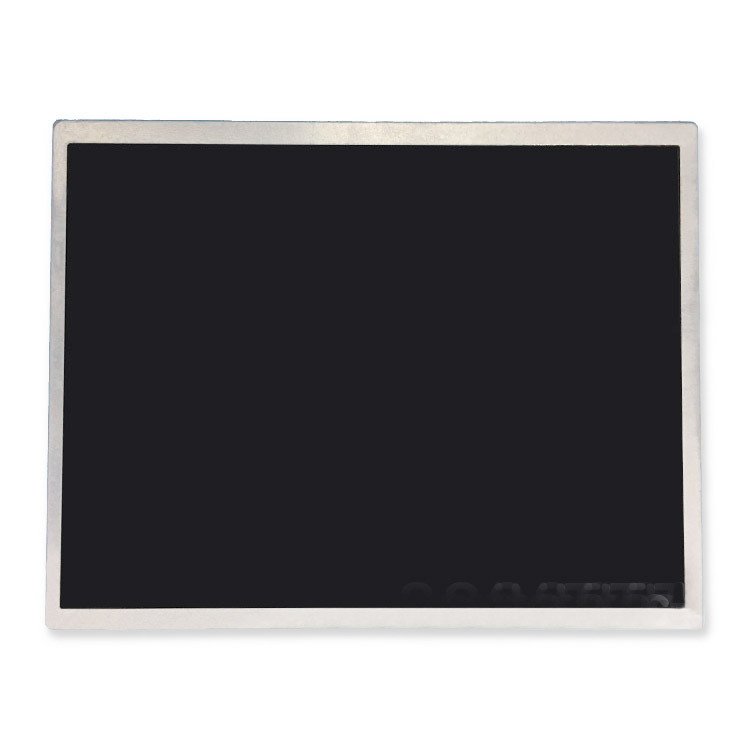
In the intricate world of industrial automation, medical devices, and human-machine interfaces (HMIs), the display module is the critical bridge between complex machine data and human understanding. Among the myriad of components available, the AA104VB04 from Mitsubishi Electric stands out as a benchmark of reliability and performance in a specific niche. This article delves deep into this particular 10.4-inch TFT-LCD module, exploring not just its basic specifications, but its engineering philosophy, ideal applications, and the reasons behind its enduring presence in demanding sectors.


We will move beyond the simple datasheet to examine the module's core technology, its design strengths for industrial environments, and the crucial integration considerations for engineers. By understanding the why behind its design choices—from its resolution and interface to its mechanical robustness—system integrators and product developers can make informed decisions about whether this module is the optimal visual interface for their next project. This exploration is essential for anyone selecting components where longevity, clarity, and stability are non-negotiable.
Decoding the Model: Anatomy of the AA104VB04
The model name AA104VB04 is a concise summary of the module's identity. Breaking it down, "AA" typically denotes Mitsubishi's standard a-Si (amorphous Silicon) TFT series. "104" directly indicates the 10.4-inch diagonal screen size. The "V" often references VGA input compatibility, while "B" may relate to its specific backlight type or generation. "04" signifies a revision or variant code. At its heart, this is an a-Si TFT-LCD LCM (Liquid Crystal Module), meaning it integrates the LCD panel, driver circuits, backlight unit, and often the interface connectors into a single, ready-to-use unit.
The key specifications are precise: a native resolution of 640 (RGB) x 480 pixels, universally known as VGA. This results in a pixel pitch of approximately 0.33mm x 0.33mm and a 76 PPI (Pixels Per Inch) density. While this PPI is low compared to consumer smartphones, it is a deliberate and optimal choice for its intended environments, providing excellent legibility from a typical viewing distance without unnecessary processing overhead. The 4:3 aspect ratio is another classic feature, perfectly suited for legacy systems and many industrial control software interfaces designed for such proportions.
The VGA Standard: Legacy Power and Modern Relevance
In an era of HDMI, DisplayPort, and LVDS, the presence of a VGA (Video Graphics Array) analog interface on the AA104VB04 is a significant statement. Far from being a mere legacy holdover, this choice is strategic. VGA is a profoundly stable, well-understood, and widely supported standard, especially in industrial PC (IPC), embedded computing, and PLC-based systems. Its analog nature can be more forgiving over longer cable runs in electrically noisy environments when properly shielded, compared to some digital signals at lower resolutions.
Furthermore, integration simplicity is a major advantage. Countless single-board computers, microcontrollers with graphics capabilities, and standard industrial motherboards still offer native VGA outputs. Using the AA104VB04 eliminates the need for complex signal converters or specialized driver boards, streamlining the design-in process, reducing bill-of-material costs, and enhancing overall system reliability. For upgrading existing machinery with a modern LCD replacement for aging CRTs, the VGA interface makes the transition seamless.
Engineered for Endurance: The Industrial-Grade Build
Mitsubishi designs components like the AA104VB04 not for the controlled, gentle life of a consumer tablet, but for the harsh realities of the factory floor, medical lab, or outdoor kiosk. Its industrial-grade pedigree is evident in several key areas. First, the operating temperature range is typically wide, often spanning from -10°C to 60°C or better, ensuring functionality in unregulated environments. The backlight, usually a long-life CCFL (Cold Cathode Fluorescent Lamp) in this module series, offers high brightness (often 400-450 nits) for readability under strong ambient light and a consistent, stable output over tens of thousands of hours.
The mechanical construction is robust, featuring a rigid metal frame that protects the glass substrate from vibration, shock, and torsional stress. The surface of the panel is frequently equipped with a hard-coated or anti-glare treatment to resist scratches and minimize reflections. This focus on durability and longevity translates directly into lower total cost of ownership for the end-user, minimizing downtime and replacement frequency—a critical factor in 24/7 operational settings.
Optimal Application Landscapes: Where This Module Excels
The specific characteristics of the AA104VB04 make it a superior choice for well-defined application segments. Its 4:3 VGA format is ideal for Human-Machine Interface (HMI) panels on industrial automation equipment, PLC controllers, and CNC machines, where software interfaces are often designed for this aspect ratio. In medical devices—such as patient monitors, diagnostic equipment, and laboratory instruments—its high reliability, stable image quality, and ability to meet stringent regulatory standards are paramount.
Additionally, it finds a home in point-of-sale (POS) systems, kiosks, and specialized transportation displays. In these applications, the module's ability to display static graphics, text-based data, and simple user interfaces clearly and reliably over many years is more valuable than high resolution or vibrant color gamut. It serves as a direct, drop-in upgrade path for systems originally built with older 10.4" CRT or early-generation LCD monitors, preserving investments in software and hardware architecture.
Critical Integration Considerations for Engineers
Successfully integrating the AA104VB04 into a product requires attention to several technical details. Power sequencing is crucial; the module's datasheet provides specific timings for applying power to the logic board, backlight inverter, and control signals. Ignoring these can lead to reduced lifespan or immediate failure. Engineers must also design the interface circuitry carefully, ensuring the VGA signal integrity with proper impedance matching and shielding to prevent ghosting or signal degradation.
Mechanical integration involves accounting for the module's exact footprint, mounting hole positions, and bezel requirements. The backlight inverter, if CCFL-based, requires high-voltage AC output and may generate electromagnetic interference (EMI) that must be mitigated within the system enclosure. Furthermore, understanding the control pins (for power on/off, backlight adjustment, etc.) is essential for implementing features like power saving modes or brightness control via the host system.
The Competitive Landscape and Longevity Perspective
While newer TFT technologies like IPS (In-Plane Switching) offer wider viewing angles and LED backlighting provides higher efficiency, the AA104VB04 occupies a distinct position. Its value proposition is not based on having the latest specs, but on proven performance, extreme reliability, and long-term availability. Mitsubishi is known for supporting its industrial component lines for many years, a critical factor for products with lifecycles spanning a decade or more.
Competitors may offer similar 10.4" VGA modules, but the differentiation often lies in consistency of supply, quality of construction, and the depth of technical documentation and support. For an engineer, selecting a display module is a long-term commitment. Choosing a well-established part like the AA104VB04 mitigates the risk of a forced redesign due to component end-of-life, thereby protecting the longevity and serviceability of the final product in the field.
FAQs: AA104VB04 Mitsubishi Display Module
1. What is the AA104VB04?It is a 10.4-inch industrial TFT-LCD module from Mitsubishi with VGA (640x480) resolution and a 4:3 aspect ratio.
2. What does "LCM" mean?LCM stands for Liquid Crystal Module, indicating it's a complete unit with panel, drivers, backlight, and often connectors.
3. Is the VGA interface a disadvantage?No, for its target applications, VGA is an advantage due to its universal support, simplicity, and stability in industrial environments.
4. What is the typical backlight type and life?It typically uses a CCFL backlight with a lifespan often rated at 50,000 hours or more to half-brightness.
5. What are the main applications for this display?Industrial HMIs, medical devices, POS systems, kiosks, and as a replacement for older 10.4" CRT/LCD displays.
6. Is it suitable for outdoor use?It has a wide temperature range and high brightness, but direct sunlight viewing may require a special optical bond or enhanced polarizer.
7. Can I touch-enable this module?Yes, it is compatible with external resistive or projective capacitive touchscreen overlays, which must be sourced separately.
8. What are the key integration challenges?Proper power sequencing, VGA signal integrity, mechanical mounting, and managing the high-voltage backlight inverter.
9. How does its 76 PPI affect image quality?At typical viewing distances for industrial equipment, 76 PPI provides sharp text and clear graphics without excessive pixelation.
10. Why choose this over a newer, higher-resolution panel?For reasons of long-term supply, proven reliability in harsh conditions, simpler integration, and compatibility with legacy systems.
Conclusion
The Mitsubishi AA104VB04 is far more than a simple collection of specifications on a page. It represents a mature, purpose-driven engineering solution tailored for environments where dependability trumps novelty. Its 10.4-inch VGA format, industrial ruggedness, and straightforward analog interface are not limitations but carefully selected attributes that solve real-world problems in automation, medical, and commercial fields.
For system designers, the value lies in its ability to reduce integration complexity, ensure long-term product supportability, and deliver consistent performance over an extended operational lifespan. In a world constantly chasing higher pixels and faster refresh rates, the AA104VB04 stands as a testament to the enduring power of right-tech—the application of precisely appropriate technology to create robust, maintainable, and successful end products. It remains a cornerstone component for those building machines that are meant to last.





