


















In the intricate world of industrial and commercial display solutions, where reliability, clarity, and durability are non-negotiable, specific component models become benchmarks of performance. The Mitsubishi AA084XE01 8.4-inch LCD display screen is one such component, a specialized panel engineered not for consumer entertainment, but for mission-critical applications where failure is not an option. This article delves deep into the technical ecosystem of this particular display, moving beyond basic specifications to explore its defining characteristics, ideal use cases, and the engineering philosophy it represents.
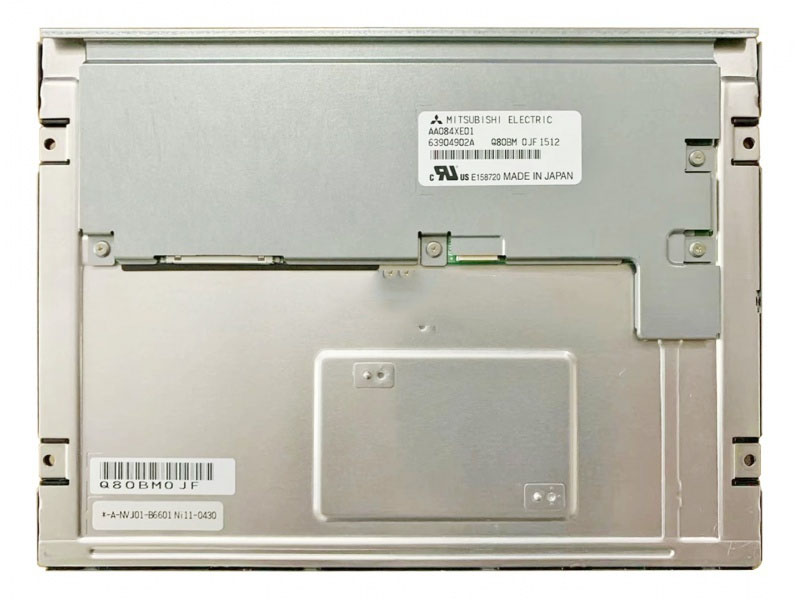
While many displays compete on resolution or color gamut alone, the AA084XE01 tells a different story. It embodies a class of components designed for integration into larger systems—from medical diagnostic equipment and industrial control panels to transportation information systems. Our exploration will uncover why this specific model has garnered attention, examining its core technology, environmental robustness, integration requirements, and the tangible value it delivers to OEMs and system integrators. This is an analysis of a tool built for precision and endurance in demanding environments.
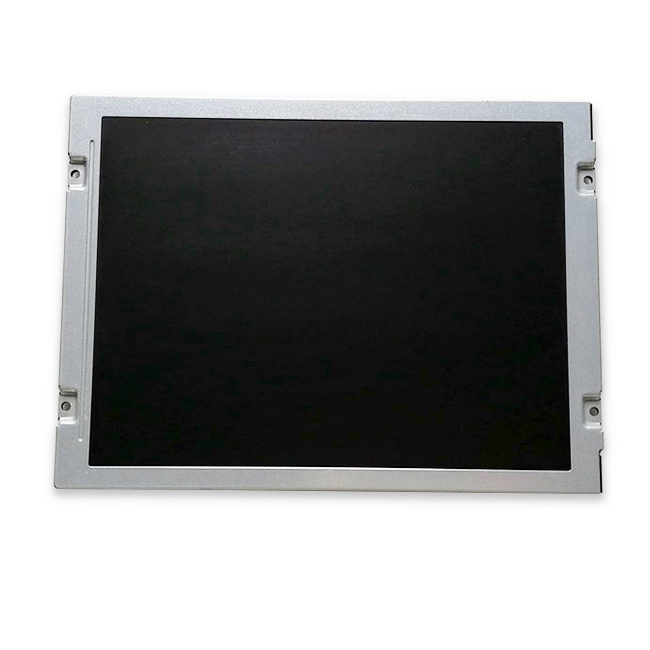
Decoding the Core Technology: Beyond the 8.4-Inch Diagonal
The Mitsubishi AA084XE01 is fundamentally a TFT-LCD (Thin-Film Transistor Liquid Crystal Display) module. Its 8.4-inch diagonal size is a classic footprint in embedded systems, offering a substantial viewing area while remaining compact enough for panel-mounted equipment. The resolution, typically 800 x 600 pixels (SVGA), provides a sharp pixel density for detailed graphical user interfaces, schematics, or data readouts without overburdening the system's graphics controller with excessive data processing.
Beyond size and resolution, the panel's technology dictates its performance. It likely employs an advanced in-plane switching (IPS) or similar wide-viewing angle technology, ensuring that visual information remains consistent and color-stable even when viewed from sharp angles—a critical feature for control panels monitored by multiple operators. The backlighting system, often utilizing long-life LEDs, is engineered for uniform brightness across the entire screen, eliminating hotspots or dim corners that could lead to misinterpretation of data. This foundation of core display technology sets the stage for its ruggedized application.
Engineered for Adversity: Ruggedness and Environmental Specifications
What truly distinguishes the AA084XE01 from a standard commercial monitor is its built-in ruggedness. This display is designed to operate reliably under conditions that would cause consumer-grade screens to falter or fail. Key specifications often include an extended operating temperature range, allowing functionality in both freezing cold and intensely hot environments, such as factory floors or outdoor kiosks.
Further, it is built to resist mechanical stress. This includes resistance to vibration and shock, ensuring that connections remain stable and the LCD matrix unaffected in mobile or high-impact settings like ambulances, construction vehicles, or manufacturing plants. Many such industrial modules also feature enhanced humidity resistance and may be treated with coatings to mitigate condensation or corrosion. This resilience transforms the display from a fragile component into a dependable interface, capable of surviving the rigors of its intended operational life.
The Integration Imperative: Interface and System Compatibility
The AA084XE01 is not a plug-and-play monitor; it is an integrated component. It typically features low-voltage differential signaling (LVDS) interfaces, the industry standard for transmitting high-speed video data from a controller board to the display panel with minimal noise and interference. This requires system designers to incorporate a compatible LCD controller or use a system-on-chip (SoC) with integrated LVDS support.
Successful integration also involves managing power sequencing, backlight control (often through an inverter or direct LED driver), and potentially implementing touch functionality if a resistive or capacitive touchscreen overlay is part of the module. Understanding these electrical and logical interface requirements is crucial for engineers. The value of the display is only realized when it is seamlessly and stably embedded into the host device, forming a cohesive and reliable human-machine interface (HMI).
Primary Application Domains: Where Precision Meets Durability
The specific blend of size, clarity, and ruggedness makes the AA084XE01 ideal for several high-stakes industries. In medical technology, it serves as the display for portable diagnostic ultrasound machines, patient monitors, and laboratory analyzers, where accurate visual representation of data is literally a matter of life and death. The screen's reliability ensures continuous operation in critical care environments.
In industrial automation and process control, it is embedded into PLC (Programmable Logic Controller) interfaces, CNC machine operator panels, and SCADA system terminals. Here, it must render complex diagrams and real-time metrics clearly for operators, often in environments filled with electromagnetic noise, dust, and variable temperatures. Additionally, it finds use in transportation and logistics, such as in-vehicle information systems for public transit or forklift status displays, where readability and shock resistance are paramount.
Comparative Landscape: Positioning Against Alternatives
When selecting a display module, engineers evaluate alternatives. Compared to newer, higher-resolution panels, the AA084XE01's SVGA resolution might seem modest. However, in many industrial contexts, ultra-high resolution is unnecessary and can be a drawback, increasing cost, power consumption, and processing overhead without delivering functional benefit. Its strength lies in its proven reliability, wide availability (though often through specialized distributors), and a known performance envelope.
It competes with similar modules from other industrial display manufacturers. The choice often comes down to nuanced differences in optical bonding (which reduces glare and improves durability), specific temperature range certifications, the quality of the manufacturer's long-term support, and supply chain stability. For legacy system upgrades or new designs requiring a proven form factor, the AA084XE01 represents a low-risk, high-reliability choice.
Lifecycle Considerations: Sourcing, Support, and Longevity
Procuring and implementing an industrial component like theAA084XE01 involves strategic thinking beyond the initial purchase. These displays are often part of a product lifecycle that spans many years, sometimes over a decade. Manufacturers like Mitsubishi typically offer extended product longevity and stable supply guarantees, which is essential for OEMs who cannot afford frequent redesigns due to component end-of-life (EOL) notices.
Support includes access to detailed technical documentation, such as full datasheets, mechanical drawings, and interface timing charts, which are vital for proper integration. Furthermore, understanding the potential need for replacement parts or the availability of compatible direct replacements from second sources is a key part of risk management. Choosing such a module is a commitment to a long-term partnership with the technology and its supply chain.
Frequently Asked Questions (FAQs)
1. What is the primary use of the Mitsubishi AA084XE01 display?It is designed for embedded industrial, medical, and transportation applications requiring a rugged, reliable 8.4-inch interface.
2. What is the screen resolution of the AA084XE01?It typically features an SVGA resolution of 800 x 600 pixels.
3. What type of interface does it use?It commonly uses an LVDS (Low-Voltage Differential Signaling) interface for robust digital video transmission.
4. Is this display touchscreen capable?The base LCD panel may not include touch; however, it is often available as a variant or can be paired with a separate resistive or capacitive touch overlay.
5. Can it operate in extreme temperatures?Yes, it is engineered for an extended operating temperature range, suitable for harsh industrial environments.
6. Is the AA084XE01 a plug-and-play monitor?No. It is a bare LCD panel/module requiring integration with a compatible controller, power supply, and system housing.
7. How does it compare to a consumer-grade 8-inch tablet screen?It is far more rugged, has wider viewing angles, better consistency in extreme conditions, and longer lifecycle support, but lacks the consumer connectivity and features.
8. Where can I buy the Mitsubishi AA084XE01?It is sourced through authorized industrial electronic component distributors or specialized display module suppliers, not consumer retail channels.
9. What is the typical lifespan of this display?The backlight and components are rated for tens of thousands of hours of operation, and the product is typically available for purchase for many years to support long-term projects.
10. What are key integration challenges?Key challenges include proper LVDS signal matching, power sequencing, mechanical mounting, and potentially integrating touch controller circuitry.
Conclusion
The Mitsubishi AA084XE01 8.4-inch LCD display is more than just a screen; it is a testament to engineering for purpose. Its value lies not in chasing consumer trends, but in delivering unwavering performance, environmental resilience, and long-term reliability for specialized applications. From hospital wards to factory floors, it serves as the critical visual gateway between complex systems and their human operators.
For engineers and procurement specialists, selecting such a component is a strategic decision that balances technical specifications with lifecycle management and supply chain assurance. In a world increasingly dependent on robust human-machine interfaces, displays like the AA084XE01 form the silent, reliable backbone of technology we count on every day, proving that true sophistication often lies in specialized, enduring design rather than mere specification.





