



















- Industrial display
-
Industrial Products
- DC Servo Drive
- AC Servo Drive
- Industrial board
- Siemens
- Switch Sensor
- Proximity Switch
- Temperature Controller
- Protection Relay
- Fiber Optic Sensor
- Encoder
- Fan
- other
- Heidelberg
- MITSUBISHI
- FANUC
- Siemens adapter
- Fujitsu connector
- Motherboard
- Board
- Contactor
- Circuit
- OMRON
- Relay
- Motor Driver
- power supply
- Cable
- Transformer
- HMI Touch Glass
-
HMI Full Machine Whole unit
- OMRON HMI Touch Panel
- Siemens HMI Touch Panel
- Mitsubishi HMI Touch Panel
- Allen-Bradley automation HMI Touch Panel
- DELTA HMI Touch Panel
- Proface HMI Touch Panel
- KINCO DELTA HMI Touch Panel
- HITECH HMI Touch Panel
- WEINTEK HMI Touch Panel
- TECVIEW HMI Touch Panel
- WEINVIEW HMI Touch Panel
- PANASONIC HMI Touch Panel
- KYOCERA HMI Touch Panel
- SCHNEIDER HMI Touch Panel
- Module
- lcd inverter
- Membrane Keypad Switch
- Zhiyan Customized Touch Screens
- Frequency Inverter
- Servo Motor
- PLC
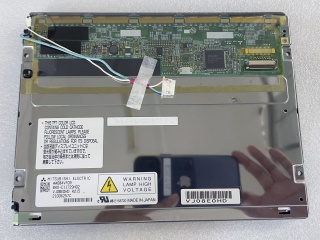
In the intricate world of industrial automation, medical instrumentation, and specialized human-machine interfaces (HMIs), the display panel is far more than a simple window to data. It is the critical touchpoint where digital commands meet physical action, where reliability and clarity are non-negotiable. At the heart of many such demanding applications lies a specific component: the AA084VF09, an 8.4-inch LCD display module from Mitsubishi Electric. This isn't a consumer-grade screen; it is a precision-engineered solution built for environments where failure is not an option.
This article delves into a comprehensive analysis of the Mitsubishi AA084VF09. We will move beyond basic specifications to explore its core technological architecture, the unique advantages conferred by its 640x480 (VGA) resolution, and its ideal application ecosystems. We will dissect the engineering considerations behind its design, compare its positioning within the broader market, and provide practical guidance for integration and optimization. Our goal is to provide engineers, procurement specialists, and system designers with the depth of understanding necessary to evaluate whether this robust display module is the keystone for their next critical project.
Deconstructing the AA084VF09: A Legacy of Industrial Robustness
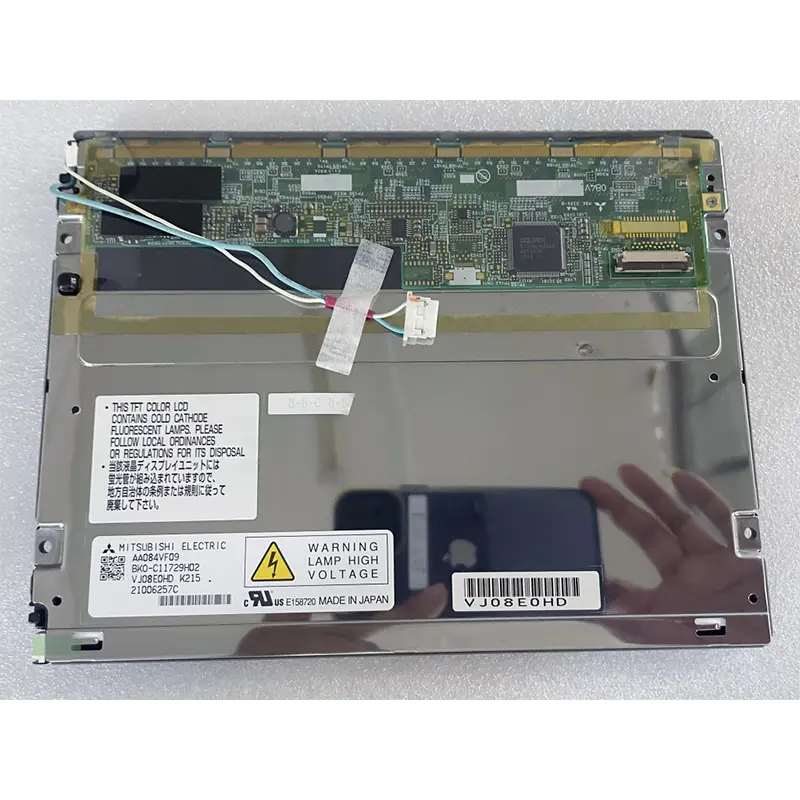
The Mitsubishi AA084VF09 is a testament to an era of industrial design where longevity and interoperability were paramount. This 8.4-inch active matrix TFT-LCD module is built around a high-performance amorphous silicon thin-film transistor panel. Its native resolution of 640 x 480 pixels, the longstanding VGA standard, is a deliberate choice. This resolution provides a perfect balance between information density and graphical clarity for complex control schematics, diagnostic readouts, and menu-driven interfaces, without imposing excessive processing load on legacy or embedded systems.
Beyond the panel itself, the module incorporates a CCFL (Cold Cathode Fluorescent Lamp) backlighting system. While newer technologies like LED exist, CCFL offers proven, even illumination with a long operational life and excellent performance across a wide temperature range—a critical factor in industrial settings. The module features a standard LVDS (Low-Voltage Differential Signaling) interface, ensuring robust, low-noise data transmission that is resistant to electromagnetic interference common in factory floors or medical suites. The inclusion of an inverter for the backlight makes it a complete, ready-to-integrate display solution.
The Strategic Advantage of VGA Resolution in Modern Systems
In an age of 4K and beyond, the persistence of VGA might seem anachronistic. However, for the AA084VF09's target applications, its 640x480 resolution is a strategic asset. Firstly, it ensures backward compatibility with a vast universe of industrial PCs, PLCs, and embedded controllers designed around this standard. Migrating an entire control system to a new display format can be prohibitively expensive and risky.
Secondly, it simplifies software and UI development. Graphics and fonts are larger, more legible, and less prone to aliasing at this resolution, reducing operator error in high-stress environments. The lower pixel count also means faster rendering times and lower GPU requirements, allowing for more predictable and stable system performance. For displaying traditional alphanumeric data, waveforms, and symbolic controls—the lifeblood of industrial HMIs—VGA remains exceptionally effective and efficient.
Core Application Ecosystems: Where Reliability is Paramount
The AA084VF09 finds its home in sectors where performance trumps novelty. IndustrialAutomation is a primary domain, where it serves as the interface for CNC machine tools, robotic control stations, and process monitoring systems. Its rugged construction and stable performance under vibration or temperature fluctuations are essential here.
In Medical Equipment, this display is often integrated into diagnostic devices, patient monitors, and surgical equipment. Its consistent color reproduction (typically 262K colors) and high contrast ratio ensure that visual data is presented accurately, supporting critical decision-making. Furthermore, the Transportation and Aerospace sectors utilize such modules in onboard control and diagnostic panels, where component certification and long-term supply are as important as the technical specs. Its design aligns with requirements for durability and mean time between failures (MTBF).
Engineering and Integration Considerations
Successfully deploying the AA084VF09 requires careful planning. Engineers must account for its physical footprint, mounting mechanism, and connector type. The CCFL backlight necessitates an inverter, which must be properly shielded and placed to avoid electrical noise. Thermal management is also crucial; while the module operates over a wide temperature range, adequate ventilation ensures longevity, especially in sealed enclosures.
From a signal integration perspective, ensuring the host system's graphics controller outputs a compatible LVDS signal with the correct timing parameters is vital. Designers may need to consider voltage regulation for the module's power supply and implement appropriate grounding schemes to maintain signal integrity. Understanding these nuances is the difference between a prototype and a field-ready product.
Market Context and Alternative Technologies
The AA084VF09 exists in a competitive landscape. Its direct competitors are often other industrial-grade modules from manufacturers like AUO, Innolux, or Sharp, offering similar VGA panels, sometimes with LED backlights for lower power consumption and longer life. The choice often boils down to specific mechanical dimensions, connector pinouts, brightness levels (the AA084VF09 is typically around 400 nits), and, importantly, supply chain security and manufacturer support.
Alternative paths include newer TFTs with higher resolutions (SVGA, XGA) or different aspect ratios, or even modern industrial panel PCs that bundle computing and display. However, for retrofit projects, legacy system support, or applications where component-level control is required, the AA084VF09's standardized form and proven reliability give it a enduring niche.
Optimizing Performance and Ensuring Longevity
To maximize the service life and performance of the AA084VF09, adherence to its absolute maximum ratings and recommended operating conditions is non-negotiable. This includes strict observance of voltage limits for the logic power, backlight, and inverter. Preventing static discharge during handling is paramount. From a software standpoint, implementing features like automatic backlight dimming (if the inverter supports it) during periods of inactivity can significantly extend the backlight's lifespan.
For systems operating in high-ambient-light environments, the use of optical bonding—adhering a glass or polycarbonate cover lens directly to the LCD with a transparent adhesive—can dramatically improve sunlight readability and physical robustness. This is a common enhancement in transportation and outdoor industrial applications. Regular maintenance of cooling filters (if used) will also prevent overheating and dust ingress.
Frequently Asked Questions (FAQs)
Q1: What is the AA084VF09?A1: It is an industrial-grade 8.4-inch TFT-LCD module from Mitsubishi with 640x480 VGA resolution, CCFL backlight, and an LVDS interface.
Q2: What does the "VGA" resolution mean for performance?A2: It ensures excellent compatibility with legacy systems, simplifies UI design, reduces processing load, and provides clear, legible graphics for control interfaces.
Q3: Is this display suitable for new designs, or is it only for repairs?A3: While ideal for maintaining existing systems, it remains a valid choice for new designs where its specific rugged characteristics, standard resolution, and supply chain stability are required.
Q4: What is the main advantage of CCFL backlighting over LED?A4: CCFL provides extremely even, wide-temperature-range illumination with a long, predictable lifespan, which has been historically preferred in many industrial designs.
Q5: What are typical applications for this display?A5: Industrial machine HMIs, medical diagnostic devices, aerospace control panels, and specialized test and measurement equipment.
Q6: What interface does it use?A6: It uses a Low-Voltage Differential Signaling (LVDS) interface for robust, low-noise digital video transmission.
Q7: Does it include a touchscreen?A7: No, the AA084VF09 is a display-only module. Resistive or capacitive touch panels can be added as separate components.
Q8: How bright is the screen?A8: Typical brightness is around 400 cd/m² (nits), suitable for most indoor industrial and medical environments.
Q9: What are critical integration considerations?A9: Power supply stability, inverter placement/ shielding, LVDS signal compatibility, thermal management, and ESD protection during assembly.
Q10: Where can I find technical specifications and pinout diagrams?A10: Official datasheets and technical manuals should be sourced from Mitsubishi Electric or authorized distributors for accurate and complete information.
Conclusion
The Mitsubishi AA084VF09 8.4-inch LCD display module exemplifies the enduring value of specialized, robust engineering in a world often focused on consumer trends. Its significance lies not in cutting-edge pixel density, but in its proven reliability, strategic VGA resolution, and seamless integration into environments where system uptime and data clarity are mission-critical. It serves as a vital component in the backbone of industries that power, heal, and transport our world.
For engineers and designers, selecting the AA084VF09 is a decision rooted in pragmatism and risk mitigation. It represents a known quantity with a deep legacy, offering a stable foundation upon which to build dependable systems. By understanding its technical strengths, ideal applications, and integration requirements, professionals can leverage this classic component to create interfaces that are not only functional but also built to last for the long haul.





