


















- Industrial display
-
Industrial Products
- DC Servo Drive
- AC Servo Drive
- Industrial board
- Siemens
- Switch Sensor
- Proximity Switch
- Temperature Controller
- Protection Relay
- Fiber Optic Sensor
- Encoder
- Fan
- other
- Heidelberg
- MITSUBISHI
- FANUC
- Siemens adapter
- Fujitsu connector
- Motherboard
- Board
- Contactor
- Circuit
- OMRON
- Relay
- Motor Driver
- power supply
- Cable
- Transformer
- HMI Touch Glass
-
HMI Full Machine Whole unit
- OMRON HMI Touch Panel
- Siemens HMI Touch Panel
- Mitsubishi HMI Touch Panel
- Allen-Bradley automation HMI Touch Panel
- DELTA HMI Touch Panel
- Proface HMI Touch Panel
- KINCO DELTA HMI Touch Panel
- HITECH HMI Touch Panel
- WEINTEK HMI Touch Panel
- TECVIEW HMI Touch Panel
- WEINVIEW HMI Touch Panel
- PANASONIC HMI Touch Panel
- KYOCERA HMI Touch Panel
- SCHNEIDER HMI Touch Panel
- Module
- lcd inverter
- Membrane Keypad Switch
- Zhiyan Customized Touch Screens
- Frequency Inverter
- Servo Motor
- PLC
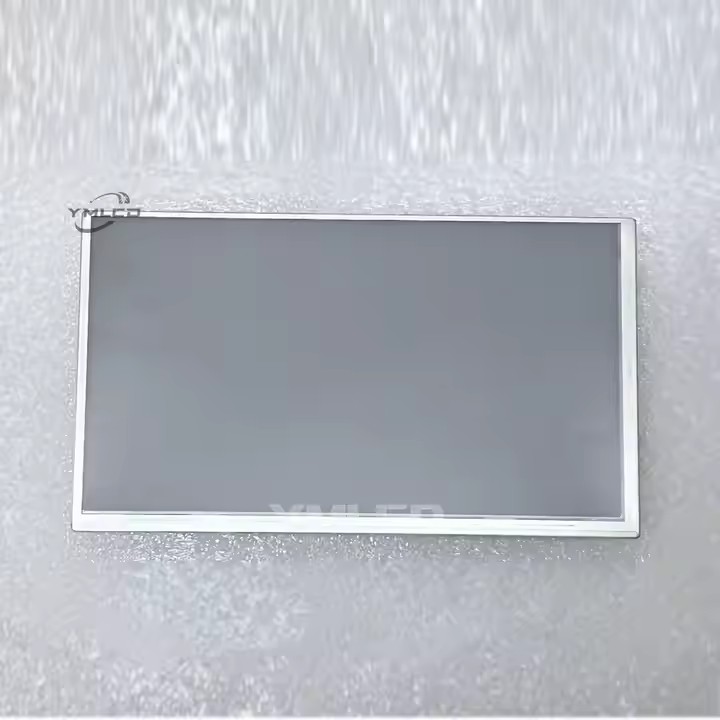
In the intricate ecosystem of modern automotive design, the display interface has evolved from a simple informational terminal to the central nervous system of the driver experience. At the heart of many sophisticated yet cost-effective dashboard and control panel designs lies a specific component: the LQ065T9BR55U, a 6.5-inch LCD display module with a resolution of 400 x 240 pixels. This is not merely a generic screen; it is a purpose-built solution engineered for the demanding environment of an automobile.
This article delves into a comprehensive analysis of the LQ065T9BR55U display. We will move beyond basic datasheet specifications to explore its technical architecture, the rationale behind its key parameters, and its ideal applications within the automotive landscape. By understanding the engineering choices embedded in this module—from its TFT technology and interface to its operating temperature range and mechanical design—we can appreciate its role in enabling reliable, clear, and durable human-machine interaction in vehicles, ultimately illuminating the critical considerations behind selecting a display for automotive integration.
Decoding the Specification Sheet: More Than Just Size and Pixels
The LQ065T9BR55U presents a set of specifications that immediately signal its automotive pedigree. The 6.5-inch diagonal active area offers a balanced form factor, suitable for secondary displays, basic infotainment systems, or dedicated control panels without dominating the dashboard. The 400 x 240 resolution, often categorized as Wide Quarter Video Graphics Array (WQVGA), provides a pixel density adequate for rendering clear text, icons, and basic graphics essential for vehicle information.
However, the depth lies in the details. The 450-nit typical brightness is a crucial figure, ensuring readability under direct sunlight—a common challenge in automotive environments. The landscape orientation and 16:9 aspect ratio are optimized for widescreen content and modern UI layouts. These parameters are not arbitrary; they represent a calculated compromise between performance, cost, and power consumption, tailored for specific in-vehicle functions where ultra-high definition is unnecessary, but reliability is paramount.
The Heart of the Display: TFT Technology and Visual Performance
At its core, the LQ065T9BR55U utilizes a Transmissive TFT (Thin-Film Transistor) LCD. This technology is the workhorse of the display world, known for its good image quality, fast response times, and cost-effectiveness. The "transmissive" design means it relies on a powerful backlight to illuminate the pixels, which directly enables its high brightness capability for sunlight readability.
The module's contrast ratio and color performance are engineered for functional clarity rather than cinematic immersion. It delivers a stable image with consistent viewing angles, ensuring that both the driver and passenger can read the information with minimal color shift. This focus on robustness and legibility under varying conditions is a hallmark of automotive-grade displays, distinguishing them from consumer-grade panels that may prioritize vibrant colors over environmental durability.
Engineered for the Road: Automotive-Grade Durability and Reliability
Perhaps the most defining characteristic of the LQ065T9BR55U is its compliance with the rigorous standards of automotive electronics. This module is designed to operate flawlessly across an extreme temperature range, typically from -30°C to +85°C. This resilience ensures functionality during frozen winter mornings and in the intense heat generated within a closed car under summer sun.
Furthermore, it is built to withstand the constant vibration and shock inherent in vehicle operation. Every connection, from the PCB to the connector, is secured to prevent failures. The materials used are selected to resist degradation from exposure to humidity and potential automotive chemicals. This relentless focus on long-term reliability over a product lifecycle of many years is what separates an automotive component from a commercial off-the-shelf part.
Interface and Integration: The Communication Pathway
A display module does not function in isolation; it requires a stable and efficient communication channel with the host processor. The LQ065T9BR55U typically utilizes standard interfaces like RGB or LVDS (Low-Voltage Differential Signaling). These parallel interfaces are well-established in the industry, offering a straightforward and robust method for transmitting video data from the vehicle's Electronic Control Unit (ECU) or system-on-chip.
The choice of interface impacts electromagnetic compatibility (EMC), a critical concern in the electrically noisy environment of a car. LVDS, in particular, is known for its low noise emission and susceptibility, helping the display system meet stringent automotive EMC regulations. The integration process also involves careful consideration of power sequencing, signal timing, and mechanical mounting, all of which are supported by the module's design to simplify the engineer's task.
Strategic Applications in Vehicle Architecture
The specific attributes of the LQ065T9BR55U make it a strategic choice for several key automotive applications. Its primary domain is in entry-level to mid-range infotainment head units, where it serves as the central touchpoint for audio, basic navigation, and vehicle settings. It is also perfectly suited for digital instrument clusters in commercial vehicles or economy cars, replacing traditional analog gauges with a configurable digital display.
Beyond the dashboard, this module finds purpose as a dedicated rear-seat entertainment display, a climate control panel, or a display for telematics and fleet management systems. In each role, its durability, sunlight readability, and reliable performance are more valuable than ultra-high resolution, providing a cost-effective solution that meets the core functional requirements.
The Competitive Landscape and Selection Considerations
When selecting a display like the LQ065T9BR55U, engineers must weigh it against alternatives, including higher-resolution displays or different technologies like IPS panels for wider viewing angles. The decision matrix involves a careful balance of cost,
performance, longevity, and supply chain stability.
This module's value proposition lies in its proven reliability for automotive use cases where premium visual specs are secondary to operational certainty. Key selection criteria include: the exact operating temperature range verification, brightness uniformity, long-term availability from the manufacturer, and the quality of technical support for integration challenges. It represents a pragmatic, no-frills solution for bringing essential digital functionality to the automotive interior.
FAQs: LCD Display LQ065T9BR55U
1. What is the primary application of the LQ065T9BR55U display?It is primarily designed for automotive applications like basic infotainment systems, digital instrument clusters, and control panels.
2. Why is the brightness of 450 nits important?It ensures the screen remains readable under direct sunlight, a critical requirement for in-vehicle displays.
3. What does "automotive-grade" mean for this display?It is built to withstand extreme temperatures (-30°C to +85°C), vibration, shock, and humidity over a long vehicle lifecycle.
4. What is the significance of the 400 x 240 resolution?It's a WQVGA resolution, sufficient for clear text and icons in functional automotive interfaces, balancing cost and performance.
5. What interface does this display module use?It commonly uses standard interfaces like RGB or LVDS for reliable data transmission from the vehicle's processor.
6. Can this display be used as a touchscreen?The LQ065T9BR55U is typically a display-only module; a separate resistive or capacitive touch panel can be added for touch functionality.
7. How does it compare to a consumer tablet display?It prioritizes durability and reliability in harsh environments over high resolution or ultra-wide viewing angles.
8. Is this display suitable for rear-view camera systems?Yes, its size and resolution are adequate for displaying a rear-view camera feed, often with on-screen guidelines.
9. What is the typical power consumption?Power consumption is moderate, heavily influenced by the backlight setting; it is designed for a vehicle's 12V electrical system.
10. Where can I find the detailed datasheet and pinout?These technical documents are available directly from the manufacturer or authorized distributors of the display module.
Conclusion
The LQ065T9BR55U 6.5-inch automotive display exemplifies the sophisticated engineering embedded in what might seem like a simple component. Its value is not defined by cutting-edge pixel density, but by its unwavering reliability, environmental robustness, and optimized performance for a specific set of demanding applications. It represents a critical piece in the puzzle of vehicle digitalization, enabling clear and consistent communication between the car and its occupants.
For designers and engineers, understanding the rationale behind its specifications—from the sunlight-readable brightness to the wide operating temperature range—is key to making informed component selections. In an industry where failure is not an option, modules like the LQ065T9BR55U provide the dependable foundation upon which safe, functional, and user-friendly automotive interfaces are built, proving that in engineering, appropriateness to task often outweighs raw specification.





