













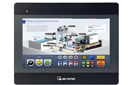




- Industrial display
-
Industrial Products
- DC Servo Drive
- AC Servo Drive
- Industrial board
- Siemens
- Switch Sensor
- Proximity Switch
- Temperature Controller
- Protection Relay
- Fiber Optic Sensor
- Encoder
- Fan
- other
- Heidelberg
- MITSUBISHI
- FANUC
- Siemens adapter
- Fujitsu connector
- Motherboard
- Board
- Contactor
- Circuit
- OMRON
- Relay
- Motor Driver
- power supply
- Cable
- Transformer
- HMI Touch Glass
-
HMI Full Machine Whole unit
- OMRON HMI Touch Panel
- Siemens HMI Touch Panel
- Mitsubishi HMI Touch Panel
- Allen-Bradley automation HMI Touch Panel
- DELTA HMI Touch Panel
- Proface HMI Touch Panel
- KINCO DELTA HMI Touch Panel
- HITECH HMI Touch Panel
- WEINTEK HMI Touch Panel
- TECVIEW HMI Touch Panel
- WEINVIEW HMI Touch Panel
- PANASONIC HMI Touch Panel
- KYOCERA HMI Touch Panel
- SCHNEIDER HMI Touch Panel
- Module
- lcd inverter
- Membrane Keypad Switch
- Zhiyan Customized Touch Screens
- Frequency Inverter
- Servo Motor
- PLC
In the demanding world of industrial automation, medical equipment, and human-machine interfaces (HMIs), the display is not merely a window to data—it is the critical touchpoint of reliability, clarity, and control. At the heart of many robust systems lies a specific component: theLQ104V1DG51. This 10.4-inch LCD display module, engineered by Sharp, represents a pinnacle of industrial-grade visual technology. Far removed from consumer-grade screens, it is built to endure the rigors of continuous operation in environments where failure is not an option.
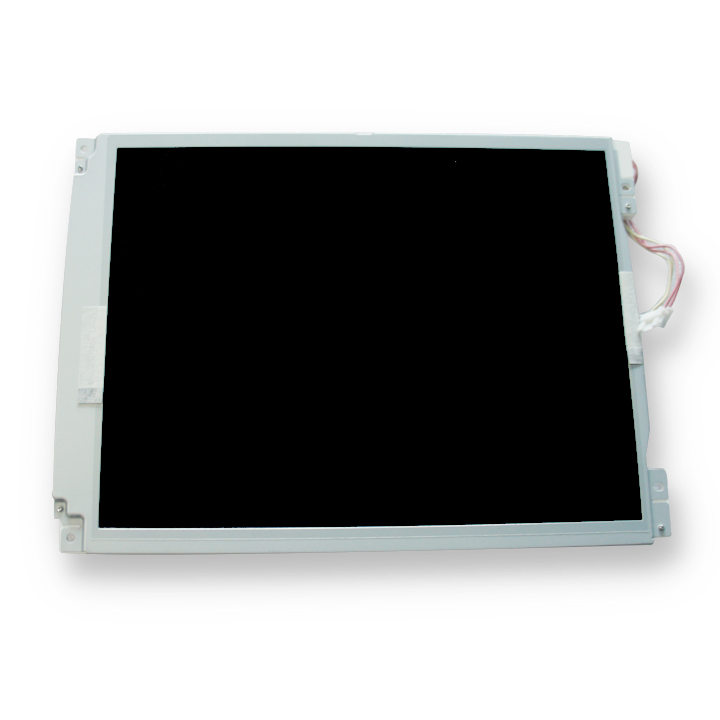
This article delves deep into the LQ104V1DG51, exploring its technical specifications, inherent strengths, and the specific application landscapes it is designed to dominate. We will move beyond basic datasheet parameters to understand the engineering philosophy behind its design, its advantages over alternative solutions, and the key considerations for successful integration. For engineers, procurement specialists, and system designers, a thorough comprehension of this component is essential for building resilient and effective industrial display solutions.
Decoding the LQ104V1DG51: Core Specifications and Architecture
A defining characteristic is its integrated standard LVDS (Low-Voltage Differential Signaling) interface. This is crucial for industrial applications, as LVDS provides robust, high-speed data transmission with low noise emission, enhancing signal integrity over longer cable runs within a chassis. The module typically offers a brightness of 500 cd/m², ensuring readability in brightly lit factory settings. Furthermore, it boasts a wide operating temperature range, often from -30°C to 80°C for the storage temperature and a stable operational window around 0°C to 50°C, highlighting its hardened design.
The Hallmarks of Industrial-Grade Durability
This Sharp module is constructed to meet these challenges head-on. Its mechanical design focuses on resilience, with a rigid frame and secure connections to withstand vibration. The backlight system, often utilizing long-life LEDs, is engineered for a high Mean Time Between Failures (MTBF), a critical metric for total cost of ownership. The screen surface is typically fitted with a robust overlay or is designed to accommodate one, protecting against scratches, chemical splashes, and operator wear. This inherent durability eliminates the frequent failures associated with repurposing consumer screens in industrial contexts.
Optical Performance in Demanding Environments
Color performance, while not geared for graphic design, is stable and reliable, ensuring that status indicators (red for alarm, green for normal) are consistently and correctly represented. The contrast ratio and gamma curve are tuned for legibility of text, schematics, and graph data rather than vibrant multimedia content. This focus on functional visual fidelity ensures that the interface communicates information effectively, reducing operator error and fatigue during long shifts.
Primary Application Landscapes and Use Cases
Another significant area is Transportation and Infrastructure, including vehicle dashboard displays for construction or agricultural machinery, and information panels in utility control rooms. Its ability to operate across a wide temperature range makes it suitable for environments that are not climate-controlled. Finally, it appears in specialized Point-of-Sale (POS) and Kiosk systems designed for 24/7 public use, where longevity and resistance to tampering or environmental factors are essential.
Integration Considerations and Design Challenges
Furthermore, designers must consider the complete display subsystem. This often involves sourcing or designing a compatible touchscreen overlay (resistive or projected capacitive) and a driver board that converts common video signals (like HDMI or VGA) to the native LVDS format of the panel. Understanding these ancillary requirements is as important as selecting the panel itself to avoid project delays and compatibility issues.
The Competitive Landscape: Why Choose the Sharp LQ104V1DG51?
While other manufacturers offer 10.4-inch industrial panels, the LQ104V1DG51 holds distinct advantages. Sharp is renowned for its proprietary Black TFT and CG-Silicon technologies, and while this model uses mature a-Si, it benefits from Sharp's stringent quality control and deep manufacturing expertise in LCDs. This translates to consistent quality, reliable supply, and known performance parameters.
Choosing a branded, industrial-specific module like this mitigates risk compared to opting for uncertified, commercial-grade panels or obscure white-label products. It ensures long-term availability, crucial for products with multi-year lifecycles, and provides access to proper technical documentation. The total value proposition lies in reduced system failures, lower maintenance costs, and a stronger, more reliable end-product, justifying its position in the market.

FAQs: LQ104V1DG51 Industrial Display
Q10: How does its 4:3 aspect ratio compare to widescreen formats?A10: The 4:3 format is often preferred for industrial and medical UIs as it efficiently displays toolbars, data lists, and control panels without wasted space, offering more vertical real estate.
Conclusion
The Sharp LQ104V1DG51 10.4-inch LCD display stands as a testament to purpose-built engineering. It transcends being a simple commodity component, embodying the principles of reliability, optical clarity, and environmental resilience required for critical applications. From factory floors to medical suites, its value is measured not in pixels alone, but in uptime, readability, and the seamless translation of data into actionable insight.





