In the specialized world of industrial and professional display technology, certain components stand out not merely as commodities, but as benchmarks of reliability and performance. The
NL6448BC33-59, a 10.4-inch LCD display module originally from the storied lines of NEC/NLT, is one such component. This isn't a consumer-grade screen; it is a precision-engineered workhorse designed for environments where failure is not an option. For engineers, system integrators, and procurement specialists, understanding this module's full profile is critical for making informed design and replacement decisions.
This article delves deep into the NL6448BC33-59, moving beyond basic datasheet specifications. We will explore its defining technical characteristics, the unique advantages of its TFT and CCFL backlight technology, and its ideal application landscapes. Furthermore, we will address the practical challenges of sourcing and compatibility in today's market, providing a comprehensive resource for professionals whose projects depend on this enduring display solution.
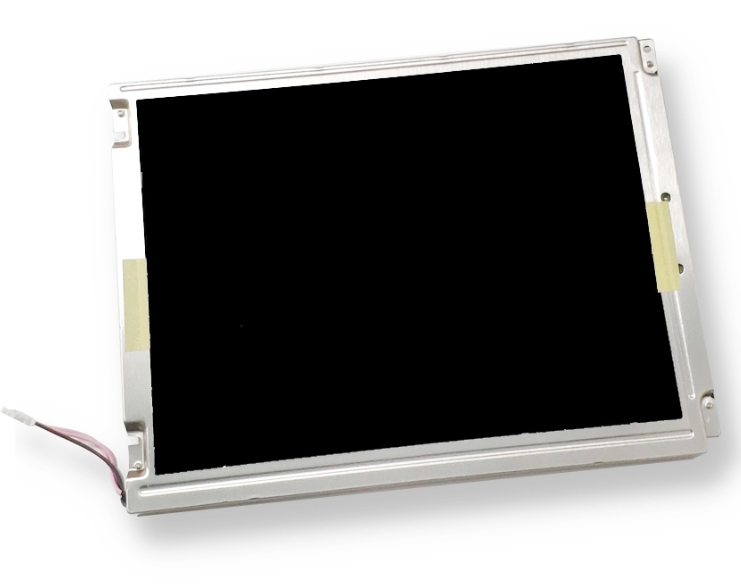
Technical Specifications and Core Architecture
The NL6448BC33-59 is built on a foundation of robust, mature technology. At its heart is a 10.4-inch diagonal active matrix TFT (Thin-Film Transistor) LCD panel with a native resolution of 640 x 480 pixels (VGA). This SVGA format was long the standard for industrial human-machine interfaces (HMIs) and medical devices, offering a balance between detail and processing efficiency. The module utilizes a CCFL (Cold Cathode Fluorescent Lamp) backlighting system, known for its uniform brightness and stable performance over a wide temperature range.
Critical electrical specifications include a 3.3V power supply for the logic interface and a higher voltage inverter for the CCFL, typical of its generation. The interface is primarily parallel RGB, a direct and reliable connection method. Understanding these architectural choices is key, as they define the module's compatibility with specific controllers and its operational parameters, setting the stage for its renowned durability in demanding fields.
The Enduring Advantages of CCFL Backlighting
In an era dominated by LED backlights, the CCFL system in the NL6448BC33-59 presents distinct, often overlooked benefits for professional applications. The primary advantage is exceptional uniformity of illumination across the entire screen surface. CCFL tubes provide a diffuse, even light source that minimizes hotspots and ensures consistent color and brightness from edge to edge—a crucial factor in diagnostic or monitoring equipment.
Furthermore, CCFL backlights exhibit stable performance across extreme environmental conditions, particularly in very low temperatures where early LED technologies could falter. Their light output spectrum and longevity were well-characterized, allowing for predictable maintenance schedules in critical systems. While less energy-efficient than modern LEDs, this technology's reliability and optical quality are precisely why the NL6448BC33-59 became embedded in long-lifecycle products.
Primary Industrial and Professional Applications
The design ethos of the NL6448BC33-59 directly targets environments where performance trumps novelty. Its most prominent applications are in industrial automation and control systems. Here, it serves as the visual interface for PLCs, CNC machine tools, and factory floor HMIs, where readability under bright lighting and resistance to electrical noise are paramount.
Equally important is its role in medical instrumentation, such as patient monitors, diagnostic ultrasound devices, and laboratory analyzers. In these settings, display consistency, color fidelity for certain indicators, and regulatory certification (for which the original module was often approved) were critical. Other applications include specialized test and measurement equipment, transportation systems, and legacy military hardware, forming an ecosystem of high-stakes, long-term deployments.
Compatibility and Pinout Configuration
For engineers tasked with integrating or replacing this module, a thorough grasp of its compatibility landscape is essential. The NL6448BC33-59 follows a specific 40-pin single-channel LVDS interface pinout configuration. This physical and electrical interface is the primary key to a successful integration. Not all 10.4-inch VGA panels are interchangeable; a mismatch in pin assignment, power sequencing, or backlight driver requirements can lead to failure.
System integrators must carefully cross-reference the exact pinout diagram, paying close attention to the voltage levels for logic, backlight enable, and brightness control signals. Many contemporary LCD controller boards offer flexible pin programming, but understanding the target module's native language is the first step in establishing a reliable communication channel between the display and the host system.
Sourcing Challenges in the Modern Market
As a product of a previous technological generation, sourcing the authentic NL6448BC33-59 presents unique challenges. NEC/NLT eventually ceased direct production, leading to a market supplied by remaining new old stock (NOS) and specialized industrial distributors. This scarcity underscores the importance of vendor verification to avoid counterfeit or remarked components that fail to meet the original performance and reliability standards.
This sourcing dynamic has also fueled a parallel market for direct replacement panels. These are modern 10.4-inch LCDs, often with LED backlights, that are engineered to be mechanical, electrical, and pin-to-pin compatible with the NL6448BC33-59. Evaluating these alternatives requires careful analysis of their specifications against the environmental and optical requirements of the original application.
Evaluating Modern LED-Backlit Replacements
The emergence of compatible LED-backlit panels offers a compelling upgrade path. The potential benefits are significant: greatly reduced power consumption, elimination of the high-voltage CCFL inverter circuit, and potentially longer overall backlight lifespan. Modern panels may also offer improved brightness and contrast ratios.
However, the evaluation must be rigorous. Key considerations include: verifying the uniformity of the LED backlight, ensuring compatibility with the existing brightness control scheme (often PWM-based), and confirming the operational temperature range matches or exceeds the original. A successful retrofit not only extends the life of the equipment but can also enhance its performance, provided the replacement module is truly a qualified equivalent and not just a physical fit.
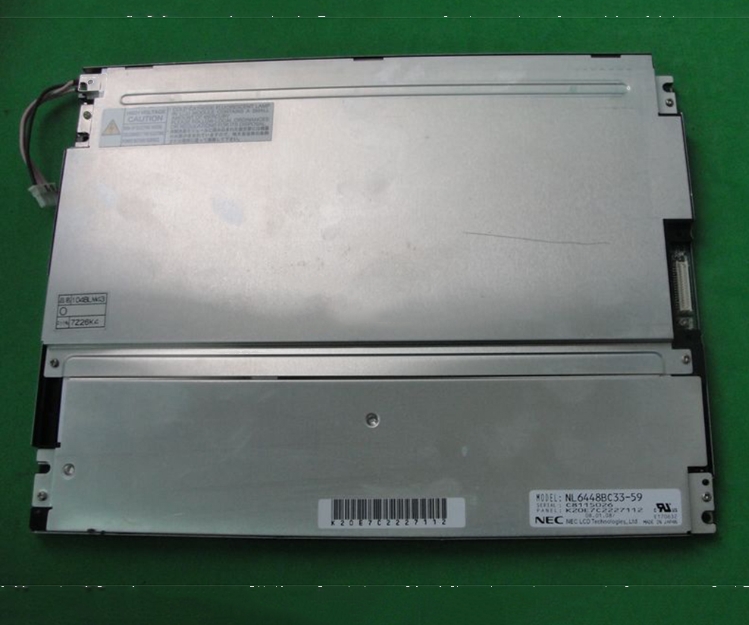
FAQs: NL6448BC33-59 Display Module
Q1: What is the screen size and resolution of the NL6448BC33-59?A1: It is a 10.4-inch TFT LCD display with a VGA (640 x 480 pixel) resolution.
Q2: What type of backlight does it use?A2: It uses a CCFL (Cold Cathode Fluorescent Lamp) backlight system.
Q3: What is the main interface for this LCD module?A3: It uses a parallel RGB (LVDS) interface with a specific 40-pin connector.
Q4: Is this module still in production by NEC/NLT?A4: No, it is a discontinued model but available as new old stock or through compatible replacements.
Q5: What are its typical applications?A5: Industrial HMIs, medical monitoring devices, test equipment, and other professional embedded systems.
Q6: Can I directly replace it with a modern LED-backlit screen?A6: Yes, if you find a panel that is explicitly marketed as a pin-to-pin and mechanical compatible replacement with LED backlight.
Q7: What are the advantages of its CCFL backlight?A7: Excellent brightness uniformity, stable performance in wide temperature ranges, and a proven, reliable technology.
Q8: What should I check when sourcing a replacement?A8: Verify the exact pinout, interface type, backlight driver requirements, and operating temperature range.
Q9: Why is it important for medical or industrial use?A9: It was designed and often certified for high reliability, consistency, and performance in critical, long-lifecycle applications.
Q10: What is the first step in integrating this module into a system?A10: Obtaining and meticulously following the official datasheet and pinout diagram to ensure correct power sequencing and signal connection.
Conclusion
The NL6448BC33-59 is far more than a simple display; it represents a specific era of high-reliability embedded engineering. Its value lies in its proven architecture, characterized by the uniform illumination of CCFL technology and a robust interface designed for industrial communication. While sourcing the original module requires diligence, its technical legacy provides a clear blueprint for evaluation.
For professionals maintaining or updating legacy systems, the path forward involves a careful technical audit. Whether securing remaining authentic stock or selecting a modern, fully compatible LED-backlit alternative, the decision must be guided by the original application's stringent demands. Understanding the NL6448BC33-59 in depth ensures that the critical visual interface in countless professional systems continues to perform with the unwavering reliability for which it was originally chosen.


















































