


















- Industrial display
-
Industrial Products
- DC Servo Drive
- AC Servo Drive
- Industrial board
- Siemens
- Switch Sensor
- Proximity Switch
- Temperature Controller
- Protection Relay
- Fiber Optic Sensor
- Encoder
- Fan
- other
- Heidelberg
- MITSUBISHI
- FANUC
- Siemens adapter
- Fujitsu connector
- Motherboard
- Board
- Contactor
- Circuit
- OMRON
- Relay
- Motor Driver
- power supply
- Cable
- Transformer
- HMI Touch Glass
-
HMI Full Machine Whole unit
- OMRON HMI Touch Panel
- Siemens HMI Touch Panel
- Mitsubishi HMI Touch Panel
- Allen-Bradley automation HMI Touch Panel
- DELTA HMI Touch Panel
- Proface HMI Touch Panel
- KINCO DELTA HMI Touch Panel
- HITECH HMI Touch Panel
- WEINTEK HMI Touch Panel
- TECVIEW HMI Touch Panel
- WEINVIEW HMI Touch Panel
- PANASONIC HMI Touch Panel
- KYOCERA HMI Touch Panel
- SCHNEIDER HMI Touch Panel
- Module
- lcd inverter
- Membrane Keypad Switch
- Zhiyan Customized Touch Screens
- Frequency Inverter
- Servo Motor
- PLC
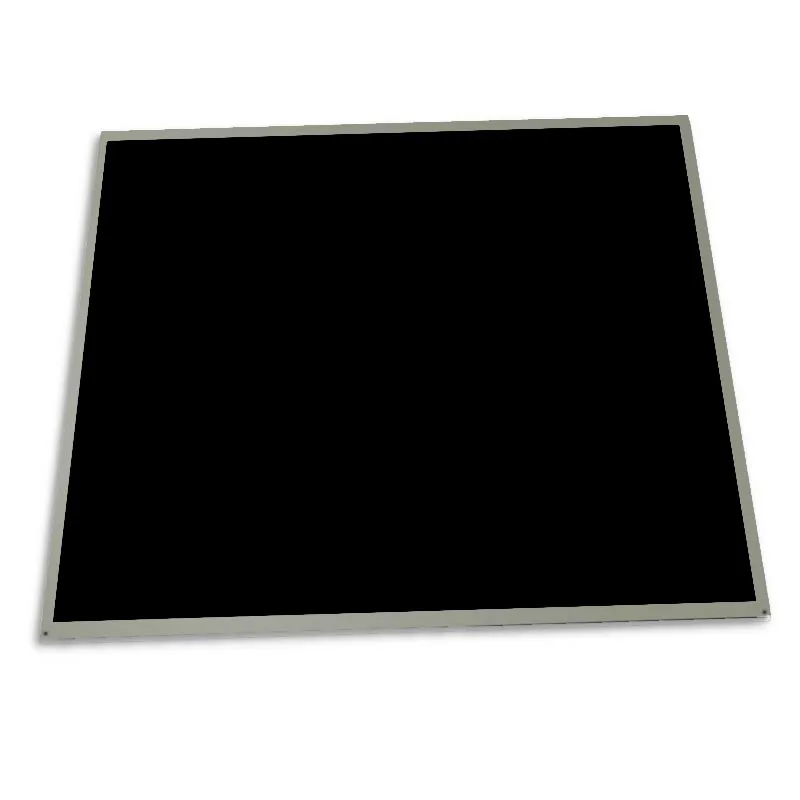
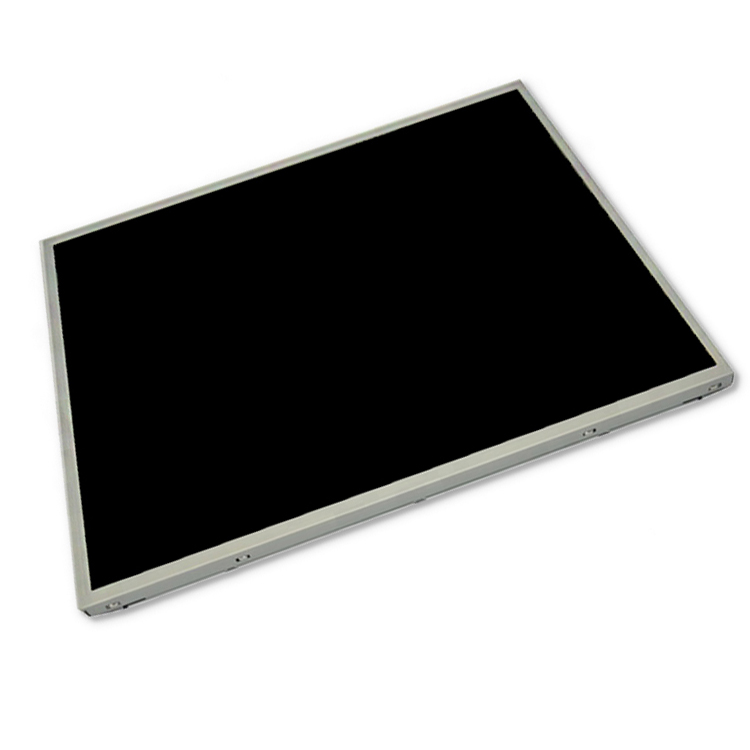
The G190ETN01.A is a 19-inch LCD panel manufactured by AU Optronics (AUO), a global leader in display technology. While the consumer market often fixates on high-resolution, high-refresh-rate screens for gaming or multimedia, the industrial sector demands a different set of priorities: longevity, optical clarity under various lighting conditions, and mechanical robustness. The G190ETN01.A was specifically engineered to meet these stringent requirements, making it a staple in applications ranging from medical imaging to factory floor automation. This article offers a deep dive into the technical architecture, performance characteristics, and practical applications of this specific panel. We will explore not only its legacy but also why it remains a relevant choice for engineers and system integrators in an era of rapidly evolving display technology. By understanding its specifications, strengths, and limitations, readers will gain a comprehensive view of how a specialized industrial component like the G190ETN01.A solves real-world operational challenges.
Architecture and Optical Design: Beyond the Standard Monitor
The G190ETN01.A employs a TN (Twisted Nematic) LCD technology, which is a deliberate choice for industrial environments. Unlike IPS panels, which are favored for wide viewing angles, TN technology offers faster response times in factory calibration settings and superior power efficiency. However, the true distinction of this AUO panel lies in its optical stack. The panel features a standard resolution of 1280 x 1024 (SXGA), a 5:4 aspect ratio that is practically extinct in consumer displays but remains the de facto standard for many legacy medical and industrial software interfaces. The backlight is a CCFL (Cold Cathode Fluorescent Lamp) type, a decision that provides a consistent, high-luminance output—typically 350 cd/m²—which is critical for readability in brightly lit factory floors. Furthermore, the panel incorporates an anti-glare coating and a surface hardness rated at 3H to resist minor scratches. This is not a display designed for cinematic color accuracy; its color gamut is approximately 72% NTSC. Instead, it is optimized for grayscale stability and contrast ratio in the range of 1000:1, ensuring that fine text and diagnostic data remain crisp and non-fatiguing over long shifts.
Thermal Management and Mechanical Resilience
One of the most underappreciated aspects of industrial panels is their ability to handle thermal stress. The G190ETN01.A is specified to operate in an ambient temperature range of 0°C to 60°C and can be stored from -20°C to 70°C. This is achieved through careful heat dissipation design in the metal bezel and the backlight driver circuits. For system integrators, this means the panel can be deployed in environments without aggressive active cooling, such as enclosures on assembly lines or in outdoor kiosks with partial shading. The physical dimensions of the module are precise, with a standard mounting hole pattern that allows for easy VESA compliance when paired with a controller board. The panel also boasts a low total power consumption of approximately 18-20 watts, which is efficient for a CCFL-based display of this size. This is particularly important for battery-backed systems or installations where thermal load must be minimized. The mechanical structure resists vibration up to 1.5G, making it suitable for integration into mobile carts, vehicle-mounted terminals, or heavy machinery that generates constant low-frequency tremor.
Signal Interface and Integration Complexity
Unlike modern displays that rely solely on embedded DisplayPort (eDP) or LVDS in a single cable, the G190ETN01.A uses a dual-channel LVDS (Low-Voltage Differential Signaling) interface. This is a 20-pin connector that carries both the pixel data and the timing control signals. From a practical standpoint, this means the panel requires a compatible timing controller (TCON) that is explicitly designed for SXGA resolution at 60 Hz. Many aftermarket driver boards exist, but integration is not as simple as plugging in an HDMI cable. Engineers must ensure the LVDS voltage levels (typically 3.3V) and the clock frequency (around 65 MHz) match the panel’s specifications. A common pitfall is using a single-channel LVDS cable, which will result in a "half-screen" or blank display. This interface complexity is a barrier to entry for hobbyists but a manageable, predictable parameter for professional system integrators who value the reliability of a well-documented, standardized connection over the flexibility of consumer interfaces. The presence of a well-defined datasheet from AUO makes timing diagram analysis straightforward for experienced hardware designers.
Longevity and Lifecycle Management: A Design for Decade-Long Use
The G190ETN01.A is classified as a long-life cycle product. AUO specifically targets industrial customers who require the same model to be available for 5 to 7 years or longer, unlike consumer panels which are often obsolete within 18 months. This is achieved through the use of mature, fully refined manufacturing processes and a supply chain for key components like the CCFL tubes and driver ICs that is stable for years. For the end-user, this translates to a critical advantage: design stability. If a medical diagnostic system or a CNC machine controller is certified with this panel, the manufacturer can confidently produce that system for years without recertification due to display changes. The backlight has a typical lifetime of 50,000 hours to half-brightness, which, in a 24/7 operation, equates to nearly 6 years of continuous use before brightness degradation becomes noticeable. This is a key metric for total cost of ownership (TCO), as the panel outlasts many other electronic components in the system. However, buyers must be aware that CCFL backlights are gradually being phased out in favor of LED in newer models, so sourcing replacement units for legacy systems requires diligent inventory management from distributors.
Application Scenarios: Where This Panel Still Excels
The G190ETN01.A is not a general-purpose display. Its strengths are highly specific to environments where standardization and reliability outweigh the need for thinness or 4K resolution. One primary use case is in medical diagnostic imaging—specifically for PACS (Picture Archiving and Communication System) workstations. The 5:4 aspect ratio is ideal for side-by-side comparison of X-rays and CT scans, and the stable grayscale reproduction meets the DICOM Part 14 standard for medical monochrome displays when properly calibrated. Another major domain is human-machine interfaces (HMIs) for industrial automation. Factory floor operators require a screen that can be read from a distance under bright overhead lights, which the 350 cd/m² brightness and anti-glare surface deliver effectively. The panel is also common in gaming and amusement machines, where the fast response time and robust build handle constant use and the occasional physical shock. Finally, it is used in retail self-service kiosks and security monitoring systems, where the long service life and predictable performance metrics reduce maintenance calls. In each of these scenarios, the panel is chosen for its proven track record rather than its bleeding-edge specs.
Frequently Asked Questions (FAQs)
Q: Is the G190ETN01.A compatible with a standard computer monitor stand?A: Not directly. It is a raw LCD panel without a bezel or mounting holes. You need a compatible controller board and a housing or VESA bracket designed for 19-inch open-frame panels.
Q: Can I replace the CCFL backlight with an LED one?A: Technically, yes, but it requires removing the original lamp and replacing it with an LED strip or inverter. This is a high-skill modification and may damage the panel if not done precisely. It is usually more cost-effective to buy a newer LED-based panel.
Q: What is the typical response time of this panel?A: The G190ETN01.A has a typical response time of 3.5 ms (Tr+Tf) at 25°C, which is very fast for a TN panel and suitable for dynamic video content.
Q: Does this panel support touch functionality?A: No. It is an LCD cell only. Touch integration must be added via an external touch controller and a touch overlay, which can be resistive or capacitive.
Q: What is the correct LVDS cable orientation for this panel?A: It uses a 20-pin JAE connector (FI-SE20P-HFE). The pin 1 position is marked on the datasheet. Using the wrong cable orientation can short the driver IC.
Q: Is this panel suitable for outdoor use in direct sunlight?A: Not without significant modifications. The 350 cd/m² brightness is insufficient for direct sunlight. You would need a high-brightness backlight upgrade or a sunlight-readable laminate film.
Q: What is the power connector voltage on the panel?A: The backlight power is a 2-pin connector requiring 12V DC. The logic power for the T-con board is also 12V DC via the LVDS connector.
Q: How do I check if my controller board is compatible?A: Verify the board supports SXGA resolution (1280x1024), dual-channel LVDS, and has a matching connector pinout. Check the board's datasheet for "G190ETN01" in its compatible panel list.
Q: What is the typical weight of the panel?A: The module weighs approximately 1.5 kilograms (3.3 lbs), which is relatively heavy due to the metal frame and glass.
Q: Is the G190ETN01.A RoHS compliant?A: Yes, AUO manufactured this panel to be fully RoHS (Restriction of Hazardous Substances) compliant, meaning it is free from lead, mercury, and other restricted materials.
Conclusion: The Enduring Value of a Specialized Workhorse
In a market flooded with vibrant, ultra-thin displays, the G190ETN01.A stands as a testament to the principle that fit for purpose often trumps latest and greatest. This 19-inch AUO panel does not chase brightness records or pixel density wars; instead, it delivers a precise, reliable, and predictable performance profile for the most demanding industrial, medical, and commercial environments. Its true value lies in its engineering maturity—a stable thermal envelope, a robust mechanical design, and a long lifecycle that protects capital investments. For system integrators and procurement specialists, the G190ETN01.A remains a safe and effective choice, provided the application matches its technical specifications. While the transition to LED backlighting and higher resolutions is inevitable, this panel continues to serve a vital role in legacy system maintenance and in new projects where standardization and field-proven reliability are non-negotiable. Understanding its capabilities ensures that this workhorse of a display is utilized to its fullest potential, rather than being dismissed as merely outdated technology.
Related Product Links:LQ070Y3LG05 Sharp 7inch 800*480 lcd screen module





