


















- Industrial display
-
Industrial Products
- DC Servo Drive
- AC Servo Drive
- Industrial board
- Siemens
- Switch Sensor
- Proximity Switch
- Temperature Controller
- Protection Relay
- Fiber Optic Sensor
- Encoder
- Fan
- other
- Heidelberg
- MITSUBISHI
- FANUC
- Siemens adapter
- Fujitsu connector
- Motherboard
- Board
- Contactor
- Circuit
- OMRON
- Relay
- Motor Driver
- power supply
- Cable
- Transformer
- HMI Touch Glass
-
HMI Full Machine Whole unit
- OMRON HMI Touch Panel
- Siemens HMI Touch Panel
- Mitsubishi HMI Touch Panel
- Allen-Bradley automation HMI Touch Panel
- DELTA HMI Touch Panel
- Proface HMI Touch Panel
- KINCO DELTA HMI Touch Panel
- HITECH HMI Touch Panel
- WEINTEK HMI Touch Panel
- TECVIEW HMI Touch Panel
- WEINVIEW HMI Touch Panel
- PANASONIC HMI Touch Panel
- KYOCERA HMI Touch Panel
- SCHNEIDER HMI Touch Panel
- Module
- lcd inverter
- Membrane Keypad Switch
- Zhiyan Customized Touch Screens
- Frequency Inverter
- Servo Motor
- PLC
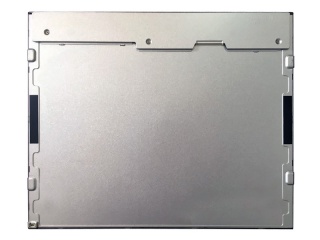
The landscape of industrial display technology is often defined by reliability, longevity, and specific performance characteristics that consumer-grade panels rarely address. Among these enduring components, the AUO G190ETN01.8 stands as a significant example. A 19-inch LCD panel manufactured by AU Optronics (AUO), this model belongs to a class of displays designed not for flashy entertainment, but for mission-critical environments. This article delves into the specific attributes of the G190ETN01.8, exploring its technical architecture, operational parameters, and the niche it continues to occupy in a market increasingly dominated by larger, higher-resolution panels. We will move beyond a simple datasheet review to analyze why this particular panel remains a relevant choice for industrial automation, medical imaging, and digital signage. The discussion will cover its backlight technology, interface standards, viewing angle performance, and the long-term supply chain considerations that buyers must evaluate. By understanding the G190ETN01.8, one gains insight into the demanding standards of the professional display sector.
Decoding the Part Number: What G190ETN01.8 Tells Us
Every segment of the model designation "G190ETN01.8" provides a roadmap to the panel's core identity. The "G" traditionally indicates a general or industrial-grade product line within AUO's classification. The "190" is straightforward, denoting a 19-inch diagonal screen size, a classic form factor that balances readability with space efficiency in control room racks and kiosk enclosures. "ETN" is more specific, pointing to a particular series within the 19-inch family, often characterized by a specific resolution—in this case, the standard 1280 x 1024 (SXGA) 5:4 aspect ratio. This resolution is a deliberate choice for applications that prioritize crisp text and stable, non-stretched image representation over the widescreen formats common in consumer media.
The "01.8" suffix is critical. It signifies a specific version or revision, often indicating an incremental improvement in backlight technology or driver IC compatibility. For this model, the ".8" revision typically points to a transition to an LED backlight system, replacing older CCFL technology. This shift brings tangible benefits: lower power consumption, a thinner module profile, and a mercury-free design that complies with stricter environmental regulations like RoHS. Furthermore, the absence of an inverter for the backlight simplifies the power supply design for integrators. Understanding this nomenclature is the first step in verifying compatibility with existing equipment, as the ".8" revision may have different electrical timing or connector pinouts compared to earlier G190ETN versions.
Optical Precision: Viewing Angles and Luminance Profile
In an industrial context, the quality of a display is not measured by vivid color saturation alone, but by its ability to convey information consistently under varied conditions. The G190ETN01.8 employs TN (Twisted Nematic) technology, a choice that for years has been the default for fast response times and cost-effective production. Its specified viewing angles of 170 degrees horizontal and 160 degrees vertical are typical for a premium TN panel. However, the phrase "viewing angle" requires careful interpretation: these figures represent the angle at which the contrast ratio drops to 10:1. In practice, color shift and gamma inversion become noticeable well before this threshold, particularly in the vertical axis. This is a fundamental characteristic of TN technology.
The panel’s typical luminance of 350 cd/m² (or nits) positions it well for indoor industrial settings with controlled ambient lighting. This brightness level is sufficient to overcome glare from overhead fluorescent lights without causing eye strain in operators who stare at the screen for extended shifts. The contrast ratio, usually specified at 1000:1, provides adequate depth for grayscale medical images and process control graphics. An important optical parameter for integrators is the surface treatment, which is typically an anti-glare (AG) coating with a hardness rating of 3H. This coating diffuses reflected light, significantly reducing specular reflections that can obscure critical data in bright environments. The trade-off is a slight reduction in perceived sharpness compared to a glossy finish, but for task-oriented displays, the reduction in glare is paramount for usability and safety.
Electrical Architecture and Interface Compatibility
The electrical backbone of the G190ETN01.8 is the LVDS (Low-Voltage Differential Signaling) interface. This standard has been the workhorse of the industrial display market for decades due to its noise immunity and ability to transmit data over longer distances within a device than newer interfaces like eDP. The panel typically uses a dual-channel LVDS configuration to support the 1280x1024 resolution at a 60Hz refresh rate. This is a critical point for system integration: the user’s motherboard or controller board must have a compatible LVDS connector (often a 30-pin or 20-pin JAE connector) and the ability to output the correct data mapping (JEIDA or VESA format).
Power management on this panel is efficient due to the LED backlight. The backlight driver circuit is often integrated into the panel itself in later revisions like the 01.8, requiring only a specific DC voltage (typically 12V) to be supplied. This contrasts with older CCFL panels that required a separate, high-voltage inverter. The internal driver board manages the constant current for the LEDs, ensuring uniform luminance over the panel's lifetime. The panel's power consumption, typically under 14W, is remarkably low for a 19-inch display, contributing to reduced thermal load inside sealed enclosures. When sourcing replacements, engineers must verify the exact connector model and pin assignment for both the data and power cables, as AUO has made minor revisions that can render new panels incompatible with old cables, even if the part number is nominally the same.
Mechanical Integration and Environmental Resilience
The physical form factor of the G190ETN01.8 is engineered for modular integration into larger systems. The panel’s active area measures 376.32 x 301.056 mm, leaving a specific bezel area for gasket mounting in panel-mount applications. The overall module dimensions are typically around 396 x 324 mm, with a thickness that varies depending on the backlight design but is generally in the range of 11 to 15 mm in the LED version. The mounting holes are precisely located to align with standard VESA or enclosure-specific brackets. Integrators frequently use this panel with a touchscreen overlay, and the mechanical drawings provide critical clearance specifications to ensure the touch controller does not interfere with the panel's frame.
Environmental specifications are a key differentiator from consumer displays. The G190ETN01.8 is designed to operate in a temperature range of 0°C to 50°C and can be stored in temperatures from -20°C to 60°C. This resilience makes it suitable for factory floors that are not fully climate-controlled. Furthermore, its vibration and shock resistance specifications are higher than those of office monitors. The panel is also designed with a specific flammability rating (UL94-V0 for its plastic components), a requirement for equipment that must pass stringent safety certifications for industrial or medical use. The long-term supply of this panel is also notable. Unlike consumer lines that are discontinued after 18 months, the G190ETN series has a product lifecycle extending 5-7 years, providing OEMs with the stability needed for multi-year equipment contracts. This supply guarantee is often as important as the technical specs themselves.
Navigating the Aftermarket: Sourcing and Compatibility Pitfalls
The sustained demand for the G190ETN01.8 has created a robust aftermarket, but it is a market fraught with risk. A primary concern is the prevalence of "compatible" panels, which are panels from other manufacturers (like LG.Display or Innolux) designed to fit the same physical and electrical footprint. While these may work, they often exhibit subtle differences in gamma curve, color temperature, or backlight brightness, which can be unacceptable in multi-screen installations where color matching is critical. Another pitfall is the existence of refurbished or "Grade A" used panels. These are often pulled from surplus equipment and may have significant hours of use, visible defects like bright pixels or backlight bleeding, and degraded internal components that will soon fail.
Authenticity verification is crucial. Counterfeit panels may bear the AUO logo but contain lower-grade cells that do not meet the original specifications for contrast or burn-in resistance. Buyers should source from reputable distributors who provide a traceable supply chain. A common compatibility mistake involves the backlight cable. The G190ETN01.8 typically uses a specific 2-pin connector for the LED power, but some variations exist where the connector is on a different side of the panel or uses a different locking mechanism. The data cable pinout is another frequent source of errors. Always compare the datasheet of the exact revision (01.8) against the system's current panel. An incorrect cable can short the LVDS lines, damaging both the panel and the controller board. For mission-critical systems, it is highly recommended to purchase a direct, manufacturer-spec replacement from a verified channel rather than a generic alternative.
Frequently Asked Questions
What is the native resolution of the G190ETN01.8?It has a native resolution of 1280 x 1024 pixels (SXGA), with a 5:4 aspect ratio.
Is the G190ETN01.8 an LED or CCFL backlight panel?It uses an LED backlight, specifically in the 01.8 revision, which offers lower power consumption and a thinner profile.
What is the typical brightness of this panel?The typical brightness (luminance) is 350 cd/m², suitable for most indoor industrial environments.
Does this panel support touch screen integration?Yes, it is commonly used with resistive or capacitive touch overlays, but it does not come with a touch panel pre-installed.
What is the lifespan of the LED backlight in this panel?The backlight is typically rated for 50,000 hours of operation to half-brightness (MTBF).
Can I use this panel with a Raspberry Pi or standard PC?Directly? No. You need an LVDS controller board (driver board) that converts the HDMI or VGA signal to LVDS. It is not a plug-and-play monitor.
What is the significance of the "01.8" revision?It indicates a specific version of the panel, often featuring an integrated LED driver and a keyed connector that differs from earlier revisions.
Is this panel suitable for outdoor use?No, it is designed for indoor use. The 350 cd/m² brightness is insufficient to overcome direct sunlight, and it lacks the necessary weatherproofing.
How do I connect the panel to my existing system?You use a 30-pin or 20-pin LVDS cable that matches the panel's connector. The exact pinout must be verified against your controller board.
What is the pixel pitch of the G190ETN01.8?The pixel pitch is approximately 0.294 mm, which provides a reasonable dot pitch for text readability at normal viewing distances.
Conclusion: A Pillar of Industrial Display Reliability
The AUO G190ETN01.8 is more than just an obsolete specification; it is a testament to the design philosophy that prioritizes longevity and functional specificity over consumer-driven trends. While lacking the high resolution and wide color gamuts of modern media panels, its optimized SXGA resolution, standardized LVDS interface, and robust environmental tolerances make it an indispensable component for systems that demand 24/7 uptime and consistent performance. The 01.8 revision, with its efficient LED backlight, represents the mature stage of this platform, balancing power economy with reliable luminosity. For engineers and procurement managers, the challenge lies not in technical capability, but in navigating the aftermarket to ensure genuine, compatible components. The enduring presence of this panel in industrial catalogs confirms a simple truth: in a world of constant innovation, there remains a steadfast need for workhorses that are predictable, repairable, and proven. The G190ETN01.8 is precisely that—a reliable solution for specific, high-stakes applications.
Related Product Links:TM080SFH03 Tianma 8" 800*600 a-Si TFT-LCD CELL





