


















- Industrial display
-
Industrial Products
- DC Servo Drive
- AC Servo Drive
- Industrial board
- Siemens
- Switch Sensor
- Proximity Switch
- Temperature Controller
- Protection Relay
- Fiber Optic Sensor
- Encoder
- Fan
- other
- Heidelberg
- MITSUBISHI
- FANUC
- Siemens adapter
- Fujitsu connector
- Motherboard
- Board
- Contactor
- Circuit
- OMRON
- Relay
- Motor Driver
- power supply
- Cable
- Transformer
- HMI Touch Glass
-
HMI Full Machine Whole unit
- OMRON HMI Touch Panel
- Siemens HMI Touch Panel
- Mitsubishi HMI Touch Panel
- Allen-Bradley automation HMI Touch Panel
- DELTA HMI Touch Panel
- Proface HMI Touch Panel
- KINCO DELTA HMI Touch Panel
- HITECH HMI Touch Panel
- WEINTEK HMI Touch Panel
- TECVIEW HMI Touch Panel
- WEINVIEW HMI Touch Panel
- PANASONIC HMI Touch Panel
- KYOCERA HMI Touch Panel
- SCHNEIDER HMI Touch Panel
- Module
- lcd inverter
- Membrane Keypad Switch
- Zhiyan Customized Touch Screens
- Frequency Inverter
- Servo Motor
- PLC
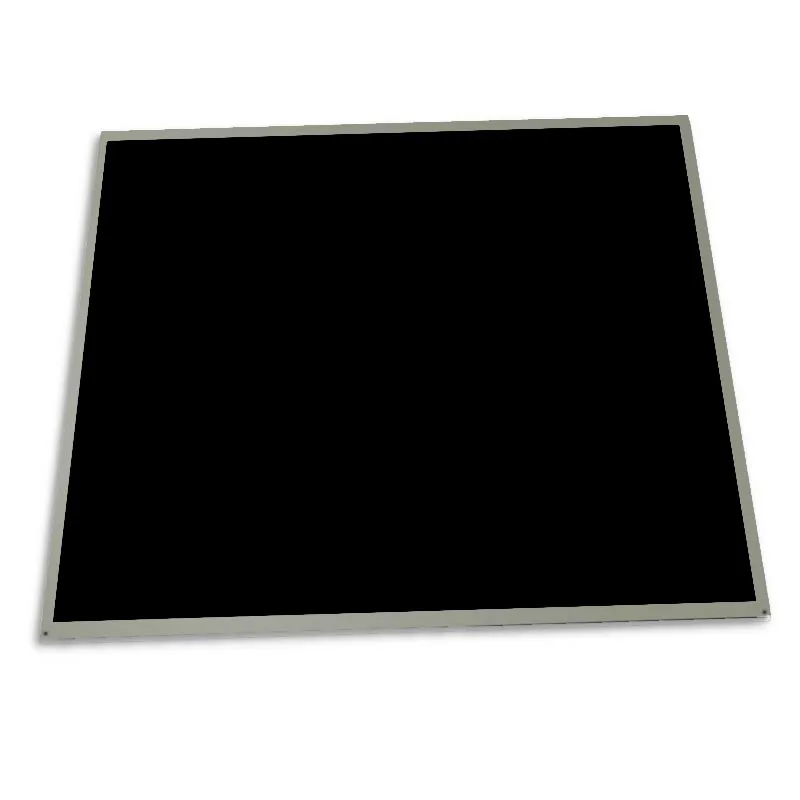
In the landscape of industrial automation and medical diagnostics, the display is not merely a peripheral; it is the critical interface between human decision-making and machine precision. The AUO G190ETN01.2 stands as a paragon of this principle. As a 19-inch TFT LCD module, it has carved out a specific niche where reliability, optical clarity, and longevity are non-negotiable. Where consumer-grade panels prioritize slimness and cost reduction, this AUO panel prioritizes resilience and consistent performance under harsh conditions, such as 24/7 operation in factory floors or sterile surgical environments. This article dives deep into the technical architecture, application logic, and market positioning of the G190ETN01.2. We will explore why this specific panel remains a preferred choice over newer, cheaper alternatives, dissecting its specifications not as a list of numbers, but as a set of engineered solutions to real-world operational challenges.
Decoding the Optical DNA: Beyond Standard Brightness and Contrast
The G190ETN01.2 distinguishes itself through a deliberate optical design tailored for operational clarity. With a typical luminance of 350 cd/m², it surpasses the standard for many indoor displays, ensuring readability in brightly lit environments like server rooms or factory assembly lines. However, the key specification is its high contrast ratio of 1000:1. This figure is critical; it allows for the differentiation of subtle shades in dark grayscale areas, which is essential for applications like radiographic viewing or high-end video surveillance monitoring.
Furthermore, the panel employs a normally black Vertical Alignment (VA) technology. Unlike Twisted Nematic (TN) panels that leak light when displaying black, VA technology provides deep, true blacks even when viewed from an angle. The viewing angle specification of 89 degrees on all axes (CR>10) is not just a marketing metric—it means that multiple operators standing at various positions around a terminal will perceive the same color and brightness, reducing operator fatigue and interpretation errors.

The Mechanics of Durability: How Construction Defines Lifecycle
The physical build of the G190ETN01.2 is engineered for a lifecycle measured in years, not months. A critical feature is its wide operating temperature range from -20°C to +70°C. This is not an arbitrary number; it is a direct function of the liquid crystal mixture and the backlight components used. In a cold storage warehouse or a semi-outdoor kiosk on a summer day, standard commercial panels would suffer from delayed response times or permanent image retention (sticking), whereas this AUO module maintains its switching speed and color stability.
Equally important is its mechanical design which typically includes robust mounting brackets and a metal bezel, rather than the plastic frames found on consumer monitors. This ensures structural rigidity against vibration commonly found in heavy machinery. The LVDS interface (Low-Voltage Differential Signaling) is chosen for its noise immunity over long cable runs, a necessity when the display head must be located several meters away from the processing unit inside a control cabinet. This mechanical and electrical resilience directly translates to lower total cost of ownership.
Navigating the Niche: Where This Panel Thrives
The G190ETN01.2 finds its natural habitat in applications where failure is not an option. Its primary domain is Human-Machine Interface (HMI) terminals in industrial automation. In a factory, this panel is often paired with a resistive or projected capacitive touchscreen to create an operator panel for a CNC machine or robotic cell. The 19-inch format offers a sweet spot, providing enough real estate for a process diagram without demanding excessive cabinet panel space.
Its second critical vertical is Medical Imaging, specifically in patient monitors and anesthesia workstations. While not a diagnostic-grade grayscale monitor, its color accuracy and stable brightness meet the stringent DICOM Part 14 standards required for general clinical review. The absence of flicker and the consistent backlight ensure that clinicians can trust their visual assessment of patient vitals. Finally, it is a staple in Gaming and Casino Equipment, where displays must operate 24/7 without dimming, often in high-ambient-light environments. Its resistance to image burn-in from static elements like game logos is a decisive advantage over older OLED technology.
Backlight Lifecycle and Power Management: The Unsung Engineering
The longevity of a TFT display is overwhelmingly determined by its backlight unit (BLU). The G190ETN01.2 utilizes an LED backlight with a specified life expectancy of 50,000 hours, measured as the time to reach 50% of the original brightness (L50). While 50,000 hours is an excellent baseline, the panel's total lifespan can significantly exceed this if the local dimming capability of the interface is utilized to reduce power to the LEDs in static or dark areas.
AUO engineers have integrated a sophisticated PWM (Pulse Width Modulation) control circuit that allows the brightness to be adjusted without introducing audible coil whine or visible flicker, which can cause headaches during prolonged use. Furthermore, the backlight driver is designed to accommodate external dimming control, meaning the system integrator can program the display to automatically reduce brightness during low-ambient-light periods (e.g., nighttime in a security room), effectively doubling the panel's functional life. This intelligent power management is a key differentiator from panels that merely consume a fixed 12V rail.
Interface and Integration: The LVDS Advantage for System Designers
For an embedded systems engineer, the choice of interface is paramount. The 30-pin LVDS (2 channels, 8-bit) interface on the G190ETN01.2 is a deliberate architectural decision. LVDS, as a technology, offers inherent immunity to electromagnetic interference (EMI), a frequent problem in environments filled with high-frequency motors, welding equipment, and power inverters. This makes integration into existing industrial bus systems far simpler than using newer interfaces like eDP that require complex retiming circuits.
The use of a dual-channel LVDS interface allows the panel to support resolutions up to 1280x1024 (SXGA) at a 5:4 aspect ratio. While 16:9 panels are now common, the 5:4 format provides more vertical pixels—an advantage in applications like building management systems, where you need to see a long list of alarms or a tall vertical process chart. The four-lane LVDS architecture ensures sufficient data bandwidth for 60Hz refresh without requiring exotic, expensive cabling. This design choice prioritizes system stability and ease of integration over chasing the latest consumer trends.
The 5:4 Aspect Ratio: A Strategic Choice for Operational Workflows
In a world dominated by 16:9 widescreens, the 1280x1024 (SXGA) resolution at a 5:4 aspect ratio of the G190ETN01.2 is not a limitation but a tactical advantage. For information-dense industrial interfaces, the extra vertical space is invaluable. A process control HMI can display a full pump station schematic with the trend graph below it without needing to scroll. For a point-of-sale (POS) terminal, the top portion can show the transaction overview while the lower portion remains dedicated to a numeric keypad.
Furthermore, the 5:4 ratio mirrors the aspect ratio of many early and mid-range legacy software applications that were designed for 4:3 monitors. Migrating to a 16:9 panel often results in black bars on the sides or distorted images. This panel allows for a direct, pixel-perfect migration path for systems running older SCADA or medical software. The square-like geometry also aligns physically with the traditional 19-inch rack unit dimensions (19U), allowing for a clean, flush fit in standard 19-inch rack mount enclosures without needing bezel adaptors.
FAQs: Expert Answers on the AUO G190ETN01.2
What is the primary difference between the G190ETN01.2 and a standard 19-inch computer monitor? It is built for industrial reliability with a wider operating temperature range, robust metal housing (typically), and an LVDS interface for direct connection to embedded controllers, unlike consumer monitors that use VGA/HDMI.
Can I use this panel outside? The standard model has 350 cd/m² brightness, which is insufficient for direct sunlight. A high-brightness (1000+ cd/m²) variant is required for outdoor use. The standard model is ideal for shaded or indoor-enclosed kiosks.
What connector does it use for the LVDS signal? It typically uses a standard 30-pin JAE FI-X30 or Hirose DF13 connector, which is common in the industrial panel market.
Is the G190ETN01.2 compatible with a Raspberry Pi? Not directly. The Raspberry Pi outputs HDMI/DSI. You would need a specific LVDS-to-HDMI converter board that is compatible with the panel's timing parameters.
What is the typical backlight life expectancy? The LED backlight is rated for 50,000 hours to half-brightness (L50) with typical usage patterns (25°C ambient, 50% brightness).
Does this panel require a separate inverter for the backlight? No. It uses an integrated LED driver on the cable or a small connector. It requires a 12V DC input for the backlight power circuits.
What does "normally black" mean in a VA panel? It means that when no voltage is applied, the liquid crystal blocks the light, making the pixel appear black. This results in deep blacks and high contrast.
Can I use this for a medical diagnostic PACS monitor? It is suitable for clinical review and patient monitoring but not for primary diagnostic radiology (which requires 5-megapixel grayscale monitors with DICOM calibration).
How do I clean the screen safely? Use a soft, lint-free microfiber cloth dampened with isopropyl alcohol (IPA) or a mild soap solution. Avoid harsh chemicals like ammonia or acetone, which can damage the polarizer.
Does it support capacitive multi-touch? The panel itself is just a TFT glass. It can be integrated with a capacitive or resistive touch screen by the system integrator, but it does not come with touch built-in.
Conclusion: The G190ETN01.2 as a Foundation for Trust
The AUO G190ETN01.2 is far more than a commodity screen; it is an engineered foundation for systems requiring absolute trust. Its enduring relevance in a market flooded with cheaper, faster consumer alternatives lies in its total cost of ownership. The wide temperature range, precise optical performance, and robust LVDS interface are not features—they are investments against downtime, calibration failures, and premature obsolescence. For the system designer, choosing this panel is a decision to prioritize operational integrity over superficial cost savings.
As industries move toward the Internet of Things (IoT) and Industry 4.0, the display remains the constant point of human interaction. The G190ETN01.2 proves that mature, well-engineered technology, chosen for its specific context, can outperform newer generics for years to come. It is a testament to the fact that sometimes, the best innovation is in the steadfast reliability of a proven design. For any project demanding a 19-inch display that must work flawlessly every second of every day, this panel remains a benchmark.





