













































- Industrial display
-
Industrial Products
- DC Servo Drive
- AC Servo Drive
- Industrial board
- Siemens
- Switch Sensor
- Proximity Switch
- Temperature Controller
- Protection Relay
- Fiber Optic Sensor
- Encoder
- Fan
- other
- Heidelberg
- MITSUBISHI
- FANUC
- Siemens adapter
- Fujitsu connector
- Motherboard
- Board
- Contactor
- Circuit
- OMRON
- Relay
- Motor Driver
- power supply
- Cable
- Transformer
- HMI Touch Glass
-
HMI Full Machine Whole unit
- OMRON HMI Touch Panel
- Siemens HMI Touch Panel
- Mitsubishi HMI Touch Panel
- Allen-Bradley automation HMI Touch Panel
- DELTA HMI Touch Panel
- Proface HMI Touch Panel
- KINCO DELTA HMI Touch Panel
- HITECH HMI Touch Panel
- WEINTEK HMI Touch Panel
- TECVIEW HMI Touch Panel
- WEINVIEW HMI Touch Panel
- PANASONIC HMI Touch Panel
- KYOCERA HMI Touch Panel
- SCHNEIDER HMI Touch Panel
- Module
- lcd inverter
- Membrane Keypad Switch
- Zhiyan Customized Touch Screens
- Frequency Inverter
- Servo Motor
- PLC
In the rapidly evolving landscape of display technology, the 19-inch panel segment remains a critical workhorse for industrial, medical, and commercial applications. While consumer markets chase higher resolutions and curved form factors, the demand for reliable, high-brightness, and ruggedized displays never wanes. This article provides a deep, technical exploration of one specific component that exemplifies this niche: the G190ETN01.0 LCD module. Manufactured by Innolux, this 19-inch panel features a native resolution of 1280 x 1024 (SXGA), a 5:4 aspect ratio, and is designed to operate in demanding environments. We will dissect its architecture, interface capabilities, optical performance, and competitive positioning. This is not a surface-level specification sheet; instead, we aim to understand why this specific model persists in a market flooded with alternatives, what makes it a superior choice for specific use cases, and how its design philosophy reflects the broader demands of industrial-grade visual equipment. By the end of this analysis, procurement specialists, system integrators, and engineers will have a clear framework for evaluating this module against their specific project requirements.
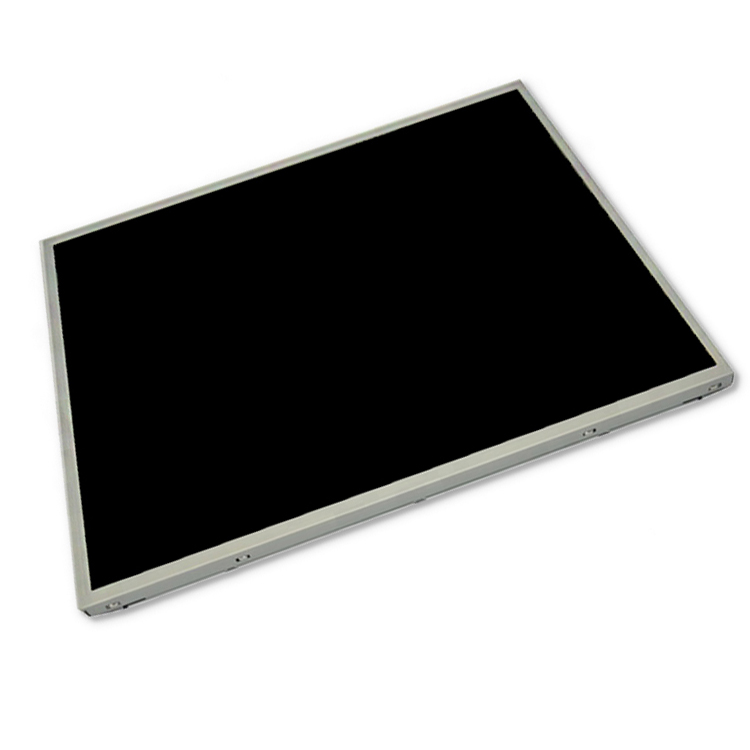
Architecture and Interface: The Engines of Data Transmission
To appreciate the G190ETN01.0, one must first understand the LVDS (Low-Voltage Differential Signaling) interface that drives it. This panel utilizes a standard dual-channel 8-bit LVDS interface, which is the industry benchmark for industrial LCDs of this era and resolution. The dual-channel capability is crucial; it allows for higher bandwidth without increasing clock speeds, thereby maintaining signal integrity over longer cable runs, which is a common requirement in embedded systems and kiosks. The pin assignment follows a standard JEIDA format, ensuring compatibility with most industrial motherboards and controller boards.
Beyond the electrical interface, the physical architecture includes a built-in timing controller (TCON) that handles the conversion of the LVDS signal into the specific driving voltages for the pixels. This integration simplifies system design for the integrator, as it reduces the need for external logic. The module also features a standard 30-pin connector, making it a drop-in replacement for other industry-standard 19-inch SXGA panels. The backlight architecture is equally strategic. It employs an LED (Light Emitting Diode) backlight unit, which is a significant upgrade from older CCFL (Cold Cathode Fluorescent Lamp) technology. This transition results in lower power consumption, a significantly longer lifespan (often exceeding 50,000 hours), and a thinner overall module profile, which is critical for space-constrained enclosure designs.
Optical Precision: Decoding Luminance, Contrast, and Viewing Angle
The optical performance of the G190ETN01.0 is tailored for consistent readability under varying ambient lighting conditions. With a typical brightness, or luminance, of 300 cd/m² (nits), this panel sits in the "high-brightness" category for standard industrial displays. This luminance level is sufficient for indoor retail, factory automation, and medical imaging stations where glare and overhead lighting could wash out a dimmer screen. The contrast ratio, typically specified at 1000:1 (typical), provides a solid foundation for displaying sharp text and distinct graphical elements, which is essential for applications like POS systems and control panels.
A critical optical parameter is the viewing angle. This panel utilizes TN (Twisted Nematic) technology, which results in wider horizontal viewing angles (typically 170°) but narrower vertical ones. While this might seem like a limitation compared to IPS panels, in many vertical mount applications (like a wall-mounted kiosk), the horizontal stability is the primary concern. The panel also features an anti-glare surface treatment (Haze 25%), which diffuses direct light reflections. This is a deliberate design choice for usability; in a factory floor scenario, a specular reflection from a machine light is far more disruptive than a slight haze on the display. The color gamut, while not as wide as premium IPS panels, covers the standard 72% NTSC gamut, delivering accurate and vibrant colors for most non-photographic industrial tasks.
Mechanical Robustness: Form Factor, Mounting, and Thermal Management
An industrial display must withstand more than just visual scrutiny; it must survive physical integration and environmental stress. The G190ETN01.0 adheres to a well-established mechanical footprint. The active display area measures 376.32mm x 301.06mm, and the overall module dimensions are designed to fit standard 19-inch bezel cutouts. A key feature is the support for multiple mounting options. The module includes mounting holes on the side and rear for bracket installation, as well as front-frame mounting capabilities. This flexibility allows system integrators to use the same panel across different product lines without redesigning their chassis.
Thermal management is another area where this module excels. The LED backlight generates less heat than CCFL, but the panel's design includes an aluminum chassis that acts as a heat sink. The operating temperature range is typically -20°C to +70°C, making it suitable for unenclosed environments like outdoor ticketing machines (with additional thermal management) or inside automotive testing equipment. The panel's weight, approximately 2.0 kg, reflects its robust construction. It is not a featherweight consumer laptop screen; it is a durable component designed to be mounted firmly and left untouched for years, resisting vibration and shock within the specified parameters of industrial safety standards (IEC 60068).
Application Environment: Where the G190ETN01.0 Excels
The technical specifications of the G190ETN01.0 converge on a specific set of application environments that reward its particular strengths. The most prominent use case is in Human-Machine Interfaces (HMI) for factory automation. In a manufacturing setting, operators need a screen that can display complex SCADA dashboards, machine status alerts, and production line data. The 1280x1024 resolution offers a 5:4 aspect ratio, providing more vertical space than a standard 16:9 widescreen display. This extra vertical real estate is ideal for reading sequential data lists, ladder logic diagrams, or vertical menus without excessive scrolling.
Another significant application is in medical imaging for patient monitoring and diagnostic review (non-primary reading). The stable color reproduction and high brightness make it suitable for displaying X-rays, CT scans, and ultrasound images in a clinical setting. The anti-glare surface is also a boon in brightly lit operating rooms or nursing stations. Furthermore, this panel is frequently found in self-service kiosks for ticketing, check-in, and information. The 19-inch size strikes a balance between readability for users with varying vision and physical footprint constraints for the kiosk cabinet. The long lifespan of the LED backlight (50,000 hours) is critical for such unattended 24/7 operation, reducing the total cost of ownership (TCO) by minimizing the frequency of maintenance interventions.
Competitive Landscape and Longevity: Why Choose This Panel in a Fast-Moving Market?
Given the dominance of 16:9 aspect ratios in the consumer world, why does a 5:4 panel like the G190ETN01.0 remain relevant? The answer lies in the legacy system support and form factor stability of the industrial sector. Many critical infrastructure systems—from air traffic control towers to bank ATMs and hospital anesthesia carts—were designed around the 19-inch 4:3 or 5:4 form factor. Switching to a widescreen panel would require re-engineering the entire enclosure, rewriting software UI layouts, and potentially violating regulatory certifications. The G190ETN01.0 serves as a direct, drop-in replacement, extending the life of these capital-intensive systems.
Compared to its competitors, such as the AUO G190EG01 or the NEC 19-inch panels, the Innolux G190ETN01.0 holds its ground through a strong balance of cost-performance and availability. It is often more readily available than specific custom runs from other manufacturers and offers a very competitive price point per nit. However, it is not without trade-offs. The TN viewing angle, as noted, is inferior to IPS panels like those in the LG LB190 series. For applications requiring multi-viewer scenarios (e.g., a large dashboard visible from many angles), an IPS solution would be superior. Therefore, the decision to use this panel is a strategic one, favoring system compatibility, low cost, and proven reliability over the latest optical innovations.
Frequently Asked Questions (FAQs)
Q: What is the exact resolution of the G190ETN01.0 LCD module?A: It is 1280 x 1024 pixels, which is the SXGA (Super Extended Graphics Array) standard, with a 5:4 aspect ratio.
Q: What type of backlight does this panel use?A: It uses a WLED (White Light Emitting Diode) backlight, which provides high efficiency and a typical lifespan of 50,000 hours.
Q: Is this a direct replacement for older CCFL-based 19-inch monitors?A: Yes, it is often used as a direct replacement due to its identical mechanical footprint and standard 30-pin dual-channel LVDS interface, provided the power supply is compatible with LED voltage requirements.
Q: What is the typical brightness of this display?A: The typical brightness is 300 cd/m² (nits), making it suitable for most indoor and semi-outdoor (shaded) applications.
Q: What is the viewing angle of the G190ETN01.0?A: It features a TN panel with a typical viewing angle of 80°/80°/80°/70° (L/R/U/D), meaning horizontal angles are wide, but vertical angles are narrower.
Q: Can this panel be used in outdoor applications?A: It is not recommended for direct sunlight without additional enhancement, such as a high-brightness optical bonding solution, as its standard brightness is insufficient to overcome strong ambient light.
Q: What is the operating temperature range?A: The standard operating temperature range is from -20°C to +70°C, which is suitable for many industrial environments but may require thermal management for extreme high heat.
Q: Is the touchscreen functionality built-in?A: No, the G190ETN01.0 is a raw LCD panel without touch functionality. It requires an external touch overlay or a compatible touch screen enclosure to add touch capability.
Q: What is the interface type for this LCD?A: It uses a dual-channel 8-bit LVDS interface on a 30-pin connector.
Q: How do I find a compatible controller board for this panel?A: You need a controller board that supports a dual-channel LVDS signal for 1280x1024 resolution and can provide the correct voltage (typically 5V for logic and 12V for backlight) to the panel.
Conclusion: The Power of Purpose-Built Design
In an era fixated on 4K and 8K resolutions, the G190ETN01.0 stands as a testament to the principle that the right tool for the job often outlasts the flashy new alternative. This module is not a flagship of innovation; it is a masterclass in reliability, compatibility, and cost-effectiveness. By opting for a proven TN technology with a robust LED backlight and a standard LVDS interface, it solves the primary challenges of the industrial display market: system integration, long-term availability, and predictable performance. For engineers maintaining legacy systems or designing new robust HMIs, the G190ETN01.0 offers a secure, well-understood pathway. It provides a stable visual foundation that prioritizes functionality over aesthetics, ensuring that the machine operator can always read the critical data, the patient monitor remains crisp, and the kiosk runs for years without screen failure. This panel may not make headlines, but its true value is quietly measured in the millions of hours of reliable operation it provides in the most demanding settings on earth.





