













































- Industrial display
-
Industrial Products
- DC Servo Drive
- AC Servo Drive
- Industrial board
- Siemens
- Switch Sensor
- Proximity Switch
- Temperature Controller
- Protection Relay
- Fiber Optic Sensor
- Encoder
- Fan
- other
- Heidelberg
- MITSUBISHI
- FANUC
- Siemens adapter
- Fujitsu connector
- Motherboard
- Board
- Contactor
- Circuit
- OMRON
- Relay
- Motor Driver
- power supply
- Cable
- Transformer
- HMI Touch Glass
-
HMI Full Machine Whole unit
- OMRON HMI Touch Panel
- Siemens HMI Touch Panel
- Mitsubishi HMI Touch Panel
- Allen-Bradley automation HMI Touch Panel
- DELTA HMI Touch Panel
- Proface HMI Touch Panel
- KINCO DELTA HMI Touch Panel
- HITECH HMI Touch Panel
- WEINTEK HMI Touch Panel
- TECVIEW HMI Touch Panel
- WEINVIEW HMI Touch Panel
- PANASONIC HMI Touch Panel
- KYOCERA HMI Touch Panel
- SCHNEIDER HMI Touch Panel
- Module
- lcd inverter
- Membrane Keypad Switch
- Zhiyan Customized Touch Screens
- Frequency Inverter
- Servo Motor
- PLC
In the rapidly evolving landscape of industrial display technology, few components achieve the status of a trusted workhorse. The AUO G190EG02 V1, a 19-inch TFT LCD module from the renowned Taiwanese manufacturer AU Optronics, stands as a testament to enduring engineering excellence. This article delves deep into the specifics of this particular model, exploring why it remains a preferred choice for demanding environments ranging from factory floors to medical operating rooms. While consumer electronics chase the latest in high-resolution OLEDs and flexible screens, the industrial sector relies on proven stability, consistent brightness, and wide temperature tolerance—attributes that the G190EG02 V1 delivers with remarkable consistency. We will examine its technical specifications, including its resolution of 1280 x 1024 (SXGA), its unique interface requirements, and its mechanical design, which prioritizes longevity and thermal management. Beyond the datasheet, we will analyze its role in mission-critical applications, compare it to modern alternatives, and provide actionable insights for engineers and procurement specialists. By the end of this analysis, you will understand not just what this display is, but why it continues to command respect in a market saturated with newer models.
Decoding the Structural DNA: Mechanical and Optical Design
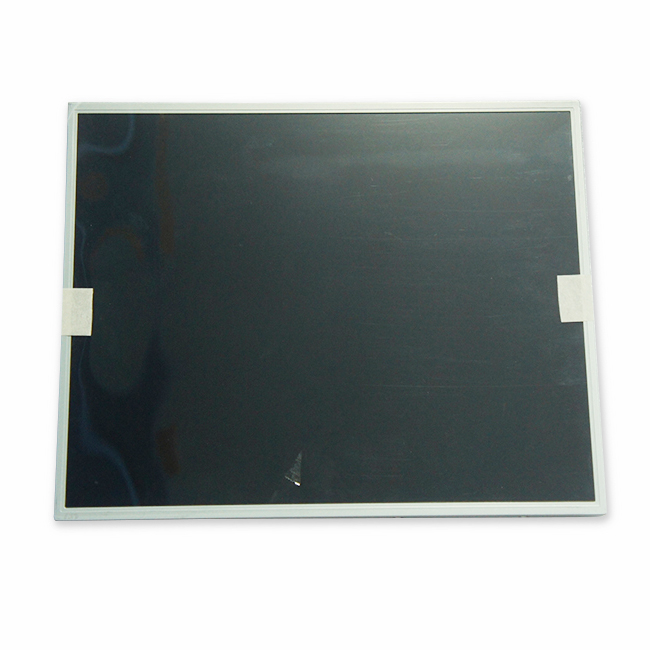
The G190EG02 V1 is engineered with a formidable physical presence. It features a robust bezel width of 18.4 mm on the top and sides, and 28.0 mm on the bottom, providing structural integrity for panel mounting in industrial consoles and kiosks. The overall dimensions measure 428.0 x 352.0 x 17.0 mm, with an active display area of 376.32 x 301.06 mm. This form factor is standard for the 19-inch industrial category, allowing for drop-in replacement in many existing systems that were designed around this generation of panels.
Optically, the display utilizes Vertical Alignment (VA) technology from AUO. This is a critical differentiator from older TN panels. VA technology delivers superior native contrast ratios, typically reaching 1000:1 , which ensures deep blacks and vibrant whites—essential for reading dense data charts or diagnostic images. The viewing angle is specified at 85 degrees in all four directions (CR≥10), a significant improvement over TN panels that suffer from color inversion at extreme angles. The surface treatment is a matte, anti-glare coating (3H hardness), which effectively diffuses ambient light from bright factory floors or hospital lights, minimizing reflections that cause eye strain during prolonged use.
Power, Interface, and Backlight Architecture
Understanding the interface of the G190EG02 V1 is crucial for integration. This model operates on a dual-channel LVDS interface with a 30-pin connector, supporting the SXGA resolution of 1280x1024 at 60Hz. It requires a 3.3V power supply for the logic board, with a typical power consumption of approximately 10.5 Watts for the logic section alone. This is a standard interface for industrial computers of its era, making it relatively straightforward to pair with compatible single-board computers (SBCs) or industrial motherboards that feature LVDS headers.
The backlight system is where the G190EG02 V1 shows its industrial pedigree. It utilizes CCFL (Cold Cathode Fluorescent Lamp) technology. While CCFL is older and less energy-efficient than modern LED backlighting, it provides a specific advantage: excellent color rendering stability over a wide temperature range. The lamp contains a pair of CCFL tubes, with a rated lifetime of 50,000 hours. However, this also means the display requires a separate inverter board to drive the backlight, which adds complexity to the system design. The inverter must supply 1170Vrms for startup and 635Vrms for continuous operation at typical current levels. This is a critical point for anyone planning a replacement; you cannot simply connect the display to a standard LED driver board without modifying the power delivery architecture.

Thermal Resilience and Environmental Adaptability
Industrial environments are harsh; temperature fluctuations, humidity, and vibration are constant stressors. The G190EG02 V1 is specifically designed to withstand these conditions. Its operating temperature range is -20°C to +70°C , with a storage range extending from -30°C to +80°C. This makes it suitable for deployment in unheated warehouses, outdoor kiosks in moderate climates, and food processing areas where refrigeration is common. The ability to start up reliably at -20°C is a feature that many consumer-grade or even some commercial-grade LED displays cannot guarantee without heated backlights.
Furthermore, the display is built to tolerate humidity levels of up to 90% RH at 60°C for 240 hours. This is particularly important in medical sterilization areas or near wash-down stations in food processing plants. Vibration resistance is rated at 1.5G across a 10-200Hz frequency range, ensuring the delicate glass substrates and internal wiring remain intact when mounted on industrial machinery or mobile vehicles. This environmental robustness is a primary reason why operators invest in maintaining this specific model rather than switching to newer, unproven panels.
Application Ecosystems: Where This Display Thrives
The AUO G190EG02 V1 has established a strong foothold in three primary verticals. First, in medical imaging systems such as patient monitors, anesthesia machines, and diagnostic ultrasound cart, the VA technology provides the grayscale homogeneity necessary for clinicians to differentiate subtle tissue densities. Its anti-glare surface reduces glare from overhead surgical lights. Second, it is ubiquitous in factory automation . Human-Machine Interfaces (HMIs) for CNC machines, PLC controllers, and robotic workcells often rely on this panel because of its reliable operation near high-frequency electrical noise and its ability to display crisp, readable text at a distance.
Third, it is commonly found in gaming and amusement machines . Slot machines, video poker terminals, and arcade cabinets use the G190EG02 V1 for its wide viewing angles, which allow multiple players to see the screen without color washout, and its mechanical durability against constant user interaction. The 19-inch size is also ideal for interactive kiosks in retail and hospitality, where a balance between screen real estate and a compact footprint is required. Its VGA/SXGA resolution (5:4 aspect ratio) is particularly well-suited for software designed for this aspect ratio, which is common in legacy industrial software.
Replacement, Compatibility, and Long-Term Lifecycle Strategy
As CCFL backlights age, their brightness diminishes. A primary concern for users of the G190EG02 V1 is how to manage obsolescence. The most common strategy is a direct replacement with a salvaged or NOS (New Old Stock) unit. When sourcing, it is critical to check the part number suffix , such as G190EG02 V1 Rev. C1, as minor revisions may involve different pinout configurations or backlight current requirements. A wrong revision can lead to immediate damage to the LCD or the driving electronics.
For those seeking a performance upgrade without changing the entire system, an alternative is to use an LED backlight conversion kit . These kits replace the CCFL tubes with LED strips and modify the power delivery to bypass the external inverter. This can extend the usable life of the display by decades, reduce power consumption by up to 50%, and eliminate the high-voltage risks of the CCFL inverter. However, this is a delicate procedure requiring precision soldering and careful handling of the light guide film, and it may void any remaining warranty on the LCD glass. For mission-critical systems where downtime is extremely costly, maintaining a stock of spare inverters and lamps is a more conservative approach.
FAQs: Ten Essential Questions About the AUO G190EG02 V1
Is the G190EG02 V1 LED or CCFL backlit?It uses CCFL backlighting (two lamps) and requires a separate external inverter for operation.
What resolution does it support?It supports a native resolution of SXGA (1280 x 1024) for a 5:4 aspect ratio.
What interface does it use?It uses a dual-channel LVDS interface with a 30-pin connector.
What is its operating temperature range?It can operate reliably between -20°C to +70°C .
Can I replace a CCFL backlight with an LED one?Yes, but only through a specialized LED conversion kit . This requires technical skill and modification of the power circuit.
What is the maximum brightness of this panel?The typical brightness is 250 cd/m² .
Is this display compatible with a Raspberry Pi?Not directly. You would need an LVDS-to-HDMI controller board specific to the pinout of this panel.
What is the typical lifespan of the CCFL backlight?The typical lifespan is 50,000 hours to half-brightness.
Why is this display still used instead of newer models?Its strengths are reliable thermal performance at -20°C, high contrast ratio (1000:1) from VA technology, and mechanical durability in harsh environments.
Where can I find the datasheet for the G190EG02 V1?Datasheets are available through AUO's official documentation channels or from specialized LCD distributors and technical forums.
Conclusion: An Enduring Asset in a Throwaway World
The AUO G190EG02 V1 is more than a piece of outdated technology; it is a carefully engineered component designed for a specific, demanding role. Its reliance on CCFL backlighting and a dual-channel LVDS interface places it firmly in the previous generation of display design, yet its superior VA panel, wide operating temperature range, and robust mechanical build keep it relevant today. For engineers and operators managing legacy industrial or medical systems, understanding the nuanced specifications of this particular panel is essential for effective system maintenance and repair. The decision to keep using this panel is often a strategic one—favoring proven reliability and a known failure mode over the unknown risks of adopting a newer model with a shorter track record. Whether you are planning a simple replacement, a backlight conversion, or a system overhaul, the G190EG02 V1 remains a benchmark for quality in the 19-inch industrial display market. It teaches us that in the world of industrial components, stability and resilience are far more valuable than novelty.





