

















- Industrial display
-
Industrial Products
- DC Servo Drive
- AC Servo Drive
- Industrial board
- Siemens
- Switch Sensor
- Proximity Switch
- Temperature Controller
- Protection Relay
- Fiber Optic Sensor
- Encoder
- Fan
- other
- Heidelberg
- MITSUBISHI
- FANUC
- Siemens adapter
- Fujitsu connector
- Motherboard
- Board
- Contactor
- Circuit
- OMRON
- Relay
- Motor Driver
- power supply
- Cable
- Transformer
- HMI Touch Glass
-
HMI Full Machine Whole unit
- OMRON HMI Touch Panel
- Siemens HMI Touch Panel
- Mitsubishi HMI Touch Panel
- Allen-Bradley automation HMI Touch Panel
- DELTA HMI Touch Panel
- Proface HMI Touch Panel
- KINCO DELTA HMI Touch Panel
- HITECH HMI Touch Panel
- WEINTEK HMI Touch Panel
- TECVIEW HMI Touch Panel
- WEINVIEW HMI Touch Panel
- PANASONIC HMI Touch Panel
- KYOCERA HMI Touch Panel
- SCHNEIDER HMI Touch Panel
- Module
- lcd inverter
- Membrane Keypad Switch
- Zhiyan Customized Touch Screens
- Frequency Inverter
- Servo Motor
- PLC
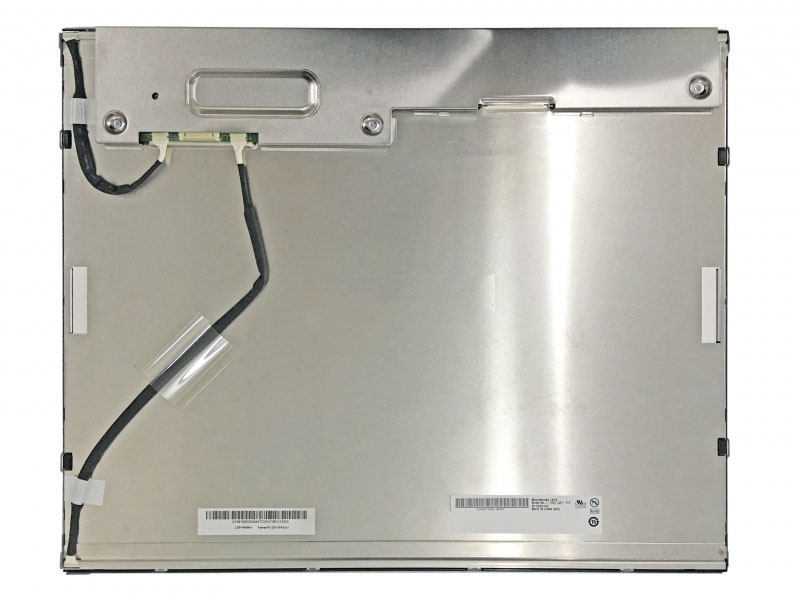
In the rapidly evolving world of display technology, where consumer electronics chase ever-higher resolutions and flexible form factors, the industrial sector operates under a different mandate: reliability, longevity, and optical consistency. At the heart of this domain lies the AUO G190EG02 V0, a 19-inch LCD display panel that has become a quiet workhorse for mission-critical applications. Unlike the fleeting trends of the smartphone market, this panel represents a carefully engineered solution designed for environments where failure is not an option. This article delves deep into the technical architecture, operational nuances, and strategic value of the G190EG02 V0. We will explore its specifications not as a list of numbers, but as a series of deliberate engineering choices that address real-world challenges in industrial automation, medical imaging, and public information systems. By the end of this analysis, you will understand why this particular panel remains a go-to benchmark for integrators seeking a balance between optical performance and industrial durability.
The Architecture of Precision: Panel Type and Resolution Dynamics
The AUO G190EG02 V0 is built on a foundation of a-Si TFT-LCD (Amorphous Silicon Thin-Film Transistor) technology, a mature and highly reliable substrate that prioritizes consistent performance over exotic manufacturing costs. This panel operates with a native resolution of 1280 x 1024 pixels, a ratio of 5:4 rather than the more common 16:9. While this resolution may appear modest by contemporary standards, it is a calculated decision for industrial applications. The 5:4 aspect ratio provides a near-square canvas, which is exceptionally well-suited for machine control interfaces, point-of-sale (POS) systems, and medical monitors where vertical space is at a premium for lists, menus, or patient data.
Pixel pitch stands at approximately 0.294 mm, offering a dot density that balances visual sharpness with readability at typical arm's-length viewing distances. This resolution also imposes a lower computational load on embedded systems, which is a critical advantage in environments where CPU resources are shared with real-time control processes. The display is not a pixel-dense marvel; it is an efficiency-driven tool designed to render information clearly without overwhelming the connected hardware or the operator. The architecture here is one of deliberate restraint—optimizing for task completion rather than immersive spectacle.
Luminance and Contrast: Engineering Visibility in Harsh Environments
A defining characteristic of the G190EG02 V0 is its high luminance output, typically rated at 350 cd/m² (nits), with variants reaching up to 500 cd/m². This is not an arbitrary figure; it is a direct response to the challenges of ambient light interference. Unlike a consumer monitor used in a dim living room, this panel is frequently deployed in factory floors, hospital wards, or outdoor kiosks where lighting conditions are unpredictable. The elevated brightness ensures that screen content remains legible even when competing with overhead fluorescent lights or direct sunlight.
Complementing this is a contrast ratio of 1000:1. This figure ensures that blacks appear deep enough to differentiate critical UI elements, while whites retain their intensity without washout. The synergy between brightness and contrast is particularly vital for grayscale healthcare imaging or for reading barcodes and QR codes under glare. Furthermore, the panel employs a standard TN (Twisted Nematic) alignment layer with an array of optical films that enhance off-angle viewing to a practical standard of 80/80/80/80 degrees (CR≥10). While not as wide as IPS panels, this viewing cone is sufficient for single-operator workstations, avoiding the cost premium of wide-angle technologies that offer diminishing returns in typical industrial settings.
Interface and Power Management: The Backbone of Seamless Integration
Connection strategy is paramount in industrial design, and the G190EG02 V0 opts for the robust LVDS (Low-Voltage Differential Signaling) interface. Specifically, it utilizes a 2-channel, 8-bit LVDS connector. The choice of LVDS over newer interfaces like eDP remains a pragmatic one. LVDS cables are exceptionally resistant to electromagnetic interference (EMI), a common hazard near heavy machinery, motors, or power lines. The dual-channel configuration allows for higher bandwidth and redundancy, ensuring that the display operates without flicker or data loss even in electrically noisy environments.
Power management is equally intelligent. The panel operates on a typical voltage of 5V and draws a current that supports its high backlight requirements. A critical engineering detail is the inclusion of a CCFL (Cold Cathode Fluorescent Lamp) backlight system in the standard V0 model. While LED backlights dominate the consumer space, CCFL systems offer a specific advantage here: a warmer, more stable color temperature over time, which is preferred in certain medical diagnostic applications where color consistency is paramount. However, the panel's inverters are designed for high-frequency operation to eliminate the audible humming associated with older backlights, a testament to AUO’s attention to operator comfort in silent environments.
Thermal and Mechanical Resilience: Surviving the 24/7 Cycle
The true test of an industrial display is its ability to maintain performance under continuous operation. The G190EG02 V0 is engineered for 24/7 duty cycles. Its operating temperature range is specified from 0°C to 60°C, with a storage range extending to -20°C to 70°C. This tolerance allows deployment in unventilated enclosures or near heat-generating equipment without the need for active cooling fans, which are points of mechanical failure.
Mechanically, the panel supports a standard VESA mount (75 x 75 mm and 100 x 100 mm), facilitating straightforward integration into existing kiosk frames or custom enclosures. Its physical dimensions, a slim bezel of approximately 397.2 x 324.9 mm, allow for compact system design. A less-discussed but vital feature is the panel's surface hardness rating. With a typical anti-glare coating of 3H, the screen resists minor abrasions and scratches from cleaning or incidental contact. Furthermore, the panel is designed to withstand a certain level of vibration and shock, compliant with standard industrial testing protocols, ensuring that the display does not suffer from pixel damage or glass cracking in mobile or high-vibration settings like forklift terminals or automotive test rigs.
Color Depth and Calibration: Beyond Basic RGB
While the industrial sector does not demand the cinema-grade color gamut of a professional video monitor, accurate color representation is critical in specific sub-fields. The G190EG02 V0 supports 16.2 million colors (8-bit color depth without FRC). The absence of Frame Rate Control (FRC) dithering is a significant advantage for medical imaging, as it eliminates temporal noise and false contours that can obscure subtle details in X-rays or CT scans.
The panel's native color gamut typically covers approximately 72% of the NTSC standard. This is sufficient for signal monitoring systems, traffic management displays, and most industrial HMI (Human-Machine Interface) applications where colors are used not for aesthetic pleasure but for coding urgency or state—such as red for alarm, yellow for warning, and green for normal operation. For integrators requiring ultra-high accuracy, the panel's uniform backlight distribution allows for viable hardware calibration. The gamma curve is factory-set to a standard of 2.2, which aligns with the typical visual perception of brightness in a lit industrial room. This calibration ensures that a grayscale ramp from 0 to 255 is perceived as linear, preventing burnout of highlights or loss of shadow detail in critical data readouts.
Supply Chain and Lifecycle Management: The Value of Longevity
One of the most compelling reasons for selecting the G190EG02 V0 is its extended production lifecycle management. Unlike consumer displays that are discontinued within 12-18 months, AUO typically guarantees availability for this model for 5 years or more from its initial release. This is a strategic imperative for industries such as aviation ground equipment, military systems, or long-term infrastructure projects where certification and replacement cycles span decades.
The panel’s status as a standard product means that it is stocked by numerous global distributors, ensuring supply continuity. Furthermore, the use of generic CCFL tubes and standard LVDS connectors allows for easier re-engineering and aftermarket repair. This contrasts sharply with proprietary designs where a single connector failure can render an entire system obsolete. For system integrators, this translates into a lower total cost of ownership (TCO). They can commit to a display design for a given product generation without the risk of a sudden "End of Life" (EOL) notice that forces an expensive and time-consuming qualification of a new panel. The G190EG02 V0 is not just a component; it is an investment in logistical stability.
Frequently Asked Questions (FAQS)
Does the AUO G190EG02 V0 support touchscreen?No, the base model is a standard LCD panel without touch functionality. It can be integrated with external touch overlays (resistive, capacitive, or IR) via the system integrator.
What is the exact viewing angle specification?The panel offers a symmetric viewing angle of 80° in all directions (80/80/80/80) at a contrast ratio of 10:1, using a TN mode.
Is the backlight user-replaceable?The backlight is a CCFL tube system that is technically replaceable by a skilled technician, but it requires disassembly of the panel frame and is not considered a user-serviceable part.
Can this panel be used in bright sunlight?Yes, particularly if you source the high-brightness variant (500 cd/m²). An anti-reflection surface treatment is recommended for direct sunlight applications.
What is the power consumption of this panel?Typical power consumption is approximately 24W, depending on the brightness setting and the specific backlight inverter model used.
Is the G190EG02 V0 compatible with single-channel LVDS?No, the default configuration requires a 2-channel (dual) LVDS transmitter to achieve the full 1280x1024 resolution at 60Hz. Single channel will limit resolution or frame rate.
What is the pixel arrangement?The panel uses an RGB vertical stripe arrangement, which is standard for crisp text display and clear graphical user interfaces.
Does this panel have a built-in OSD (On-Screen Display)?No, the raw panel does not include OSD controls. OSD functions are managed by the host system's graphics driver or an external controller board.
What is the typical response time?The response time is typically 5ms (Tr+Tf), which is adequate for static imagery and basic animations but not designed for high-speed video or gaming.
Are replacement CCFL lamps readily available?Yes, due to the panel's popularity, generic CCFL tubes matching the length and diameter specifications are widely available from electronic component suppliers.
Conclusion: A Calculated Investment in Operability and Durability
The AUO G190EG02 V0 19-inch LCD display panel stands as a testament to the philosophy of purpose-built engineering. It deliberately eschews the race for higher pixel counts or exotic color gamuts in favor of rock-solid reliability, predictable power consumption, and robust mechanical design. For system integrators, project managers, and procurement specialists, this panel offers a unique value proposition: it is a known, quantified quantity that reduces technical risk. Its high luminance ensures operability under harsh lighting, its LVDS interface provides noise immunity, and its extended lifecycle offers supply chain security. In an industry where downtime costs thousands of dollars per minute, the G190EG02 V0 is not merely a screen—it is a critical, trustworthy component of a larger, fail-safe system. Choosing this panel is a strategic decision to prioritize operational continuity over aesthetic novelty, a choice that pays dividends over the long life of any industrial deployment. It remains a benchmark because it works, day after day, without compromise.





