

















- Industrial display
-
Industrial Products
- DC Servo Drive
- AC Servo Drive
- Industrial board
- Siemens
- Switch Sensor
- Proximity Switch
- Temperature Controller
- Protection Relay
- Fiber Optic Sensor
- Encoder
- Fan
- other
- Heidelberg
- MITSUBISHI
- FANUC
- Siemens adapter
- Fujitsu connector
- Motherboard
- Board
- Contactor
- Circuit
- OMRON
- Relay
- Motor Driver
- power supply
- Cable
- Transformer
- HMI Touch Glass
-
HMI Full Machine Whole unit
- OMRON HMI Touch Panel
- Siemens HMI Touch Panel
- Mitsubishi HMI Touch Panel
- Allen-Bradley automation HMI Touch Panel
- DELTA HMI Touch Panel
- Proface HMI Touch Panel
- KINCO DELTA HMI Touch Panel
- HITECH HMI Touch Panel
- WEINTEK HMI Touch Panel
- TECVIEW HMI Touch Panel
- WEINVIEW HMI Touch Panel
- PANASONIC HMI Touch Panel
- KYOCERA HMI Touch Panel
- SCHNEIDER HMI Touch Panel
- Module
- lcd inverter
- Membrane Keypad Switch
- Zhiyan Customized Touch Screens
- Frequency Inverter
- Servo Motor
- PLC
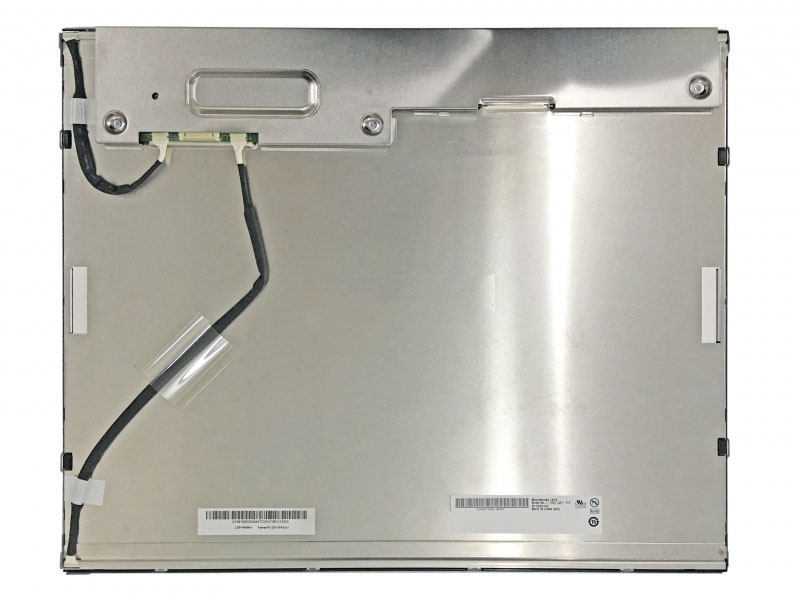
In an era dominated by ultra-high-definition 4K and 8K displays, the industrial display sector remains anchored by the reliability and specific performance characteristics of legacy formats. Among these, the AUO G190EG02 V0 stands as a significant example of engineering precision tailored for demanding environments. This 19-inch LCD panel, manufactured by AU Optronics (AUO), is not a consumer-grade monitor; it is a specialized component designed for applications where longevity, stability, and optical clarity are non-negotiable. This article delves deep into the technical architecture, operational strengths, and market positioning of the G190EG02 V0. We will dissect why a seemingly standard 19-inch panel continues to power critical systems in medical imaging, industrial automation, and gaming kiosks. By exploring its electrical interface, thermal management, and compatibility nuances, we aim to provide a comprehensive guide for engineers, procurement specialists, and system integrators who rely on the proven fidelity of the AUO G190EG02 V0 platform.
Core Optical Architecture and Display Characteristics
The G190EG02 V0 employs a twisted nematic (TN) technology, which is a deliberate choice for industrial applications prioritizing response time over wide color gamut. Its native resolution is 1280 x 1024 pixels, adhering to the SXGA standard, which provides a 5:4 aspect ratio—a format that remains prevalent in legacy medical PACS systems and specific control room setups. The panel delivers a typical brightness of 250 cd/m², a figure that is often insufficient for direct sunlight but perfectly calibrated for indoor, controlled-lighting environments.
A critical characteristic is its viewing angle. With a horizontal and vertical angle of 85°, 85°, 85°, and 75° (left, right, up, down), the panel has a notable asymmetry. The TN technology inherently limits vertical viewing performance, which means the panel must be mounted at eye level for optimal color and contrast consistency. The contrast ratio stands at 1000:1, which, while not exceptional by modern consumer standards, is robust for displaying sharp monochrome text and DICOM-compliant grayscale images. The 8-millisecond response time ensures that motion artifacts are minimized in dynamic industrial interfaces, making it superior to older VA panels for real-time data visualization.
Interface, Power Management, and Signal Integrity
Understanding the electrical interface of the G190EG02 V0 is crucial for system integration. This panel is strictly an LVDS (Low-Voltage Differential Signaling) interface device, operating on a 30-pin connection. It requires a dual-channel LVDS input, which is a significant detail. Single-channel controllers will not drive this panel to its full resolution and refresh rate. The panel accepts a typical voltage of 3.3V for logic and 5V for the backlight, with a combined power consumption often hovering around 15 to 18 watts depending on backlight current.
Signal integrity is paramount. The LVDS cables must be shielded and kept short to prevent EMI interference, which can manifest as shimmering or missing pixels in harsh industrial environments. The panel does not include an integrated timing controller (TCON) board that handles scaling; it expects a clean, pre-scaled 1280x1024 signal from the host system. This makes it unsuitable for direct connection to standard VGA or DVI connectors without a dedicated LVDS converter board. Furthermore, the panel's internal logic is sensitive to power sequencing. A delay between applying the logic voltage and the backlight voltage is required to prevent inrush current damage, a common failure point in poorly designed embedded systems using this LCD.
CCFL Backlight Technology: Longevity and Replacement Dynamics
Unlike modern panels that rely on LED backlighting, the G190EG02 V0 utilizes cold cathode fluorescent lamp (CCFL) technology. This is a double-edged sword. The positive aspect is spectral stability—CCFLs produce a very consistent white point across the panel surface, which is essential for color-critical medical applications where LED edge lighting can cause color shift. The typical lifetime of the CCFL backlight in this model is rated at 50,000 hours to half-brightness.
The major drawback is the bulk and heat. The inverter module required to drive the CCFL generates significant heat and occupies physical space, making the panel thicker and heavier than LED counterparts. For system integrators, the end-of-life strategy is critical. When the backlight dims or fails, it cannot be replaced by simply swapping an LED strip. A replacement backlight kit specifically designed for the G190EG02 V0 chassis is required, and the procedure involves careful disassembly of the bezel and diffuser layers. Furthermore, the high-voltage AC output of the inverter (typically 1000Vrms) presents a safety hazard during maintenance. The market is seeing a gradual shift toward compatibility upgrades, but the original CCFL configuration remains the gold standard for applications requiring absolute optical uniformity.
Mechanical Design, Mounting, and Thermal Constraints
The physical form factor of the G190EG02 V0 is engineered for enclosure mounting rather than desktop use. The overall dimensions are approximately 396.0 mm x 324.0 mm (horizontal x vertical), with a panel depth of roughly 10.5 mm for the glass only, increasing to about 20 mm including the driver PCB and backlight chassis. The active area is 376.3 mm x 301.1 mm, providing a generous bezel width for gasketing and sealing against dust or liquid ingress.
Thermal management is a primary concern. The CCFL inverter and the driver ICs generate localized heat. The panel's operating temperature range is specified from 0°C to 50°C, with a storage range of -20°C to 60°C. Exceeding these limits, particularly in the upper range, can cause the liquid crystal material to degrade permanently. For system integrators, this means forced air circulation is often required if the panel is housed in a sealed cabinet. The mounting holes are typically located on the side brackets, following a VESA-compatible pattern (75mm x 75mm or 100mm x 100mm via adapters), although the exact configuration varies by revision. Additionally, the optical film stack is sensitive to pressure; overtightening screws can cause mura (uneven brightness), a common defect that degrades imaging quality.
Application-Specific Performance in Medical and Industrial Settings
The AUO G190EG02 V0 has found a stronghold in two distinct verticals: medical diagnostic imaging and industrial human-machine interfaces (HMIs). In medical contexts, the panel's 1280x1024 resolution aligns perfectly with the standard resolution for viewing chest X-rays and CT scans. The high contrast ratio and stable CCFL backlight make it DICOM Part 14 compliant when paired with a proper calibration sensor and software. However, it is *not* a high-brightness medical monitor; it is best suited for secondary review workstations rather than primary diagnosis, where higher luminance (500 cd/m²+) is required.
In industrial HMI, the panel excels in factory automation controllers and CNC machine interfaces. Its wide operating voltage tolerance and robust construction against vibration (when properly mounted) make it reliable. The 5:4 aspect ratio is preferred for displaying ladder logic diagrams and machine data. However, the viewing angle limitation is a notable liability on a factory floor where operators may view the screen from an angle. For gaming and amusement applications (slot machines), the panel's fast response time and vivid color saturation (for a CCFL panel) make it adequate, though newer LED panels with higher brightness are now preferred for attracting player attention in bright casino floors.
Obsolescence, Sourcing, and Compatibility with Modern Controllers
The G190EG02 V0 is an active, but increasingly obsolescent, product. AUO has largely shifted its production focus to LED-backlit 16:9 panels, meaning original new stock of this exact panel is becoming scarce. The most reliable sourcing channels are through authorized industrial display distributors (e.g., Winstar, Shenzhen Hongsheng) or via surplus electronic markets. It is critical to verify the specific revision number, as the V0 designation implies the first revision, which may have slightly different electrical characteristics than later versions.
Compatibility with modern controllers is a nuanced challenge. Many contemporary single-board computers (SBCs) like the Raspberry Pi or Jetson Nano do not have native LVDS outputs. They require an HDMI-to-LVDS converter board. However, these converter boards must specifically support the 5:4 aspect ratio and the dual-channel LVDS configuration. A common mistake is using a single-channel LVDS board, which results in a split screen or black banding. Furthermore, the converter must provide the correct 3.3V logic voltage and the backlight on/off signal timing. For mission-critical systems, it is advisable to purchase a matched LCD controller board from the same vendor to guarantee plug-and-play operation. Documentation from the panel datasheet is essential for configuring the converter's jumpers correctly.
Frequently Asked Questions (FAQS)
Q1: What is the physical resolution of the AUO G190EG02 V0 panel?A: The native resolution is 1280 x 1024 pixels (SXGA), with a 5:4 aspect ratio.
Q2: Can I connect this panel to a standard VGA or HDMI port directly?A: No. It requires a dedicated LVDS interface. You need an HDMI-to-LVDS or VGA-to-LVDS converter board designed for dual-channel 1280x1024 signals.
Q3: Is the backlight replaceable?A: Yes, but it is a complex task involving removal of the bezel and diffuser layers. You need a compatible CCFL replacement kit. It is not a simple swap like an LED strip.
Q4: What is the typical lifespan of the backlight?A: The CCFL backlight is rated for approximately 50,000 hours of operation to half-brightness under standard conditions.
Q5: What are the major differences between the G190EG02 V0 and newer LED models?A: The V0 uses CCFL backlighting, which offers better optical uniformity but is thicker, heavier, and runs hotter. Modern LED models are thinner and more energy-efficient.
Q6: What is the operating temperature range for this display?A: The standard operating range is 0°C to +50°C. Storage range is -20°C to +60°C.
Q7: Does this panel support touch input?A: The panel itself is a pure LCD display with no touch layer. It is often paired with an external resistive or capacitive touchscreen overlay in industrial kiosks.
Q8: What type of connector does it use?A: It uses a 30-pin LVDS connector (usually JAE or Hirose style) for data and power, plus a separate connector for the CCFL backlight high-voltage input.
Q9: Is this panel suitable for outdoor use?A: Not in direct sunlight. Its standard brightness of 250 cd/m² is insufficient. It is designed for indoor, controlled lighting environments.
Q10: Where can I find the datasheet for the G190EG02 V0?A: The official datasheet is typically available from AUO's embedded display portal or through authorized distributors like Digi-Key, Mouser (for stock), or specialized industrial LCD supplier websites.
Conclusion: A Legacy of Stability in a Changing Display Landscape
The AUO G190EG02 V0 19-inch LCD panel represents a specific era of industrial display design—one that prioritized electrical and optical stability over thinness and power efficiency. While its CCFL backlight and TN technology may appear dated against the current LED OLED paradigm, its enduring presence in medical and factory environments is a testament to its reliability. For engineers and integrators tasked with maintaining legacy systems or building new installations that require proven color consistency and a 5:4 aspect ratio, this panel remains a viable, if increasingly scarce, solution. The key to successful deployment lies in meticulous attention to interface compatibility, thermal management, and backlight maintenance. As the market inevitably transitions to LED-based replacements, understanding the G190EG02 V0's architecture offers valuable lessons in designing for longevity. It is a reminder that in the world of industrial hardware, a well-designed, mature product often outlives flashier, less robust alternatives. Choosing this panel is a commitment to a proven standard, not a pursuit of the latest visual trend.





