


















- Industrial display
-
Industrial Products
- DC Servo Drive
- AC Servo Drive
- Industrial board
- Siemens
- Switch Sensor
- Proximity Switch
- Temperature Controller
- Protection Relay
- Fiber Optic Sensor
- Encoder
- Fan
- other
- Heidelberg
- MITSUBISHI
- FANUC
- Siemens adapter
- Fujitsu connector
- Motherboard
- Board
- Contactor
- Circuit
- OMRON
- Relay
- Motor Driver
- power supply
- Cable
- Transformer
- HMI Touch Glass
-
HMI Full Machine Whole unit
- OMRON HMI Touch Panel
- Siemens HMI Touch Panel
- Mitsubishi HMI Touch Panel
- Allen-Bradley automation HMI Touch Panel
- DELTA HMI Touch Panel
- Proface HMI Touch Panel
- KINCO DELTA HMI Touch Panel
- HITECH HMI Touch Panel
- WEINTEK HMI Touch Panel
- TECVIEW HMI Touch Panel
- WEINVIEW HMI Touch Panel
- PANASONIC HMI Touch Panel
- KYOCERA HMI Touch Panel
- SCHNEIDER HMI Touch Panel
- Module
- lcd inverter
- Membrane Keypad Switch
- Zhiyan Customized Touch Screens
- Frequency Inverter
- Servo Motor
- PLC
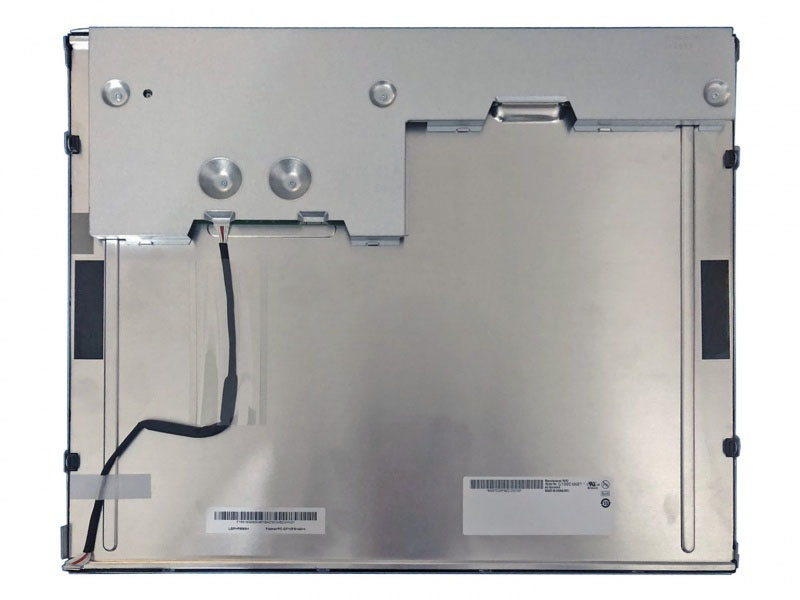
In the competitive landscape of industrial display technology, the 19-inch form factor has maintained a steadfast presence, valued for its balance between readability and spatial efficiency. Among the panels that define this category, the AUO G190EAN01.1 stands out as a specific model that merits in-depth examination. This article delves beyond the basic datasheet to explore the engineering decisions, performance metrics, and application suitability of this particular TFT-LCD module manufactured by AU Optronics (AUO). We will dissect its optical characteristics, interface architecture, and mechanical design to understand why it serves as a critical component in medical, aviation, and industrial automation systems. By focusing on the technical nuances that differentiate this panel from generic 19-inch offerings, this analysis aims to provide system integrators, procurement specialists, and display engineers with a rigorous understanding of its capabilities and limitations. The core theme of this discussion is how the G190EAN01.1’s specific configuration—notably its IVA (Advanced Vertical Alignment) technology and LED backlighting—addresses the stringent requirements of high-reliability environments.
Optical Architecture: IVA Technology and Viewing Performance
The AUO G190EAN01.1 employs IVA (Image Vertical Alignment) technology, a proprietary AUO advancement over traditional VA (Vertical Alignment) panels. This is a critical differentiator. Unlike standard TN (Twisted Nematic) panels common in older industrial displays, IVA provides superior contrast ratios, typically reaching 3000:1 in this model. This high static contrast is essential for applications where differentiation between shades of gray is critical, such as in medical PACS (Picture Archiving and Communication System) viewers. The panel achieves a wide viewing angle of 89 degrees in all four directions (left/right/up/down), which minimizes color shift and gamma shift when viewed off-center. This is particularly valuable in multi-user environments, like factory floor control rooms, where operators view the screen from various positions. The panel’s brightness is rated at 350 cd/m² (typical), which is sufficient for indoor industrial settings but may require an additional high-brightness backlight for direct sunlight exposure. The 16.7 million color depth (8-bit) ensures smooth gradients, avoiding the banding artifacts seen in cheaper 6-bit+FRC (Frame Rate Control) panels. The anti-glare surface treatment (Haze 25%) is engineered to disperse ambient light reflections, reducing operator eye strain during prolonged monitoring tasks.
Interface and Signal Integrity: The LCDS and LVDS Ecosystem
Signal transmission integrity is paramount in industrial environments where electromagnetic interference (EMI) is prevalent. The G190EAN01.1 utilizes a dual-channel LVDS (Low-Voltage Differential Signaling) interface. This is not merely a technical specification; it dictates the cable selection, connector pin-out, and receiver compatibility on the host system. Operating at a typical resolution of 1280 x 1024 (SXGA) with a 5:4 aspect ratio, the panel requires two 8-bit data channels to achieve its 16.7 million color depth at a 60 Hz refresh rate. The dual-channel architecture also provides a redundancy pathway and lowers the per-line data rate, making the signal more resilient to noise. The interface supports pixel clocks up to 108 MHz. For system designers, this means that the chosen graphics controller must have a compatible LVDS transmitter capable of sourcing the proper voltage swing and common-mode voltage. The panel’s timing controller (TCON) has built-in spread spectrum clocking support to reduce EMI peak emissions, a feature often overlooked but crucial for passing FCC or CE certification in industrial equipment. The 30-pin connector (JAE FI-RE31S-HF or equivalent) is a standard industrial footprint, ensuring broad compatibility with off-the-shelf LVDS cables.
Mechanical Design and Thermal Considerations
The physical construction of the AUO G190EAN01.1 is designed for long-term mechanical stability. The module has an active area of 376.32 mm x 301.06 mm and an overall outline dimension that includes robust metal bezel mounting tabs. The panel uses a standard 4-point mounting pattern on each side, compatible with VESA-style enclosures. A less-discussed but vital feature is the thermal management integration. The LED backlight drive circuit is mounted on a separate PCB that interfaces with the panel via a flex cable. This design deliberately isolates the heat generated by the LED driver from the sensitive liquid crystal layer. For integrators, this means passive cooling is typically sufficient up to an ambient temperature of 60°C. The backlight itself is composed of a side-lit LED array with a rated lifetime of 50,000 hours (to half brightness), which is standard for industrial panels. The module weight is approximately 1.1 kg, making it suitable for articulated arm mounts in medical carts or kiosk enclosures without requiring heavily reinforced support structures.
Environmental Robustness and Reliability Testing
Industrial displays must operate under conditions that would quickly degrade consumer-grade monitors. The G190EAN01.1 is specified for an operating temperature range of 0°C to +60°C and a storage range of -20°C to +60°C. More importantly, it has undergone rigorous reliability testing that includes vibration resistance (1.5G, 10-200Hz in each axis) and shock resistance (50G, 11ms half-sine pulse). This makes it suitable for deployment in mobile equipment like forklift terminals or in-vehicle infotainment systems where constant vibration is a factor. The panel is also designed to meet RoHS (Restriction of Hazardous Substances) compliance, ensuring no lead, mercury, or cadmium in its construction. While not inherently waterproof, the front polarizer is treated to withstand humidity levels of up to 95% RH (non-condensing). For integrators concerned with long-term field service, the LED backlight driver circuit is a key failure point; AUO’s design includes over-voltage and short-circuit protection, reducing the likelihood of catastrophic failure due to power supply surges.
Application Suitability and System Integration Challenges
Given its optical and environmental specifications, the G190EAN01.1 is optimized for medical diagnostic displays, industrial HMI (Human-Machine Interface) panels, and gaming machines. However, integration is not plug-and-play. A significant challenge is the inverter-free design; the panel requires a constant 12V DC input for the backlight, not a high-voltage AC signal like older CCFL (Cold Cathode Fluorescent Lamp) panels. System designers must ensure their power supply provides clean, regulated 12V current. Additionally, the panel’s native 5:4 aspect ratio does not match the 16:9 or 16:10 ratios common in modern computing. This means that operating systems or graphics cards must be configured to output SXGA (1280x1024) natively, or scaling artifacts will occur. For medical use, the panel’s grayscale accuracy can be further calibrated using external LUT (Look-Up Table) boxes, though the internal 8-bit gamma correction is quite good out of the box. The panel’s LED backlight offers instant-on operation, a distinct advantage over CCFL panels that require several minutes to reach full brightness in cold environments.
FAQs: Common Questions About the AUO G190EAN01.1
Q: What is the exact resolution of the AUO G190EAN01.1?A: It is 1280 x 1024 (SXGA) with a 5:4 aspect ratio.
Q: Is this panel compatible with VGA or DVI inputs directly?A: No, it requires an LVDS signal. An LVDS-to-VGA or LVDS-to-DVI converter board is necessary for use with standard PC outputs.
Q: What is the typical power consumption of this display?A: The typical power consumption is around 24W, which includes both the TCON and the LED backlight at full brightness.
Q: Does the panel support touch screen functionality?A: The base model does not have touch integrated. It requires an external touch panel (resistive or capacitive) to be mounted over the glass.
Q: What is the difference between IVA and IPS technology?A: IVA (AUO’s implementation of VA) offers higher contrast ratios (3000:1), while IPS offers slightly better color consistency at extreme viewing angles and faster pixel response times in some cases.
Q: Can this panel be used in direct sunlight?A: Standard brightness (350 cd/m²) is insufficient. You would require an optical bonding service to add a high-brightness backlight or a sunlight-readable film.
Q: What is the pinout of the LVDS connector?A: It uses a standard 30-pin JAE FI-RE31S-HF connector. The pinout is detailed in the official AUO specification sheet, differentiating odd/even pixel channels.
Q: Is the backlight replaceable?A: The LED array is side-lit and integrated into the metal frame. Replacement is difficult and requires careful disassembly; replacing the entire panel is usually more cost-effective.
Q: What is the response time of this panel?A: Typical gray-to-gray (GtG) response time is 25ms, suitable for static image monitoring but not for high-frame-rate gaming or video.
Q: Is this display compliant with medical standards like IEC 60601?A: The panel module itself is designed for industrial use but is commonly integrated into medical systems that undergo full IEC 60601-1 certification.
Conclusion: A Workhorse for High-Reliability Environments
The AUO G190EAN01.1 19-inch TFT screen is not a cutting-edge consumer display, nor is it intended to be. Its value lies in its proven reliability, specific interface compatibility, and robust optical performance within its operational envelope. The deliberate use of IVA technology delivers contrast levels that surpass standard TN panels, making it ideal for diagnostic and monitoring tasks where image clarity is paramount. While integration requires attention to signal sourcing (LVDS) and power regulation, the panel’s mechanical design and environmental tolerances make it a dependable foundation for systems that operate in demanding environments—from hospital operating rooms to factory assembly lines. For engineers and procurement professionals seeking a 19-inch solution that prioritizes stability over flashiness, the G190EAN01.1 remains a valid, well-documented choice. However, any potential buyer must verify that their system’s graphical pipeline can handle the 5:4 aspect ratio and dual-channel LVDS requirements to avoid costly integration delays. This panel exemplifies the principle that in industrial design, consistent, predictable performance is often more valuable than raw specifications.





