













































- Industrial display
-
Industrial Products
- DC Servo Drive
- AC Servo Drive
- Industrial board
- Siemens
- Switch Sensor
- Proximity Switch
- Temperature Controller
- Protection Relay
- Fiber Optic Sensor
- Encoder
- Fan
- other
- Heidelberg
- MITSUBISHI
- FANUC
- Siemens adapter
- Fujitsu connector
- Motherboard
- Board
- Contactor
- Circuit
- OMRON
- Relay
- Motor Driver
- power supply
- Cable
- Transformer
- HMI Touch Glass
-
HMI Full Machine Whole unit
- OMRON HMI Touch Panel
- Siemens HMI Touch Panel
- Mitsubishi HMI Touch Panel
- Allen-Bradley automation HMI Touch Panel
- DELTA HMI Touch Panel
- Proface HMI Touch Panel
- KINCO DELTA HMI Touch Panel
- HITECH HMI Touch Panel
- WEINTEK HMI Touch Panel
- TECVIEW HMI Touch Panel
- WEINVIEW HMI Touch Panel
- PANASONIC HMI Touch Panel
- KYOCERA HMI Touch Panel
- SCHNEIDER HMI Touch Panel
- Module
- lcd inverter
- Membrane Keypad Switch
- Zhiyan Customized Touch Screens
- Frequency Inverter
- Servo Motor
- PLC
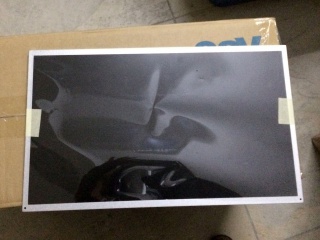
In the landscape of industrial displays, the 18.5-inch form factor occupies a critical niche, balancing readability with footprint constraints. The G185XW01 V2, manufactured by AU Optronics (AUO), stands as a prominent model within this category, specifically engineered for demanding environments such as factory automation, medical equipment, and digital signage. This article moves beyond superficial specifications to explore the engineering philosophy, interface nuances, and application-specific trade-offs that define this panel. We will dissect its optical performance, mechanical integrity, and operational longevity, providing a technical yet practical guide for integrators and procurement professionals. By understanding what makes the G185XW01 V2 distinct—from its XGA resolution architecture to its specialized LVDS interface—readers will be better equipped to evaluate its suitability for mission-critical embedded systems.

Optical Architecture and Resolution Balancing
At the heart of the G185XW01 V2 lies a careful compromise between pixel density and practical visibility. The panel utilizes an XGA resolution of 1366 x 768 pixels, which, at 18.5 inches diagonally, yields a pixel density of approximately 84 pixels per inch (PPI). This may seem modest compared to consumer-grade 1080p monitors, but in the industrial context, it is a deliberate choice. Higher resolutions at this size would require more powerful backlighting and tighter transistor matrices, reducing durability and increasing power consumption.
The display employs Twisted Nematic (TN) technology, which offers rapid response times—typically under 5 milliseconds—critical for displaying dynamic process data without motion blur. However, the trade-off is constrained viewing angles, commonly rated at 170° horizontal and 160° vertical. For applications where multiple operators must view the screen from oblique angles, this may necessitate careful physical placement or the selection of an IPS alternative. The panel's contrast ratio of 1000:1, combined with a typical brightness of 250–350 cd/m², ensures legibility in semi-controlled indoor lighting environments, though direct glare protection is recommended for signage deployments near windows.
Interface Protocol and Signal Integrity
The G185XW01 V2 communicates exclusively through the LVDS (Low-Voltage Differential Signaling) interface, a standard in industrial systems for over a decade. Specifically, it employs a single-channel, 6-bit LVDS connection, capable of transmitting up to 262,144 colors (18-bit color depth). This interface is chosen for its noise immunity—critical in factories where electromagnetic interference from motors and welders can disrupt display signals. However, integrators must note that single-channel LVDS has a maximum resolution ceiling; at 1366x768, it operates at the edge of its bandwidth, requiring careful PCB layout and cable shielding to maintain signal integrity over distances exceeding 30 centimeters.
Unlike modern embedded DisplayPort or HDMI solutions, LVDS does not carry audio or auxiliary data, simplifying the hardware stack but requiring a dedicated graphics controller or scaler board. The panel's standard 30-pin connector pinout, with specific assignments for differential pairs and power sequences, demands strict adherence to timing specifications to prevent artifacts such as pixel shimmer or line noise. For legacy upgrade projects, this interface compatibility is both a boon (proven reliability) and a constraint (limited upgrade paths to higher resolutions without a controller redesign).
Mechanical Integration and Thermal Dynamics
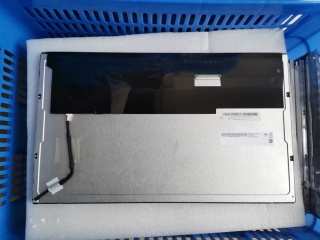
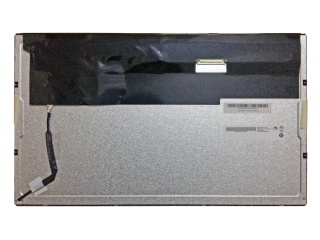
Physical integration of the G185XW01 V2 requires consideration of its mechanical outline and mounting provisions. The panel measures approximately 409 x 236 x 11.5 millimeters, with an active display area of 409.8 x 230.4 millimeters. It is designed with symmetrical mounting holes on the left and right edges, allowing for four-point fixation via M3 screws. Its slim profile, under 12 mm, makes it suitable for space-constrained enclosures, but this thinness demands a rigid chassis backing to prevent torsion-induced LCD cell damage.
Thermal management is a subtle but significant factor. The backlight system, typically using CCFL (Cold Cathode Fluorescent Lamp) or, in later revisions, LED arrays, generates heat concentrated along the bottom edge. Without adequate ventilation, accumulated heat can accelerate polarizer degradation over extended operational hours. AUO specifies an operating temperature range of 0°C to 50°C, but consistent operation near the upper limit without active cooling may reduce the backlight's half-life below its rated 50,000 hours. For outdoor enclosures or high-ambient-temperature settings, a small fan or thermostatically controlled venting is recommended.
Backlight System and Longevity
One of the most critical differentiators of the G185XW01 V2 lies in its backlight architecture. While many consumer monitors have transitioned entirely to white LED matrices, this AUO model often ships with a dual-CCFL (Cold Cathode Fluorescent Lamp) configuration. CCFLs produce a broad, stable spectrum with a color temperature typically around 6500K, but they require a high-voltage inverter circuit operating at 600–900 VAC. This inverter introduces two failure points: the lamp itself, which gradually loses brightness and shifts color after 40,000–50,000 hours, and the inverter transformer, which is susceptible to electrolytic capacitor degradation.
For applications demanding 24/7 operation, the CCFL-based version may require scheduled maintenance, whereas LED-backlit variants (if specified) offer higher luminous efficiency and instant-on capability. The power consumption of the CCFL system hovers around 18–25 watts for the backlight alone, versus 12–15 watts for an equivalent LED array. When selecting between CCFL and LED sub-models, integrators must weigh upfront cost against total cost of ownership, particularly in thermal-sensitive medical or semiconductor manufacturing environments.
Application Suitability and Market Positioning
The G185XW01 V2 occupies a specific market segment that bridges legacy industrial systems and modern embedded displays. Its primary deployment scenarios include point-of-sale terminals, automated teller machines, and light industrial human-machine interfaces (HMIs). The 4:3 aspect ratio, while less common in consumer displays, aligns well with legacy software interfaces designed for square-ish formats, avoiding letterboxing or scaling artifacts. Furthermore, its XGA resolution is well-matched to standard VGA and DVI sources, reducing the need for expensive scaling hardware in retrofit installations.
However, the panel faces increasing competition from 19-inch WXGA+ (1440x900) models that offer wider aspect ratios and higher pixel densities. The G185XW01 V2's strength is its proven long-term availability; AUO maintains this part for industrial customers requiring stable supply over product lifecycles lasting 5–7 years. It is not a panel for high-end graphics or immersive media consumption, but rather a workhorse screen for transactional, data-centric tasks. For integrators building systems that must operate reliably for a decade, this predictable specification sheet and widely available replacement controllers make it a safe, defensible choice.
FAQs
1. What is the native resolution of the G185XW01 V2?The native resolution is 1366 x 768 pixels, offering an XGA widescreen aspect ratio.
2. Is this panel compatible with HDMI or DisplayPort?No, it uses a single-channel LVDS interface. An external controller board is required to convert HDMI or DisplayPort signals to LVDS.
3. What is the typical power consumption of the G185XW01 V2?Total power consumption is approximately 20–28 watts, varying by backlight type and brightness setting.
4. How does the CCFL backlight affect color accuracy over time?CCFL lamps undergo color temperature shift, typically warming (yellowing) by 500–1000K over 30,000 hours, requiring occasional recalibration.
5. What is the physical mounting pattern for this display?Mounting holes are positioned on the left and right edges, spaced 75 mm apart from the center, using M3 screws.
6. Can this display be used outdoors?It is possible when combined with a high-brightness overlay or enclosure, but native brightness (250–350 cd/m²) is insufficient for direct sunlight.
7. What is the viewing angle rating for this panel?Typical ratings are 170° horizontal and 160° vertical, typical for TN technology.
8. Is the G185XW01 V2 RoHS compliant?Yes, AUO's manufacturing process meets RoHS standards, with lead-free solder and restricted substances.
9. How does the 6-bit color depth impact image quality?It reproduces 262,144 colors, sufficient for text and graphics but inadequate for photo-realistic gradients without dithering.
10. Where can I find a compatible controller board?Generic LVDS controller boards with a 30-pin connector and support for 1366x768 input are widely available through industrial electronics distributors.
Conclusion
The G185XW01 V2 from AUO is more than a simple display panel; it is a carefully engineered component designed for reliability, compatibility, and specific industrial use cases. Throughout this article, we have examined how its optical trade-offs, LVDS interface, and thermal considerations shape its suitability for applications like HMIs and transactional terminals. While not a cutting-edge consumer product, its longevity of supply, proven mechanical design, and CCFL or LED backlight options offer real value to system integrators who prioritize operational stability over pixel density. The key takeaway is that selection should be driven by the specific requirements of the deployment environment—particularly regarding viewing angles, ambient light, and thermal stress tolerance. For those building systems that demand predictable performance over extended lifecycles, the G185XW01 V2 remains a prudent, well-documented choice. Ultimately, understanding these nuanced trade-offs transforms a simple component selection into a strategic decision for product reliability.





