



















- Industrial display
-
Industrial Products
- DC Servo Drive
- AC Servo Drive
- Industrial board
- Siemens
- Switch Sensor
- Proximity Switch
- Temperature Controller
- Protection Relay
- Fiber Optic Sensor
- Encoder
- Fan
- other
- Heidelberg
- MITSUBISHI
- FANUC
- Siemens adapter
- Fujitsu connector
- Motherboard
- Board
- Contactor
- Circuit
- OMRON
- Relay
- Motor Driver
- power supply
- Cable
- Transformer
- HMI Touch Glass
-
HMI Full Machine Whole unit
- OMRON HMI Touch Panel
- Siemens HMI Touch Panel
- Mitsubishi HMI Touch Panel
- Allen-Bradley automation HMI Touch Panel
- DELTA HMI Touch Panel
- Proface HMI Touch Panel
- KINCO DELTA HMI Touch Panel
- HITECH HMI Touch Panel
- WEINTEK HMI Touch Panel
- TECVIEW HMI Touch Panel
- WEINVIEW HMI Touch Panel
- PANASONIC HMI Touch Panel
- KYOCERA HMI Touch Panel
- SCHNEIDER HMI Touch Panel
- Module
- lcd inverter
- Membrane Keypad Switch
- Zhiyan Customized Touch Screens
- Frequency Inverter
- Servo Motor
- PLC
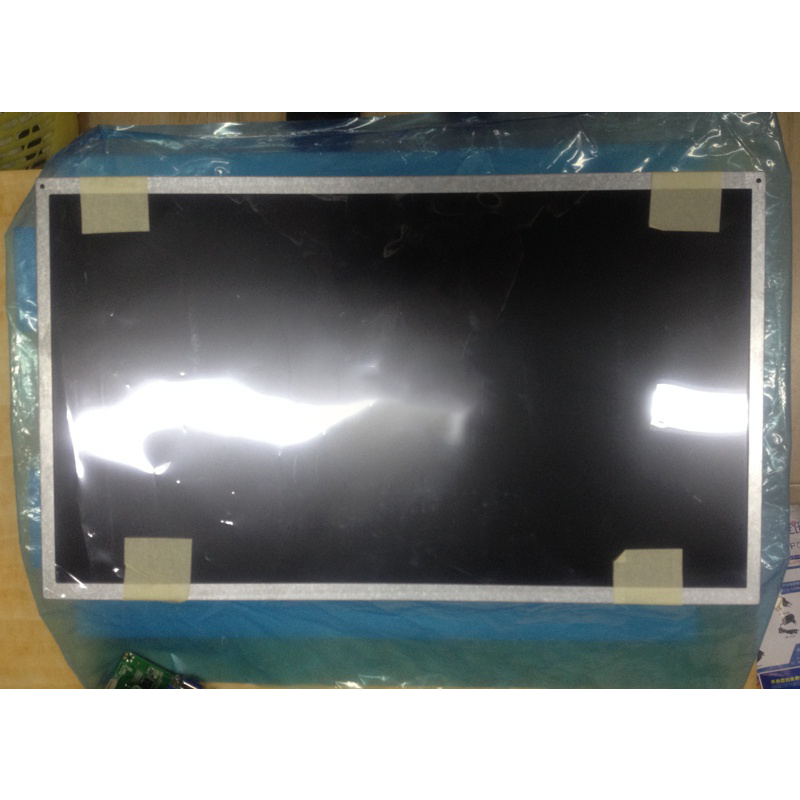
The landscape of industrial and commercial displays is defined not by flashy innovation, but by relentless reliability and standardized performance. Within this specific niche, the G185XW01 V1, manufactured by AU Optronics (AUO), stands as a significant benchmark. This 18.5-inch LCD panel, operating at the ubiquitous 1366×768 resolution, is far more than a simple screen; it is a carefully engineered component designed for longevity and consistent visual output. While modern consumer electronics chase 4K and OLED, sectors such as medical patient monitoring, POS systems, industrial automation, and digital signage require panels that prioritize predictable color reproduction, wide temperature tolerances, and a supply chain that ensures long-term availability.
This article provides a deep dive into the G185XW01 V1, moving beyond its basic specifications to explore its internal architecture, interface considerations, performance characteristics, and its strategic role in the aftermarket and embedded systems. We will examine why this specific model remains relevant in a world of ever-increasing pixel counts, and what engineers, procurement specialists, and system integrators need to know to leverage its full potential.
Architecture and Interface: The LVDS Backbone
To understand the G185XW01 V1, one must first appreciate its primary communication protocol: LVDS (Low-Voltage Differential Signaling). This is a critical technical detail. LVDS is a legacy interface in the consumer space, but it remains the gold standard for industrial panels for a key reason: noise immunity. In an industrial environment filled with motors, relays, and high-frequency switching power supplies, the differential signaling of LVDS provides a robust data channel that is far less susceptible to electromagnetic interference (EMI) than newer, higher-speed interfaces like eDP. The panel uses a standard single-channel LVDS connector, typically a 30-pin JAE or compatible type.
Beyond the connector, the panel's timing controller (TCON) is embedded directly onto the display’s PCB. This TCON interprets the LVDS signal to drive the a-Si TFT (Amorphous Silicon Thin-Film Transistor) array. This integration simplifies system design for the integrator; the host computer only needs to output a standard LVDS timing signal. This architecture, while seemingly dated, provides a stable, well-documented foundation. It is not designed for high refresh rate gaming, but for deterministic, flicker-free operation at 60Hz across a diverse temperature range. Understanding this interface is the first step in correctly pairing the panel with a controller board or an embedded motherboard like a Raspberry Pi or a dedicated industrial PC that supports LVDS output or requires an LVDS-to-HDMI converter.
Optical Performance: Achieving WV Film and Wide Viewing Angles
A common specification for this panel is its TN (Twisted Nematic) mode combined with a WV (Wide Viewing) Film. This is a deliberate engineering trade-off. Standard TN panels suffer from severe color shift and contrast inversion when viewed from off-angles, particularly vertically. The addition of the WV film is an optical compensation layer that significantly widens the effective viewing cone, mitigating this inversion to a usable level for multi-user scenarios like a point-of-sale terminal or a clinic check-in kiosk. While it will never match the 178-degree consistency of an IPS panel, the WV film transforms the TN panel from a one-user-angled device into a functional multi-viewer display.
In terms of luminance, the G185XW01 V1 is specified with a typical brightness of 250 cd/m² (nits). This is a standard, "office-grade" brightness level, sufficient for indoor use, whether in a hospital, factory floor, or retail store. The contrast ratio hovers around 1000:1, which is very good for a TN+Film panel. At this contrast level, text remains sharp, dark graphics maintain depth, and even basic medical imaging (non-diagnostic) can be viewed adequately. The 5ms response time (Typ., Tr+Tf) is more than sufficient for static or slow-moving content typical in these sectors. It is also worth noting the CCFL (Cold Cathode Fluorescent Lamp) backlight in many earlier revisions. Later revisions might be LED, but identifying the backlight type is crucial for power supply and lifespan considerations.
Environmental Resilience and Thermal Management
Perhaps the most defining characteristic of the G185XW01 V1 is its robust environmental specification. This panel is typically designed to operate within an ambient temperature range of 0°C to 50°C and a storage range of -20°C to 60°C. While 0°C may seem restrictive, it is a de facto standard for "non-heated" indoor industrial environments. For applications requiring freezer-grade operation, specialized variants exist, but the standard G185XW01 V1 is intended for controlled climates. What often goes overlooked, however, is thermal management from the system integrator's perspective.
The panel itself generates heat, primarily from the backlight and driver ICs. In a sealed kiosk enclosure, heat can build up quickly. A key consideration is that the panel's lifetime is significantly shortened by operating at its upper thermal limit continuously. The reliability data sheet for this model often cites a typical lifetime of 30,000 to 50,000 hours for the backlight, but this drops precipitously above 45°C. Therefore, a competent design must include a path for thermal dissipation, potentially through a metal chassis or a small fan. The G185XW01 V1 is not a high-power device (typically 10-15W for the backlight), but passive or active cooling is still a necessary consideration to ensure it hits its rated lifespan. Its high reliability is not just a specification; it is a dependancy of its thermal environment.
The Interface Ecosystem: Control and Converter Boards
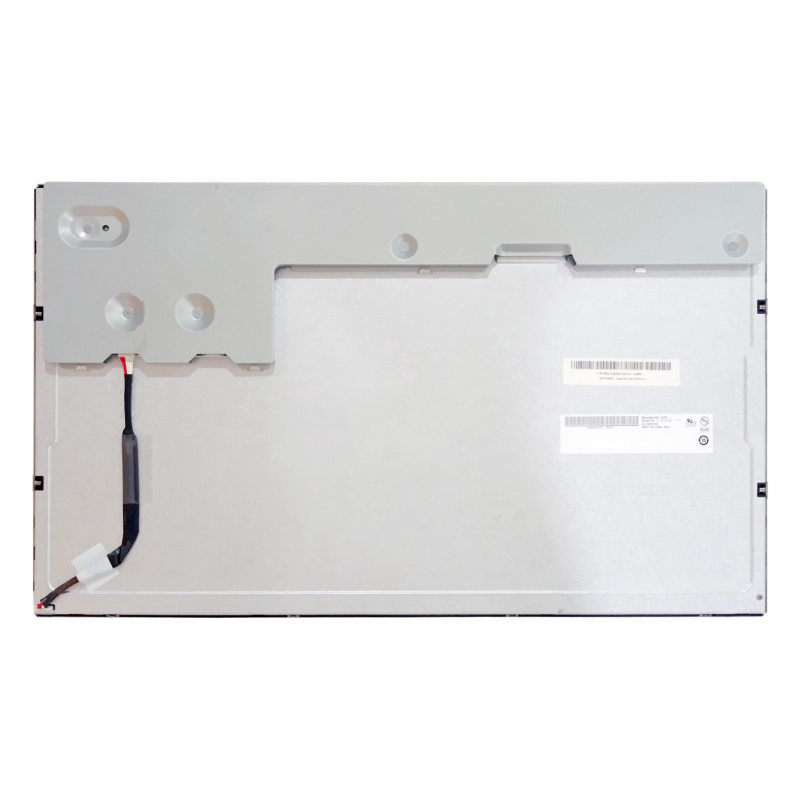
The G185XW01 V1 is a raw panel; it does not come with HDMI, VGA, or DVI ports. Integrating it into modern systems requires an LVDS controller board. This is a separate PCB that acts as a translator. It takes a standard video signal (HDMI, DVI, VGA) from a computer, converts it to the appropriate LVDS timings and electrical levels for the specific panel model, and provides power to the backlight. Understanding the right controller board for the G185XW01 V1 is critical. The board must match the panel's resolution (1366×768), interface type (Single-Channel 8-bit LVDS), and power requirements (typically 12V or 5V for logic, with a separate higher voltage for the backlight).
There is a thriving aftermarket of universal LCD controller boards, often sold as "HDMI to LVDS" boards. These boards typically offer on-screen display (OSD) controls for brightness, contrast, color temperature, and aspect ratio. A critical piece of information when selecting such a board is the connector pinout of the panel. The G185XW01 V1 typically uses a 30-pin dual-row connector but the exact pin assignment for LVDS data pairs, power, and ground can vary between manufacturers. A mismatched cable can damage the panel. Many high-quality aftermarket kits come with a pre-configured, model-specific cable. This ecosystem makes the panel highly adaptable. It can be repurposed into a desktop monitor, integrated into a custom arcade cabinet, or used in a research project, significantly extending its lifecycle beyond its intended industrial application.
System Integration, Repair, and Aftermarket Viability
In the world of professional system integration, the G185XW01 V1 occupies a sweet spot. Its 18.5-inch diagonal is large enough for comfortable viewing of user interfaces, data entry forms, and patient details, yet compact enough for kiosks, retractable arms, and space-constrained workstations. The 1366×768 HD resolution is perfectly adequate for text-based interfaces and simple graphics. Pushing higher resolution (e.g., 1920×1080) on a panel this size often results in scaling issues for legacy applications or increased cost without proportional benefit. For the integrator, the key value proposition is a known quantity. They have verified timing diagrams, connector pinouts, and mechanical drawings. This reduces design risk.
For the aftermarket and repair market, this panel is a staple. It is commonly used as a replacement for broken screens in medical monitors, POS terminals, and older all-in-one computers. Finding a compatible replacement is straightforward because the specifications are well-documented. The use of a CCFL backlight in some versions can be a disadvantage, as these have a finite lifespan and require a high-voltage inverter. However, LED backlit versions or conversion kits are available. The aftermarket viability is also supported by a vast supply of used, pulled, and refurbished units. This means that for a business maintaining a fleet of older equipment, a stock of G185XW01 V1 panels can provide a cost-effective and immediate fix, avoiding the expense and integration headaches of switching to a new, entirely different display technology.
FAQs: G185XW01 V1 AUO 18.5" LCD Display
1. What is the resolution of the G185XW01 V1?It is 1366 x 768 pixels (WXGA HD).
2. What video interface does this panel use?It uses a Single-Channel LVDS (Low-Voltage Differential Signaling) interface.
3. Can I connect it directly to an HDMI port on a PC?No. You need a dedicated LVDS controller board that converts HDMI to LVDS signals.
4. What is the typical brightness of this display?It is typically 250 cd/m² (nits).
5. Is the backlight CCFL or LED?It depends on the specific revision. Earlier versions (e.g., V1.0) are CCFL, while later revisions are often LED. Always check the model number suffix.
6. What is the panel technology used?It uses TN (Twisted Nematic) with a WV (Wide View) Film.
7. What is the operating temperature range?Typically 0°C to 50°C.
8. Is this a good panel for an arcade machine?Yes, its size, resolution, and LVDS compatibility with standard controller boards make it a very popular choice for DIY arcade cabinets.
9. How long does the panel typically last?The backlight lifetime is rated at approximately 30,000 to 50,000 hours.
10. What is the typical power consumption?The full panel (logic + backlight) usually consumes between 10W and 15W.
Conclusion: The Enduring Utility of a Proven Design
The G185XW01 V1 from AUO is a testament to the idea that technological relevance is not defined solely by cutting-edge specs, but by consistent, reliable utility. It occupies a necessary middle ground between low-quality, short-life consumer panels and astronomically priced medical-grade screens. Its strengths lie in its well-documented interface, robust environmental resilience, and the mature ecosystem of controller boards that allow it to be adapted into countless applications. While it lacks the aesthetic allure of a modern frameless IPS monitor, its value in industrial, commercial, and aftermarket contexts is undeniable.
For the system designer, it represents a low-risk, proven solution. For the technician, it is a readily available, repairable component. For the hobbyist, it is a gateway to building custom displays. The G185XW01 V1 will eventually fade from supply as technology marches on, but its engineering philosophy—prioritizing reliability, standardization, and maintainability over raw visual flash—remains a powerful lesson for all who design and build the electronic systems that run our world. Understanding its capabilities ensures you can extract maximum value from this durable hardware.
Related Product Links:LQ084V1DG21 Sharp Industrial LCD display screen





