


















- Industrial display
-
Industrial Products
- DC Servo Drive
- AC Servo Drive
- Industrial board
- Siemens
- Switch Sensor
- Proximity Switch
- Temperature Controller
- Protection Relay
- Fiber Optic Sensor
- Encoder
- Fan
- other
- Heidelberg
- MITSUBISHI
- FANUC
- Siemens adapter
- Fujitsu connector
- Motherboard
- Board
- Contactor
- Circuit
- OMRON
- Relay
- Motor Driver
- power supply
- Cable
- Transformer
- HMI Touch Glass
-
HMI Full Machine Whole unit
- OMRON HMI Touch Panel
- Siemens HMI Touch Panel
- Mitsubishi HMI Touch Panel
- Allen-Bradley automation HMI Touch Panel
- DELTA HMI Touch Panel
- Proface HMI Touch Panel
- KINCO DELTA HMI Touch Panel
- HITECH HMI Touch Panel
- WEINTEK HMI Touch Panel
- TECVIEW HMI Touch Panel
- WEINVIEW HMI Touch Panel
- PANASONIC HMI Touch Panel
- KYOCERA HMI Touch Panel
- SCHNEIDER HMI Touch Panel
- Module
- lcd inverter
- Membrane Keypad Switch
- Zhiyan Customized Touch Screens
- Frequency Inverter
- Servo Motor
- PLC
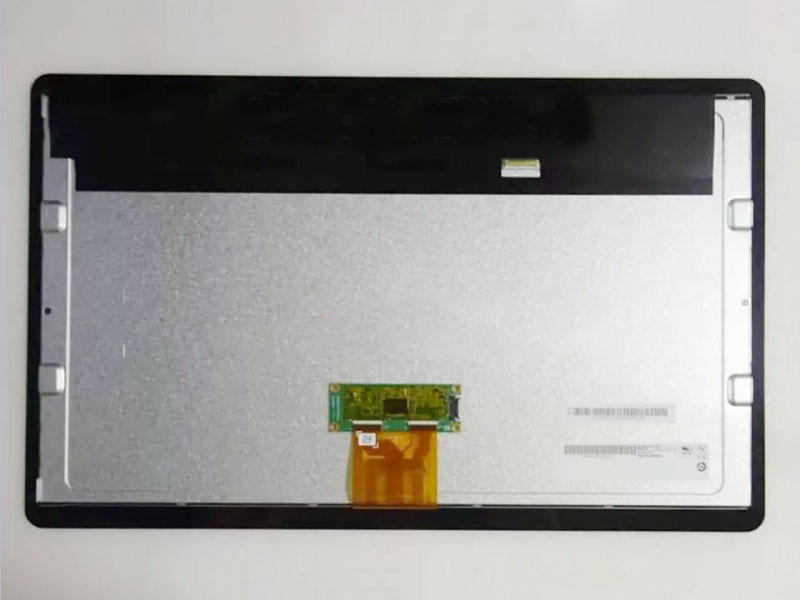
In the rapidly evolving landscape of industrial automation, medical equipment, and digital signage, the demand for reliable, high-performance display modules has never been more critical. Among the myriad of options available, the G185XTT01.1 from AU Optronics (AUO) stands out as a robust 18.5-inch solution. This module, a product of precise engineering, bridges the gap between consumer-grade monitors and specialized industrial panels. This article delves deep into the technical specifications, application scenarios, and operational advantages of the G185XTT01.1, moving beyond basic specifications to explore its role in complex systems. We will examine its optical performance, interface considerations, mechanical design, and real-world durability, providing a comprehensive guide for engineers, procurement specialists, and system integrators. Understanding the nuances of this specific model is essential for making informed decisions in environments where failure is not an option, from a busy hospital ward to a 24/7 factory floor. This analysis aims to equip you with the knowledge to evaluate and deploy this display module effectively.
Technical Architecture and Optical Excellence
At its core, the G185XTT01.1 leverages AUO's mature TN (Twisted Nematic) LCD technology, optimized for industrial temperature ranges. Its native resolution is 1366 x 768 pixels, a standard WXGA HD format that provides a perfect balance between sharpness and signal processing efficiency. This is not a high-resolution panel intended for graphics design; rather, its strength lies in clarity and consistency across its 18.5-inch diagonal viewing area (16:9 aspect ratio).
The module delivers a typical brightness of 350 cd/m², which is significantly higher than standard office monitors. This high luminance is critical for overcoming ambient light in bright industrial or retail environments. Furthermore, the contrast ratio of 1000:1 ensures that text and symbols remain legible, even in grayscale applications. The optical interface is equally important. The panel features a typical response time of 5ms (Tr+Tf), which mitigates motion blur in dynamic data displays or scrolling menus. However, it is crucial to note the viewing angles: 80/80/80/60 (L/R/U/D). While horizontal viewing is excellent, the vertical asymmetry indicates that this panel is best used in landscape orientation with the viewer at or slightly below eye level.
System Integration and Interface Interoperability
For an industrial display, the physical connection to the host system is as crucial as the pixel quality. The G185XTT01.1 primarily utilizes the LVDS (Low-Voltage Differential Signaling) interface, specifically a 1-channel, 8-bit connection. This is the industry standard for embedded computing, offering a reliable, low-noise data transmission path over relatively short distances (typically less than 1 meter). It requires a 30-pin connector, which is common on many industrial motherboards and single-board computers.
The module operates on a single 3.3V power supply, simplifying power management in embedded systems. Importantly, it does not include a built-in touch panel, which is a deliberate design choice for flexibility. System integrators must select a separate touch solution (resistive, capacitive, or IR) based on the specific application environment. The absence of an integrated touch layer also reduces overall thickness and weight, making it easier to incorporate into custom enclosures. The LVDS interface carries both pixel data and timing control signals, but the system designer must ensure the host controller supports the exact timing parameters (clock frequency, H/V sync) of this specific panel to avoid display corruption or failure to initialize.
Mechanical Robustness and Thermal Management
The physical construction of the G185XTT01.1 is designed for longevity in harsh conditions. The module has an active area of 409.8 x 230.4 mm and an overall dimension that includes the driver PCBA and mounting brackets. Its weight is typical for a panel of this size, around 1.0-1.2 kg, which is manageable for arm-mounted or kiosk installations.
Thermal management is a key differentiator. AUO specifies an operating temperature range of -20°C to +70°C and a storage range of -30°C to +80°C. This wide range allows deployment in unheated warehouses, outdoor ticketing machines (with appropriate heating), or near industrial ovens. The panel uses a standard backlight unit (LED) with a quoted lifetime of 30,000 hours to half brightness. While this is adequate for many applications, continuous operation at high brightness or elevated temperatures will accelerate LED degradation. Engineers should consider active or passive cooling strategies if the module is housed in a sealed, warm enclosure. The backlight is non-replaceable in the field, meaning the entire module is typically swapped upon failure, emphasizing the need for proper thermal derating in the system design.
Application Ecosystems: From Medical to Kiosk
While many 18.5-inch panels exist, the G185XTT01.1 is purpose-built for specific verticals. Its primary market includes medical patient monitoring, where the 1366x768 resolution is sufficient for displaying vital signs waveforms (ECG, SpO2) and numeric data simultaneously. The high brightness and wide temperature range make it suitable for use in operating rooms and emergency vehicles.
A second major application is Human-Machine Interface (HMI) for industrial machinery. Factory automation panels often require a display that can withstand vibration, dust, and fluctuating temperatures. The G185XTT01.1's LVDS interface integrates easily with PLCs and industrial PCs. Furthermore, its 16:9 aspect ratio is ideal for digital signage and self-service kiosks in indoor environments. It provides a cost-effective solution for displaying menus, maps, or advertising content without the vivid color gamut demands of a premium TV panel. The module's lack of touch integration means it is frequently paired with a projected capacitive touchscreen in kiosks, offering a modern user experience. However, it is less common in high-end gaming or video editing due to its limited viewing angles and color performance.
Long-Term Value, Sourcing, and Lifecycle Management
When selecting the G185XTT01.1, one must consider its lifecycle status. AUO typically supports industrial panels for extended periods, often 5-7 years or more, but this should be verified with the supplier. The panel is classified as active in production, but like all electronics, it is subject to obsolescence. For critical applications, securing a long-term supply agreement or identifying a second-source compatible panel is prudent.
The cost per pixel metric is favorable for this size class, but the true value lies in its reliability. Panel failures in the field are expensive, involving service calls, equipment downtime, and potential data loss. The G185XTT01.1's robust construction and AUO's quality control (ISO/TS 16949 certified factories) translate to a low field failure rate. When sourcing, ensure the module is a "standard version" (specifically the G185XTT01.1 Rev 1.0 or later revision) to guarantee consistent electrical characteristics. Beware of panels salvaged from end-of-life consumer monitors, as they may not meet the same shock/vibration or temperature specs. A proper sourcing strategy focuses on authorized distributors and clear return policies, ensuring long-term operational continuity.
FAQs
What is the exact native resolution of the G185XTT01.1? It is 1366 x 768 pixels (WXGA).
Does this module support touch input? No, it is a display-only module. An external touch panel must be integrated.
What interface does it use to connect to a motherboard? It uses a single-channel 8-bit LVDS interface on a 30-pin connector.
What is the typical brightness output? The typical brightness is 350 cd/m².
What is the operating temperature range? It operates from -20°C to +70°C.
How long does the backlight last? The LED backlight has a typical lifetime of 30,000 hours (to half brightness).
Can this panel be used outdoors in direct sunlight? It is not designed for direct sunlight; its 350 cd/m² brightness requires shading or a partially reflective solution for daylight readability.
What is the weight of the module? Approximately 1.0 to 1.2 kg, depending on the specific configuration.
Is this panel suitable for portrait mode orientation? Yes, but the vertical viewing angle (60 degrees upward) is limiting, so it should be tilted accordingly.
What is the typical application for this panel? Medical patient monitors, industrial HMI panels, and self-service kiosks.





