













































- Industrial display
-
Industrial Products
- DC Servo Drive
- AC Servo Drive
- Industrial board
- Siemens
- Switch Sensor
- Proximity Switch
- Temperature Controller
- Protection Relay
- Fiber Optic Sensor
- Encoder
- Fan
- other
- Heidelberg
- MITSUBISHI
- FANUC
- Siemens adapter
- Fujitsu connector
- Motherboard
- Board
- Contactor
- Circuit
- OMRON
- Relay
- Motor Driver
- power supply
- Cable
- Transformer
- HMI Touch Glass
-
HMI Full Machine Whole unit
- OMRON HMI Touch Panel
- Siemens HMI Touch Panel
- Mitsubishi HMI Touch Panel
- Allen-Bradley automation HMI Touch Panel
- DELTA HMI Touch Panel
- Proface HMI Touch Panel
- KINCO DELTA HMI Touch Panel
- HITECH HMI Touch Panel
- WEINTEK HMI Touch Panel
- TECVIEW HMI Touch Panel
- WEINVIEW HMI Touch Panel
- PANASONIC HMI Touch Panel
- KYOCERA HMI Touch Panel
- SCHNEIDER HMI Touch Panel
- Module
- lcd inverter
- Membrane Keypad Switch
- Zhiyan Customized Touch Screens
- Frequency Inverter
- Servo Motor
- PLC
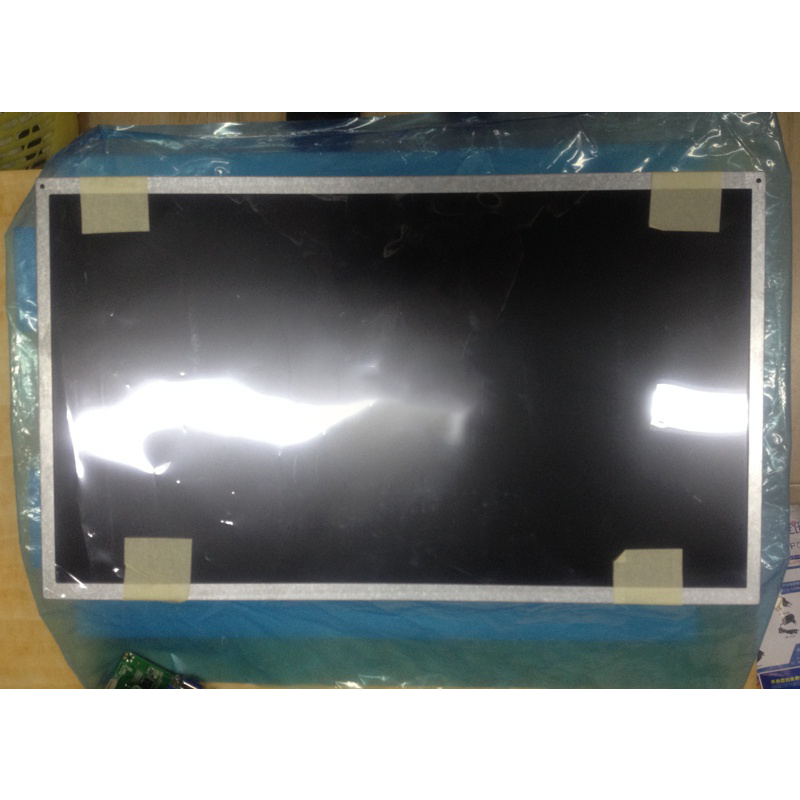
In the rapidly evolving landscape of industrial automation and digital signage, the display panel often serves as the critical interface between human operators and complex machine systems. While consumer-grade screens dominate the market headlines, the backbone of mission-critical environments relies on specialized components designed for endurance and precision. This article delves into a specific but highly significant product: the G185XTT01.0, an 18.5-inch LCD display module manufactured by AU Optronics (AUO). Unlike standard televisions or monitors, this panel is engineered for the rigors of factory floors, medical bays, and outdoor kiosks. We will explore its technical architecture, the engineering philosophy behind its robust design, and its strategic relevance in an era defined by the Industrial Internet of Things (IIoT). Rather than focusing solely on superficial specifications, we aim to uncover the industrial logic that makes the G185XTT01.0 a preferred choice for system integrators. From its optical performance to its thermal management, we will dissect the elements that separate an average display from a reliable industrial instrument, providing a comprehensive resource for procurement specialists and design engineers.
Deconstructing the Core: Resolution, Aspect Ratio, and Pixel Architecture
The G185XTT01.0 is defined by its XGA resolution (1024 x 768 pixels), which, at first glance, may appear modest compared to the 4K standards of consumer electronics. However, in the industrial context, this resolution is a deliberate and strategic choice. The 4:3 aspect ratio, while increasingly rare in the consumer world, remains the gold standard for legacy system compatibility and specific control room applications. It allows for the seamless integration into existing HMI (Human-Machine Interface) software that was designed around this format.
More critical than the raw pixel count is the pixel architecture. The panel utilizes TN (Twisted Nematic) technology. While TN offers superior response times—crucial for avoiding ghosting in rapidly changing data or video feeds—it has traditionally suffered from limited viewing angles. AUO has mitigated this through advanced optical compensation films. The true depth lies in the 6-bit + Hi-FRC (Frame Rate Control) color depth. This technology simulates 16.2 million colors by rapidly toggling between adjacent color shades, creating a visual experience that surpasses typical 6-bit panels. For industrial users, this means clearer differentiation between warning colors (red vs. orange) and more readable gradient charts. The pixel pitch of approximately 0.376mm strikes a balance between visual sharpness and text legibility at typical viewing distances of an arm's length, making it ideal for touch-driven interfaces where finger precision is paramount.
Engineering for Endurance: Assessing Robustness and Thermal Management
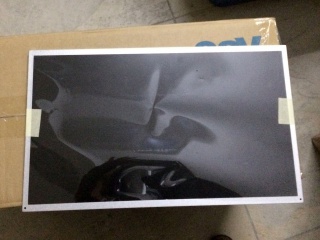
Industrial environments are unforgiving. Excessive heat, vibration, and continuous operation are the norm, not the exception. The G185XTT01.0's construction reflects a philosophy of survivability over cost-cutting. The module is built with a robust metal frame, unlike the plastic enclosures of commercial monitors. This frame provides structural rigidity, preventing screen distortion under physical stress and acting as a heatsink to dissipate heat generated by the backlight unit.
Thermal management is a standout feature. The panel is rated for an operating temperature range of -40°C to +85°C. Achieving this requires careful component selection beyond the LCD glass itself. The LED backlight drivers and timing controller (TCON) are designed with wider thermal tolerances. The backlight unit uses a specific arrangement of high-brightness LEDs, often with a dual-edge configuration, which reduces thermal concentration at a single point. This design prevents "hotspotting" and ensures uniform luminance even when the ambient temperature of a factory floor exceeds 50°C. Furthermore, the panel's construction minimizes internal air gaps to reduce condensation risk during rapid temperature shifts, a common failure point in lesser displays.
Optical Precision: High Brightness, Contrast, and Viewing Angle Realities
A key differentiator of the G185XTT01.0 is its high brightness rating, typically listed at 1000 cd/m² (nits), though some variants can exceed this. Standard monitors operate around 250-300 cd/m². This high luminance is not for aesthetic appeal; it is a functional necessity. In a sunlit control room or a factory near a window, ambient light washes out standard screens. The 1000 cd/m² rating ensures that the image remains legible and that the contrast ratio (typically 1000:1) maintains its effectiveness.
However, brightness comes with trade-offs, primarily power consumption and heat. AUO has employed white LED backlighting with enhanced phosphorus composition to achieve higher luminous efficacy without a proportional increase in power draw. The viewing angle specification is where many misconceptions arise. While rated at 80/80/80/60 (left/right/up/down), the effective viewing zone for accurate color rendering is narrower due to the TN technology. In practice, horizontal shifts maintain good contrast, but vertical shifts (especially downward) can lead to color inversion. System integrators must therefore be strategic about mounting height—typically eye-level or slightly below—to ensure the touch operator gets an optimal image without color shift. This is not a flaw but a design characteristic that dictates ergonomic placement.
Interface and Integration: Navigating Connectivity and Compatibility
The G185XTT01.0 utilizes a LVDS (Low-Voltage Differential Signaling) interface, specifically a single channel or dual channel configuration depending on the exact revision. LVDS is the backbone of industrial connectivity for good reasons: it is resistant to electrical noise (EMI), consumes less power than parallel interfaces, and allows for cable lengths of several meters without signal degradation. This is vital when the display is mounted in a remote operator panel far from the main controller.
The panel requires a 30-pin LVDS connector, but the pinout is not universal across all AUO models. A common integration pitfall is assuming a generic LVDS cable will work. Designers must consult the official datasheet for the exact pin mapping. The panel operates at a standard 3.3V logic voltage for the LVDS signal. For power, it typically requires a 12V input for the backlight driver. Understanding this split power architecture—one path for logic control and one for the high-current backlight—is crucial for designing a stable power supply unit (PSU). The presence of an EDID (Extended Display Identification Data) ROM on the panel allows the source device (e.g., an industrial PC) to automatically query and configure the optimal resolution, refresh rate, and timing, simplifying initial setup in complex systems.
Strategic Market Position: Use Cases and Long-Term Availability
The G185XTT01.0 is not a mass-market product; it is a strategic asset for specific verticals. Its primary applications include medical patient monitors (where 4:3 aspect ratio mimics legacy paper charts), industrial HMI panels in CNC machines, and public information kiosks in outdoor environments when properly housed. Its resilience also makes it popular in marine navigation and digital signage in transport hubs.
A critical, often overlooked factor is long-term availability (LTAV). AUO, as a major Tier-1 manufacturer, commits to producing these panels for several years, often five to seven years. For OEMs that design a machine, the display is a lifecycle-critical component. Changing a display mid-production requires mechanical re-engineering, software re-certification, and new regulatory approvals. The G185XTT01.0's guaranteed production lifecycle offers a predictable supply chain, reducing redesign risks. Additionally, its compatibility with widely available touch sensors (resistive, capacitive, and IR) via optical bonding makes it a versatile chassis for customized solutions. System integrators value this flexibility, enabling them to offer a unified display platform across multiple product lines with only the touch interface varying.
FAQs: Addressing Common Technical and Selection Queries
Is the G185XTT01.0 suitable for direct sunlight?Yes, with a bright backlight (typically 1000 nits) and an anti-glare treatment, but optimal sunlight readability often requires optical bonding with a touch panel to reduce internal reflections.
Can this panel be used for 24/7 operation?Yes, it is designed for continuous operation with robust thermal management and premium backlight LEDs rated for 50,000 hours or more to half-brightness.
What touch technology works best with this panel?The panel is neutral; capacitive (PCAP) is recommended for high optical quality, while resistive is preferred for gloved hands or wet environments. The same panel can be used with both via different bonding techniques.
What is the typical power consumption?Total consumption typically ranges from 15W to 25W depending on backlight current setting, with the logic portion consuming less than 5W.
How does the viewing angle affect user ergonomics?Because it is TN-based, the best image is obtained when the user's eyes are around the center of the screen. A downward tilt should be avoided to prevent color inversion.
Is the LVDS interface compatible with modern ARM-based boards?Yes, most single-board computers (e.g., NXP i.MX, Rockchip) support LVDS outputs directly, though you may need to configure the timing parameters manually via the kernel.
What is the difference between V1.0 and V2.0 revisions?Revisions typically involve minor changes to the TCON or backlight driver circuit. Always verify using AUO's official specs; newer revisions remain mechanically and electrically interchangeable in most cases.
Can this panel be driven by an HDMI-to-LVDS converter?Yes, many third-party controller boards exist, but ensure the board supports 1024x768 resolution and can drive a 1000 nit backlight.
Why is the response time important for this display?With a typical 8ms response time, it effectively reduces motion blur in dynamic data visualization, such as scrolling graphs or video feeds, improving readability.
Is this panel RoHS compliant?Yes, as a leading manufacturer, AUO ensures the G185XTT01.0 complies with RoHS and REACH regulations regarding hazardous substances.
Conclusion: A Calculated Foundation for Reliable Human-Machine Interaction
The G185XTT01.0 is more than a simple collection of glass, liquid crystals, and LEDs. It is a carefully engineered solution designed to solve the complex demands of the industrial world where failure is not an option. Its XGA resolution, robust metal construction, and high brightness are not mere specifications; they are deliberate responses to the challenges of heat, vibration, ambient light, and long operational life. While it lacks the glamorous high-definition specs of consumer screens, it compensates with a level of reliability, thermal stability, and predictable supply that is simply more valuable in its domain. For system designers, choosing this panel is an investment in system integrity. It acknowledges that in industrial automation, the quality of the interface directly correlates with operational safety and efficiency. When a display does its job without fail, hour after hour, year after year, it becomes an invisible but indispensable component. The G185XTT01.0 embodies this principle: it is a foundational piece of technology that performs its silent, critical duty without compromise.
Related Product Links:LQ10D368 Sharp 10.4"640*480 LCD display screen for industrial





