


















- Industrial display
-
Industrial Products
- DC Servo Drive
- AC Servo Drive
- Industrial board
- Siemens
- Switch Sensor
- Proximity Switch
- Temperature Controller
- Protection Relay
- Fiber Optic Sensor
- Encoder
- Fan
- other
- Heidelberg
- MITSUBISHI
- FANUC
- Siemens adapter
- Fujitsu connector
- Motherboard
- Board
- Contactor
- Circuit
- OMRON
- Relay
- Motor Driver
- power supply
- Cable
- Transformer
- HMI Touch Glass
-
HMI Full Machine Whole unit
- OMRON HMI Touch Panel
- Siemens HMI Touch Panel
- Mitsubishi HMI Touch Panel
- Allen-Bradley automation HMI Touch Panel
- DELTA HMI Touch Panel
- Proface HMI Touch Panel
- KINCO DELTA HMI Touch Panel
- HITECH HMI Touch Panel
- WEINTEK HMI Touch Panel
- TECVIEW HMI Touch Panel
- WEINVIEW HMI Touch Panel
- PANASONIC HMI Touch Panel
- KYOCERA HMI Touch Panel
- SCHNEIDER HMI Touch Panel
- Module
- lcd inverter
- Membrane Keypad Switch
- Zhiyan Customized Touch Screens
- Frequency Inverter
- Servo Motor
- PLC
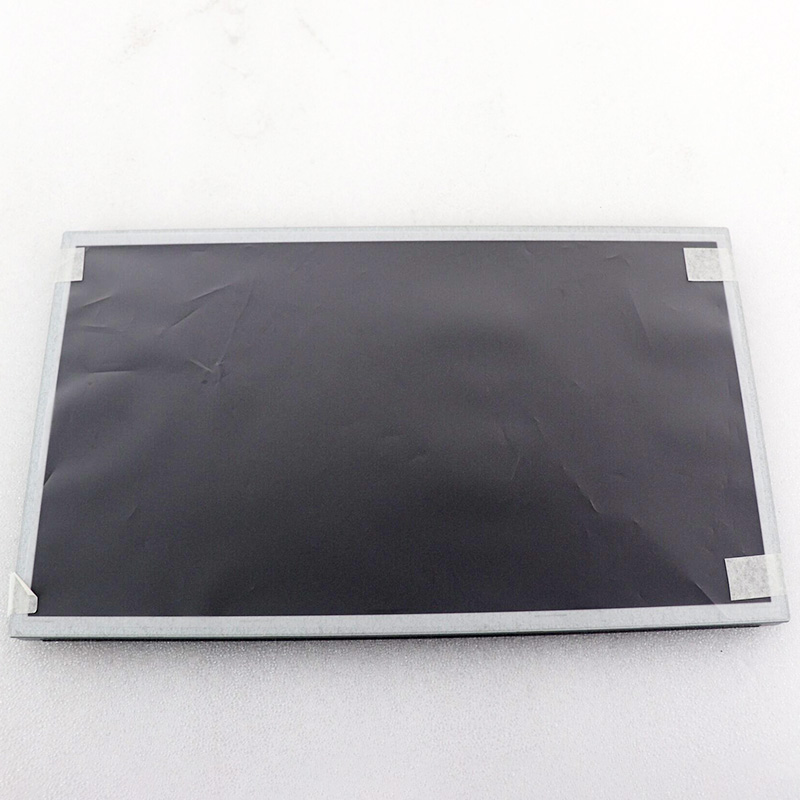
In the vast ecosystem of display technology, the 15.6-inch form factor has become a cornerstone for applications ranging from medical diagnostics to heavy industrial machinery. Among the myriad of options available, the AUO G156XTN02.1 stands out not merely as a screen, but as a carefully engineered solution designed for longevity and performance under demanding conditions. This article delves deep into the architecture and practical implications of this specific LCD module. We will move beyond superficial specifications to analyze its TN technology, its role in critical environments, and the engineering trade-offs that define its value proposition. For procurement specialists, system integrators, and engineers, understanding the G156XTN02.1 is not just about knowing its resolution or brightness; it is about recognizing how a well-designed display module can reduce system failure rates, improve user safety, and extend the operational lifecycle of expensive equipment. This exploration will provide a comprehensive framework for evaluating this module against the specific needs of high-reliability applications.
The TN Advantage: Why Speed and Response Time Matter in a 15.6" Panel
The G156XTN02.1 utilizes Twisted Nematic (TN) technology, a choice that often raises questions in a market dominated by IPS panels. To understand this decision, one must look beyond viewing angles to the core requirement of many industrial systems: motion clarity and responsiveness. TN panels are inherently faster than their IPS counterparts. This module is engineered for applications where real-time data visualization is critical—such as in CNC machine controls or patient monitoring systems. The rapid pixel response time, typically in the range of 8ms or lower, ensures that moving text or changing graphs do not produce ghosting or blur. This is not merely a convenience; it is a functional safety requirement. In a production line, a lagging display can lead to misinterpretation of speed data or readout errors. Furthermore, the lower power consumption curve of TN technology compared to IPS of the same generation allows for simpler thermal management within sealed enclosures. The trade-off in viewing angles is mitigated by the panel's typical mounting position in a control console, directly facing the operator. Thus, the TN architecture of the G156XTN02.1 is not a compromise but a deliberate optimization for speed and operational efficiency.
Optical Performance: Balancing Luminance and Contrast in Harsh Lighting
A display’s worth is ultimately measured by its readability in the environment where it is deployed. The G156XTN02.1 addresses this with a specific focus on luminance and contrast ratio. Typically rated at 400 cd/m², this module is not the highest brightness on the market, but it operates within a highly effective sweet spot. This level of luminance is sufficient to overcome ambient light from overhead factory lighting or indirect sunlight in a control room, without causing excessive eye strain during an 8-hour shift. More critical than raw brightness is the panel's contrast ratio, often cited at 700:1. This figure dictates the depth of blacks and the clarity of text. However, the true engineering merit lies in the optical uniformity. The G156XTN02.1 is binned for minimal luminance variance across the screen, a critical factor for medical imaging review stations where a gradient of 5% from center to corner could be clinically significant. The anti-glare surface treatment is another key specification. By diffusing reflected light, it prevents specular highlights from obscuring data. For the end-user, this translates into a reduced error rate during data entry and a more comfortable long-duration viewing experience, directly impacting productivity and user satisfaction.
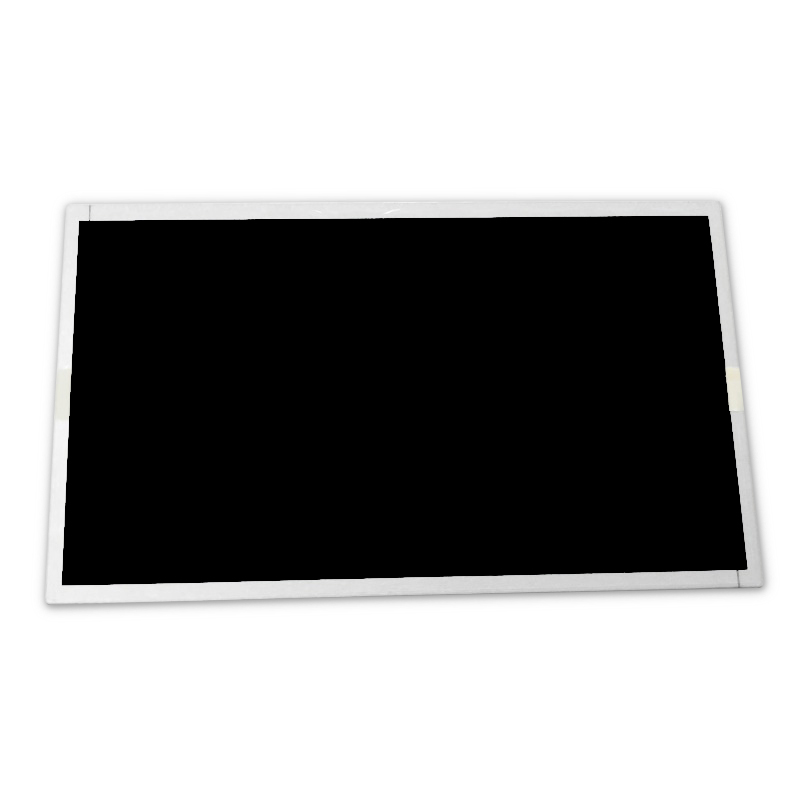
Mechanical Architecture and Thermal Design for Rugged Operation
The physical construction of the G156XTN02.1 reveals a design philosophy centered on reliability and integration. The module typically comes with a standard 30-pin LVDS interface and mounting holes that conform to industry standards, ensuring mechanical compatibility with a wide range of existing chassis. The mechanical dimensions are precise, with a thin profile that does not sacrifice structural rigidity. More importantly, the panel's thermal management is a silent feature. The backlight unit, a key source of heat, is designed to dissipate energy efficiently through the metal frame. This is crucial for applications where the display is sealed inside a panel without active cooling. Operating temperature ranges for industrial variants (typically -10°C to +60°C) are supported by the selection of liquid crystal materials that do not freeze or darken at low temperatures and robust polarization films that resist delamination under heat stress. The vibration resistance is another mechanical attribute. The internal structure is reinforced to prevent micro-fractures in the glass or detachment of the FPC (Flexible Printed Circuit) cable. For a system integrator, these mechanical ratings are not just numbers; they are a guarantee that the display will survive the rigors of shipping and operation in vibrating machinery, such as forklift terminals or conveyor belt control stations.
Interface and Power Architecture: The Backbone of System Integration
While the visual performance is the user-facing attribute, the electrical interface of the G156XTN02.1 is the engineer's true concern. This module typically operates on a 3.3V logic supply for the control board and a separate higher voltage for the LED backlight driver. The LVDS (Low-Voltage Differential Signaling) interface is the standard for industrial panels, offering high noise immunity and reduced electromagnetic interference—a critical factor in environments with heavy motors, welding equipment, or RF transmitters. The signal integrity of this interface is paramount. The panel's timing controller (TCON) is designed to handle slight signal degradation without pixel dropouts. Power management is equally sophisticated. The backlight driver efficiency directly impacts the total system power budget. The G156XTN02.1's driver is designed to operate with minimal ripple current, extending the lifespan of the LEDs. Furthermore, the module supports a range of color depths (typically 16.7M colors via dithering), which is communicated via the interface protocol. For the system designer, this means a straightforward "plug-and-play" integration with standard embedded controllers, provided the LVDS cable is properly terminated and shielded. Understanding the power sequence requirements (VDD logic before backlight) is essential to avoid damaging the driver ICs—a detail often overlooked in datasheets but critical for long-term reliability.
Longevity and Industrial Durability: Lifecycle Management and Supply Stability
Industrial displays are often designed for a lifecycle of 5 to 10 years, a stark contrast to consumer electronics. The G156XTN02.1 is built with this long-term availability in mind. AUO, as a Tier-1 manufacturer, provides product life cycle commitments that are critical for medical and military procurement cycles, which demand 7+ years of consistent supply. The backlight unit, typically using LED technology, has an estimated lifespan of 50,000 hours or more (depending on brightness settings and thermal conditions). This means that under typical 24/7 operation, the display could last for over 5 years before noticeable dimming occurs. However, longevity is not solely about the hardware. It is also about component standardization. The use of industry-standard connectors and control board footprints means that this module can serve as a drop-in replacement for older CCFL-lit panels without a complete chassis redesign. Environmental compliance is a final pillar of durability. The display is RoHS and REACH compliant, ensuring no hazardous materials like mercury or lead. For the asset owner, this translates into lower total cost of ownership (TCO), reduced e-waste, and a manageable supply chain risk that is easily forecastable.
Selection Criteria and Competitive Positioning in the 15.6" Market
Choosing the G156XTN02.1 over alternatives like IPS-based screens or lower-cost TN panels requires a strategic evaluation of application constraints. The key differentiator is the balance of performance and cost for non-color-critical applications. If the primary use case is readouts, numeric data, and waveform visualization, the G156XTN02.1 offers a superior cost-per-inch value compared to IPS equivalents. Its competitive positioning is strongest in factory automation (HMIs), ATMs/kiosks, and transportation systems. In contrast, a medical diagnostic screen requiring wide-angle viewing for a team of doctors would demand an IPS panel. Similarly, a consumer-grade laptop screen would be less expensive but lack the mechanical robustness and thermal management. The decision matrix hinges on three factors: viewing angle requirement (single operator vs. multi-viewer), ambient light control (low glare environment vs. bright room), and response time necessity (static data vs. dynamic animations). By benchmarking the G156XTN02.1 against these criteria, engineers can avoid over-specifying (buying an expensive IPS for a simple display) or under-specifying (buying a fragile consumer panel for a factory floor). This analysis makes the G156XTN02.1 a highly rational choice for a vast middle-ground of industrial applications where reliability and speed outweigh aesthetic concerns.
FAQs: Ten Critical Questions About the G156XTN02.1
What is the typical interface type for the G156XTN02.1?It typically uses a 30-pin LVDS (Low-Voltage Differential Signaling) interface for efficient data transmission.
Can this panel operate in sub-zero temperatures?Yes, the standard storage temperature is -20°C, and operation is supported down to -10°C, suitable for cold storage or outdoor enclosures.
Is the backlight easily replaceable?No. The LED backlight is integrated into the module. Replacement of the entire panel is the recommended practice for maintenance.
Does this model support touch functionality?The standard G156XTN02.1 is a display-only module. Touch panels are typically added as a separate layer by the system integrator.
What is the typical power consumption?Consumption varies, but it is generally under 10W for the module, with the LED backlight being the primary consumer.
Is it compatible with older CCFL-based systems?Yes, due to its standard dimensions and LVDS interface, it is often used as a direct replacement upgrade, though a new backlight power supply board may be required.
What is the pixel pitch and dot area?For a 15.6" screen, the pixel pitch is approximately 0.825mm × 0.825mm, providing a clear text rendering at 1:1 pixel mapping.
Does the panel have a specific anti-glare coating?Yes, it features a matte surface with a specific haze level (e.g., 25%) to diffuse reflected light without blurring the image.
How is the color depth achieved?It uses a 6-bit driver with FRC (Frame Rate Control) to simulate 16.7M colors, sufficient for GUI icons and data charts but not for photo editing.
What is the warranty period from AUO?AUO typically offers a 12-18 month warranty for industrial panels, though specific terms depend on the distributor and end-use agreement.
Conclusion: The Strategic Value of the G156XTN02.1 in Modern Display Ecosystems
The G156XTN02.1 by AUO represents a masterclass in purposeful engineering. It is not a display that attempts to do everything; rather, it excels at a specific, high-value set of tasks. We have seen that its TN architecture, robust mechanical design, and optimized power profile are not arbitrary features but calculated responses to the harsh realities of industrial and medical environments. The focus on fast response times, reliable thermal performance, and long-term supply chain stability offers a clear return on investment for system integrators who value uptime and low TCO above aesthetic perfection. While it will never replace a high-end IPS screen for collaborative color grading, it stands as the rational, cost-effective choice for the vast majority of human-machine interfaces. Ultimately, the G156XTN02.1 teaches us that the best display is not the one with the highest specs on paper, but the one that serves its purpose flawlessly over its intended lifecycle. For engineers and buyers, this module offers a proven, stable, and efficient solution that minimizes risk and maximizes operational readiness.





