


















- Industrial display
-
Industrial Products
- DC Servo Drive
- AC Servo Drive
- Industrial board
- Siemens
- Switch Sensor
- Proximity Switch
- Temperature Controller
- Protection Relay
- Fiber Optic Sensor
- Encoder
- Fan
- other
- Heidelberg
- MITSUBISHI
- FANUC
- Siemens adapter
- Fujitsu connector
- Motherboard
- Board
- Contactor
- Circuit
- OMRON
- Relay
- Motor Driver
- power supply
- Cable
- Transformer
- HMI Touch Glass
-
HMI Full Machine Whole unit
- OMRON HMI Touch Panel
- Siemens HMI Touch Panel
- Mitsubishi HMI Touch Panel
- Allen-Bradley automation HMI Touch Panel
- DELTA HMI Touch Panel
- Proface HMI Touch Panel
- KINCO DELTA HMI Touch Panel
- HITECH HMI Touch Panel
- WEINTEK HMI Touch Panel
- TECVIEW HMI Touch Panel
- WEINVIEW HMI Touch Panel
- PANASONIC HMI Touch Panel
- KYOCERA HMI Touch Panel
- SCHNEIDER HMI Touch Panel
- Module
- lcd inverter
- Membrane Keypad Switch
- Zhiyan Customized Touch Screens
- Frequency Inverter
- Servo Motor
- PLC
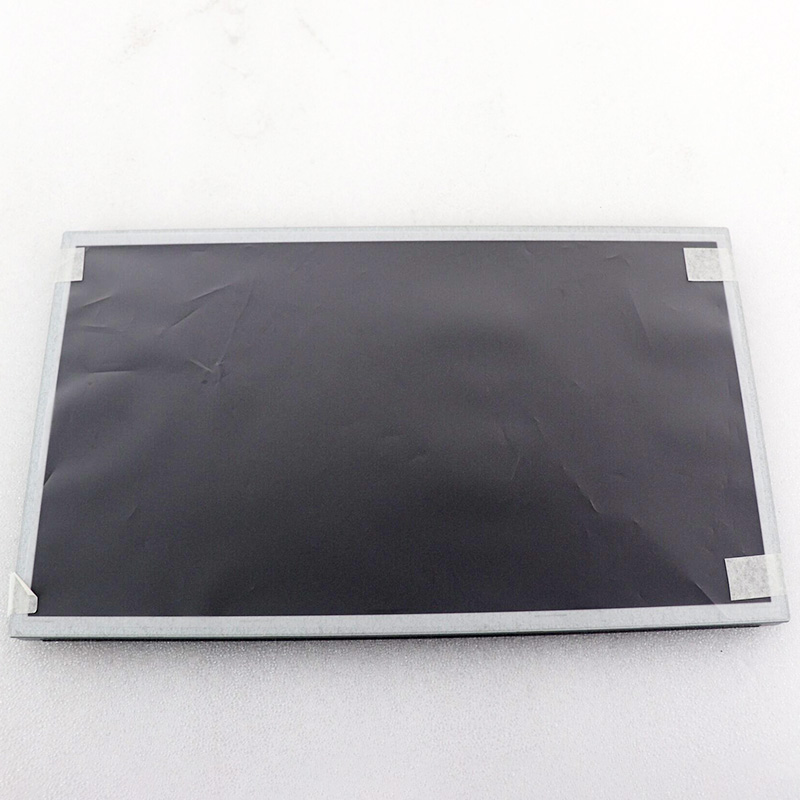
In the rapidly evolving landscape of industrial and commercial display technology, the choice of a liquid crystal display (LCD) panel is a critical decision that dictates user experience, system reliability, and operational efficiency. Among the myriad of options available, the G156HCE-LH1 from Innolux stands out as a specific 15.6-inch model that commands attention for its unique technical specifications and application versatility. This article provides a deep, technical exploration of the G156HCE-LH1. We will delve beyond the basic specifications to understand its underlying architecture, optical performance, interface requirements, and mechanical design. The purpose is to equip engineers, procurement specialists, and system integrators with the comprehensive knowledge required to evaluate, select, and implement this panel effectively. We will dissect the panel's positioning within the Innolux portfolio, its suitability for high-end medical, industrial, and gaming environments, and the critical factors that differentiate it from generic 15.6-inch displays. By understanding the nuances of this component, readers can make informed decisions that enhance product value and system longevity.
The Architectural DNA: A 15.6-Inch Canvas of Precision
The G156HCE-LH1 is engineered for high-performance applications where color accuracy and visual clarity are paramount. A key differentiator is its use of IPS (In-Plane Switching) technology, a stark contrast to TN (Twisted Nematic) panels which suffer from limited viewing angles. This architecture ensures that color shift and contrast degradation are minimized even when the display is viewed from extreme angles (typically 85/85/85/85 degrees). This is fundamentally important for multi-user environments such as medical diagnostic workstations or control room dashboards.
Furthermore, the panel leverages a WLED (White Light Emitting Diode) backlight system, which provides a stable and uniform light source. This specific model is often configured for high brightness, frequently reaching 300-400 cd/m² or more, depending on the revision. This brightness level is not arbitrary; it is calculated to combat ambient light in clinical settings or to meet the rigorous demands of sunlight-readable outdoor kiosks. The active area measures 344.16 x 193.59 mm, offering a standard 16:9 aspect ratio, but the real sophistication lies in its color architecture. It typically supports 16.7 million colors (8-bit) with a color gamut that often covers nearly 100% of the sRGB spectrum. This fidelity is critical for applications like digital radiography, where subtle gradations in gray and color directly impact diagnosis. The panel's contrast ratio, typically in the range of 800:1 to 1000:1, ensures deep blacks and vibrant whites, providing the necessary dynamic range for video and animation.
Interface and Connectivity: The eDP Protocol and Signal Integrity
Connectivity dictates how seamlessly the G156HCE-LH1 integrates into a system. This panel predominantly utilizes the eDP (Embedded DisplayPort) interface, specifically a 30-pin eDP 1.2 compliant connector. This is a significant advantage over traditional LVDS interfaces, as it supports higher data transfer rates, enabling higher resolutions and refresh rates with fewer wires. The eDP standard also allows for advanced power management features, such as Panel Self-Refresh (PSR), which can lead to lower overall system power consumption by allowing the graphics processor to idle when the image is static.
It is crucial to note that not all G156HCE-LH1 variants are created equal. Some may utilize a V-by-One interface, a high-speed serial interface common in video displays, or a standard LVDS interface for legacy compatibility. Engineers must verify the specific part number suffix (e.g., -LH1 could indicate a specific backlight or interface type). The interface voltage, typically 3.3V, and the pin configuration must be meticulously matched to the host controller. Signal integrity is paramount at the data rates used by eDP; a poorly routed cable or incorrect termination can result in shimmer, noise, or a complete loss of signal. Therefore, choosing the correct cable assembly and ensuring robust PCB layout at the host side is as critical as selecting the panel itself. The panel also includes an integrated timing controller (TCON), which processes the eDP signal and drives the gate and source drivers for the LCD matrix, reducing the burden on the system's graphics processor.
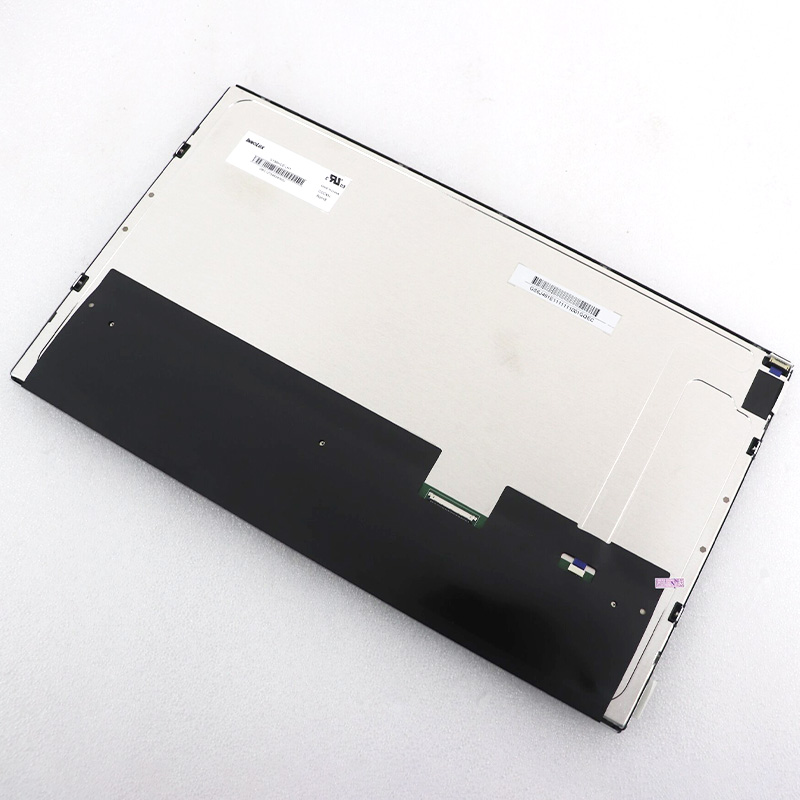
Mechanical Integration: Mounting, Size, and Thermal Management
Integrating the G156HCE-LH1 into a final product is a mechanical engineering challenge. The panel's dimensions are precise: a typical outer dimension of 363.8 x 215.9 mm with a thickness of approximately 9.6 to 10.5 mm (excluding the backlight driver board). The mounting is achieved through screw holes specifically located on the side or rear frame, designed to secure the panel into a bezel or enclosure. Over-tightening these screws can cause localized stress, leading to a phenomenon known as "mura," or uneven brightness, which is unacceptable in medical imaging.
Thermal management is another critical concern. The WLED backlight generates heat, which must be dissipated to prevent thermal degradation of the liquid crystal material and the backlight LED itself. The panel's mechanical design typically includes a metal frame that acts as a heatsink. In a closed-system enclosure, forced air convection or conduction to the chassis is often required. Failure to manage heat will result in reduced brightness over time, color shift, and a shortened operational lifespan. The weight of the panel, roughly 940 grams for the standard version, must be factored into the mechanical design for shock and vibration resistance. For mobile applications, weight reduction becomes a priority, but without compromising structural rigidity to protect the glass cell. Furthermore, the front bezel design must account for the optical bonding process, often used to reduce glare and increase durability by laminating a cover glass directly to the touch panel.
Comparative Advantage: The G156HCE-LH1 vs. Generic 15.6 Panels
To fully appreciate the G156HCE-LH1, one must compare it to ubiquitous, low-cost 15.6-inch panels found in consumer laptops. The primary difference lies in reliability and longevity. Consumer panels are often rated for a lifetime of 15,000 to 30,000 hours, whereas the G156HCE-LH1 is typically rated for 50,000 hours or more to half-brightness. This operational lifespan is essential for industrial kiosks, digital signage in 24/7 environments, and medical equipment that must function without interruption for years.
Furthermore, the operating temperature range is a critical differentiator. A standard consumer panel may function between 0°C and 50°C. The G156HCE-LH1 is often specified for a wider industrial range, such as -20°C to +70°C, allowing for deployment in unheated warehouses, transportation terminals, or outdoor environments. Another key advantage is its optical bonding capability. While not always standard, the panel is often sourced for optical bonding, where a layer of transparent adhesive is applied between the LCD surface and a cover glass or touch sensor. This eliminates the air gap, reducing reflection and preventing moisture condensation, dramatically improving sunlight readability and touch accuracy. The panel's surface treatment, typically Anti-Glare (AG) or Anti-Reflection (AR), is also optimized for specific applications. A generic panel may have a standard glossy or matte finish, while the G156HCE-LH1 is designed to meet stringent optical standards for contrast and uniformity in challenging lighting conditions.
Application Domains: From OR to Rugged Kiosk
The G156HCE-LH1's attributes make it the preferred choice for several high-stakes application domains. The foremost is medical imaging. In an Operating Room (OR) or a PACS (Picture Archiving and Communication System) workstation, radiologists rely on the panel's color accuracy and grayscale performance to interpret X-rays, CT scans, and MRIs.DICOM (Digital Imaging and Communications in Medicine) compliance is a key standard here, and this panel is frequently calibrated to meet those stringent luminance response curves. The high brightness ensures clear visibility even in the bright ambient light of a surgical suite.
Beyond medical, the panel finds a significant home in industrial automation. It is used in human-machine interfaces (HMIs) for factory floors, where visibility under bright or fluorescent lighting is critical. The wide viewing angle is crucial for operators monitoring processes from multiple positions. Additionally, it serves as the display for gaming machines and lottery terminals, where high refresh rates (often 60Hz or higher) and vibrant colors are required for an engaging user experience. In the transportation sector, it can be found in in-flight entertainment systems, train information displays, and ruggedized tablets used by field service engineers. The panel's mechanical robustness and wide temperature range ensure reliable performance in vibration-prone and temperature-variable environments. Finally, it powers financial and retail kiosks, where the touch interface—often a projected capacitive (PCAP) touch sensor laminated to the panel—needs to be highly responsive and optically clear to withstand countless daily interactions.
FAQs on the G156HCE-LH1 LCD Display
What is the primary interface of the G156HCE-LH1? It predominantly uses a 30-pin eDP (Embedded DisplayPort) 1.2 interface, though some variants may use LVDS or V-by-One. Always verify the specific model's datasheet.
Is this panel suitable for outdoor use? Yes, with the right backlight configuration, it can be made sunlight-readable. Optical bonding and an Anti-Glare (AG) surface treatment are recommended to reduce reflection.
What is the typical power consumption? It varies, typically around 10-15 Watts for the backlight and panel electronics at full brightness, but this can vary based on the brightness and interface.
Can this panel display full HD (1920x1080) resolution? Yes, the G156HCE-LH1 is a FHD panel, supporting a resolution of 1920 x 1080 pixels.
What is its typical color depth? It supports 16.7 million colors (8-bit), offering excellent color accuracy for sRGB applications.
What operating temperature can it withstand? It is typically industrial-grade, with a range of -20°C to +70°C. The exact range is specified on the datasheet.
Is it compatible with capacitive touch screens? Yes, it is commonly used with Projected Capacitive (PCAP) touch screens. Optical bonding of the touch panel to the LCD is standard practice for this model.
What does the "-LH1" suffix mean? This specific suffix often indicates a particular version of the backlight, brightness level, or interface type. It is a critical differentiator for compatibility.
How does it compare to a standard laptop LCD? It is significantly more robust, with a longer lifespan (50,000+ hours vs. 15,000 hours), wider temperature range, and better optical performance.
Is DICOM compliance available? While not automatic, the panel's high color accuracy and grayscale performance make it a prime candidate for DICOM calibration in medical imaging workstations.
Conclusion: A Calculated Investment in Display Reliability
In conclusion, the Innolux G156HCE-LH1 is far more than a simple 15.6-inch screen. It represents a calibrated engineering solution designed for environments where failure is not an option and visual fidelity is paramount. From its robust IPS architecture and high-brightness backlight to its industrial-grade temperature tolerance and precise eDP interface, every aspect of this panel is engineered for long-term reliability and consistent performance. We have seen that its true value is unlocked not in consumer laptops, but in medical diagnostic workstations, rugged HMIs, and high-traffic kiosks. The key takeaways for any engineer or integrator are the necessity of verifying the specific interface variant for your design, planning for adequate thermal management and mechanical support, and recognizing the profound difference in lifespan and environmental resilience compared to generic commodity panels. Choosing the G156HCE-LH1 is an investment in product quality, user satisfaction, and a lower total cost of ownership over the system's operational life. By understanding its capabilities and constraints, you empower your project with a display component that performs with precision and endures with resilience.





