













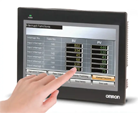
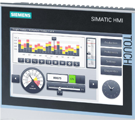
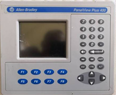





- Industrial display
-
Industrial Products
- DC Servo Drive
- AC Servo Drive
- Industrial board
- Siemens
- Switch Sensor
- Proximity Switch
- Temperature Controller
- Protection Relay
- Fiber Optic Sensor
- Encoder
- Fan
- other
- Heidelberg
- MITSUBISHI
- FANUC
- Siemens adapter
- Fujitsu connector
- Motherboard
- Board
- Contactor
- Circuit
- OMRON
- Relay
- Motor Driver
- power supply
- Cable
- Transformer
- HMI Touch Glass
-
HMI Full Machine Whole unit
- OMRON HMI Touch Panel
- Siemens HMI Touch Panel
- Mitsubishi HMI Touch Panel
- Allen-Bradley automation HMI Touch Panel
- DELTA HMI Touch Panel
- Proface HMI Touch Panel
- KINCO DELTA HMI Touch Panel
- HITECH HMI Touch Panel
- WEINTEK HMI Touch Panel
- TECVIEW HMI Touch Panel
- WEINVIEW HMI Touch Panel
- PANASONIC HMI Touch Panel
- KYOCERA HMI Touch Panel
- SCHNEIDER HMI Touch Panel
- Module
- lcd inverter
- Membrane Keypad Switch
- Zhiyan Customized Touch Screens
- Frequency Inverter
- Servo Motor
- PLC
In the rapidly evolving landscape of industrial automation, medical imaging, and high-end commercial displays, the demand for reliable, high-performance visual interfaces has never been greater. At the heart of many mission-critical systems lies the Liquid Crystal Display (LCD) module, a component often taken for granted until its performance dictates the success or failure of a user interface. This article provides a comprehensive deep dive into one specific, yet highly significant, component: the G156HAT01.2, a 15.6-inch TFT display manufactured by AU Optronics (AUO). Far from being a generic screen, this model represents a specific convergence of size, resolution, and ruggedness tailored for applications where clarity and durability are non-negotiable. We will explore its technical architecture, market positioning, performance characteristics, and practical considerations for integration. Whether you are a design engineer, a procurement specialist, or a system architect, understanding the nuances of this display—from its IPS (In-Plane Switching) technology to its industrial temperature range—is crucial for making informed decisions. This analysis will move beyond basic specifications to examine the real-world engineering trade-offs and use cases that define the G156HAT01.2’s role in modern display ecosystems.

Defining the Core: Resolution, Size, and Panel Technology
The G156HAT01.2 is defined by its foundational specifications, which position it as a premium solution within the 15.6-inch form factor. With a native resolution of 1920 x 1080 pixels (Full HD), it achieves a pixel density of approximately 141 PPI (pixels per inch). This is a critical threshold, as it ensures sharp text rendering and detailed image reproduction, a requirement for medical PACS (Picture Archiving and Communication System) viewing and detailed CAD drawings. The “HA” in its model number signifies AUO’s commitment to high-performance visuals, specifically leveraging IPS (In-Plane Switching) technology.
Unlike basic TN (Twisted Nematic) panels, the IPS architecture of the G156HAT01.2 provides exceptional color consistency and viewing angles. The rated 178° viewing angle (both horizontal and vertical) minimizes chromatic shift and contrast degradation when the display is viewed off-axis. This is particularly important in multi-user environments, such as a control room or a surgical suite, where personnel must interpret data from various physical positions. Furthermore, the panel typically delivers a brightness level in the range of 400 to 500 cd/m² (nits), surpassing standard commercial monitors. This high luminance is not merely for marketing specifications; it is essential for maintaining readability in brightly lit environments or when the display is used behind a touch screen or protective glass, which can reduce effective light transmission by 10-15%.
Navigating the Interface: LVDS Signal Integrity and Compatibility
Connectivity is a primary consideration for any embedded display, and the G156HAT01.2 utilizes the industry-standard LVDS (Low-Voltage Differential Signaling) interface. Specifically, it employs a dual-channel, 8-bit LVDS receiver. This is a deliberate engineering choice, distinct from newer eDP (embedded DisplayPort) interfaces. While eDP offers higher bandwidth for 4K panels and can reduce the number of wires in a cable harness, LVDS remains the dominant standard in the industrial sector for several key reasons.
First, LVDS is exceptionally robust against electromagnetic interference (EMI), a critical factor in environments with heavy machinery or medical equipment. The differential signaling cancels out noise, ensuring signal integrity over cable lengths often exceeding 30-50 centimeters. Second, compatibility is a cornerstone of industrial longevity. Many existing controller boards, ARM-based or x86-based single-board computers (SBCs) designed for industrial applications, still natively support LVDS. Integrating an eDP panel often requires expensive bridge chips, adding cost and complexity. The G156HAT01.2’s pinout is standardized, typically using a 30-pin or 40-pin connector, making it a drop-in replacement for a wide range of earlier models. Engineers must verify the exact pin assignment (voltage sequencing and data mapping) against their specific mainboard, but the ecosystem of LVDS timing controllers (T-CONs) for this panel is mature, simplifying the design phase and reducing time-to-market for new equipment.

Environmental Ruggedness: Industrial Temperature and Reliability Standards
Perhaps the most defining characteristic of the G156HAT01.2, distinguishing it from consumer-grade laptop panels, is its environmental tolerance. This AUO display is engineered for the extended temperature range, typically operating reliably from -20°C to +70°C, with storage capabilities up to -30°C to +80°C. This is a fundamental requirement for applications including outdoor kiosks, cold-chain logistics displays, and factory floor control panels where HVAC control is minimal.
Meeting these specifications involves several engineering challenges. The liquid crystal material itself must be a specialized formula that remains responsive at low temperatures (where standard LC fluid can become sluggish and slow to switch). The CCFL backlight of older units is now obsolete; this model uses LED (White Light Emitting Diode) backlighting. The LED array and its driver circuitry must be selected for thermal stability, ensuring consistent brightness without rapid degradation at high temperatures. Furthermore, the mechanical construction—the glass cell, the metal bezel, and the tab bonding—must withstand the mechanical stress of thermal expansion and contraction. AUO often qualifies these displays for high-vibration and high-humidity environments, meeting standards such as IP4X or specific automotive / railway regulations. This ruggedness removes the risk of infant mortality due to cold-start failures, a common problem when using off-the-shelf consumer displays in industrial machinery.
Optical Performance: Beyond Brightness to Contrast and Color Gamut
While brightness is important, the G156HAT01.2’s optical performance is defined by a balanced interplay of contrast ratio and color reproduction. The panel typically achieves a static contrast ratio of 1000:1 (or higher). This is considered excellent for IPS technology, enabling deep blacks and bright whites simultaneously. This is crucial for applications like medical diagnostic imaging, where subtle variations in soft tissue density (represented as grayscale differences) must be clearly distinguishable.
The color gamut is another critical factor. While standard panels might cover only 45-60% of the NTSC color space, the G156HAT01.2 often achieves 72% NTSC (typically 95-100% sRGB) or even 90%+ DCI-P3 in some variants. This level of color fidelity is necessary for professional graphics editing, pharmaceutical labeling, and advanced visualization in ultrasound or endoscopy systems. The panel's response time, typically in the range of 20-25 ms (rising + falling), is adequate for most static and slowly-moving content. It is not designed for high-speed gaming (which requires 1-5 ms), but this is a deliberate optimization; slower response times reduce the likelihood of artifact and overdrive-related artifacts in a static GUI, while offering lower power consumption and heat generation.
Power Consumption and System Integration Strategies
From a system design perspective, the G156HAT01.2 is relatively power-hungry compared to small handheld displays, but efficient for its size. The power consumption typically falls within the range of 10-15 Watts for the panel alone, depending on the brightness setting and LED current. The bulk of this power is consumed by the backlight LED array. A robust power management strategy is essential for portable or battery-backed applications.
Engineers must consider a dedicated power rail for the backlight (typically 12V at 2-3 Amps) and a separate logic voltage (typically 3.3V or 5V). Inrush current during backlight startup can be high, requiring proper slew-rate control or a soft-start circuit on the power supply. Integration also involves mechanical design: the 15.6-inch panel requires a bezel or enclosure that provides structural support without interfering with the active area. The standard VESA mounting pattern (typically 75mm x 75mm or 100mm x 100mm) must be accommodated. Thermal management is equally important. While the panel is designed to operate up to 70°C, forced air cooling may be necessary in closed-cabinet applications to keep the internal ambient temperature below that threshold, thereby extending the lifespan of the LCD and the LED backlight.
Frequently Asked Questions (FAQs)
Is the G156HAT01.2 a touchscreen panel?No, this is a raw TFT LCD glass module. It does not include a touch sensor. A separate touch screen (e.g., PCAP, resistive) must be integrated by the system designer.
What is the typical lifespan of the LED backlight in this model?AUO typically rates the backlight for 50,000 hours of operation to half-brightness (L50). Actual lifespan depends on operating temperature and driving current.
Can I use this display in direct sunlight?The 400-500 cd/m² brightness is suitable for shaded outdoor use or under a visor. For direct sunlight readability, a specialized transflective or high-brightness (1000+ cd/m²) variant would be required.
What connector does the G156HAT01.2 use?It typically utilizes a 30-pin or 40-pin fine-pitch connector (e.g., Hirose DF19 or compatible). Always verify the datasheet for the exact connector part number and mate.
Is the interface compatible with a Raspberry Pi?Not directly. The Raspberry Pi does not have a native LVDS output. You would need an HDMI-to-LVDS converter board to drive this panel.
What is the maximum resolution supported by the LVDS interface?The dual-channel 8-bit LVDS on this panel can reliably carry 1920x1080 at 60Hz. It cannot support 4K resolution natively.
What are the dimensions of the active area?For a 15.6-inch screen with a 16:9 aspect ratio, the active area is approximately 344.16 mm by 193.59 mm.
Does this display support PWM dimming?Yes, the LED backlight is typically controlled via a PWM (Pulse Width Modulation) signal on the backlight connector for brightness adjustment.
Is this display suitable for medical diagnostic use?Its high contrast and color accuracy make it suitable for many medical applications (e.g., patient monitoring, PACS review), but it is not individually certified as a medical diagnostic monitor (e.g., DICOM Part 14 calibration).
What is the response time of the G156HAT01.2?The typical response time (Tr/Tf) is approximately 20-25 ms, optimized for static and GUI content rather than high-speed video games.
Conclusion
The AUO G156HAT01.2 is far more than a standard computer screen; it is a finely tuned industrial instrument. Its blend of Full HD resolution, IPS-wide viewing angles, high brightness, and robust environmental tolerances positions it as a formidable workhorse for the most demanding embedded applications. While consumer displays are optimized for cost and slimness, this model prioritizes longevity, signal integrity, and wide operating conditions—a trade-off that is essential for medical, automation, and outdoor kiosk designers.
For the system architect, the key takeaway is the importance of holistic integration. Success with this panel requires not just understanding its specs, but respecting its power needs, its thermal envelope, and the specifics of its LVDS signal mapping. It is a testament to the fact that superior visual performance in an industrial context is achieved through deliberate engineering across multiple domains. When chosen correctly, the G156HAT01.2 provides a stable, clear, and reliable visual foundation that can substantially reduce total cost of ownership over the long life cycle of capital equipment.





