













































- Industrial display
-
Industrial Products
- DC Servo Drive
- AC Servo Drive
- Industrial board
- Siemens
- Switch Sensor
- Proximity Switch
- Temperature Controller
- Protection Relay
- Fiber Optic Sensor
- Encoder
- Fan
- other
- Heidelberg
- MITSUBISHI
- FANUC
- Siemens adapter
- Fujitsu connector
- Motherboard
- Board
- Contactor
- Circuit
- OMRON
- Relay
- Motor Driver
- power supply
- Cable
- Transformer
- HMI Touch Glass
-
HMI Full Machine Whole unit
- OMRON HMI Touch Panel
- Siemens HMI Touch Panel
- Mitsubishi HMI Touch Panel
- Allen-Bradley automation HMI Touch Panel
- DELTA HMI Touch Panel
- Proface HMI Touch Panel
- KINCO DELTA HMI Touch Panel
- HITECH HMI Touch Panel
- WEINTEK HMI Touch Panel
- TECVIEW HMI Touch Panel
- WEINVIEW HMI Touch Panel
- PANASONIC HMI Touch Panel
- KYOCERA HMI Touch Panel
- SCHNEIDER HMI Touch Panel
- Module
- lcd inverter
- Membrane Keypad Switch
- Zhiyan Customized Touch Screens
- Frequency Inverter
- Servo Motor
- PLC
In the competitive landscape of industrial and commercial displays, the G156HAN02.015.6" LCD panel manufactured by AU Optronics (AUO) stands out as a critical component for high-performance applications. This article provides an in-depth exploration of this specific model, moving beyond basic specifications to examine its engineering architecture, operational advantages, and market positioning. We will dissect why this panel is frequently chosen for medical imaging, gaming terminals, and industrial human-machine interfaces (HMIs). The discussion will cover its a-Si TFT-LCD technology, optical characteristics, and mechanical design, offering a comprehensive resource for engineers, procurement specialists, and system integrators. We will focus on the technical nuances that differentiate the G156HAN02.0 from other 15.6-inch offerings, providing practical insights into its real-world performance and suitability for demanding environments.
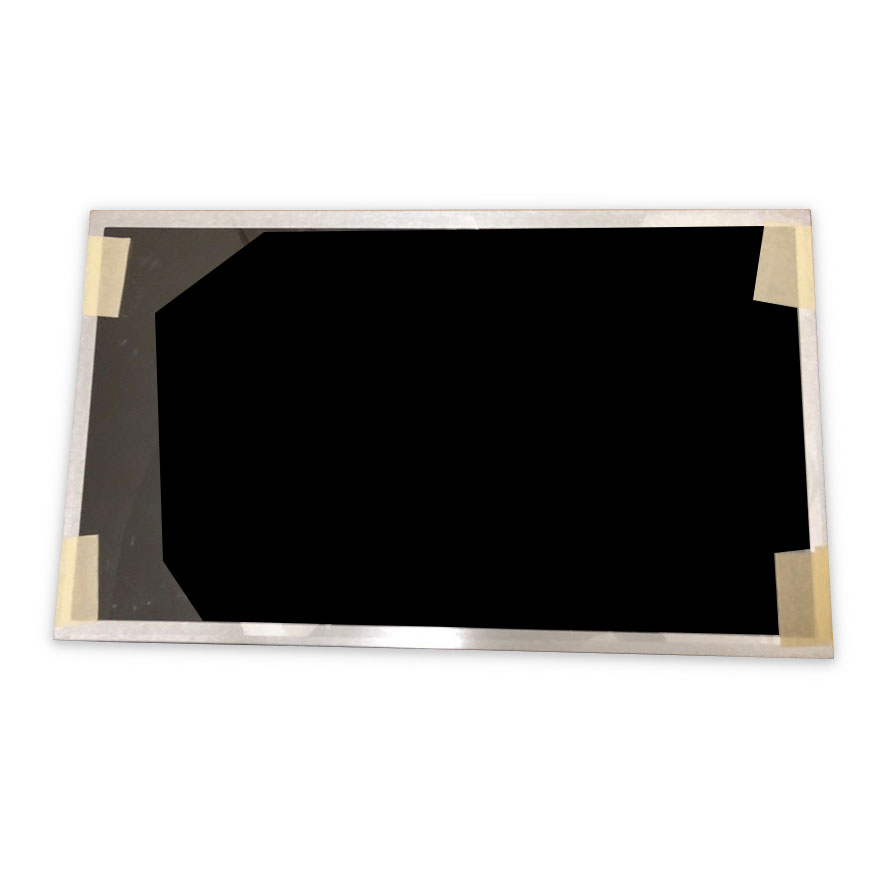
Distinguishing the G156HAN02.0: Beyond Basic Specifications
The G156HAN02.0 is not simply a standard 15.6-inch display; it is a meticulously engineered a-Si TFT-LCD panel designed for high reliability. With a native resolution of 1920x1080 (Full HD) and a 16:9 aspect ratio, it delivers sharp image clarity. However, its true value lies in its LVDS (Low-Voltage Differential Signaling) interface, a two-channel, 30-pin connector that ensures robust data transmission with reduced electromagnetic interference. The panel boasts an active area of 344.16 x 193.59 mm, with a dot pitch of just 0.17925 mm, contributing to a pixel density of approximately 141 PPI. This level of detail is crucial for applications where text legibility and fine graphic rendering are non-negotiable. Furthermore, the display is rated for an operating temperature range of 0°C to 50°C and a storage range of -20°C to 60°C, making it suitable for controlled environments such as medical facilities and financial trading floors.
Optical Performance and Viewing Angle Engineering
A defining characteristic of the G156HAN02.0 is its adoption of AHVA (Advanced Hyper-Viewing Angle) technology, AUO’s proprietary variant of IPS. This gives the panel a super-wide viewing angle of 89/89/89/89 degrees (CR≥10), ensuring consistent color and contrast from virtually any position. The typical luminance is rated at 400 cd/m², which is significantly brighter than consumer-grade monitors, making it effective in ambient light conditions often found in industrial or retail settings. Contrast ratio is a respectable 1000:1, providing deep blacks and vibrant whites. Color reproduction is supported by a 16.7 million color palette (8-bit), and the surface treatment is typically an Anti-Glare (AG) coating with a 3H hardness, which reduces reflections and enhances readability under direct lighting. This combination of high brightness, wide viewing angles, and an anti-glare surface minimizes eye strain during prolonged use
.
Power Management and LED Backlight Architecture
Efficient power consumption is a critical factor for continuous operation, and the G156HAN02.0 excels in this area through its well-designed WLED (White Light-Emitting Diode) backlight system. The backlight is configured to draw a typical current of 310mA at a standard voltage of 12.0V, translating to a total power consumption of approximately 3.72W for the backlight alone. When combined with the logic power (typically 0.7A at 3.3V), the total panel power consumption remains under 6.5W in most operational scenarios. This low power profile makes it an excellent choice for passively cooled systems and fanless embedded computers. The backlight also features a built-in LED driver, simplifying the integration process for designers. The rated lifespan of the LED array is typically 50,000 hours at a constant current, ensuring years of reliable service before any perceptible brightness degradation occurs.
Mechanical Integration and Physical Dimensions
For system designers, the mechanical outline of the G156HAN02.0 is a crucial consideration. The module’s external dimensions measure 363.8 x 215.95 mm, with an overall thickness of just 10.0 mm (from the front bezel to the rear of the PCB). The panel weight is a lightweight 620g, which is beneficial for portable equipment and articulated arms. The display utilizes an anti-glare, hard coating (3H) surface treatment standard. The 30-pin LVDS connector is located on the right side of the panel (when viewed from the front), typically using a male JAE FI-RE series or equivalent connector. The mounting hole pattern is designed to be compatible with standard VESA and embedded mounting systems, allowing for easy integration into existing enclosures or custom chassis. The bezel width is minimal, typically around 8.5mm on the sides and top, offering a modern, frameless aesthetic in final products.
Comparative Advantages Over Other 15.6-inch Panels
When comparing the G156HAN02.0 to other common 15.6-inch LCDs, several critical advantages emerge. Consumer-grade panels often use TN (Twisted Nematic) technology, which suffers from poor viewing angles and color shift. In contrast, the G156HAN02.0’s AHVA technology provides superior color consistency. Unlike many open-cell displays that require a separate touch module and backlight controller, this AUO model comes as a complete module with a robust metal frame and a reliable CCFL or WLED backlight. Its high brightness of 400 cd/m² sets it apart from standard office displays (typically 250-300 cd/m²), making it ideal for kiosks and public information terminals. The precise LVDS timing and signal integrity specifications also ensure a lower rate of signal interference in electrically noisy industrial environments, a significant reliability advantage over generic panels.
Specialized Application Suitability and Market Niche
The unique specifications of the G156HAN02.0 make it a prime candidate for several specialized verticals. Its high brightness and wide viewing angle are essential for medical imaging displays used in PACS (Picture Archiving and Communication Systems) and patient monitoring, where accurate grayscale reproduction is critical. The panel is also heavily utilized in gaming machines and slot terminals, where vibrant colors and fast response times (typically 25ms Tr+Tf) enhance the user experience. Furthermore, its 400-nit brightness and anti-glare coating make it suitable for outdoor-adjacent kiosks and industrial HMIs on factory floors. The robust build quality and long backlight life also make it a default choice for aviation and transportation in-cabin displays, where reliability under constant use is paramount.
Frequently Asked Questions
Is the G156HAN02.0 compatible with a Raspberry Pi? Yes, but you need an active LVDS-to-HDMI adapter board. The panel uses a 30-pin LVDS interface, not direct HDMI.
Does this panel support a touchscreen overlay? No, it comes as a standard LCD module without touch. It is designed for systems where a separate touch panel is added.
What is the typical response time? The typical Tr+Tf response time is 25 milliseconds. This is adequate for video playback and GUI navigation but not for high-speed gaming.
Is the backlight replaceable? No, the WLED backlight is integrated into the panel. Replacement requires a full panel assembly change when the backlight fails.
What is the difference between the G156HAN02.0 and the G156HAN02.1? They are often functionally identical but may have minor revisions in the LED driver circuit or connector manufacturing. Always verify with the datasheet.
Can this panel run at 60Hz refresh rate? Yes, it supports a standard 60Hz vertical refresh rate over its dual-channel LVDS interface.
Is it suitable for outdoor use? Not directly in sunlight. Its 400 cd/m² brightness is good for shaded outdoor or indoor high-ambient-light use, but it is not a sunlight-readable panel.
What is the pin-out for the 30-pin connector? The pin-out follows the standard 30-pin dual-channel LVDS mapping, typically defined by JAE or Hirose connectors. Consult the official datasheet for specific pin assignments.
Does it support 10-bit color depth? No, it is an 8-bit panel capable of displaying 16.7 million colors, not the 1.07 billion of 10-bit panels.
Is the G156HAN02.0 compatible with the G156HAN01.0? Mechanically and electrically they are very similar, but check the datasheet for differences in backlight current requirements before direct replacement.
Conclusion
The G156HAN02.0 15.6" LCD from AUO is a testament to the precision engineering required for modern industrial and specialty display applications. It is not a general-purpose monitor but a specialized tool that combines high luminance, wide viewing angles, and robust mechanical construction into a reliable package. Its strengths lie in its consistent optical performance, low power consumption, and compatibility with standard LVDS interfaces, making it a viable choice for medical, gaming, and automation systems. For engineers and procurement professionals, selecting this panel means investing in a proven component with a long operational lifespan and predictable quality. When designing your next interactive kiosk, diagnostic monitor, or industrial control panel, the G156HAN02.0 offers a balance of performance and reliability that is difficult to replicate with consumer-grade alternatives. It remains a benchmark choice for demanding 15.6-inch display requirements.





