













































In the intricate ecosystem of electronic components, the display panel often serves as the critical interface between user and device, defining the quality of interaction. Among the myriad of options available to engineers and product designers, the G101EAN02.6 emerges as a significant contender. This 10.1-inch LCD module, manufactured by AUO (AU Optronics), represents more than just a screen; it encapsulates a specific set of technological choices aimed at balancing performance, reliability, and integration efficiency.
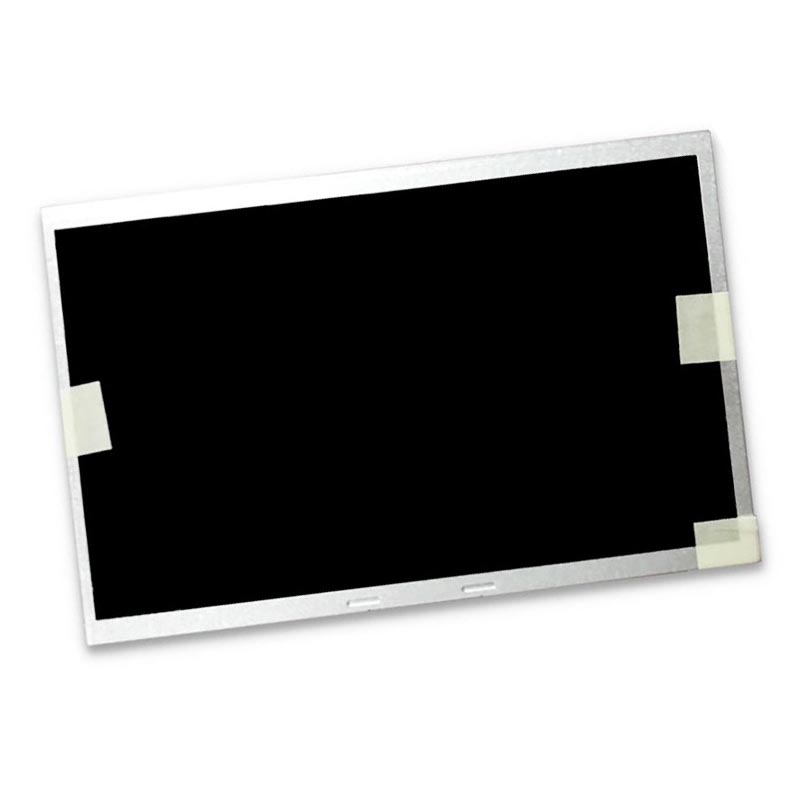
This article delves into a comprehensive analysis of the G101EAN02.6 display. We will move beyond basic datasheet specifications to explore its architectural nuances, key performance characteristics, and the practical considerations for its implementation. Our journey will uncover why this particular model is specified for certain applications, examining its optical performance, interface technology, mechanical design, and typical use cases. The goal is to provide a resource that aids in making an informed component selection, understanding not just the "what," but the "how" and "why" behind this AUO display solution.

Decoding the Model: Architecture and Core Specifications
The alphanumeric code G101EAN02.6 is a direct map to its identity. "G" often denotes the generation or series, "101" indicates a 10.1-inch diagonal size, and "EAN" points to specific technological and feature sets within AUO's portfolio, typically involving TFT-LCD technology with an LED backlight unit. The "02.6" suffix refers to a precise revision or version, indicating potential minor iterations in brightness, contrast, or power consumption.
At its core, this module is an a-Si (amorphous Silicon) TFT LCD panel. It commonly features a resolution of 1280 x 800 pixels (WXGA), offering a 16:10 aspect ratio that provides additional vertical space compared to the widespread 16:9 format. This resolution strikes a balance between sharpness and the data throughput requirements of its interface, typically LVDS (Low-Voltage Differential Signaling). The panel is integrally built with a driver IC and power circuitry, presenting itself as a complete module ready for system integration, which significantly reduces development complexity for OEMs.
Optical Performance: Clarity, Color, and Readability
The visual output of the G101EAN02.6 is defined by several key optical parameters. Its brightness, often ranging between 300 to 500 nits, ensures comfortable viewability in various indoor lighting conditions. The contrast ratio, a critical factor for image depth and text legibility, is typically high, allowing for distinct separation between dark and light areas.
Color performance is governed by its color gamut coverage, usually aligning with standard sRGB or similar ranges, making it suitable for applications requiring accurate color representation without the need for wide-gamut performance. Furthermore, the viewing angles—both horizontal and vertical—are a crucial consideration. This panel typically offers wide viewing angles (e.g., 80/80/80/80), ensuring consistent color and contrast when viewed from the sides, above, or below, which is vital for shared or multi-user devices.
The Interface and Integration: LVDS and Power Considerations
Integration is where theoretical specifications meet practical engineering. The G101EAN02.6 predominantly utilizes an LVDS interface. This mature, robust, and noise-resistant differential signaling standard is ideal for transmitting high-speed video data from a system's main board to the display with minimal electromagnetic interference. Understanding the pinout, signal timing, and power sequencing requirements of this interface is paramount for a stable display subsystem.
Power design is another critical facet. The module requires specific voltage rails (e.g., 3.3V for logic, a higher voltage for the LED backlight) with precise sequencing to avoid damaging the TFT array. The design of the backlight driver circuit, whether constant current or PWM-controlled, directly impacts display uniformity, longevity, and power efficiency. Proper thermal management for the backlight LEDs also ensures sustained brightness and lifespan.
Mechanical and Environmental Design Robustness
The physical construction of the display module dictates its durability and application scope. The G101EAN02.6 features a rigid PCB and a sturdy bezel, often with mounting holes for secure attachment to a chassis. The thickness and weight are optimized for space-constrained designs commonly found in industrial and embedded systems.
Environmental robustness is a key differentiator for industrial components. This panel is often designed to operate reliably across a wide temperature range (e.g., -20°C to 70°C for the operating range). It may also incorporate features to mitigate condensation or withstand higher levels of vibration and shock compared to commercial-grade panels. This resilience makes it a preferred choice for harsh environments where consumer displays would fail.
Typical Application Ecosystems and Use Cases
The specific combination of its 10.1-inch size, WXGA resolution, wide viewing angles, and industrial robustness positions the G101EAN02.6 in distinct market segments. It is a frequent choice for Human-Machine Interfaces (HMI) in industrial automation, factory control panels, and medical monitoring devices, where reliability and clear visibility are non-negotiable.
Beyond industrial settings, it finds application in point-of-sale (POS) systems, kiosks, transportation infotainment, and certain portable instrumentation. In these contexts, the display acts as a durable and reliable portal for information exchange, user input, and system control, often operating for extended periods under demanding conditions.
Comparative Analysis and Selection Rationale
Why choose the G101EAN02.6 over other 10.1-inch panels? The decision hinges on a matrix of factors. Compared to lower-cost commercial panels, it offers enhanced durability, wider temperature tolerance, and potentially longer lifecycle availability—critical for products with multi-year development and deployment schedules.
Against other industrial-grade panels, its value proposition lies in AUO's manufacturing consistency, supply chain stability, and the balanced performance of its optical specs. The 16:10 aspect ratio can be a decisive factor for applications needing more vertical screen real estate for data displays or control menus. Ultimately, selection is a calculated trade-off between cost, performance, longevity, and the specific environmental demands of the end product.
FAQs: G101EAN02.6 10.1" LCD Display
Q1: What is the primary interface of the G101EAN02.6?A1: It primarily uses an LVDS (Low-Voltage Differential Signaling) interface for reliable, high-speed video data transmission.
Q2: What is its typical resolution and aspect ratio?A2: It typically offers a WXGA resolution of 1280 x 800 pixels with a 16:10 aspect ratio.
Q3: Is this display suitable for outdoor use?A3: With a typical brightness of 300-500 nits, it is best for indoor or shaded outdoor use. Fully sunlight-readable versions require much higher brightness (>1000 nits).
Q4: What are the key advantages for industrial applications?A4: Key advantages include wide operating temperature range, robust construction, long-term availability, and stable performance under continuous operation.
Q5: Does it have a touch screen?A5: The G101EAN02.6 is a display module only. Touch functionality (resistive or capacitive) is typically added as a separate overlay or panel.
Q6: What is the expected lifespan of the backlight?A6: Under normal operating conditions, the LED backlight is often rated for 30,000 to 50,000 hours or more.
Q7: Can it be used as a direct replacement for other 10.1" panels?A7: Not directly. Mechanical dimensions, interface pinouts, power requirements, and driver software must be carefully verified for compatibility.
Q8: What type of TFT technology does it use?A8: It utilizes a-Si (amorphous Silicon) TFT technology, a mature and cost-effective standard for LCDs.
Q9: How is the display typically powered?A9: It requires separate power rails for panel logic (e.g., 3.3V) and the LED backlight (a higher voltage, e.g., 12-24V), with specific power-on sequencing.
Q10: Where can I find detailed technical documentation?A10: Official datasheets, application notes, and interface guides are available through AUO's official website or authorized distributors.
Conclusion
The AUO G101EAN02.6 10.1-inch LCD display is a meticulously engineered component that exemplifies the requirements of professional and industrial-grade applications. Its value extends beyond a simple list of specifications into the realms of reliable integration, environmental resilience, and long-term operational stability. The choice of WXGA resolution, LVDS interface, and wide-temperature design creates a profile ideally suited for HMIs, medical devices, kiosks, and other systems where failure is not an option.
For engineers and product managers, selecting this module represents a strategic decision to prioritize durability and consistency over the lowest possible cost. It underscores an understanding that the display is not merely an output device but a fundamental part of the product's user experience and reliability narrative. In a landscape filled with disposable components, the G101EAN02.6 stands as a testament to designed longevity, making it a prudent investment for products destined for demanding real-world environments.





