



















- Industrie-LCD-Display
-
Industrial Products
- DC Servo Drive
- AC Servo Drive
- PCB
- Siemens
- Switch Sensor
- Näherungsschalter
- Temperaturregler
- Schutzrelais
- Fiber Optic Sensor
- Encoder
- Fan
- other
- Heidelberg
- MITSUBISHI
- FANUC
- Siemens adapter
- Fujitsu connector
- Der Aufsichtsrat
- Board
- Contactor
- Circuit
- Omron
- Relais.
- Motortreiber
- power supply
- Cable
- Transformator
- HMI Touch-Glas
-
HMI-Vollautomat Ganze Einheit
- OMRON HMI Touch Panel
- Siemens HMI Touch Panel
- Mitsubishi HMI Touch Panel
- Allen-Bradley Automatisierung HMI Touch
- DELTA HMI Touch Panel
- EVIEW DELTA HMI Touch Panel
- KINCO DELTA HMI Touch Panel
- HITECH HMI Touch Panel
- WEINTECK HMI Touch Panel
- TECVIEW HMI Touch Panel
- WEINVIEW HMI Touch Panel
- PANASONIC HMI Touch Panel
- KYOCERA HMI Touch Panel
- SCHNEIDER HMI Touch Panel
- Module
- LCD Wechselrichter
- Membran Tastenfeld Schalter
- Winni Touch Screens
- Frequenzumrichter
- Servo Motor
- PLC
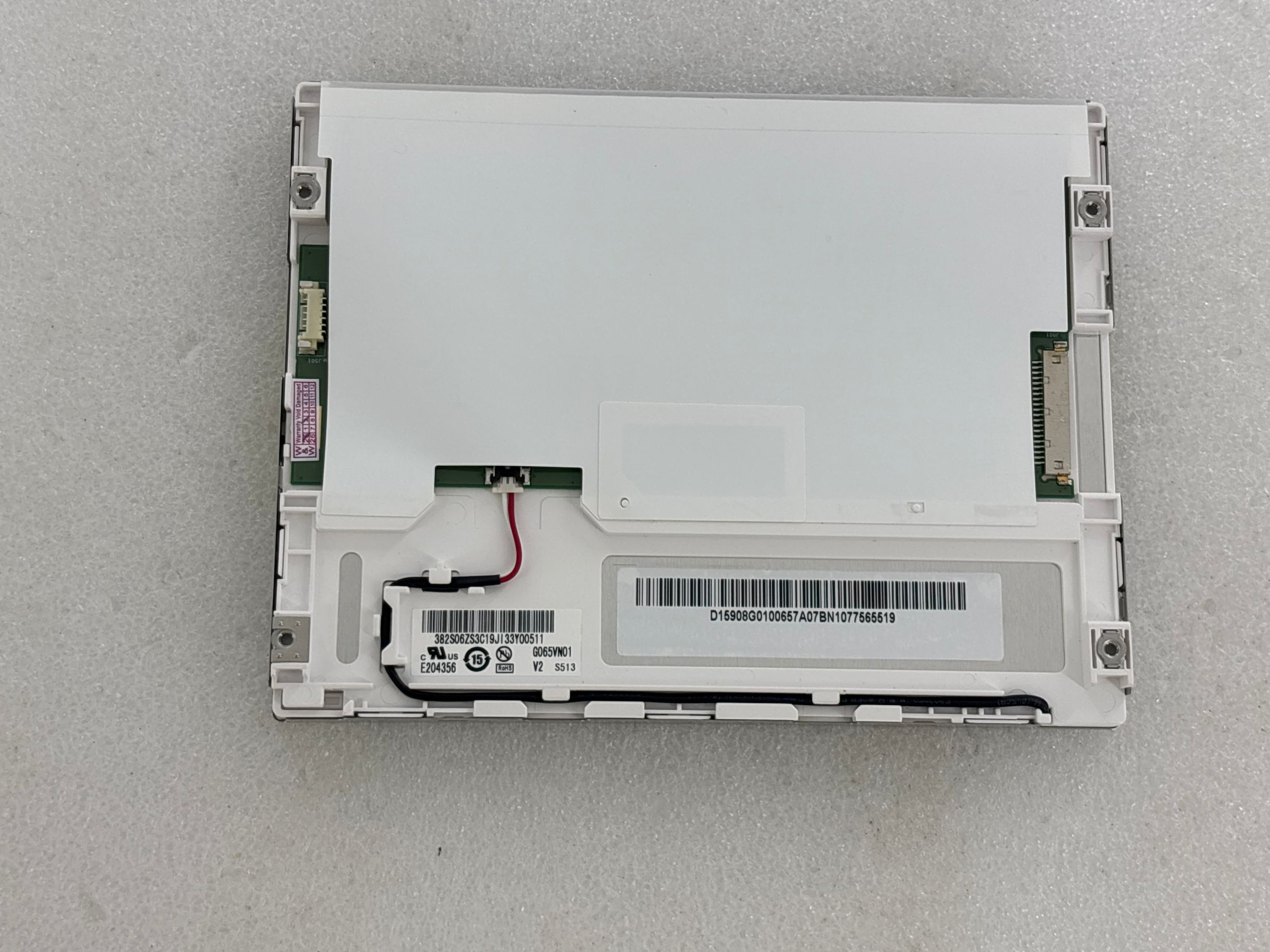
In the intricate world of electronic components, the display module often serves as the critical interface between a device and its user. For engineers, product designers, and procurement specialists, selecting the right display is a decision that balances technical specifications, supply chain reliability, and cost. This article provides an in-depth exploration of the G065VN01 V2, a 6.5-inch LCD display module designed as a compatible solution for panels originally manufactured by AUO (AU Optronics).
We will move beyond basic datasheet parameters to examine the module's role within the broader ecosystem of display technology. The analysis will cover its core technical architecture, the specific applications it enables, and the crucial considerations for integration. Furthermore, we will address the practical realities of sourcing compatible modules, weighing the advantages against potential challenges. This guide aims to equip you with the knowledge necessary to evaluate whether the G065VN01 V2 is the optimal display driver for your next project, ensuring both performance and viability.
Decoding the G065VN01 V2: Core Specifications and Architecture
The G065VN01 V2 is a 6.5-inch diagonal TFT-LCD module boasting a resolution of 480 x 854 pixels (WVGA+). This format provides a balance between sharpness and processing demands, suitable for a range of embedded systems. At its heart is an a-Si (amorphous Silicon) TFT panel, a mature and cost-effective technology known for its reliability and consistent production yield.
The module typically incorporates a standard RGB interface, facilitating direct connection to many common display controllers and system-on-chip (SoC) solutions. Key performance aspects include its brightness level, which is adequate for indoor use, and its contrast ratio, which defines the depth of image quality. Understanding these foundational specs is the first step in assessing compatibility with your system's electrical and optical requirements.


Target Applications and Ideal Use Cases
This display module is not designed for consumer smartphones but rather for specialized industrial, commercial, and IoT interfaces. Its robust construction and specific performance profile make it an excellent candidate for human-machine interfaces (HMI) in factory automation, control panels for medical devices or test equipment, and point-of-sale (POS) systems.
Furthermore, its size and resolution are well-suited for portable handheld terminals, vehicle telematics displays, and smart home control panels. The module shines in applications where long-term availability, durability, and clear readability under controlled lighting are more critical than ultra-high resolution or extreme outdoor visibility. Identifying the environmental and operational context is key to leveraging its strengths.
The AUO Compatibility Factor: Sourcing and Supply Chain
The designation "for AUO" indicates that the G065VN01 V2 is engineered as a pin-to-pin and mechanical compatible alternative to an original AU Optronics panel. This is a significant aspect of its value proposition. In the electronics industry, original display models can be discontinued or face long lead times, potentially stalling product manufacturing.
Compatible modules like this one are produced by other manufacturers to fill this supply chain gap. They offer a second source, often extending the lifecycle of a product design. For companies with existing products built around an AUO panel, the G065VN01 V2 can be a drop-in replacement, minimizing re-engineering efforts and requalification costs.
Critical Integration Considerations for Engineers
While pin compatibility simplifies physical replacement, successful integration demands careful attention. Engineers must verify not just the connector type and pinout, but also the power sequence, timing parameters (like vertical/horizontal sync), and voltage levels of the interface signals. Even minor deviations from the original panel's driving requirements can lead to display artifacts or failure.
Additionally, the optical performance—such as viewing angle characteristics, color gamut, and backlight uniformity—should be tested against the original specifications. The mechanical dimensions, including bezel size and mounting hole positions, must also be confirmed to ensure a perfect fit within the existing enclosure or chassis.
Advantages of Choosing a Compatible Display Module
Opting for a module like the G065VN01 V2 presents several compelling advantages. The primary benefit is supply chain diversification, reducing risk and potentially improving procurement flexibility. It can also lead to cost savings, as compatible modules are often priced competitively.
From a design perspective, it allows for the continuation of a proven hardware design without costly and time-consuming redesigns. This is particularly valuable for long-lifecycle products in industrial and medical fields. Finally, working with a supplier specializing in compatible modules can provide better technical support and inventory commitment for legacy products.
Potential Challenges and Mitigation Strategies
The path of using a compatible module is not without its potential pitfalls. The foremost challenge is ensuring true functional equivalence. Variations in the liquid crystal cell or backlight assembly can result in differences in color temperature, response time, or operating temperature range.
To mitigate these risks, rigorous sample testing is non-negotiable. Engineers should develop a comprehensive test plan that evaluates the module under all expected environmental and operational conditions. Establishing a strong relationship with a reputable supplier who provides full documentation and technical data is equally crucial. Always request and review detailed specification sheets and reliability reports before committing to volume procurement.
FAQs: G065VN01 V2 Display Module
Q1: Is the G065VN01 V2 an original AUO product?A: No, it is a compatible module designed to function as a replacement for an original AUO panel.
Q2: What is the screen resolution?A: It has a resolution of 480 (H) x 854 (V) pixels, often referred to as WVGA+.
Q3: What is the interface type?A: It typically uses a standard parallel RGB interface.
Q4: Is it suitable for outdoor use?A: Its standard brightness is intended for indoor use. Outdoor use would require additional evaluation and possibly a high-brightness version or sunshade.
Q5: Can I use this as a direct drop-in replacement?A: While designed for pin compatibility, thorough electrical and mechanical verification is essential before assuming a drop-in fit.
Q6: What are the main applications?A: Ideal for industrial HMIs, medical devices, POS systems, handheld terminals, and embedded control panels.
Q7: Does it include a touchscreen?A: The G065VN01 V2 is primarily an LCD module. Touchscreen panels (resistive or capacitive) are usually separate add-on components.
Q8: How do I ensure quality when sourcing?A: Source from reputable distributors, request full specifications and samples for testing, and verify reliability certifications.
Q9: What if my original panel has a different model number?A: Consult with the supplier. They often have cross-reference lists to identify which compatible module matches your original AUO part.
Q10: Are the driving ICs and firmware the same?A: The internal timing controller (T-Con) and firmware may differ, but the module is designed to respond to the same external input signals as the original.
Conclusion
The G065VN01 V2 6.5-inch display module represents a pragmatic and vital component in the electronics landscape, offering a lifeline for products dependent on legacy AUO panels. Its value extends beyond mere specifications, lying in its role as a supply chain stabilizer and a tool for product lifecycle extension.
Successful adoption, however, hinges on a disciplined engineering approach. By thoroughly understanding its technical profile, rigorously testing for integration, and partnering with credible suppliers, development teams can leverage this compatible solution effectively. In a market where continuity is as important as innovation, modules like the G065VN01 V2 provide a crucial bridge, ensuring that reliable devices can remain in production and in service for years to come.





