













































- Industrial display
-
Industrial Products
- DC Servo Drive
- AC Servo Drive
- Industrial board
- Siemens
- Switch Sensor
- Proximity Switch
- Temperature Controller
- Protection Relay
- Fiber Optic Sensor
- Encoder
- Fan
- other
- Heidelberg
- MITSUBISHI
- FANUC
- Siemens adapter
- Fujitsu connector
- Motherboard
- Board
- Contactor
- Circuit
- OMRON
- Relay
- Motor Driver
- power supply
- Cable
- Transformer
- HMI Touch Glass
-
HMI Full Machine Whole unit
- OMRON HMI Touch Panel
- Siemens HMI Touch Panel
- Mitsubishi HMI Touch Panel
- Allen-Bradley automation HMI Touch Panel
- DELTA HMI Touch Panel
- Proface HMI Touch Panel
- KINCO DELTA HMI Touch Panel
- HITECH HMI Touch Panel
- WEINTEK HMI Touch Panel
- TECVIEW HMI Touch Panel
- WEINVIEW HMI Touch Panel
- PANASONIC HMI Touch Panel
- KYOCERA HMI Touch Panel
- SCHNEIDER HMI Touch Panel
- Module
- lcd inverter
- Membrane Keypad Switch
- Zhiyan Customized Touch Screens
- Frequency Inverter
- Servo Motor
- PLC
In the intricate world of industrial automation and high-performance display solutions, the Mitsubishi AA070ME116 7-inch LCD panel stands as a critical yet often overlooked component. This isn't a consumer-grade screen for tablets or phones; it's a workhorse engineered for reliability, precision, and longevity in demanding environments. As a replacement part for Mitsubishi's own GOT series and other industrial HMIs, its significance extends far beyond its compact dimensions.
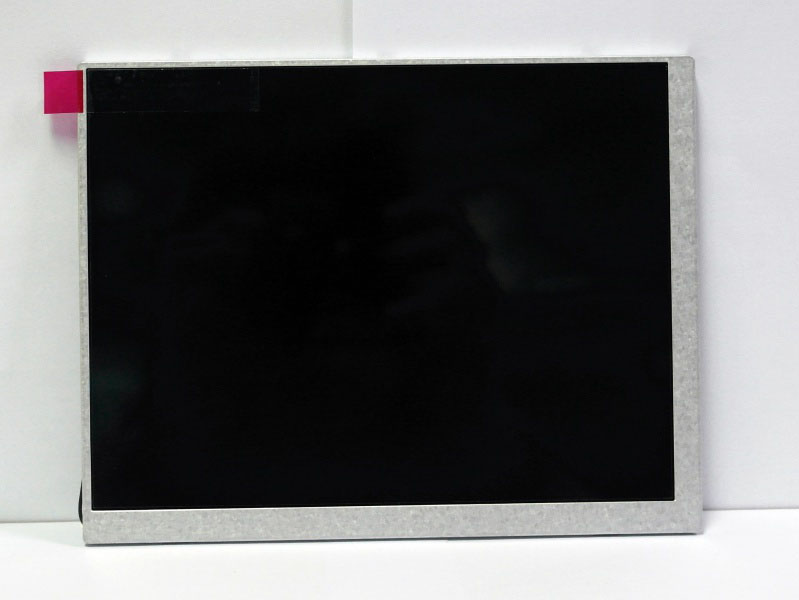
This article delves deep into the technical ecosystem of the AA070ME116. We will move beyond basic part number identification to explore its core specifications, the engineering philosophy behind its design, and its pivotal role within larger control systems. Understanding this panel is key for maintenance engineers, system integrators, and procurement specialists who need to ensure operational continuity, make informed replacement decisions, and appreciate the robust display technology that drives modern industrial interfaces.
Decoding the AA070ME116: More Than Just a Part Number
The alphanumeric code AA070ME116 is a precise technical identifier. Breaking it down reveals its core identity: "AA" typically denotes an LCD module series from Mitsubishi Electric, "070" indicates a 7-inch diagonal screen size, and "ME1" often references a specific model family with defined resolution and interface characteristics. The final digits specify revision or variant details.
At its heart, this is a TFT-LCD (Thin-Film Transistor Liquid Crystal Display) module. Its primary specifications include a resolution of 800 x 480 pixels (WVGA), which was a standard for many industrial HMI interfaces, providing a clear balance between detail and processing efficiency. It features a standard RGB interface, allowing it to connect directly to controller boards. Crucially, it incorporates a CCFL (Cold Cathode Fluorescent Lamp) backlight system, a technology known for its uniform brightness and long operational life, albeit one that is gradually being superseded by LED backlights in newer models. This specification alone places it in a specific era of industrial design.
Engineering for Industrial Resilience
The AA070ME116 is built not for aesthetics but for endurance. Its design philosophy prioritizes stability under conditions that would cripple consumer displays. The panel operates reliably across a wide temperature range, often from -20°C to +70°C, ensuring functionality in unheated warehouses or near hot machinery. It is engineered for high resistance to vibration and shock, critical in manufacturing plants or mobile equipment.
Furthermore, its longevity is a key feature. The CCFL backlight, while older technology, is rated for tens of thousands of hours of operation. The panel's construction minimizes the ingress of dust and is designed to resist electromagnetic interference (EMI), which is rampant in industrial settings filled with motors and drives. This resilience translates directly to reduced downtime and lower total cost of ownership, as the display becomes a dependable, long-term asset rather than a frequent point of failure.
The Heart of the HMI: System Integration Role
This LCD panel is rarely a standalone product. Its primary application is as the display core within Mitsubishi's GOT1000 and compatible series of Graphic Operation Terminals (GOTs). In this role, it serves as the vital visual conduit between human operators and complex programmable logic controllers (PLCs) or other automation systems.
When integrated, the panel displays custom HMI screens—showing real-time process data, alarm lists, production metrics, and interactive control buttons. Its performance directly impacts operator efficiency and situational awareness. A dim, failing, or damaged panel can obscure critical alarms or data, leading to operational errors. Therefore, understanding its integration—how it connects via LVDS or TTL signals to the HMI's main board—is essential for troubleshooting and replacement. It is a symbiotic component within a larger, mission-critical system.
Common Failure Modes and Diagnostic Insights
Even robust components eventually fail. Recognizing the symptoms of a failing AA070ME116 is crucial for proactive maintenance. The most common failure point is the CCFL backlight. Symptoms include a dim display, uneven brightness (dark spots or areas), a pinkish tint, or complete darkness where the HMI's touch functions may still work (indicated by audible feedback).
Other issues include screen artifacts like lines, flickering, or distorted images, which may point to a failing LCD matrix or loose internal connections (ribbon cables). Complete blank screens could stem from the panel itself, the inverter board powering the CCFL, or the main controller. Systematic diagnosis involves checking for visible backlight glow in a dark room, listening for the inverter's high-frequency whine, and verifying input signals. This knowledge prevents unnecessary part replacement and guides precise repair actions.
Sourcing and Compatibility Considerations
Procuring a genuine or compatible AA070ME116 requires diligence. As an older part, availability from original manufacturers may be limited, leading users to the aftermarket. Key considerations include:
Genuine vs. Compatible: OEM parts guarantee exact specifications but at a premium. High-quality compatible modules can offer reliable performance and cost savings but must be vetted for electrical and mechanical compatibility.
Physical and Interface Match: Verify mounting hole patterns, connector type and position, and overall dimensions (outline). A mismatch here renders the panel unusable.
Backlight Type: Ensure the replacement matches the CCFL specification. Some modern "drop-in" replacements may use LED backlights with an integrated driver, requiring verification of compatibility with the existing HMI's power supply and inverter circuit.
Sourcing from reputable suppliers with technical support is paramount to avoid costly installation errors.
The Future Context: Legacy Support and Technology Transition
The AA070ME116 represents a mature technology standard. The industry-wide shift from CCFL to LED backlighting offers advantages in power efficiency, thinner profiles, and instant-on capability. Newer HMI models increasingly use fully integrated, custom LCD assemblies with advanced touch technology.
However, this does not obsolete the AA070ME116. Its importance lies in the vast installed base of industrial equipment with lifespans measured in decades. For these systems, the panel remains a vital spare part. The discussion around it highlights a critical aspect of industrial maintenance: managing technological transition while supporting legacy assets. Understanding this panel equips professionals to make strategic decisions—whether to repair with a compatible part, upgrade the entire HMI unit, or plan for a phased system modernization.
FAQs: AA070ME116 LCD Panel
1. What is the AA070ME116?It is a 7-inch TFT-LCD display module with CCFL backlight, primarily used as a replacement part for Mitsubishi GOT1000 series HMIs.
2. What is its screen resolution?The standard resolution is 800 x 480 pixels (WVGA).
3. What does CCFL backlight mean?CCFL (Cold Cathode Fluorescent Lamp) is an older backlight technology known for long life and even brightness, common in industrial displays of its era.
4. What are the most common signs of failure?A dim screen, uneven lighting, a pink hue, or a completely dark screen (but with a powered HMI) typically indicate CCFL or inverter failure.
5. Can I replace it with an LED-backlit panel?Yes, but only with a specifically designed compatible module that includes the correct LED driver to match your HMI's power system. It is not a direct electrical swap.
6. Is it a touch screen panel?No, the AA070ME116 is the LCD display module only. Touch functionality is provided by a separate resistive touchscreen overlay attached to the HMI's front bezel.
7. How do I know if it's compatible with my HMI?Check your HMI's exact model number (e.g., GT10**, GT11**) and consult the manufacturer's parts list or a reputable supplier to confirm the correct LCD module part number.
8. Can I repair the CCFL backlight myself?While technically possible, it requires specialized skills and tools. It involves disassembling the panel in a clean environment and handling high-voltage components. Module replacement is generally safer and more reliable.
9. Where is the best place to source one?From authorized Mitsubishi distributors for OEM parts, or from established industrial electronic component suppliers with positive reviews and technical support for compatible units.
10. Does this panel become obsolete?As a product, it is in a legacy phase. However, its role in maintaining existing industrial equipment ensures it remains a critical spare part for many years to come.
Conclusion
The Mitsubishi AA070ME116 7-inch LCD panel exemplifies the critical, embedded technology that powers industrial human-machine interfaces. Our exploration has moved from its technical specifications and rugged design to its systemic role, failure patterns, and sourcing logistics. This component is far more than a simple screen; it is a reliability-engineered node in the data flow of automation.
For professionals in the field, understanding such components is fundamental to effective maintenance, smart procurement, and strategic planning. It underscores the balance between supporting legacy systems with precise parts and navigating the broader industry transition to newer display technologies. Ultimately, mastery of details like the AA070ME116 ensures operational resilience, minimizes downtime, and sustains the productivity of the industrial ecosystems that depend on it.





