

















- Industrie-LCD-Display
-
Industrial Products
- DC Servo Drive
- AC Servo Drive
- PCB
- Siemens
- Switch Sensor
- Näherungsschalter
- Temperaturregler
- Schutzrelais
- Fiber Optic Sensor
- Encoder
- Fan
- other
- Heidelberg
- MITSUBISHI
- FANUC
- Siemens adapter
- Fujitsu connector
- Der Aufsichtsrat
- Board
- Contactor
- Circuit
- Omron
- Relais.
- Motortreiber
- power supply
- Cable
- Transformator
- HMI Touch-Glas
-
HMI-Vollautomat Ganze Einheit
- OMRON HMI Touch Panel
- Siemens HMI Touch Panel
- Mitsubishi HMI Touch Panel
- Allen-Bradley Automatisierung HMI Touch
- DELTA HMI Touch Panel
- EVIEW DELTA HMI Touch Panel
- KINCO DELTA HMI Touch Panel
- HITECH HMI Touch Panel
- WEINTECK HMI Touch Panel
- TECVIEW HMI Touch Panel
- WEINVIEW HMI Touch Panel
- PANASONIC HMI Touch Panel
- KYOCERA HMI Touch Panel
- SCHNEIDER HMI Touch Panel
- Module
- LCD Wechselrichter
- Membran Tastenfeld Schalter
- Winni Touch Screens
- Frequenzumrichter
- Servo Motor
- PLC
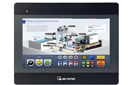
In the intricate world of industrial and commercial technology, the display screen is far more than a simple window to data; it is the critical interface between complex systems and human operators. Among the myriad of specialized display solutions, the LQ10D367 10.4-inch LCD display screen has emerged as a significant component, renowned for its reliability and adaptability in demanding environments. This article delves deep into the specifications, applications, and technical nuances of this particular display module, moving beyond basic datasheet information to explore its real-world impact.
Our exploration will uncover why the LQ10D367 is not just another screen but a tailored solution for sectors where performance under pressure is non-negotiable. We will examine its core technological foundations, the specific industries that rely on its robustness, and the key considerations for integration. By understanding the depth of its design and application, engineers, procurement specialists, and technology integrators can make informed decisions about implementing this pivotal component in their next-generation systems.
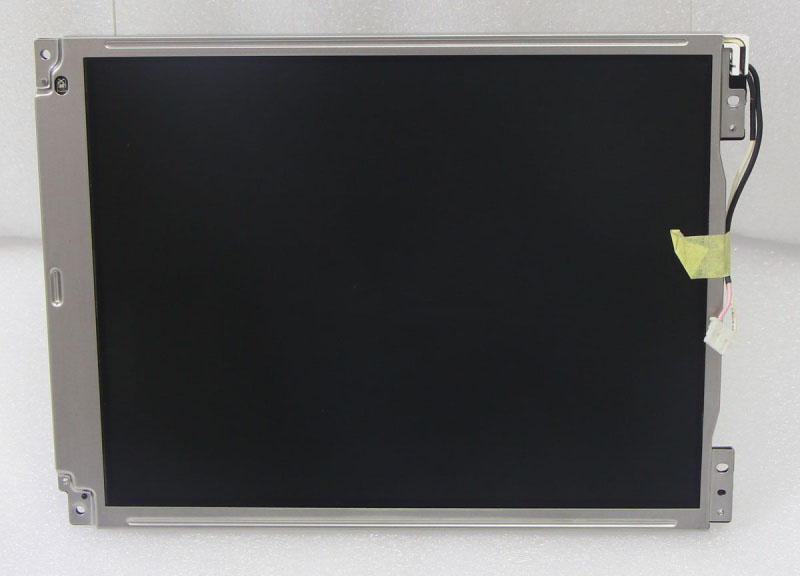
Unpacking the LQ10D367: Core Specifications and Technology
Beyond the basics, critical specifications define its operational envelope. These include a wide operating temperature range, often from -20°C to 70°C, ensuring functionality in non-climate-controlled settings. Its brightness, typically in the range of 300 to 500 nits, guarantees readability in brightly lit factories or under sunlight. Furthermore, the interface—frequently LVDS (Low-Voltage Differential Signaling)—provides robust, high-speed data transmission with resistance to noise, which is paramount in electrically noisy industrial environments. Understanding these foundational specs is the first step in appreciating its design philosophy.
Engineered for Endurance: Ruggedness and Environmental Suitability
Environmental sealing is another key facet. Many variants feature enhanced protection against dust and moisture ingress, with some models achieving specific ingress protection (IP) ratings. This makes the screen suitable for wash-down environments in food processing or pharmaceutical manufacturing, or for use in outdoor kiosks exposed to the elements. The combination of a wide temperature tolerance, high brightness for optical bonding compatibility, and physical durability transforms the LQ10D367 from a passive component into an active, reliable partner in challenging operational landscapes.
Primary Applications and Industry Deployment
Within the medical device sector, this display is found in diagnostic equipment, patient monitoring systems, and surgical devices where consistent, accurate visual feedback is crucial. The transportation and logistics field utilizes it in vehicle telematics, forklift operator panels, and fleet management systems, where readability and durability are paramount. Additionally, it powers point-of-sale (POS) systems, interactive kiosks, and specialized instrumentation, proving its versatility as a backbone display technology for embedded solutions.
Integration Considerations and Interface Compatibility
Mechanical integration involves precise mounting within the end-product's enclosure, often using the module's pre-drilled holes. Thermal management must also be considered, as prolonged high-brightness operation can generate heat. Furthermore, the choice of a matching touchscreen overlay (such as resistive or projected capacitive) adds another layer of compatibility planning for interactive applications. Navigating these considerations is essential for a stable and long-lasting implementation
The Competitive Landscape: Positioning the 10.4-Inch Niche
The LQ10D367 competes within this niche based on its proven reliability, widespread availability, and the extensive ecosystem of compatible controllers and accessories. While newer technologies like IPS panels offer wider viewing angles, the LQ10D367's strength lies in its optimal balance of performance, durability, and total cost of ownership for its target applications, a balance that newer or alternative modules must convincingly challenge.
Future-Proofing and Long-Term Availability
Future-proofing a design that incorporates this module involves securing a reliable supply chain and, in some cases, considering compatible pin-to-pin replacement options from secondary sources. While display technology continues to evolve with trends toward higher resolutions and lower power consumption, the enduring need for robust, medium-sized displays in industrial settings ensures that successors to the LQ10D367 will continue to serve its core design principles of reliability and environmental toughness.





