


















- Industrie-LCD-Display
-
Industrial Products
- DC Servo Drive
- AC Servo Drive
- PCB
- Siemens
- Switch Sensor
- Näherungsschalter
- Temperaturregler
- Schutzrelais
- Fiber Optic Sensor
- Encoder
- Fan
- other
- Heidelberg
- MITSUBISHI
- FANUC
- Siemens adapter
- Fujitsu connector
- Der Aufsichtsrat
- Board
- Contactor
- Circuit
- Omron
- Relais.
- Motortreiber
- power supply
- Cable
- Transformator
- HMI Touch-Glas
-
HMI-Vollautomat Ganze Einheit
- OMRON HMI Touch Panel
- Siemens HMI Touch Panel
- Mitsubishi HMI Touch Panel
- Allen-Bradley Automatisierung HMI Touch
- DELTA HMI Touch Panel
- EVIEW DELTA HMI Touch Panel
- KINCO DELTA HMI Touch Panel
- HITECH HMI Touch Panel
- WEINTECK HMI Touch Panel
- TECVIEW HMI Touch Panel
- WEINVIEW HMI Touch Panel
- PANASONIC HMI Touch Panel
- KYOCERA HMI Touch Panel
- SCHNEIDER HMI Touch Panel
- Module
- LCD Wechselrichter
- Membran Tastenfeld Schalter
- Winni Touch Screens
- Frequenzumrichter
- Servo Motor
- PLC
The global display industry is in a state of constant flux, driven by demands for higher resolution, better power efficiency, and more rugged form factors. Within this complex ecosystem, the 21.5-inch segment remains a critical workhorse, bridging the gap between small mobile panels and large-format commercial displays. One model that has garnered specific attention from industrial buyers and system integrators is the G215HAN01.2, manufactured by AU Optronics (AUO). This article provides a deep dive into this specific LCD panel, moving beyond basic specifications to explore its architectural design, performance characteristics, and market positioning.
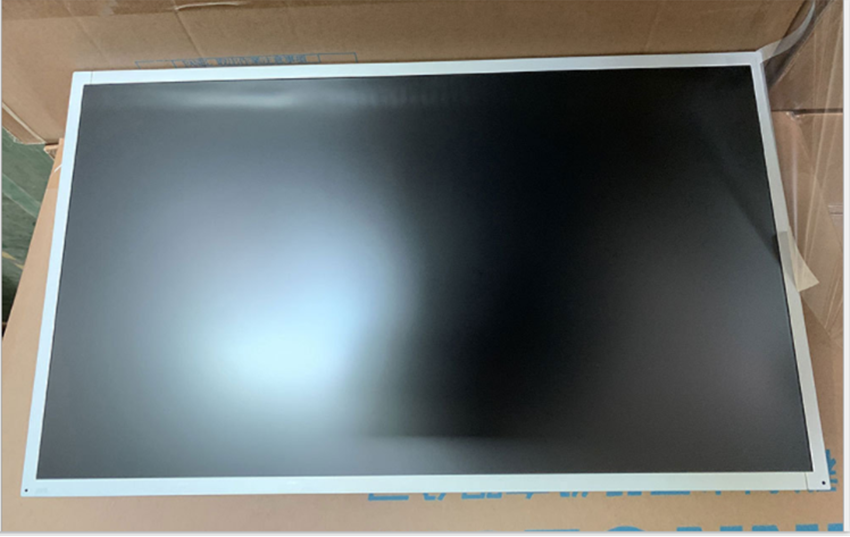
Unlike consumer-grade monitors that prioritize thinness and aesthetic appeal, the G215HAN01.2 is engineered for reliability and consistent optical performance. We will dissect its technical parameters, from backlight technology to viewing angles, and analyze why it is a preferred choice for applications ranging from medical diagnostics to industrial automation. The goal is to equip procurement managers, engineers, and technical decision-makers with the precise information needed to evaluate this component for their specific projects.
Decoding the Nomenclature: What the G215HAN01.2 Tells Us
To truly understand a display panel, one must first decode its part number. The designation G215HAN01.2 is not arbitrary; it is a fingerprint of the panel's lineage. The "G215" prefix immediately identifies the active diagonal size at approximately 21.5 inches, a standard dimension for a variety of embedded applications. The "H" typically signifies a high-brightness or high-performance variant within AUO's product tree, while "AN" often points to an "A-type" or standard architectural design, differentiating it from custom or specialized modules.
The suffix "01.2" is particularly telling. It indicates this is a specific revision or generation of a panel base model. Revision numbers often reflect subtle but critical improvements made over the product's lifecycle, such as tweaks to the optical bonding process, updates to the timing controller (TCON) firmware, or optimizations in the backlight driving current. Understanding this revision is crucial for sourcing replacement parts; a version 01.0 may not be a direct drop-in replacement for a 01.2 due to changes in connector pinouts or voltage requirements. For the G215HAN01.2, this revision typically points to a mature, well-tested solution with predictable yields and stable supply chains, making it a low-risk choice for long-term production runs.
Optical Architecture: Beyond Resolution and Color Gamut
While many panels boast high pixel counts, the true value of the G215HAN01.2 lies in its refined optical architecture. This panel typically employs IPS (In-Plane Switching) technology, a crucial detail for professional environments. IPS ensures that color shift and luminance variation are minimized even when the user is not positioned directly in front of the screen. For a 21.5-inch panel, which is often used in multi-monitor command centers or medical carts, maintaining color consistency across the entire surface and from extreme angles is non-negotiable.
The panel delivers a standard Full HD (1920 x 1080) resolution, resulting in a crisp pixel density of approximately 102 PPI (Pixels Per Inch). This is an ideal sweet spot for text readability and detailed graphical user interfaces without placing an unnecessary processing load on the host system. Furthermore, the color gamut, often specified at 72% NTSC (or 100% sRGB), ensures that the display can reproduce colors accurately for standard productivity and diagnostic imaging tasks. The backlight unit, typically an LED (WLED) array, is engineered to provide uniform luminance across the panel's lifetime, avoiding the "hot spots" and edge bleeding common in lower-cost designs. The pair of CCFL-less backlight also contributes to a thinner profile and lower power consumption compared to older technologies.
Mechanical and Interface Industrialization
The physical construction of the G215HAN01.2 reveals its industrial-grade DNA. Unlike consumer monitors that are glued into plastic bezels, this panel is designed as a modular component, ready for integration into a custom enclosure. Its mechanical outline is optimized for standard VESA mounting, but the specific fixation points and screw hole locations are designed to allow for easy installation into medical or industrial chassis. The panel's thickness is carefully managed to balance structural rigidity with the need for a slim final product.
The interface is equally critical. This panel typically utilizes a standard LVDS (Low-Voltage Differential Signaling) interface, specifically a 2-channel, 8-bit configuration. This choice of interface is significant for system integration. LVDS is a mature and highly reliable standard that is less susceptible to electromagnetic interference (EMI) than newer, higher-speed interfaces like eDP in certain industrial environments. The connector, pinout, and voltage levels (typically 3.3V for logic) are well-documented, allowing engineers to design a robust, shielded cable harness. The panel also supports a specific range of input frequencies, which dictates the achievable frame rates and pixel clock, directly influencing compatibility with the host system's graphics output.
Backlight Performance and Longevity in Operational Contexts
For any display used in a 24/7 operational context, the backlight is the most critical consumable component. The G215HAN01.2 is typically designed for a backlight lifetime of 50,000 hours or more, measured to half-brightness (L50). This translates to over five years of continuous operation before the screen becomes noticeably dim. This longevity is achieved through the selection of high-grade LED die and efficient heat dissipation design within the panel chassis.
However, brightness itself is not absolute. The panel's typical luminosity is around 250 cd/m² to 350 cd/m² (nits), depending on the exact build and revision. While this is ample for indoor environments like a hospital ward or a factory floor, it is not designed for direct sunlight. The contrast ratio, typically 1000:1, ensures deep blacks and good text legibility in standard ambient lighting. For applications requiring higher visibility, the G215HAN01.2 can be used as a platform for optical bonding, where a cover glass is laminated to the panel to reduce internal reflections and improve sunlight readability, a process that significantly increases the effective contrast ratio in bright environments.
Comparative Market Positioning and Application Verticals
How does the G215HAN01.2 stack up against its competitors and its own siblings? Within the AUO lineup, it sits above entry-level TN panels (which offer faster response times but poor color/viewing angles) and below premium medical-grade 10-bit panels (which command a significantly higher price). Its direct competitors include panels from Innolux and BOE in the same size class. The advantage of the G215HAN01.2 is its balance: it offers the excellent IPS viewing angles and color stability required for professional use without the premium price of specialized high-brightness or high-resolution variants.
This positioning makes it a dominant player in three verticals: Medical Informatics (patient monitoring, PACS workstations), Industrial Controls (HMI terminals, PLC interfaces), and Gaming & Amusement (slot machines, digital signage). In medical informatics, the G215HAN01.2's 1024 x 768 resolution (in some variants) or Full HD resolution ensures that critical patient data is readable. In industrial controls, its robust build and long backlight life reduce total cost of ownership. For gaming, its 1000:1 contrast ratio and 5ms (typical) response time provide a satisfactory user experience for slot machine graphics. It is not a low-cost panel, but it is a value-engineered panel, delivering predictable, high-quality performance over a long lifespan.
Best Practices for System Integration and Sourcing
Successfully integrating the G215HAN01.2 requires more than just reading the datasheet. Engineers must pay close attention to the power sequence—the specific order in which the logic supply (VDD) and backlight supply (VBL) are applied and removed. Incorrect sequencing can damage the panel's internal circuitry, leading to immediate failure or latent defects. A dedicated power management IC is often recommended to ensure clean, controlled power application.
From a sourcing perspective, the availability of the G215HAN01.2 can fluctuate. It is not a mass-market cellphone display; it is a specialized component with a lifecycle that can span years. Buyers should establish a relationship with an authorized AUO distributor to secure pricing and allocate inventory. Because of its maturity, the market also has a healthy supply of "original grade" and "compatible" panels. However, for mission-critical applications, investing in the genuine AUO part is crucial to guarantee the stated specifications, particularly in terms of reliability and backlight uniformity. Finally, consider the lot code when matching panels for multi-display setups, as subtle variations in brightness and color can occur between different production lots.
FAQs on the G215HAN01.2 Panel
Is the G215HAN01.2 a touch screen panel?No, it is a standard LCD panel without integrated touch. It is designed to be used with an external touch sensor overlay, such as a projected capacitive (PCAP) or resistive touch film.
What is the exact resolution of this panel?The standard resolution is 1920 x 1080 (Full HD) at a 16:9 aspect ratio.
Can this panel be used for medical diagnostic imaging?Yes, for primary diagnostic imaging, but it typically meets the standards for secondary PACS workstations rather than the highest-grade mammography or radiology displays. Its color accuracy is sufficient for most medical informatics.
What is the typical power consumption?The total power consumption is typically around 15-18 watts, including both the logic and backlight sections, though this varies by brightness setting.
What is the optimal operating temperature range?The specified operating temperature is usually 0°C to 50°C, and the storage temperature is -20°C to 60°C, suitable for most indoor environments.
Is the G215HAN01.2 a direct replacement for the G215HAN01.0?Not necessarily. Always check the datasheet for pin-to-pin compatibility and any changes to the timing controller (TCON) firmware. They are often similar but not drop-in identical.
What type of backlight does it use?It uses a direct-lit or edge-lit WLED (White Light Emitting Diode) backlight. The specific driver is integrated into the panel.
Does the panel support 10-bit color depth?No, it is an 8-bit panel, meaning it can display 16.7 million colors. True 10-bit panels are typically more expensive and found in professional graphics monitors.
Where can I find the official datasheet?The official datasheet can be obtained from an authorized AUO distributor or by requesting it directly from AU Optronics' industrial panel division.
What is the typical response time?The typical response time (Grey-to-Grey) is around 5-8 milliseconds, which is sufficient for most standard applications but not for high-speed gaming.
Conclusion: The Value of a Mature, Reliable Foundation
The G215HAN01.2 from AUO stands as a testament to the principle that in engineering, reliability often outweighs raw performance. It is not the brightest, thinnest, or most color-accurate panel on the market. Instead, it is a trusted workhorse—an industrial component optimized for stability, longevity, and predictable behavior. Its IPS technology provides the visual consistency needed for professional interfaces, while its mature LVDS interface and robust build make it a safe choice for system integration.
For engineers and procurement managers tasked with building equipment that needs to operate reliably for years, the G215HAN01.2 offers a compelling cost-to-value proposition. It occupies a critical niche where the demands for performance and durability meet the realities of cost and supply chain stability. By understanding its architecture, limitations, and ideal use cases, stakeholders can make informed decisions that lead to successful, long-lived product deployments. The quiet excellence of this panel ensures it remains a reliable foundation for countless systems worldwide.





